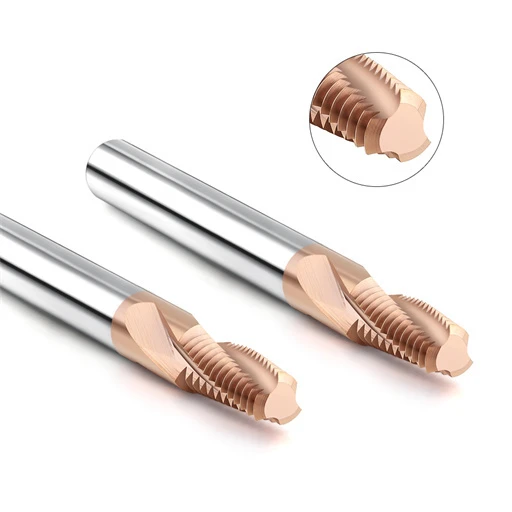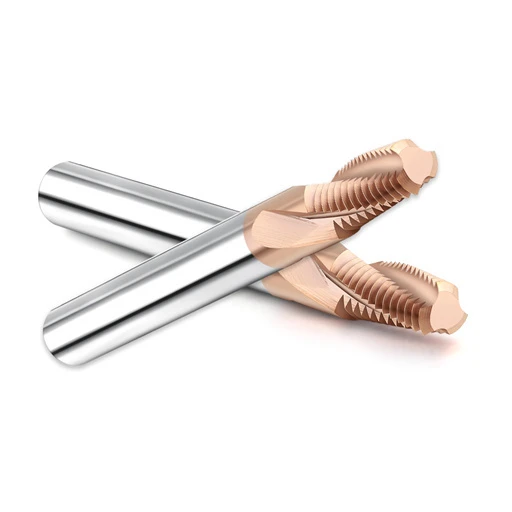

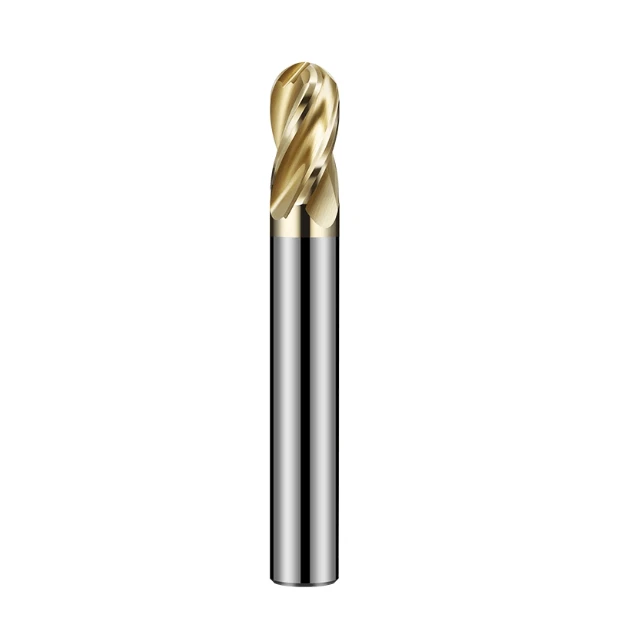
Last month, an aerospace component manufacturer in the U.S. Midwest faced a major disaster while milling deep-cavity molds from 316L stainless steel. Their new programmer reduced the stepover and feed per tooth (fz) too low to pursue a better surface finish. Instead of achieving a mirror finish, the tool rubbed against the surface, generating an extremely hard layer of work-hardened material.
Subsequently, two brand-new tools suffered severe micro-chipping on their cutting edges within five minutes of engaging this hardened zone. We have encountered this exact scenario countless times during our fifteen years of providing on-site shop floor technical support. When using a end mill ball nose for stainless steel for 3D contouring, the effective cutting speed ($V_c$) at the very tip approaches zero. This inherently invites heavy rubbing, which instantly doubles the surface hardness.
To resolve this critical vulnerability, shop floors cannot rely solely on theoretical textbook formulas. It requires a high-rigidity solid carbide substrate with a micro-grain structure and targeted cutting-edge passivation (honing). As a specialized ball nose end mill bits manufacturer, our R&D process balances unequal helix angles with variable pitch designs to suppress resonance. We also apply mirror-polishing techniques on the flutes to ensure that sticky chips are evacuated instantly.
Many North American and European buyers ultimately choose our custom-engineered CNC milling cutters for stainless steel for their exceptional impact resistance. There is an outdated stereotype that Chinese tools only compete on price. However, true cost-per-part reduction is achieved by synergizing cutting geometry, advanced coatings, and proper 5-axis toolpath strategies. Do you frequently encounter this frustrating scenario where an initial tool scrapes the surface and causes the replacement tool to fail in minutes?

Why Do 304/316 Stainless Steels Tend to “Get Harder as You Cut” During Surface Finishing?
While providing on-site technical support in Europe and North America, we frequently hear shop supervisors complain about 304 and 316 stainless steels. This is particularly evident during complex 3D surface finishing. The cutting sound may start crisp, but it soon becomes dull and muffled while the workpiece surface develops a blinding glare. This classic manifestation of work hardening happens because stainless steel undergoes significant crystal lattice slip under compressive forces.
Recently, a long-standing client in the UK encountered this challenge while milling the contoured flow channels of 316 pump bodies. To achieve a high surface finish, they selected our high-performance end mill ball nose for stainless steel but made a critical error in their toolpath strategy. Since austenitic stainless steel has extremely low thermal conductivity, heat concentrates entirely at the tiny contact zone between the ball nose tip and the workpiece. This severe thermal stress transforms the soft austenite into a hard martensitic structure.
Micro-Wear at the Tool Tip and “Rubbing” (Rather than “Cutting”) Caused by Improper Stepover
In 3D finishing or mold corner cleaning, many programming engineers habitually set the stepover distance to an extremely small value. However, they overlook a critical physical blind spot: the effective cutting speed ($V_c$) decreases gradually toward the dead center of the tool tip, eventually reaching zero. If your stepover and feed per tooth are smaller than the microscopic edge radius, the blade will merely press and rub the material. This microscopic squeezing action is the primary culprit behind severe cold-work hardening.
This rubbing action triggers rapid microscopic wear at the tool tip. When examining used carbide ball nose end mill bits under high-magnification microscopes, we typically find that flank wear begins right on the ball radius. Once a mere 0.02 mm of flank wear appears, the tool’s sharpness is severely compromised. If cutting continues at shallow depths, the tool enters a vicious cycle where the more it rubs, the duller it gets, and the duller it gets, the harder the surface becomes.
Recutting and Heat Accumulation Caused by Inadequate Chip Evacuation
During deep cavity milling, limited chip evacuation space acts as an invisible killer that accelerates surface hardening. Stainless steel chips are highly adhesive and prone to welding onto the cutting edges, forming built-up edges (BUE). If the shop’s air pressure is insufficient or the coolant nozzles are misaligned, high-temperature chips remain trapped in the cavity. As the cutter makes its next reciprocating pass, it inevitably engages in harmful chip recutting.
This secondary cutting deals a fatal blow to CNC milling cutters for stainless steel. The chips, having been cut once, are already severely work-hardened. When drawn back into the flutes, they generate violent mechanical impacts that cause micro-chipping along the cutting edge. Our tests show that when the cutting zone temperature spikes over 1470°F (800°C) due to poor evacuation, the chemical affinity intensifies. This instantly creates an impenetrable hard shell that ruins subsequent tools.
A Classic Catastrophe: Real-World Lessons from a Customer’s Failure—Surface Hardening and Tool Breakage Caused by Inferior Cutters
We observed a stark reminder of this at a German metalworking facility executing a bulk order for medical-grade stainless steel components. To cut upfront costs, they purchased cheap, unbranded cutting tools online that lacked rigorous edge treatment or quality substrates. During the semi-finishing stage, these inferior tools failed due to insufficient bending rigidity. The cutters deflected significantly upon engagement, causing the cutting edges to skid and knead a 0.1 mm deep hardened layer into the component.
When they switched to their finishing tools, the cutters emitted a piercing shriek the instant they touched this hardened zone. Within seconds, the center of the tool shattered completely. For us as a professional ball nose end mill bits manufacturer, this case proves there is zero room for negligence regarding tool geometry and substrate consistency. Using substandard tools never saves money; it only destroys expensive finishing cutters and causes the entire batch of parts to be scrapped.
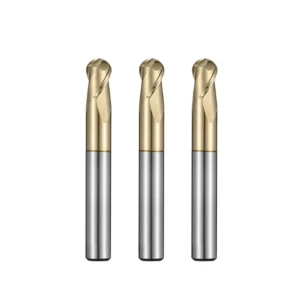
The Core of Overcoming Work Hardening: How to Optimize Our Carbide Ball Nose End Mills Through Geometric Parameters
After years on the machine shop floor, we know that reducing cutting speeds merely treats the symptoms of stainless steel work hardening. The real solution lies within the geometric design of the tool itself. When manufacturing a carbide ball nose end mill, we focus on precise micro-adjustments to the cutting edge profile and flute geometry. This allows the tool tip to penetrate the material with maximum speed and minimum resistance, breaking chips before the lattice distorts and hardens.
Conventional, symmetric solid carbide tools often induce low-frequency resonance when cutting austenitic stainless steel because the cutting forces are excessively uniform. Even slight vibration causes the cutting edge to bounce rhythmically, creating a dense pattern of localized cold-worked hardened spots. Therefore, optimizing non-symmetric geometric parameters—such as rake angles, relief angles, and flute morphology—to alter cutting force distribution is our primary weapon to overcome this critical machining bottleneck.
H3: The Real-World Effectiveness of Unequal Indexing and Variable Helix Designs in Suppressing Vibration During Stainless Steel Machining
Have you ever heard a piercing, high-frequency screech from your machine during long-path milling on complex 3D surfaces? This chatter is typically caused by continuous, periodic cutting forces triggering resonance on the shop floor. To disrupt this rhythmic pattern, our current strategy incorporates unequal indexing (uneven tooth spacing) and variable helix angles. This ensures that the time interval between cuts and the direction of chip evacuation vary with every single pass.
Based on actual test data, these asymmetric tools reduce machining vibration amplitudes by more than 60% during demanding applications. Once vibration is suppressed, the cutting edge maintains a stable, continuous cutting state, preventing the unnecessary squeezing that deforms the workpiece surface. When machining high-rigidity or thin-walled parts, choosing this specialized end mill ball nose for stainless steel determines whether your surface emerges as a silky mirror or a marred, hardened layer.
Mastering Edge Micro-Sharpness (Honing): Finding the Balance Between Chip Resistance and Cutting Penetration
A common misconception in the tool industry is that a razor-sharp edge is always better for cutting tough stainless steel. However, seasoned machinists know that a razor-sharp edge lacks sufficient structural support at the very tip, leading to immediate micro-chipping upon initial contact. To resolve this challenge, we subject the cutting edge to a precise process of microscopic edge preparation. Utilizing high-precision edge-honing equipment, we create an extremely minute round radius (honing) along the cutting edge.
For our custom CNC milling cutters for stainless steel, calibrating this micro-edge radius is an extremely delicate undertaking. If the radius is too large, the tool becomes dull and increases the compressive forces on the workpiece, directly triggering work hardening. Conversely, if it is too small, the edge lacks the structural integrity to withstand the material’s impact. Controlling this radius within a golden range of just a few microns ensures keen penetration while maximizing chipping resistance.
Wear Resistance of Nano-Composite Coatings (AlTiN/TiAlN) on Stainless Steel in High-Temperature, Harsh Environments
Stainless steel possesses low thermal conductivity, meaning the vast majority of cutting heat transfers directly into the tool tip during finishing. Without effective thermal protection, the cobalt binder within a carbide substrate undergoes rapid phase transformation, leading to rapid plastic deformation. Consequently, as a specialized ball nose end mill bits manufacturer, we apply high-performance, nanostructured AlTiN or TiAlN coatings to the optimized tool geometry using PVD technology.
These nano-composite coatings serve a dual function during harsh, high-temperature cutting operations. When temperatures exceed 800°C, the aluminum content reacts with atmospheric oxygen to form a dense, protective aluminum oxide (Al2O3) barrier that channels heat away into the chips. Furthermore, the coating’s high hot hardness and low friction coefficient minimize high-temperature chemical adhesion on the rake face. This prevents rapid flank wear and safeguards the workpiece surface from thermal hardening.

Adjusting On-Site Cutting Strategies: The “Unwritten Rules” for Parameters When Using CNC Milling Cutters for Stainless Steel
Even with the world’s most advanced tools, you cannot escape the curse of work hardening if your machine parameters are incorrect. Our technical support teams find that over 70% of surface hardening issues are resolved by adjusting CAM toolpaths and feed rate overrides. When machining highly tough and gummy materials, conventional shop-floor wisdom is often counterproductive. Operators must strictly adhere to a specific set of unwritten rules tailored to the unique characteristics of stainless steel.
When guiding clients on using CNC milling cutters for stainless steel, the first adjustment we require is abandoning excessively shallow depths of cut. A conservative mindset that cuts too shallow causes the tool tip to repeatedly rub against the sensitive surface layer. The core strategy relies on pairing a judicious radial depth (ae) and axial depth (ap) with a precisely calculated surface speed. This ensures the cutting edge slices cleanly into the underlying soft material layer.
Maintain a Stable Feed Per Tooth (fz) to Forcefully Cut Beneath the Hardened Layer
When operators hear unusual noises or observe a rise in machine load, their first instinct is to dial down the feed rate. However, we must warn you that reducing the feed rate is an extremely hazardous practice when machining stainless steel. When you reduce the feed, the feed per tooth (fz) diminishes significantly. If this value drops below the depth of the hardened layer created by the previous pass, the edge cannot establish an effective shear angle and slides under high pressure.
Consequently, we recommend establishing a stable, robust baseline feed rate for any end mill ball nose for stainless steel. Even in deceleration zones like curved corners, adaptive dynamic milling algorithms should be employed to ensure actual chip thickness consistently exceeds the hardened layer depth. This forceful entry logic leverages sufficient material resistance to protect the cutting edge. It prevents the tool tip from rapidly annealing, softening, or chipping due to non-cutting friction.
Climb Milling vs. Conventional Milling: Our Test Data from 3D Flow Channel Machining
Regarding whether to employ climb milling or conventional milling on complex 3D surfaces, we conducted dedicated comparative studies using 316 stainless steel. In conventional up-milling, the cutter teeth initiate the cut from a chip thickness of zero. Before the cutting edge can shear off the first chip, it undergoes a considerable distance of severe friction and compression. This process almost invariably induces severe cold-work surface hardening.
Conversely, climb milling initiates the cut from the maximum chip thickness, plunging the carbide ball nose end mill directly into the material. Our test data shows that stainless steel surfaces machined via climb milling exhibit a hardness increase of only 15% relative to the base material. In stark contrast, conventional milling causes a hardness surge that nearly doubles the original value while accelerating flank wear. We consistently advise adopting a full climb-milling toolpath strategy for finishing contoured surfaces.
The Decisive Role of “Sturz Milling” (Tilting) in 5-Axis Machining for Eliminating the “Dead Point” (Zero Vc) at the Center of a Ball Nose End Mill
In traditional 3-axis machining, a ball-nose tool remains perpendicular to flat or gently sloped 3D top surfaces. In this configuration, the geometric center of the ball tip lies directly beneath the point of contact. Because the rotational radius at this specific point approaches zero, the effective cutting speed (Vc) physically drops to zero. Lacking linear velocity, the tool tip completely loses its cutting capability and forcibly abrades the material away via spindle downward thrust.
To decisively overcome this limitation, we strongly recommend that manufacturing facilities adopt the 5-axis Sturz Milling technique. By tilting the axis of the china ball nose end mill between 15 and 25 degrees, the contact point shifts away from the dead center. This directs the workload to the side of the radius where rotational velocity is significantly higher. This strategy renders the cutting process exceptionally smooth, eliminates built-up edge, and enables a qualitative leap in surface finish.
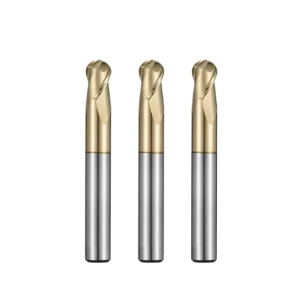
As a Professional Manufacturer of Ball Nose End Mill Bits, What Specific Improvements Do We Implement Before Shipment?
Overseas buyers often ask us why our tools demonstrate superior stability and wear resistance when cutting stainless steel compared to standard suppliers. Frankly, manufacturing a tool for high-speed cutting on standard carbon steel is easy. However, tackling stainless steel—a material highly prone to work hardening—ultimately comes down to invisible, detailed microscopic improvements implemented before the tool leaves our factory.
Simply acquiring high-end 5-axis grinding machines is far from sufficient; the true technical barrier lies in the rigorous quality control embedded within the manufacturing process itself. We have optimized every production stage, from raw rod selection to final inspection. As a specialized ball nose end mill bits manufacturer, our tools undergo two additional, critical edge-conditioning processes to ensure they maintain a stable cut without inducing work hardening on your shop floor.
Substrate Selection: The Impact Resistance Performance of Micro-grain Materials When Machining Aerospace-Grade Stainless Steel
When machining tough aerospace alloys like 17-4PH or Inconel, standard carbide rods suffer rapid fatigue failure. If the substrate material possesses a coarse grain structure, high-frequency intermittent cutting forces easily induce micro-cracks along the grain boundaries. To overcome this limitation, we selected ultra-fine, micro-grain carbide as our core substrate material, which delivers a qualitative leap in both flexural strength and fracture toughness.
Based on actual workshop feedback, this specific micro-grain substrate demonstrates exceptional impact resistance when cutting high-toughness stainless steel. Under extreme operating conditions where cutting forces fluctuate wildly, the ultrafine grains firmly anchor the crystal lattice structure at the tool tip. Comparative laboratory tests show that our custom carbide ball nose end mill bits exhibit a service life against shock that is more than 30% longer than standard carbide options.
How a Rigorous Flute Mirror-Polishing Process Aids in the Evacuation of Sticky Chips
Stainless steel behaves much like sticky taffy when being cut, meaning rough flutes lead to immediate chip clogging. Once the flute becomes clogged, cutting fluid cannot reach the tool tip, and the subsequent cutting edge will re-cut and crush those trapped, high-temperature chips. This extreme concentration of frictional heat and mechanical stress instantly sears an unmachinable work-hardened layer onto the surface of your workpiece.
To achieve perfect evacuation, we subject all our CNC milling cutters for stainless steel to an exceptionally rigorous flute mirror-polishing process. Following 5-axis grinding, we utilize specialized fluid polishing equipment and ultrafine abrasives to polish the bottom of every flute to a near-mirror finish (Ra). This silky-smooth surface drastically lowers the friction coefficient, allowing sticky chips to slide out instantly and channel intense cutting heat away from the machining zone.
Factory Quality Inspection: How High-Magnification Microscopy Eliminates Radial Runout in Ball Nose Radii
Multi-flute ball nose tools harbor a highly deceptive yet critical hidden hazard: radial runout within the ball nose radius. If a four-flute tool exhibits a runout of even a mere 5 microns, a single specific cutting edge will bear the vast majority of the cutting load while the remaining edges merely engage in futile rubbing. This uneven chip load causes rapid tool wear on one edge and aggressive scraping on the others, inducing severe surface work hardening.
Consequently, in our finished-goods facility, every single china ball nose end mill undergoes rigorous scrutiny using a high-magnification, fully automated 3D optical measuring system imported from Germany. We perform a radial runout scan across every microscopic point along the entire spherical arc from 0 to 90 degrees. This strict quality control guarantees that every cutting edge shares the cutting forces uniformly, completely eliminating surface scratching caused by tool deflection.
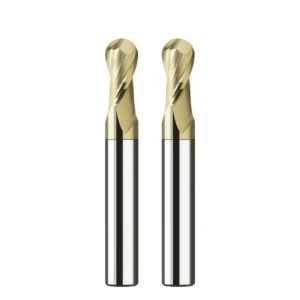
Real Feedback from Western Buyers: The ROI of Choosing High-Performance “China Ball Nose End Mills”
Over our years of engagement with mid-to-high-end manufacturing facilities in the West, we have observed a fundamental shift in purchasing decisions. In the past, many Western workshops paid significant price premiums for German or Japanese brands, harboring a prejudice against a china ball nose end mill. However, when confronted with challenging stainless steel, what truly creates a high Return on Investment (ROI) is a tool’s exact geometric compatibility and long-term wear resistance.
If you are currently undertaking orders for high-precision stainless steel parts, consider breaking free from the traditional mindset of choosing the most expensive brand. Instead, re-evaluate your tool supply chain across three key dimensions: substrate material, customized flute geometry, and comprehensive per-part machining costs. We compete head-to-head with top-tier international brands by leveraging hard-core cutting performance data, superior surface finishes, and long-term tool life stability.
Tool Life Comparison Data: A Long-Standing German Client Switches from Major Western Brands to Our Custom-Engineered Tools
A long-established mold manufacturing facility in Stuttgart, Germany, previously relied on premium European carbide ball-nose tools to machine 420 stainless steel plastic mold cavities. Due to severe work hardening and thermal wear, their original European tools could sustain effective finish cutting for only five hours on average. After switching to our custom end mill ball nose for stainless steel, optimized with unequal-pitch flute geometry, their tool tip flank wear slowed down drastically.
The final on-site test results astonished their process engineers: under identical Vc and fz, our tools performed stable cutting for nearly 7.5 hours—a full 50% increase in tool life. Furthermore, because we controlled the radial runout along the spherical cutting radius within tight tolerances prior to shipment, the depth of the work-hardened layer was significantly reduced. This proves our precision tools possess the robust capabilities required to outperform major international brands.
Reducing Cost-Per-Part: Saving More Than Just Tool Costs—Saving Valuable Downtime
Experienced workshop supervisors understand that when evaluating project tooling costs, you must calculate the true “Cost-Per-Part,” not just the unit price on the invoice. If a tool lacks sufficient impact resistance and chips frequently, the operator is forced to halt production, re-zero, and switch tools. In such scenarios, expensive machine downtime and the vicious chain reaction of work-hardened parts destroying subsequent finishing tools are what truly devour your project’s profit.
By choosing our high-performance carbide ball nose end mill bits, you effectively flatten the tool’s wear curve. When a single tool can perform stable, predictable, and continuous cutting operations for extended periods, you reclaim valuable active machining time. This optimization naturally drives down the overall amortized cost per finished part, saving your shop both tool budget and expensive operational hours.
Providing 24-Hour Remote Technical Support: How We Help Overseas Workshops Optimize Stainless Steel Cutting Parameters Online
Manufacturing a superior cutting tool accounts for only 50% of the solution; the remaining 50% depends entirely on how the tool is utilized on the shop floor. Addressing the critical need for local support, and acting as a specialized ball nose end mill bits manufacturer, we have established a rapid-response remote technical support system. This mechanism allows us to seamlessly transfer our wealth of stainless steel machining expertise directly to frontline workshops abroad.
Whenever overseas engineers encounter cornering chatter, chip clogging, or abnormal surface hardening, our technical team steps in remotely to analyze CAM toolpaths and chip morphology. We guide you on how to optimize feed rates, adjust climb milling strategies, and reconfigure tilt angles for 5-axis machining. If you are struggling with a challenging component, please reach out to us with your specific workshop conditions, part design drawings, or material grades for a practical solution.