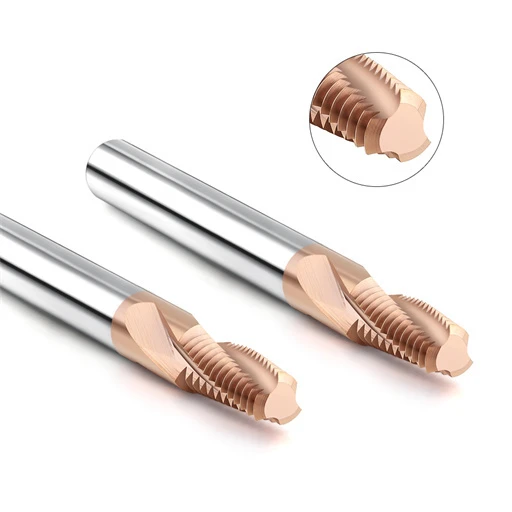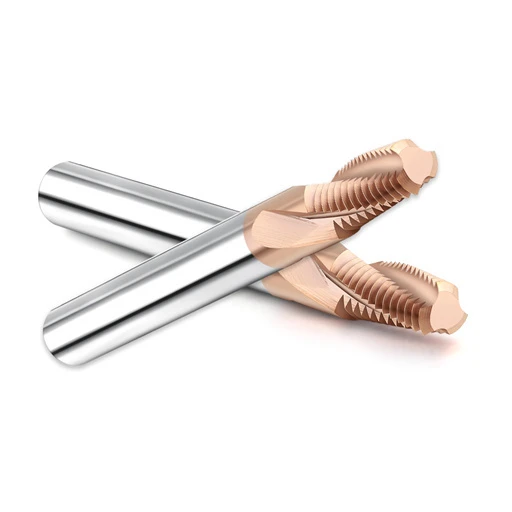

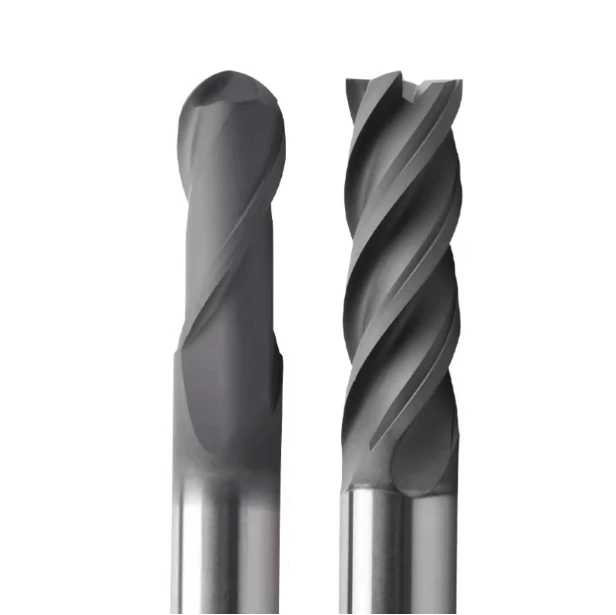
To be honest, in our tool lab, the biggest headaches never come from the 20mm roughing end mills. The real stress comes from those tiny diamond milling cutters—the ones under 1.0mm that sit nestled in velvet-lined cases like fine jewelry.
Last month, a client supplying graphite molds for a major European semiconductor manufacturer came to us with a “precision drift” nightmare. They were machining deep, narrow slots using standard milling cutters for graphite. After just six hours, the surface roughness at the bottom of the slots jumped from $Ra$ 0.2 to $Ra$ 0.8. In the world of micron-scale precision, that meant the entire block of expensive material was now scrap.
When we got on-site, we found the issue wasn’t the spindle—it was the specific diamond end mill cutter they had chosen. In micro-machining, a runout of even 3μm creates a catastrophic impact load on the edge. Many diamond milling cutter suppliers brag about coating hardness, but they forget to mention that for a 0.5mm tool, coating uniformity and substrate toughness are what actually keep you running through the night.
This isn’t just about swapping tools. As engineers with 15 years of experience, we know micro-machining is a tightrope walk between edge chipping and thermal failure. If you apply standard formulas or try to fix low feed rates by simply cranking the RPM, that expensive cutter will snap long before it shows its true wear resistance. We’ve distilled this “survival guide” from years of broken tools and ruined molds. After all, isn’t a chipped edge—visible only under a microscope—the ultimate source of professional stress?
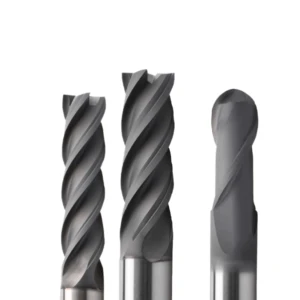
Why Do We Recommend Diamond End Mill Cutters Over Carbide for Micro-Machining?
When handling diameters under 1.0mm, we often get asked: “Carbide is a fraction of the price; why spend more on diamond?” From an engineering perspective, it’s not just about hardness. In the micron realm, carbide’s limitations are glaring. The cobalt binder in carbide softens under continuous friction, causing the cutting edge to deform microscopically. While a few microns of wear is negligible on a large tool, it is a total failure for a 0.5mm tool.
We guide clients toward the diamond end mill cutter to gain a physical “unfair advantage.” Diamond has an incredibly high Young’s modulus and a very low friction coefficient. This means that even at high speeds, the heat generated between the edge and the workpiece stays remarkably low. On a microscopic level, diamond stays sharp without the “edge rounding” common in carbide. If you want long-term, unattended automation, diamond is the only rational choice after a true cost-per-part analysis.
Solving “Edge Blunting” and “Annealing” in Sub-1.0mm Micro-Machining
Whether machining high-silicon aluminum or reinforced composites, we see a recurring pattern: micro-tools rarely fail from pure breakage; they fail from “thermal fatigue.” Because these tools are so small, they can’t dissipate heat. The heat builds up at the tip, inducing an “annealing effect” that turns a hard carbide edge as soft as butter. Once that edge dulls, cutting resistance spikes, and the tool snaps instantly under the radial load.
Our diamond milling cutters solve this by leveraging diamond’s natural thermal conductivity—the highest in nature. Diamond pulls heat away from the cutting zone and through the tool body almost instantly. This “cold cutting” prevents the chemical wear that destroys lesser tools. We’ve found that even in dry machining, the diamond surface prevents chips from “welding” to the edge. This thermal control keeps the tip sharp and stops the precision drift caused by heat-induced softening.
Case Study: Solving Micron-Level Tolerance Fluctuations in Aerospace Parts
A recent project involved a client in the aerospace sector machining electronic enclosures from abrasive graphite fiber composites. They needed to hold a strict $\pm$ 2μm tolerance over a 20-hour continuous cycle. With their original tools, they had to recalibrate tool offsets after every two parts. The dimensions drifted so much mid-run that their scrap rate was through the roof.
We stepped in and switched them to a custom diamond milling cutter. Because of the diamond’s superior wear resistance, we slashed the offset frequency from once every two parts to once every 100 parts. Diamond’s low affinity for the workpiece material kept cutting forces constant across every pass. We stabilized the tolerance band and proved a vital point: in ultra-precision work, trying to fix a tool’s performance issues with manual tweaks is a losing game. You need a tool that is inherently stable from the first cut to the thousandth.
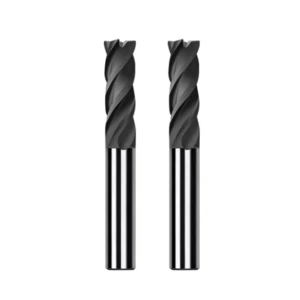
For Graphite Electrodes and Composites: Selection Logic for Micro-Diameter Graphite Milling Cutters
In our workshops, machining graphite is often called a “battle against dust and chipping.” This is especially true for complex mobile phone molds or ultra-fine EDM ribs. In these cases, your tool selection logic must change completely. While most people prioritize tool rigidity, we’ve found that chip-evacuation space is far more critical than sheer hardness. If your flute design is inadequate, graphite dust accumulates instantly, creating massive radial pressure. For a micro-tool, this leads to a “stalling fracture”—the tool snaps simply because it’s choked by its own dust.
We advise engineers selecting a milling cutter for graphite to find the sweet spot between the helix angle and edge sharpness. For diameters under 1.0mm, a large helix angle helps clear chips but weakens the tool tip. An angle that is too small, however, spikes your cutting forces. We’ve found that the secret to precision is matching the tool’s core diameter ratio to the specific grain size of your graphite. It’s not just about speed; it’s about ensuring cutting forces pull the material upward rather than pushing it laterally, which prevents the base of your electrodes from snapping.
Avoiding Chipping: Chip Evacuation Strategies for Sub-0.5mm Graphite Rib Machining
The biggest frustration in machining 0.5mm ribs is undoubtedly “rib chipping.” At the edge of a thin wall, even a tiny vibration can cause brittle graphite to spall. In our experience with 3C molds, simply slowing down the feed rate rarely works. The real solution is a “cascading” evacuation path. You need to force the chips out along a predetermined channel so they don’t get trapped and undergo “secondary grinding” within the narrow flute.
We’ve found that in micro-machining, the angle and position of your air blast matter more than the pressure. If the airflow doesn’t hit the tip of that 0.5mm tool directly, dust forms a hard “graphite cushion” at the bottom of the cut. This causes the tool to chatter as if it’s “dancing on stone.” We view chip evacuation as airflow management. By optimizing your tool path to ensure the cutter always meets fresh material, you eliminate the compressive forces that cause edge chipping.
The Coating Thickness Debate: Why “Thin and Dense” Wins for Micro-Diameter Tools
Many B2B buyers mistakenly believe that a thicker coating means better wear resistance. This is a dangerous trap in micro-machining. We once saw a client request a thicker coating for a 0.3mm tool to extend its life; the tool snapped the second it touched the workpiece. The reason? Excessively thick diamond coatings create a “dulling effect.” It increases the edge radius, turning a sharp diamond milling cutter into a blunt instrument that “squeezes” the material.
Our manufacturing standard is “thin and dense.” We use PVD to keep the coating as thin as a cicada’s wing while maintaining maximum crystal density. For a tool under 1.0mm, even 1μm of extra thickness can ruin the tool’s dynamics. This balance between toughness and sharpness is our secret weapon. It allows us to maintain the tool’s original geometry, ensuring you get the wear resistance of diamond without the catastrophic force spikes of a dull edge.
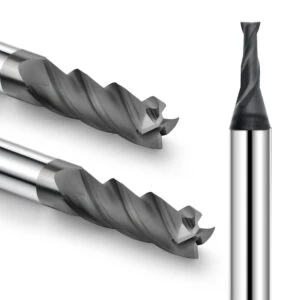
Preventing “Brittle Fracture” in Diamond Milling Cutters During High-Speed Machining
At high speeds, diamond tools behave more like ceramics than metals. Experienced operators often make the mistake of “feeling” for rigidity, but for a diamond end mill cutter, this is a recipe for disaster. Diamond is incredibly hard, but it is also brittle. It cannot handle abnormal lateral impacts. At high RPMs, the slightest machine vibration or spindle fluctuation will cause the coating to flake or the substrate to suffer a catastrophic “brittle fracture.”
To prevent this, you have to look at the system rigidity, not just the tool. Most fractures we see stem from the wrong tool-holding solution. Micro-tools generate high resonant frequencies. If you aren’t using high-precision shrink-fit or hydraulic holders to absorb these micro-vibrations, the diamond edge will fatigue and fail. We focus on “stress mitigation.” You must create the most stable mechanical environment possible to let the diamond’s wear resistance actually do its job.
Runout: The Silent Killer of Micro-Diameter Diamond End Mills
In micro-precision work, we are obsessive about runout. We often see customers complain about inconsistent tool life, only to find that their spindle runout exceeds 0.01mm. For a 0.5mm tool, that means one edge is taking 150% of the load while the other is “cutting air.” This imbalance destroys the tool in minutes.
Our rule is simple: runout must be under 1% of the tool’s diameter. Before you run a micro-tool, perform a full-cycle dynamic inspection. If you have runout, even the most expensive tool from the best diamond milling cutter suppliers will fail. Micro-machining is a game of precision; runout is the invisible killer that eats your profit. Fix your clamping accuracy, and you’ll find that diamond tools can last much longer than you ever expected.
Adjusting “Feed Per Tooth” at 40,000+ RPM: An Engineer’s Perspective
At speeds over 40,000 RPM, traditional charts are useless. At this speed, the “Feed Per Tooth” is so small that the tool can easily stop cutting and start “rubbing.” If your feed is too conservative, the tool just generates friction heat that destroys the diamond coating. If it’s too aggressive, the lateral force will snap the slender shank instantly.
We rely on auditory feedback and chip morphology. At 40,000 RPM, we listen for a clean, sharp sound and watch for consistent chip shape. This requires experience-based trade-offs. Sometimes, to hold a micron-level finish, we sacrifice speed and take more passes to ensure stability. In high-speed work, consistency is always better than raw speed. If the tool breaks, your “efficiency” drops to zero immediately.
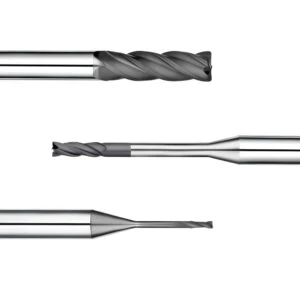
Evaluating Diamond Milling Cutter Suppliers: How B2B Clients Can Avoid Low-End Pitfalls
In B2B procurement, a low price is often a deceptive entry point. On the front lines of manufacturing, we’ve seen countless shops try to save on upfront costs by choosing suppliers that lack rigorous process controls. The true competence of a diamond milling cutter supplier isn’t in their marketing—it’s in the stability of their coating equipment and their substrate selection. Low-end suppliers often cut corners on adhesion treatments, leading to tool peeling or spalling in less than half a shift. The hidden cost of that downtime far outweighs any savings on the tool itself.
When vetting a partner, we prioritize “closed-loop” process control. A mature supplier must monitor everything: from the initial grind to the CVD and final edge honing. Don’t just accept hardness specs at face value. Ask their technicians how they test for coating stress relief and bonding strength. A trustworthy supplier will be honest about batch variations rather than promising “absolute perfection.” In precision manufacturing, candor about technical limits is much more valuable than a flawless data sheet.
Why We Insist on SEM Inspection Reports for Micro-Diameter Edges
In micro-machining, the naked eye can’t see the defects that kill a tool. We insist on SEM reports at 1,000x magnification or higher. At this level, diamond grain distribution, coating continuity, and micro-cracks become visible. For a diamond milling cutter under 1.0mm, a tiny clump of coating or a micro-chip at the tip becomes a stress point that leads to instant failure.
Through SEM imagery, we can see the interface between the diamond and the carbide. We’ve found that many low-cost tools—those sold without SEM inspection—have a “sawtooth” microstructure that creates massive friction in abrasive materials. Technical dialogue between engineers should be based on data. An SEM report isn’t just a certificate; it’s proof of a supplier’s confidence. We only entrust expensive workpieces to these miniature tools when we’ve seen the truth at the microscopic level.
Non-Standard Customization: Communication Strategies for Better Results
Standard catalogs can’t cover every “nightmare” scenario, especially deep, narrow slots with extreme length-to-diameter ratios. When you need a custom tool, don’t just send a tool drawing. Instead, tell your engineer about the “workpiece features” and the “machining environment.” Designing a custom diamond end mill cutter requires balancing variables like neck relief length, coating gradient, and damping designs tailored to your spindle rigidity.
We prefer discussing your specific “pain points”—is it poor chip evacuation or a failing surface finish? With that feedback, we can fine-tune standard designs, perhaps adjusting the helix angle or the honing radius. This is a technical partnership, not just an order. We need your feedback on vibrations or built-up edge (BUE); that data from your shop floor is the key to making a custom tool succeed.
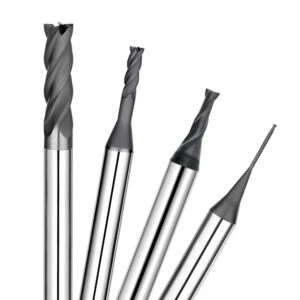
Optimizing Milling Cutter Lifespan: From Rigidity to Cutting Fluids
Tool life never exists in a vacuum; it is the final feedback of your entire “systems engineering.” If your cutters are wearing out prematurely, stop looking at the coating for a moment and look at your ecosystem. We often find that a client’s spindle runout has drifted, or their collets have suffered fatigue. In an environment lacking rigidity, even the best tools fail.
For micro-machining under 1.0mm, stability requires “micro-management.” If you are cutting abrasive materials, upgrade your clamping—switching to an ultra-high-precision hydraulic holder can filter out the high-frequency vibrations that snap diamond edges. Optimizing tool life is about eliminating variables. From machine geometry to the filtration purity of your cutting fluid, every detail shows up on the wear curve of your diamond milling cutter.
Micro-Machining Isn’t “Light Duty”: Balancing Forces and Structure
A common mistake is thinking that micro-machining involves negligible forces. In reality, with a 0.5mm tool, the ratio of overhang to diameter is so high that the unit stress on the edge often exceeds that of a much larger tool. This “asymmetrical loading” is why micro-tools snap. To fight this, we have to make precise trade-offs between core rigidity and chip evacuation space.
If you are machining deep cavities (L:D > 5:1), review your toolpaths. We recommend balanced strategies like trochoidal milling or “step-down” approaches to reduce the load on each tooth. The structural integrity of a micro-diamond tool has limits. A good engineer uses programming to prevent sudden force spikes. When the geometry and the trajectory are in harmony, the tool stays composed even in extreme conditions.
Shared Insights: Maintaining Stability in Coolant-Free (Dry) Environments
When cutting graphite or composites, we are often forced to run dry. In these cases, maintaining a diamond end mill cutter becomes an art form. If you’re worried about heat, focus on “airflow management.” Diamond is heat-resistant, but if chips aren’t evacuated, “secondary cutting” creates localized heat that destroys the coating bond.
Our secret is simple: use high-volume, constant-temperature compressed air for continuous purging. This keeps the cutting zone in “dynamic thermal equilibrium.” If you see discoloration or chips sticking to the tip, try reducing the spindle speed and increasing the depth of cut. This allows the chips themselves to carry the heat away from the part.
These insights come from years of late shifts and broken tools. Every project is unique. If you’re facing a tough material or an impossible toolpath, let’s talk. We’re here to help you find that stable, balanced solution.