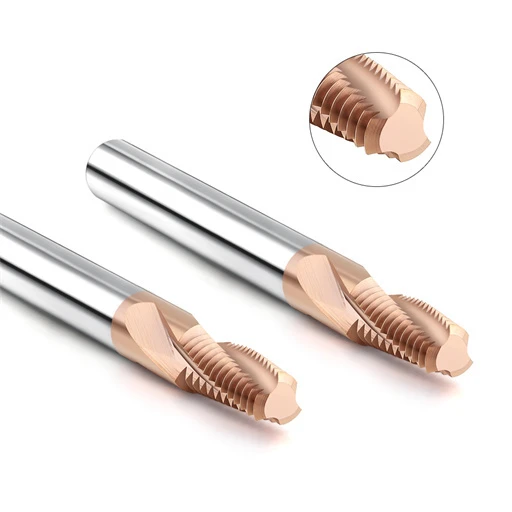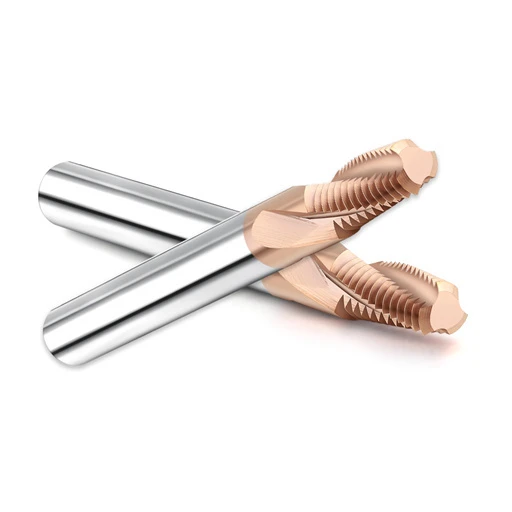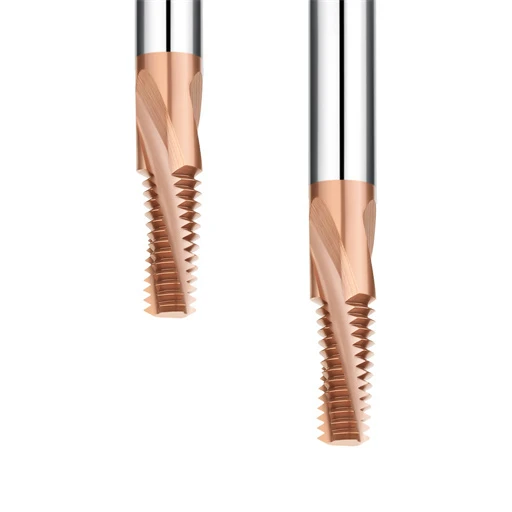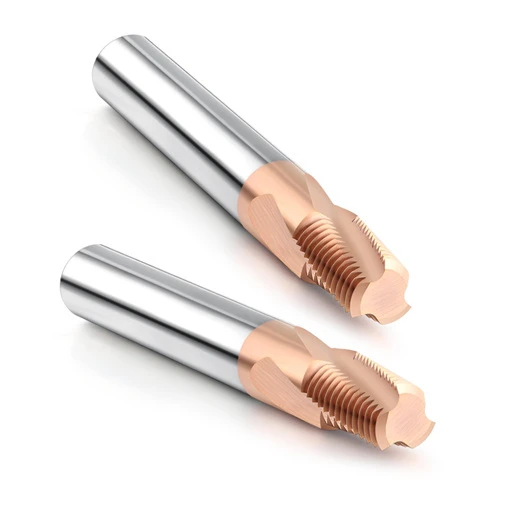
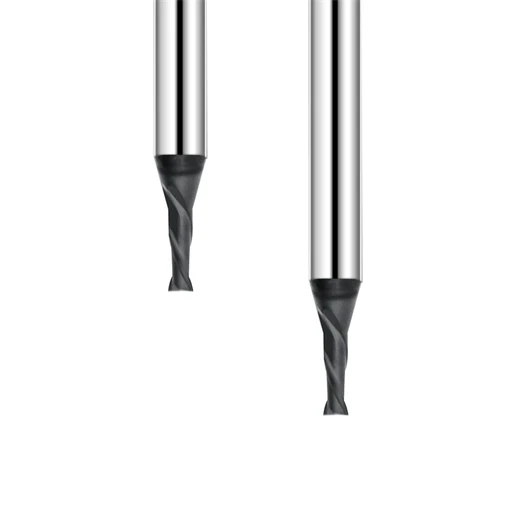
While engineering a graphite electrode machining solution for a European mold-making client, we encountered a classic shop floor dilemma. The client relied on high-speed machining centers to produce complex EDM graphite electrodes. However, their engineering team struggled to decide whether a 1-flute or 2-flute graphite end mill was the optimal choice for their operation.
Initially, they assumed more cutting edges yielded higher machining efficiency, so they standardized on 2-flute graphite end mills. In practice, severe graphite dust accumulation and poor evacuation quickly degraded performance. Accelerated tool wear caused severe edge chipping on delicate electrodes, ruining the final surface finish.
Conversely, other shops prefer a 1-flute graphite end mill because its large flute gullet maximizes dust evacuation. Yet in high-precision applications requiring maximum tool rigidity, 1-flute designs often struggle with stability and surface consistency. Balancing material removal rates with tight tolerances remains a persistent challenge for machinists.
Over two decades of serving mold makers and precision shops, we have seen this tooling frustration repeatedly. Most graphite machining failures do not stem from raw material difficulty. Instead, they result from mismatched tool geometry, improper flute count, and poorly tuned milling parameters.
There is no universal winner between single-flute and two-flute graphite end mills. The right selection depends on your specific graphite grade, slotting depth, cutting speed, feed rate, and vacuum dust extraction capability. Properly matching these variables guarantees cleaner cuts and significantly extends tool life.
In this guide, we leverage real-world CNC shop case studies to deliver a side-by-side comparison of 1-flute and 2-flute graphite end mills. You will learn how tool geometry, chip loads, and dust control impact electrode quality so you can optimize your high-speed graphite machining process.

Graphite End Mill Selection: Why Does the Number of Flutes Affect CNC Graphite Machining Results?
In our decades of supporting precision mold shops, graphite end mill selection remains a make-or-break decision for surface quality. Most shop managers focus heavily on diamond coatings or carbide grades. However, practical floor experience proves that flute geometry directly determines dust evacuation efficiency, edge wear, and cutting stability.
During high-speed finishing of complex EDM graphite electrodes, selecting the wrong flute count creates severe process bottlenecks. Graphite produces highly abrasive micro-fine dust rather than standard metal chips. Without adequate clearance, dust packs tightly into the cutting zone, triggering excessive friction, sudden heat spikes, and premature tool failure.
The Importance of Tool Geometry in Graphite Machining Systems
A graphite end mill never performs in a vacuum; it operates within a complete, interdependent machining ecosystem. Spindle dynamics, vacuum extraction velocity, workholding rigidity, and toolpaths all interact with tool geometry. Copying feeds and speeds directly from a tool catalog without evaluating your specific system often causes premature edge failure.
For instance, micro-milling delicate graphite electrodes requires maximum flute clearance and sharp cutting action to prevent corner chipping. Conversely, heavy roughing of large structural graphite molds demands higher core rigidity to withstand radial deflection. Selecting optimal geometry ensures your CNC graphite machining system stays reliable under tight tolerance demands.
Key Differences: 1-Flute vs 2-Flute Graphite End Mills
Choosing between 1-flute and 2-flute graphite end mills comes down to balancing chip space against tool core strength. A single-flute tool features a massive flute cavity that excels at throwing abrasive dust clear of deep pockets. This open geometry eliminates dust pack-out during high-feed deep slotting operations.
In contrast, a two-flute tool doubles the cutting edges per revolution, providing superior core strength and balanced cutting forces. This added rigidity minimizes vibration during light finishing passes on high-precision EDM graphite electrodes. Machinists should choose based on chip evacuation space versus required surface uniformity rather than speed alone.
How Flute Count Impacts Graphite Milling Parameters
Flute geometry directly governs how you program your spindle speeds, feed rates, and depth of cut (DOC). A single-flute tool requires a higher feed-per-tooth to maintain proper chip load and prevent rub-induced abrasive wear. Miscalculating chip loads on a single edge accelerates cutter dulling.
With a 2-flute graphite end mill, you can increase table feed speeds while sharing the cutting load across two distinct edges. However, engineers must carefully monitor axial engagement to prevent dust buildup inside smaller flute gullets. Mastering the balance between flute count and graphite milling parameters ensures consistent tolerances and longer tool life.
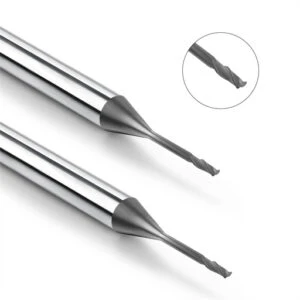
1 Flute Graphite End Mill: Advantages and Application Scenarios
In our experience engineering graphite tooling solutions, 1-flute tools consistently deliver superior process reliability for high-purity, fine-grained graphite. When machining delicate electrodes featuring deep cavities or slender ribs, shop floor priorities shift. Engineers care less about maxing out spindle speeds and focus more on controlling abrasive graphite dust, preventing edge chipping, and maintaining dimensional stability.
We recently assisted a precision mold manufacturer struggling with deep-slot EDM graphite electrodes. Their existing 2-flute cutters frequently clogged with fine debris, causing sudden tool breakage. By switching to a 1-flute graphite end mill, we expanded the chip gullet volume significantly. This modification stabilized dust extraction, eliminated thermal buildup, and dramatically extended tool life during long automated runs.
How the 1 Flute Graphite End Mill Enhances Graphite Dust Removal Efficiency
Effective graphite dust removal is essential for maintaining tight tolerances and protecting machine guide ways. Reducing the tool to a single cutting edge maximizes internal flute space. This expansive clearance enables vacuum extraction systems to pull abrasive dust out of the cut zone instantly before re-cutting can occur.
However, selecting a single-flute tool does not automatically guarantee perfect dust extraction. Evacuation performance relies on balancing spindle RPM, feed rate, radial depth of cut, and industrial vacuum air velocity. Even with an open 1-flute geometry, improper chip loads can still lead to localized dust packing and micro-chipping along delicate electrode walls.
Advantages of Single Flute Tools for Chip Evacuation in High-Speed Graphite Machining
During high-speed graphite machining, maintaining continuous tool engagement without secondary rubbing is vital. Unlike metals that form solid curled chips, graphite disintegrates into millions of abrasive micro-particles. If your tool lacks sufficient gullet capacity, these trapped particles cause secondary abrasive rub, generating heat and dulling the cutting edge prematurely.
A single-flute design features a ultra-deep chip channel that dramatically reduces particle dwell time inside the flutes. This structural edge gives machinists maximum process security during heavy roughing, aggressive slotting, and deep cavity clearing. While finishing passes may require higher edge counts, single-flute cutters dominate high-volume material removal.
Ideal CNC Graphite Machining Applications for Single Flute End Mills
Single-flute graphite end mills shine in high-dust applications where clearance takes priority over sheer edge density. They excel at roughing large EDM graphite electrodes, slotting deep channels, clearing micro-pockets, and driving high-feed cavity prep. Their open architecture prevents packing where multi-flute designs fail.
For complex 3D mold geometries, we recommend a hybrid machining strategy. Use an aggressive 1-flute graphite end mill to rough out bulk stock efficiently, then switch to a 2-flute tool for light, high-precision finishing passes. Prioritizing chip space during heavy cuts delivers a far more predictable and profitable machining process.
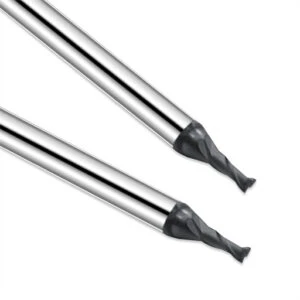
Analysis of Machining Advantages of 2 Flute Graphite End Mills
In our experience optimizing CNC graphite machining for precision mold shops, 2-flute graphite end mills are essential for high stability and consistent surface finishes. While many engineers focus heavily on dust evacuation, production realities demand equal attention to cutting force balance, vibration dampening, and micro-geometry control during semi-finishing and finishing passes.
We recently assisted a precision mold client struggling with finish consistency on small EDM graphite electrodes. They previously used 1-flute cutters, but subtle variations in radial engagement caused edge deflection and uneven surface textures. Switching to a 2-flute graphite end mill restored mechanical symmetry, smoothed out cutter engagement, and produced pristine, uniform surface finishes across entire production batches.
How 2 Flute Graphite End Mills Improve Surface Quality
Achieving an exceptional graphite surface finish depends on minimizing tool chatter and maintaining constant chip loads. The symmetrical 2-flute geometry distributes cutting forces across two opposing edges. This configuration halves the radial load per tooth, significantly reducing vibration during delicate contouring operations on fragile electrodes.
However, flute count alone cannot guarantee a flawless finish. We often see shops struggle with tool marks or corner chipping on 2-flute cutters due to improper feed-per-tooth settings or excessive axial depth. To maximize graphite milling surface quality, machinists must pair double-flute geometry with high spindle speeds and light radial step-overs.
Impact of the 2 Flute Design on Machining Stability and Tool Life
In continuous electrode production, cutting stability directly impacts process economics and scrap rates. Double-flute end mills offer a thicker core cross-section than single-flute tools. This added structural rigidity resists bending forces, making 2-flute designs far less prone to harmonic chatter during high-speed machining.
Sharing the work across two cutting edges also reduces individual thermal and mechanical shock. When supported by adequate vacuum shrouds to prevent dust re-cutting, this load distribution extends the functional tool life of graphite end mills. Balancing edge count with efficient dust extraction keeps cutting edges sharp much longer.
Are 2 Flute Graphite End Mills Better Suited for Finishing or Roughing?
Rather than labeling 2-flute tools strictly for roughing or finishing, we evaluate the specific machining stage and cavity depth. 2-flute graphite end mills excel at operations requiring strict dimensional tolerances—such as 3D profile finishing, rib detailing, and high-precision electrode sizing. Their inherent stability minimizes taper on vertical walls.
That said, 2-flute end mills can handle shallow roughing if the dust extraction system keeps pace. For deep-slotting or aggressive cavity clearing where dust pack-out is a risk, single-flute tools remain superior. Matching your tool selection to the specific stage of CNC graphite machining ensures the optimal balance of speed, surface quality, and tool stability.
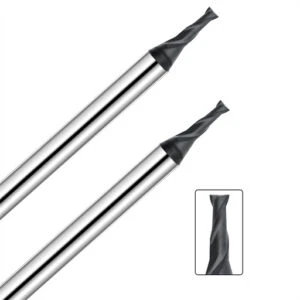
1-Flute vs 2-Flute Graphite End Mills: A Comparative Analysis of Key Performance
In our decades of optimizing shop operations, machinists constantly ask whether a 1-flute vs 2-flute graphite end mill is the superior choice. Floor experience proves there is no single right answer. Optimal performance depends on your specific graphite grain size, feature geometry, machining stage, and machine tool capabilities.
We once consulted for an electrode shop that tried standardizing on one single cutter geometry to simplify inventory. They quickly learned that 1-flute designs dominated deep-slot roughing, while 2-flute cutters were essential for ultra-precise finishing. Evaluating key performance metrics—dust evacuation, surface finish, parameter windows, and tool wear—is far more effective than forcing a one-size-fits-all tooling strategy.
Graphite Dust Removal: Comparing Dust Evacuation Capabilities
Graphite milling generates immense volumes of abrasive micro-dust that can instantly clog tool flutes and overload vacuum systems. Superior graphite dust removal requires maximizing flute clearance. Single-flute tools excel in heavy roughing and deep slotting because their open geometry allows high-velocity vacuum systems to clear dust immediately before re-cutting occurs.
By contrast, 2-flute end mills have smaller chip spaces that can pack with dust during deep engagement. However, for shallow finishing passes, a 2-flute cutter provides adequate clearance if supported by tuned vacuum airflow. Machinists must evaluate slot depth, material removal rate, and vacuum velocity rather than judging dust control on flute count alone.
Graphite Milling Surface Quality: The Impact of Flute Count on Surface Finish
In precision electrode production, achieving consistent graphite milling surface quality dictates spark erosion performance in the EDM die-sinker. Double-flute end mills naturally provide a more continuous cutting action. Sharing radial loads across two opposing cutting edges dampens harmonic chatter, producing smoother wall textures and sharper corner profiles.
However, using a 2-flute cutter does not automatically eliminate machining marks or edge chipping. If abrasive dust is allowed to pack inside the flutes, high friction will quickly degrade the cutting edges and ruin the surface finish. Achieving superior results requires matching tool geometry with balanced high-speed toolpaths and proper feed rates.
Graphite Milling Parameters: How Flute Count Affects Speed and Feed Settings
Optimizing graphite milling parameters requires understanding how flute geometry alters chip load calculations. Relying solely on generic manufacturer speed and feed charts often leads to premature cutter dulling or tool breakage. Single-flute and double-flute cutters of identical diameters require distinct operational windows.
A single-flute tool demands a higher feed-per-tooth to prevent the cutting edge from rubbing against abrasive graphite without cutting. Conversely, a 2-flute cutter allows higher total table feeds while maintaining a lighter individual chip load. Machinists must adjust graphite end mill speed and feed settings according to material hardness, radial engagement, and target tolerances.
Graphite End Mill Tool Life: Analysis of Tool Wear and Longevity
Extending graphite end mill tool life comes down to controlling thermal shock and abrasive edge wear. Tool life is not dictated by flute count alone, but by how well the cutter operates within its ideal environment. Carbide grade, diamond coating quality, parameter selection, and vacuum efficiency all play vital roles.
In high-dust, high-material-removal applications, 1-flute tools often last longer because they prevent friction caused by trapped dust. In stable, low-load finishing operations, 2-flute tools distribute edge wear evenly to maintain dimensional accuracy over longer cycles. Matching cutter geometry to your specific machining stage ensures maximum tool longevity and lower tooling costs.
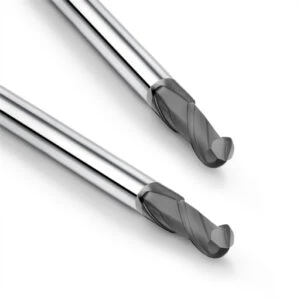
Graphite End Mill Speed and Feed: How to Adjust Parameters for 1 Flute and 2 Flute End Mills?
Parameter optimization is often the defining factor between tool success and sudden failure on the shop floor. Many machinists switch from a 1-flute to a 2-flute cutter without updating their speeds and feeds, leading to disappointing performance. A tool setup that runs reliably in fine-grain electrode graphite can suffer rapid corner chipping, chatter, or excessive dust pack-out when applied to high-density isometric grades.
Establishing reliable graphite end mill speed and feed parameters requires balancing edge count, material density, slot depth, and spindle stability. Single-flute and double-flute designs feature distinct chip space and cutting force dynamics. Engineers must tailor spindle RPM, table feed, and depth of cut to the specific tool geometry rather than relying on unverified catalogdefaults.
Recommended Speed and Feed Settings for 1 Flute Graphite End Mills
When running a 1-flute graphite end mill, parameter strategies must prioritize rapid dust evacuation and preventing secondary edge rubbing. Because a single-flute cutter provides a generous chip clearance gullet, machinists can safely increase feed rates during deep slotting and high-speed roughing without risking tool clogging.
For example, on a deep-pocket electrode project, increasing the feed-per-tooth eliminated dust re-cutting and dramatically stabilized tool life. Maintaining an aggressive chip load keeps the single cutting edge biting into fresh material rather than grinding against abrasive graphite dust. Fine-tune parameters based on tool overhang, machine rigidity, and vacuum velocity.
Recommended Speed and Feed Settings for 2 Flute Graphite End Mills
Programming 2-flute graphite end mills requires careful attention to cutting load distribution across both edges. In semi-finishing and finishing operations, parameters should favor edge balance and vibration reduction over raw material removal rates. Excessive feed rates on a double-flute tool can trigger chip overloading and edge micro-chipping.
For precision EDM electrode finishing, maintaining high spindle speeds with a slightly reduced feed-per-tooth minimizes tool deflection and machining marks. This balanced approach protects delicate electrode ribs while yielding a superior surface finish. Always monitor radial engagement to ensure dust clears the smaller flutes smoothly.
The Impact of RPM, Feed Rate, and Depth of Cut on Graphite Machining Results
Spindle RPM, feed rate, radial depth of cut (RDOC), and axial depth of cut (ADOC) interact constantly during graphite machining. Unbalanced graphite milling parameters are the primary cause of premature wear. Insufficient spindle speeds reduce cutting efficiency, while excessive feed rates overload fragile carbide edges, causing localized chipping.
Roughing passes should optimize axial depth to maximize material removal, whereas finishing passes require high RPM and light radial step-overs to ensure strict dimensional control. Optimizing parameters is not about finding a single rigid formula, but tuning variables to suit your exact machine environment. Are your current speeds and feeds tailored to your tool geometry?
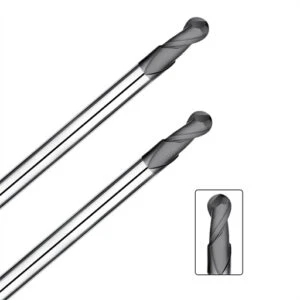
How to Select the Right Graphite Milling Cutter for a Graphite Machining System?
Throughout our decades in precision manufacturing, we often see shops assume that buying ultra-hard carbide or advanced diamond coatings resolves every machining challenge. In reality, cutter performance depends entirely on system-wide compatibility. The finest tool will fail if mismatched with your machine dynamics, workholding rigidity, or vacuum shroud velocity.
We once consulted for a European shop producing complex EDM graphite electrodes and mold inserts. Using a single cutter style for all passes caused inconsistent dust extraction, tool marks, and unpredictable tool life. Switching to stage-specific cutter strategies restored process stability, proving that holistic system compatibility is essential for successful CNC graphite machining.
Tooling Selection Strategies for EDM Graphite Electrode Machining
Engineering high-precision EDM electrodes requires balancing high material removal rates with delicate detail accuracy. Electrode designs often feature thin ribs, deep slots, and tight corner radii. Your graphite end mills must provide aggressive cutting action while eliminating harmful vibration.
Selecting the right cutter for EDM graphite electrode machining depends heavily on graphite grain size, feature depth, and spark erosion requirements. During initial roughing, prioritize large chip gullets and aggressive dust evacuation to clear bulk stock. For finishing passes, pivot toward maximum core rigidity, edge sharpness, and precise runout control to ensure flawless electrode geometry.
Tooling Selection Strategies for High-Precision Graphite Mold Machining
High-precision graphite mold machining demands superior surface repeatability and strict tolerance hold. Unlike standard electrodes, precision mold components cannot tolerate wall taper or surface gouges caused by tool deflection. Selecting geometry with high radial rigidity prevents chatter and keeps dimensions consistent across long cutting cycles.
We worked with a medical mold manufacturer struggling with micro-cavity surface finishes despite using premium tool materials. Their cutter geometry lacked the necessary vibration dampening for high-RPM finishing. By optimizing cutter diameter, flute count, and step-over parameters, we eliminated surface chatter and stabilized their precision graphite mold machining process.
Selecting the Number of Flutes for Roughing, Semi-Finishing, and Finishing
Optimal flute selection changes as your part progresses through each production stage. Roughing demands maximum chip clearance to pull abrasive dust out of deep cavities. Semi-finishing requires a balance between stock removal and dimensional stability, while finishing prioritizes edge continuity, fine surface texture, and tight tolerances.
For roughing complex EDM graphite electrodes, single-flute tools excel at driving fast stock removal without clogging flutes. For final semi-finishing and finishing, switching to a 2-flute cutter provides the symmetry and stability needed for mirror-like wall finishes. Aligning flute count with each machining phase optimizes throughput, extends tool life, and reduces scrap rates.
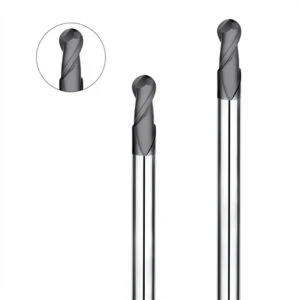
Graphite Milling Cutter Manufacturer: How to Choose a Professional Manufacturer?
Throughout our experience troubleshooting graphite machining bottlenecks, performance failures usually trace back to one core factor: whether the cutter manufacturer truly understands application requirements. Choosing between 1-flute and 2-flute designs involves balancing dust clearance, surface finish, and tool life. A qualified supplier must engineer geometries around these exact graphite material behaviors.
When selecting a graphite milling cutter manufacturer, evaluate engineering support over sticker price alone. A technical supplier should analyze your specific graphite density, spindle capabilities, vacuum velocity, and electrode geometries. If your shop struggles with edge chipping or premature wear, you need an application-driven partner who can optimize the entire machining system.
Technical Capabilities Required for a Graphite Machining Tool Manufacturer
A specialized graphite machining tool manufacturer must offer far more than standard catalog inventory. Because graphite is extremely abrasive and prone to micro-chipping, tool makers must master edge hone consistency, flute polished finishes, and clearance angles tailored specifically for powdery chip formation.
Look for a long-term supplier that actively optimizes geometries based on real-world floor feedback. When evaluating recurring machining failures, a capable engineering partner analyzes grain size, toolpaths, and vacuum airflow rather than simply swapping part numbers. This application-first approach ensures stable, repeatable production runs.
Selection Criteria: Carbide vs Diamond Coated Graphite End Mills
Choosing between uncoated carbide and diamond coated graphite end mills depends on your production volume and precision targets. Micro-grain carbide end mills offer lower upfront costs for small-batch prototyping or short-run electrode prep. However, continuous high-speed machining rapidly dulls raw carbide edges due to graphite’s high abrasiveness.
For high-volume production of EDM electrodes, diamond coated graphite end mills deliver unmatched wear resistance and edge retention. Diamond coatings maintain strict corner radii over long cutting cycles, preventing wall taper and ensuring part consistency. Balancing coating investment against total tool life yields the lowest cost per part.
The Impact of Tool Geometry on Graphite Machining Performance
Even with identical carbide substrates and coatings, subtle differences in cutter geometry dramatically alter machining performance. Achieving superior results requires a precise balance of rake angles, helix angles, edge hones, and flute gullet capacity. Optimized geometry reduces cutting pressure while preventing thermal buildup.
When machining deep-slot graphite electrodes or complex mold cavities, select geometries engineered for micro-dust evacuation. Properly designed flute channels prevent abrasive dust re-cutting, protecting cutting edges and improving wall surface quality. Sharing your drawings, material grades, and machine specs with your tool manufacturer ensures the ideal geometry match.

FAQ: 1 Flute vs 2 Flute Graphite End Mills
In our technical support calls with precision mold makers and electrode shops, choosing the correct flute count is a constant discussion point. Engineers often wonder why a 1-flute cutter runs smoothly on one job, while a 2-flute cutter is required for surface finish on another. The answer lies in matching tool geometry to your specific machining targets.
This FAQ section draws on two decades of floor experience in CNC graphite machining. Below, we address key questions regarding dust clearance, surface quality, and stage-specific tool selection so you can optimize your high-speed milling operations.
Is a 1 Flute End Mill Better for Graphite Machining?
A 1-flute graphite end mill is ideal for heavy material removal, aggressive deep slotting, and high-dust cavity prep. Its single expansive flute gullet provides maximum dust clearance space. This open architecture prevents dust pack-out and heat buildup during deep cuts.
However, a single-flute cutter is rarely optimal for ultra-precise finishing passes on fragile electrode walls. Choosing between 1-flute and 2-flute designs depends on feature depth, target surface roughness, and vacuum shroud velocity rather than picking a single universal tool.
Is a 2 Flute Graphite End Mill Better for Finishing?
Yes, a 2-flute graphite end mill generally excels during semi-finishing and final contouring passes. Featuring two opposing cutting edges, it balances radial cutting forces and dampens harmonic chatter. This structural symmetry minimizes micro-chipping along delicate electrode ribs.
Even so, achieving flawless finishes requires more than just two flutes. Machinists must fine-tune spindle RPM, feed-per-tooth, and step-over values while maintaining effective dust extraction. Proper parameter management ensures consistent, mark-free wall surfaces across large batch runs.
What Is the Best Flute Number for Graphite Cutting?
There is no single “best” flute count for all graphite machining applications. Single-flute tools dominate heavy stock removal and deep slotting where chip clearance takes top priority. Two-flute tools dominate precision finishing where stability, core rigidity, and surface texture matter most.
Instead of standardizing on one flute count, we recommend a multi-stage tooling strategy. Use single-flute tools for roughing out bulk material quickly, then switch to two-flute tools for high-precision finishing. This process balance yields maximum efficiency and lower scrap rates.
How Does Flute Number Affect Graphite Dust Removal?
Flute count directly impacts internal gullet volume, which governs graphite dust removal efficiency. Single-flute designs provide significantly larger dust clearance pathways, allowing vacuum extraction systems to pull abrasive particles clear before re-cutting occurs.
While 2-flute tools offer smaller dust pathways, they perform reliably in shallow cuts under strong vacuum airflow. Effective dust control requires pairing the proper flute geometry with tuned spindle speeds and adequate vacuum shroud suction.
Which Graphite End Mill Is Best for CNC Graphite Machining?
The best cutter for CNC graphite machining is the one tailored to your specific material grade and part geometry. For roughing large EDM electrodes, prioritize high-clearance 1-flute end mills with diamond coatings. For thin-rib finishing, select rigid 2-flute end mills engineered for tight runout control.
To identify your ideal setup, evaluate your machine rigidity, dust collection velocity, and surface finish specs. Sharing part prints and graphite specs with your tooling partner ensures a fully optimized machining system.