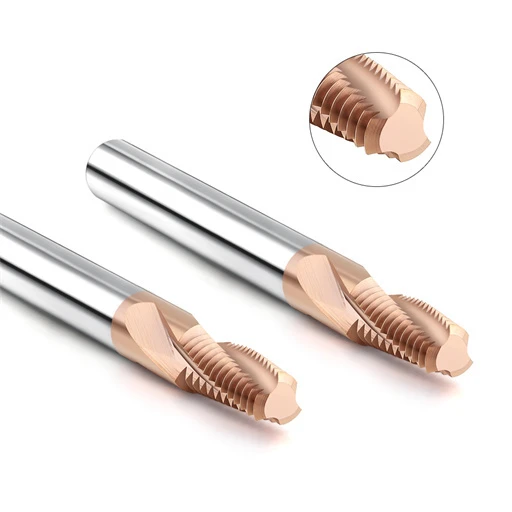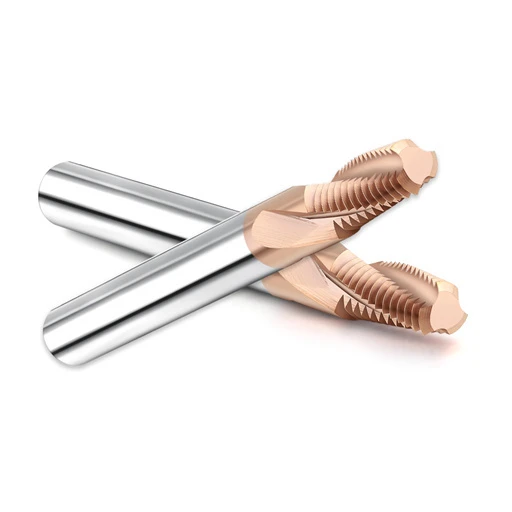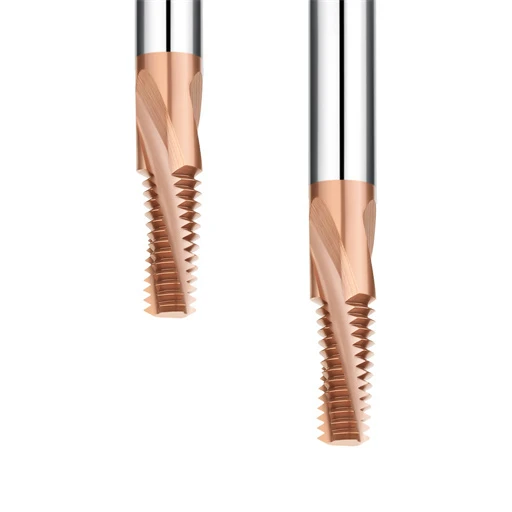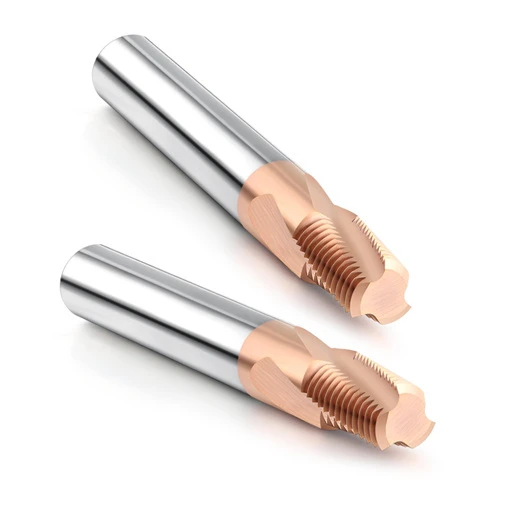

Last month, a long-standing North American precision mold manufacturer reached out to us in a panic. Their CNC programmers were hitting a wall while machining a batch of Cr12MoV mold steel hardened to HRC62. Due to the extreme hardness, standard drill bits emitted a piercing screech and failed after fewer than two holes, suffering catastrophic edge chipping at the outer corners. As cutting tool engineers with over 15 years of hands-on shop floor experience, we have seen countless Western clients pay a heavy price for choosing the wrong supplier and attempting to machine hardened steel with substandard tools.
When facing machining challenges involving such extreme hardness, conventional catalog-buying criteria always fail. You do not need a run-of-the-mill wholesaler; you need a dedicated carbide drill bits for hardened steel factory that truly understands material science and cutting geometries. After all, a premium solid carbide drill bits for hardened steel determines your spindle load and cycle efficiency in seconds, whereas a cheap tool can instantly destroy hours of expensive EDM or milling work.
Based on years of process optimization, we have distilled a fundamental rule: for consistent success in drilling high-hardness metals (HRC55 to HRC65), even a one-micron deviation in base material or coating will be exponentially magnified on your VMC. So, when evaluating the true technical capabilities of a manufacturer specializing in carbide drill bits hardened steel, what hardcore indicators should you actually look for?
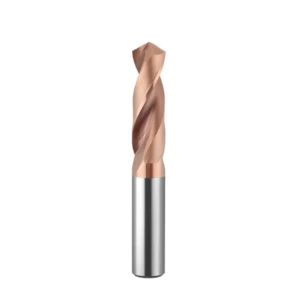
Core Material Selection: Does the Manufacturer Possess Top-Tier Base Material for HRC65 Carbide Drill Bits?
We often say on the shop floor that a cutting tool’s performance ceiling is determined by the DNA of its base material. When drilling into hardened steel exceeding HRC60, any minute internal defect will cause instant structural failure under immense cutting stress. When selecting our rod suppliers, we look beyond basic hardness figures; we prioritize ultra-pure tungsten carbide powder and uniform sintered density.
In actual production, we prefer base materials characterized by low magnetic saturation and high Transverse Rupture Strength (TRS). This requires absolute precision in temperature control during our vacuum low-pressure overpressure sintering (HIP) process. Only solid carbide rods produced this way can maintain thermal shock stability and resist mechanical fatigue at the cutting tip under heavy-duty loads.
Ultra-fine/Nano-grain Rods vs Standard Carbide: Our Chip-Resistance Test Results in HRC65 Hardened Steel Drilling
In our cutting laboratory, we conducted a tool longevity test on HRC65 SKD11 die steel under rigorous dry-cutting conditions. Standard micro-grain drill bits suffered microscopic chipping at the outer corner by the second hole, failing under the intense compressive forces. In contrast, our specialized hrc65 carbide drill bits made from nano-scale rods ($0.2\mu\text{m}–0.4\mu\text{m}$ grain size) retained exceptional edge integrity under the microscope.
The physics is simple: finer grain sizing means tighter spacing between tungsten carbide particles, yielding a superior balance of hardness and toughness. When machining quench-hardened steel, the cutting edge undergoes intense impact against a hard martensitic microstructure with every rotation. Our testing data reveals that this high-density substrate ensures stable cutting performance and significantly reduces sudden tool breakage.
Why Genuine Manufacturers of Solid Carbide Drills for Hardened Steel Must Strictly Maintain the 10%–12% Cobalt Balance
Process engineers in many Western workshops often fall into the trap of believing that for materials exceeding HRC60, the drill bit should be as hard as possible. This leads them to blindly demand lower cobalt content from their suppliers. However, our R&D shows that if cobalt content drops below 8%, tool brittleness increases sharply, causing a catastrophic brittle fracture inside the hole during high-feed operations.
Conversely, if cobalt content exceeds 12%, the tool gains toughness but its red hardness and wear resistance suffer significantly, leading to rapid plastic deformation at high temperatures. Consequently, we consistently maintain the cobalt content of our solid carbide drill bits for hardened steel within a strict 10%–12% balance range. This ratio preserves sufficient impact toughness while ensuring high compressive strength on the shop floor.
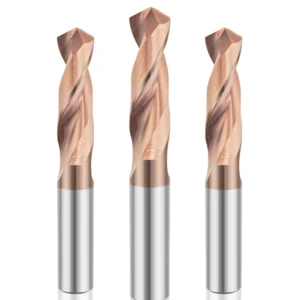
Geometric Edge Design: How a Top-Tier Manufacturer of Carbide Drills for Hardened Steel Optimizes Cutting Edges
If the raw rod material determines a tool’s endurance, then its edge geometry directly dictates its cutting performance upon contact. When machining hardened steel, mechanical and thermal stresses are several times greater than in standard operations. Standard sharp drill bits fail catastrophically against ultra-hard workpieces because an edge that is too thin is prone to instant plastic deformation or micro-chipping.
To balance chip resistance with smooth cutting, we apply a micron-level negative chamfer (K-Land) or edge honing to the primary cutting edge. These microscopic adjustments effectively redirect cutting forces away from the fragile tip and into the rigid body of the tool. For us, optimizing geometry is engineered from observing chip formation and analyzing cutting sounds directly in customer workshops.
140° Point Angle and Special Split Point: A Geometric Solution for Centering Drift
Last year, a German client machining through-hardened drive shafts experienced frequent centering drift caused by the chisel edge, resulting in out-of-tolerance holes. The chisel edge on standard drill bits has virtually no cutting capability; it simply crushes material, which is disastrous above HRC60. We solved this by introducing a special split point that reduces chisel edge length and incorporates a positive rake angle for genuine self-centering.
At the same time, we decisively abandoned the traditional 118° point angle in favor of a fixed 140° angle. A large point angle shortens transition time as the cutting edge enters the workpiece and concentrates cutting forces axially. Combined with a rigid cross-shaped centering edge, our carbide drill bits for hardened steel achieve stable centering instantly without needing a pilot center drill.
Micron-Level Control of the Relief Angle: Eliminating Severe Friction and Screeching Noises When Drilling Hard Steel
A piercing screech inside a hole is almost always caused by severe friction between the relief face and the hard workpiece surface. Designing tools for ultra-hard steel presents a major challenge when choosing the relief angle. If the relief angle is too large, the cutting edge lacks rear support and chips under heavy loads; if it is too small, the relief face rubs aggressively against work-hardened surfaces.
To resolve this, we employ a primary and secondary relief angle design using 5-axis CNC grinders. We restrict the primary relief angle to 6°–8° for rigid rear support, while increasing the secondary relief angle for unobstructed chip evacuation. Thanks to this precision, our carbide drill bits hardened steel operate with a smooth, steady sound and significantly reduced mechanical stress.

Coating Processes and Equipment: Evaluating the Core Technical Capabilities of a Carbide Drill Bit Factory for Hardened Steel
In modern high-hardness machining, coating technology bears nearly half the burden of resisting wear on the tool surface. When drilling into hardened materials, localized temperatures at the contact zone often spike above 800°C. If a carbide drill bits for hardened steel factory relies solely on outsourced coating or low-end equipment, it cannot form a high-adhesion protective film, causing coatings to peel off in sheets during deep-hole drilling.
To ensure stability, we utilize high-end, in-house PVD coating furnaces rather than outsourcing. Assessing a manufacturer requires evaluating their ability to fine-tune the coating interface, control the nano-multilayer structure, and minimize surface particulate defects. Only by integrating the substrate with the composite film layer can we create an impenetrable thermal armor capable of withstanding extreme drilling wear.
From TiAlN to nACo Nano-Coatings: Real-World Data on Protecting Solid Carbide Drill Bits for Hardened Steel in High-Heat Machining
Standard Titanium Aluminum Nitride (TiAlN) coatings fail when US clients machine cold-work die steels exceeding HRC60 at high spindle speeds because they quickly reach their red-hardness limits. Subsequently, we integrated nACo (Nano-composite Coating) into our R&D. Composed of nanocrystalline TiAlN and amorphous Si3N4, this super-hard thin film raises oxidation resistance to 1,100°C and achieves a nanohardness of 45 GPa.
In dry-drilling tests on HRC62 steel, conventional coatings showed significant edge dulling by the 15th hole due to high-temperature chemical diffusion. In contrast, our solid carbide drill bits for hardened steel featuring optimized nACo remained intact after 40 consecutive holes, displaying only normal signs of friction. This real-world data confirms that nanocomposite film prevents thermal softening in extreme heat.
Edge Preparation (Before Coating): The Hidden Process Determining the Lifespan of HRC65 Carbide Drills
Many workshop supervisors focus solely on coating grade and color, overlooking a hidden process that critically affects tool life: edge preparation. When a drill comes off a 5-axis grinding machine, its cutting edge is microscopically riddled with jagged burrs and micro-cracks. If coated directly, these defects are encapsulated; once machining begins, the detaching burrs tear the coating away, leading to immediate edge chipping.
Therefore, prior to coating, we precisely hone the cutting edge using nylon brushing, drag finishing, or abrasive blasting to create a micron-scale, slightly rounded profile. This eliminates stress concentration and creates a superior interface for coating adhesion. This specialized preparation is the true secret behind extending the lifespan of our hrc65 carbide drill bits and ensuring stable cutting performance.
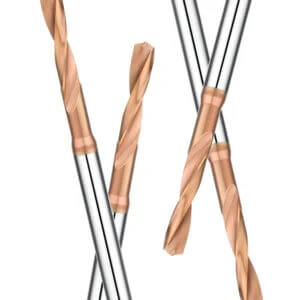
Inspection and Quality Control: How a High-Quality Carbide Drill Bit Factory Conducts “100% Inspection” Before Shipment
In the tool manufacturing industry, producing a single high-precision sample is easy; the real challenge lies in ensuring that thousands of tools possess identical cutting longevity during mass production. When your CNC operators leave machines running unattended overnight, any tool harboring a microscopic defect becomes a ticking time bomb. Therefore, a qualified carbide drill bits for hardened steel factory must never rely solely on random sampling for quality control.
In our quality control department, pneumatic gauges, laser microscopes, and fully automated vision measuring systems operate around the clock. We strictly inspect parameters for every finished tool, including shank diameter tolerances, flute lengths, and cutting edge symmetry. We understand that high-end clients demand predictability; our exhaustive, 100% inspection protocols exist to eliminate every variable of uncertainty from your production line.
Micron-Level Runout—A Top Priority for Western Clients: How We Keep It Under 0.002mm Using German Inspection Equipment
Western process engineers are extremely sensitive to one specific metric: radial runout. When drilling hardened steel, if runout exceeds 0.005mm, the extreme material hardness causes uneven forces on the cutting edges, leading to premature corner chipping. To strictly limit cutting edge runout to within 0.002mm, we utilize German-made Zoller tool presetting and measuring machines for our 100% inspections.
In practice, we place the sharpened drill bits into high-precision hydraulic inspection chucks to simulate actual spindle operation during non-contact laser scanning. By adjusting grinding wheel dressing parameters at the micron level, we ensure that both main cutting edges maintain highly coincident paths during rotation. This exceptional force symmetry across the solid carbide drill bits for hardened steel significantly reduces machine tool spindle vibration.
Visual Screening for Microscopic Cutting Edge Defects: Preventing Sudden Tool Failure on Machining Centers
When a tool suffers a sudden, brittle fracture while drilling hardened steel, the primary hidden culprit is often micro-cracks left during the sharpening process. These microscopic defects, concealed beneath the coating, are invisible to the naked eye and easily missed by standard low-magnification loupes. To solve this, we integrated a high-resolution industrial optical imaging system to examine the microscopic topography of our carbide drill bits hardened steel.
Through ultra-high-definition image analysis at over 100x magnification, we can clearly detect minute thermal stress cracks or tiny edge serrations caused by wheel wear. Any tool failing to meet our microscopic edge quality standards is immediately rejected and barred from entering the PVD coating furnace. This rigorous visual screening successfully minimizes the risk of sudden tool breakage caused by microscopic stress concentrations on your multi-axis CNC machines.
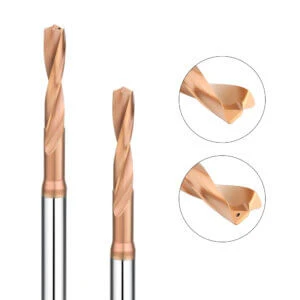
Technical Support Capabilities: Choose a Carbide Drill Bit Manufacturer That Can Engage in In-Depth Dialogue with Your CNC Engineers
When selecting a long-term carbide drill bits for hardened steel factory, the ultimate differentiator lies in the manufacturer’s engineering support. A supplier that merely matches orders against a standard catalog—without understanding your actual cutting conditions—cannot assist when dealing with extremely hard materials. Shop floors have too many variables; machine rigidity, tool holder clamping force, and toolpath adjustments directly impact performance.
If you are facing frequent edge chipping due to uneven workpiece hardness, or struggling to program a new material, please contact our application engineering team. A capable manufacturer should stand alongside your CNC programmers, reviewing blueprints and discussing machining details using the practical language of the shop floor. We provide comprehensive technical backing, from optimizing clamping solutions to fine-tuning chip evacuation paths.
A Real-World Case Study: Customizing Non-Standard Step Drills for a US/European Buyer—Delivering Machining Solutions, Not Just Tools
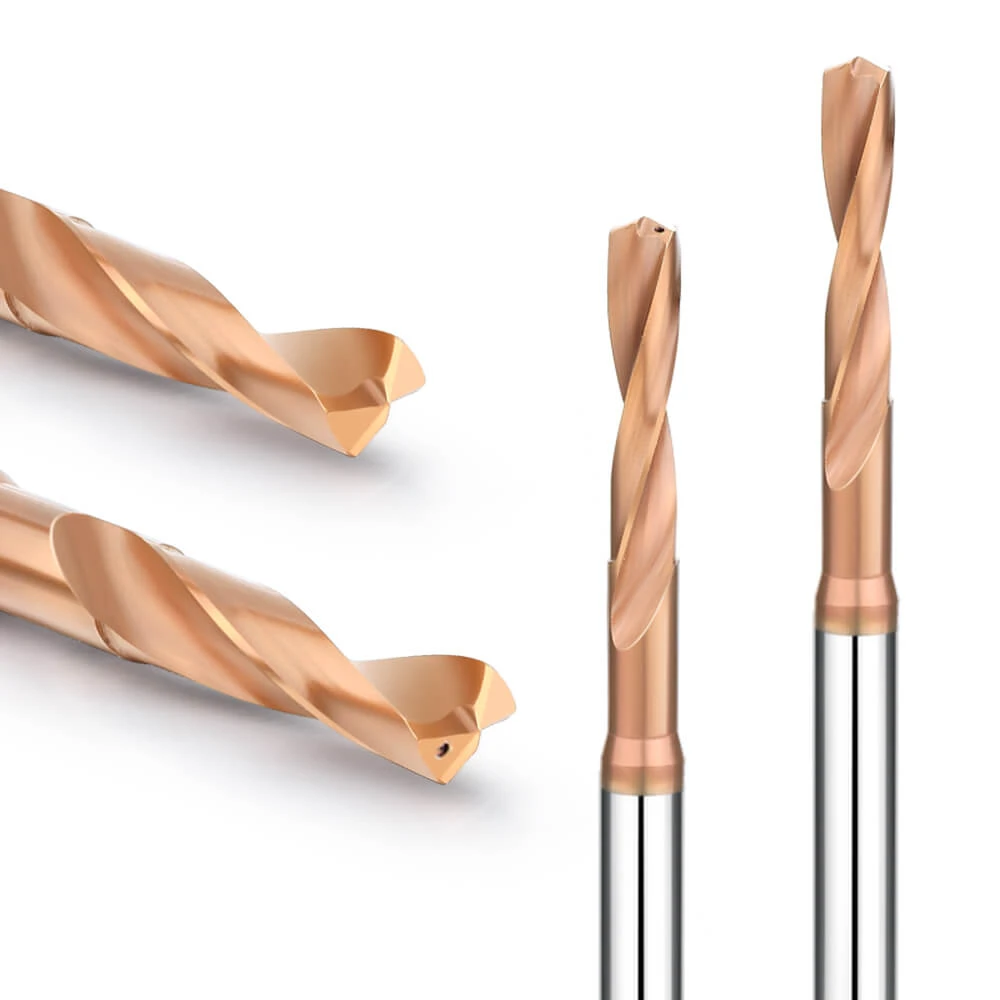
Last quarter, an aerospace manufacturer approached us because the coaxiality of a stepped hole in hardened steel consistently failed to meet blueprint specifications using standard tools. This resulted in high scrap rates and excessively long production cycles. After a detailed assessment of their part drawings, we custom-designed a solid carbide drill bits for hardened steel application featuring two steps and optimized edge honing.
This custom stepped drill completed the complex hole machining—a task that previously required three separate operations—in a single pass. It ensured precise coaxiality tolerances for the multi-stage holes while reducing the machining cycle time per part by nearly 40%. If you are struggling with machining bottlenecks involving special cavities or non-standard point angles, simply send us your workpiece blueprints and specific hole specifications.
Optimized Cutting Parameters (Speeds and Feeds) for HRC55–HRC65 Hardened Steel: No More Blind Trial-and-Error on the Shop Floor
When drilling ultra-hard materials, the window for optimal cutting speed (Vc) and feed rate (f) is extremely narrow, leading many workshops to resort to blind guesswork. In our dedicated cutting laboratory, we have conducted thousands of tool-life matrix tests on martensitic hardened steels of various hardness levels. We know that a feed rate that is too low leads to severe work hardening, while one that is too high causes instant mechanical overload.
If you are currently relying on guesswork or notice abnormally rapid tool wear, please provide us with your specific material grade, spindle RPM limits, and coolant pressure. Drawing on our core cutting database built over 16 years, we will provide you with precise recommended speeds and feeds for your hrc65 carbide drill bits. Let us help you eliminate the frustrating, costly cycle of wasting tools and scrapping material through trial-and-error.