
Last month, a long-standing automotive client in the US Midwest sent us an urgent email. While using our tungsten carbide drill bits for metal to drill quenched-and-tempered 4140 steel (HRC 32–35), their tool life suddenly plummeted. A process normally stable at 800 holes crashed completely, with some drills suffering catastrophic failures inside the hole after drilling just 300 holes.
This is by no means an isolated incident. Over the past 15 years of providing technical support and wholesale tungsten carbide drill bits to Western clients, we have repeatedly encountered these baffling on-site failures. Most machine shops only realize the severity of the problem after tool breakage scraps high-value workpieces or inflicts severe collateral damage on precision CNC spindle bearings.
In reality, the extreme hardness of cemented carbide is a double-edged sword. While it grants the tool exceptional cutting efficiency, it lacks the ductility found in high-speed steel (HSS) or cobalt drills. When minor wear develops on the flank or micro-chipping occurs on the cutting edge, cutting forces and spindle loads spike exponentially.
As a manufacturer specializing in premium china tungsten carbide drill bits, we know that determining when to regrind is a process requiring precise quantification. If your operators wait until the spindle screams and the chips turn black before changing tools, you ruin a premium drill that could have been reground 3–5 times. When machining tungsten carbide drill bits metal applications under high-load conditions, does your shop enforce a strict, quantifiable tool-change standard based on a flank wear threshold like a VB value of 0.2 mm?
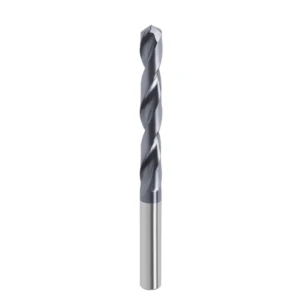
Insights from Western Workshop Technical Support: Why Shouldn’t We Wait for Tungsten Carbide Drill Bits Metal to Snap Completely Before Changing Them?
After working with Western workshop supervisors and manufacturing engineers for over a decade, we’ve noticed a fascinating trend. Many highly skilled veteran machinists still tackle high-hardness CNC setups using habits formed back in the HSS days. They run the tool until it literally refuses to cut or snaps off in the hole. This “run-to-failure” mindset is a recipe for disaster when dealing with tungsten carbide drill bits metal. Solid carbide is inherently hard and brittle; it resists thermal softening beautifully, but it absolutely lacks ductility, meaning its failure mode is sudden fracture rather than gradual deformation.
We have diagnosed countless production lines derailed by this exact issue. When a solid carbide drill operates with severe wear, it is running under massive fatigue and overload. Not only does the hole wall’s surface roughness spin out of spec, but the spiking cutting resistance means the tool body can shatter instantly from the slightest vibration. In our machining philosophy, a tool change isn’t about squeezing out the absolute last second of tool life. It is about locking in process reliability, protecting your setup, and maintaining strict dimensional consistency across parts.
A Common Misconception Among Western Customers: “The Machining Sound Hasn’t Changed” Doesn’t Mean the Tungsten Carbide Drill Bits Don’t Need Regrinding
In our daily technical support emails, customers frequently tell us, “Our operators are monitoring the machine closely. The drilling sound is crisp, and the spindle load looks normal, so why stop production now?” Frankly, this is one of the most deceptive technical traps on the shop floor. When drilling stainless steel or tough alloys, advanced coatings like TiAlN or AlCrN do an incredible job of masking heat. Even when the cutting edge develops flank wear, high-pressure through-tool coolant muffles the friction, meaning the acoustic feedback from the machine barely changes.
However, once you pull those tungsten carbide drill bits and inspect them under a tool microscope, the reality becomes clear. The micro-geometry of the cutting edge has already degraded from a clean shearing action to a brutal, plowing force that relies entirely on machine rigidity. This friction triggers rapid work hardening right along the walls of the drilled hole. Relying on an operator’s ear means you miss the prime window for a cost-effective regrind. An edge that could have been restored by kissing off just a few microns now requires grinding away a full millimeter, drastically slashing the tool’s total service life.
Insights from 16 Years of Shop Floor Experience: Cost Analysis of Scrap and CNC Spindle Damage Caused by Delayed Tool Replacement
Let’s look at the hard math of shop floor financials. When a machining cell drops because a tungsten carbide drill bits for metal snaps, your loss reaches far beyond the price of that single tool. Broken carbide fragments left inside a hole are incredibly hard and often impervious to standard extraction methods, meaning high-value aerospace valve bodies or precision molds end up straight in the scrap bin. Worse yet, if that failure happens during a multi-axis setup or an automated “lights-out” shift, the sudden impact force channels directly back into the CNC spindle.
In the worst field cases we’ve audited, the moment a tool jams or snaps, the Z-axis feed load spikes past 200% within a fraction of a millisecond. This intense shock load frequently causes microscopic pitting or deformation in the spindle’s precision ceramic bearings. Weeks later, the shop faces excessive spindle runout and mystery chatter marks on finished surfaces, forcing a costly spindle rebuild. Jeopardizing a $30,000 spindle just to squeeze an extra 30 seconds out of a tool cycle makes zero sense from a technical or economic standpoint.
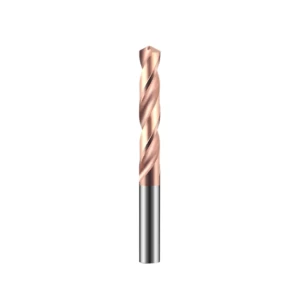
A Field Visual Inspection Guide for Engineers: Accurately Identifying Four Typical Wear Patterns on Tungsten Carbide Drill Bits
You cannot expect CNC operators to run to a laboratory microscope before every single tool change. That is why having a practical, floor-ready visual inspection routine is absolutely critical for your shop. In our years of analyzing tool failures, we have found that carbide edge breakdown follows very predictable patterns. By using the naked eye paired with a simple 10x or 20x pocket magnifier, any machinist can quickly evaluate edge discoloration, micro-fractures, and chip geometry to determine if those tungsten carbide drill bits are experiencing normal wear or nearing a catastrophic limit.
We always tell shop-floor process engineers that true tool inspection goes beyond just staring at the cutting lip; you must read the chips and listen to the machine. The moment your smooth, tightly curled silver chips transform into jagged, dark fragments or serrated ribbons, the cutting physics have broken down. Catching these indicators directly at the machine enclosure allows you to make an immediate, cost-saving decision. You can pull the tool for a controlled regrind rather than letting it run into an expensive part-scrapping failure.
The Critical Impact of Flank Wear Exceeding 0.2mm on Hole Diameter Tolerance when Using Tungsten Carbide Drill Bits for Metal
In high-volume production, flank wear is your most predictable metric for tracking tool degradation. When running tungsten carbide drill bits for metal through medium-carbon or alloy steels, steady friction creates a uniform wear land right along the cutting relief angle. Our empirical shop data shows that once this wear land width (VB) crosses 0.2mm, the friction area rubbing against the hole wall expands exponentially. This extreme friction generates massive thermal loads and actually grinds down the drill’s outer diameter margin.
When engineers notice hole sizes drifting out of spec—like an H7 tolerance blowing out to an H8—they usually blame fixture deflection or machine thermal growth. However, when we audit these lines, nine times out of ten, the root cause is an over-worn drill margin that can no longer guide the tool straight. The resulting unbalanced cutting forces cause the drill body to wobble, creating bell-mouthed or reverse-tapered holes. If your quality department demands absolute dimensional consistency, setting a hard 0.2mm flank wear limit for tool swaps is the safest technical choice you can make.
Micro-chipping of the Cutting Edge—Why Do Your Drills Fail Prematurely When Machining Tungsten Carbide Drill Bits Metal Applications?
If your shop is running high-volume jobs in austenitic stainless steels like 304 or 316, you know the frustration of seeing your cutting edges look like a serrated steak knife. This severe micro-chipping often destroys the tool long before normal flank wear ever sets in. Stainless steel combines high high-temperature strength with brutal work-hardening traits, causing metal chips to weld themselves directly to the carbide edge. When these erratic built-up edges (BUE) snap off during high-speed rotation, they pull micro-fragments of the carbide substrate away with them.
When troubleshooting these harsh tungsten carbide drill bits metal setups, the very first variable we inspect is your coolant delivery system. If your internal through-tool coolant pressure is too low, it fails to evacuate these gummy chips from the bottom of the hole, forcing the tool to re-cut its own chips. This chip recutting is the absolute primary culprit behind micro-chipping. Because micro-fractures create severe localized stress points that rapidly lead to total tool breakage, we prefer backing off the feed rate slightly rather than risking a sudden impact inside the workpiece.
The Direct Link Between Chisel Edge Wear and Spindle Axial Load Spikes for Wholesale Tungsten Carbide Drill Bits Users
The chisel edge sits at the dead center of the drill geometry, making it the most frequently overlooked zone during quick shop inspections. From a pure machining mechanics standpoint, the cutting speed at the absolute center of the tool is virtually zero. This means the chisel edge doesn’t actually shear or cut metal; it brutally pushes and extrudes the material out of its path. During heavy-duty drilling cycles on rigid CNC machining centers, this small zone bears the brunt of the machine’s axial force.
When setting up high-volume lines using wholesale tungsten carbide drill bits, we always train operators to monitor the Z-axis feed load on the CNC control panel. Once that chisel edge flattens out from excessive extrusion wear, you will see your axial spindle loads jump by 30% to 50% almost instantly. This massive axial pressure forces severe breakout burrs at the exit hole and can even warp thin-walled parts. If your telemetry shows a sudden surge in feed current, pull the tool immediately—even if the main outer cutting lips still look perfectly sharp.
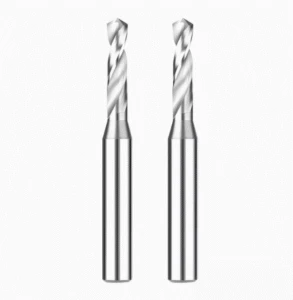
How We Restore Over 95% of New-Tool Life to China Tungsten Carbide Drill Bits Through Regrinding
Many manufacturing shop owners we talk to are highly skeptical about tool recycling, assuming a reground tool can only net about 60% of its original life. However, over a decade of tracking tool life cycles in our production facility proves that rigorous, factory-level process control completely changes the math. We consistently bring reground china tungsten carbide drill bits right back to 95% of their original, out-of-the-box machining performance. The secret is that you cannot treat tool reconditioning as a basic sharpening job; it must be treated as a micron-level geometric rebuild.
Our first step with incoming worn drills is never to just throw them onto a grinding spindle; we must completely grind away the sub-surface thermal fatigue zone. Metal cutting subjects the carbide edge to intense thermal cycling, creating microscopic stress fractures just below the surface. If you try to grind a fresh cutting edge directly over this compromised material, the new edge will flake off within the first few cycles. We willingly sacrifice an extra 0.5mm of tool length to ensure our grinding wheels are forming geometries on a 100% stable, virgin carbide substrate.
Why Simple Regrinding on a 5-Axis Tool Grinder Isn’t Enough? The Importance of Edge Preparation for High-Performance Tungsten Carbide Drill Bits
Many workshops invest heavily in high-end 5-axis CNC tool grinders but end up calling us when their self-sharpened bits fail after drilling just 50 holes. As a fellow tool manufacturer, I spot their technical error immediately: they are producing an edge that is simply too sharp. A drill bit coming straight off a raw diamond grinding wheel features a microscopically acute, razor-sharp edge. If you plunge a razor-thin carbide edge straight into a tough alloy or mold steel, that delicate point will instantly micro-collapse on impact.
To prevent this immediate edge failure, our manufacturing workflow mandates a dedicated edge preparation (passivation) process after grinding. Using specialized abrasive nylon brushes or micro-blasting technology, we round off that fragile edge into a precise, micron-scale radius or a custom “waterfall” profile. This requires deep technical expertise: if your edge hone is under 10 microns, the tool will chip; if it exceeds 35 microns, the drill rubs, creating massive chatter. Dialing in this exact edge hone radius is what gives our premium tungsten carbide drill bits their exceptional impact resistance.
Extending the Service Life of Reground Tools: Why We Insist on Re-coating with TiAlN or AlCrN on China Tungsten Carbide Drill Bits
In modern tool engineering, micro-geometry only accounts for half of your performance equation—the remaining half depends entirely on surface metallurgy. We regularly encounter shops trying to cut corners by running stripped, bare carbide drills on high-load parts to save a quick buck on coating costs. The immediate result is always massive material adhesion, rapid heat build-up, and localized crater wear. On every Western contract we manage, we maintain a strict policy: every structural drilling tool must undergo full PVD re-coating after a regrind.
Why are nanocomposite coatings like TiAlN and AlCrN non-negotiable for high-production environments? When cutting zones spike past 800°C, these advanced coatings react with the atmosphere to form a microscopic, ultra-dense Al2O3 thermal barrier. This layer blocks intense friction heat from sinking into the underlying carbide substrate, preventing the cobalt binder from softening. Spending that small premium on proper PVD re-coating for your china tungsten carbide drill bits pays for itself by delivering multi-fold tool life extensions and ultra-smooth chip evacuation.
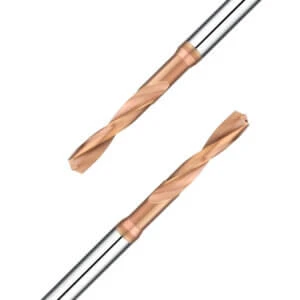
Cost-Saving Analysis for Bulk B2B Procurement: Wholesale Tungsten Carbide Drill Bits and the ROI of Regrinding
Many B2B purchasing managers fall into a costly trap: they focus entirely on the upfront invoice price of a tool while ignoring the total cost per hole over its lifecycle. As an integrated manufacturer, we look at tooling through the lens of lean production and supply chain optimization. Combining bulk ordering with a rigid shop-floor tool tracking system unlocks major hidden profit margins. Lowering your initial amortized tool cost while standardizing your swap-out intervals is exactly how modern machine shops pull ahead of their local competitors.
Buying in bulk does more than just slash international freight and customs fees; it provides the inventory buffer required to run a proactive preventive maintenance program. When a shop stocks only a few backup tools, operators run drills to the absolute breaking point out of fear of empty spindles. Conversely, backing your production with a high-volume supply of wholesale tungsten carbide drill bits gives your team the confidence to pull tools at the perfect time. This keeps tool wear within an optimal, highly cost-effective reconditioning loop.
Crunching the Numbers: How Much Can Bulk Procurement Combined with Three Regrinding Cycles Reduce Your Cost Per Hole?
Let’s look at the hard financials from a high-volume automotive chassis drilling contract. Standardizing your tool crib allows you to drastically compress your upfront unit costs. Suppose a brand-new solid carbide drill yields a stable baseline of 1,000 holes. If you pull that drill at its critical wear threshold and send it to a specialized center for a precision re-profile and PVD nano-coating, it is far from finished. Our testing shows that a properly remanufactured tool consistently delivers 90 to 95% of its original tool life.
You can repeat this exact grinding and recoating cycle three consecutive times before the tool’s core dimensions degrade. When you total the cost of the initial tool plus three low-cost regrinds and divide it by the cumulative 3,800-hole output, your cost per hole plummets by over 40%. For distributors or Tier-1 shops chewing through millions of holes annually, this practice converts tool waste straight into pure profit. We actively encourage our partners to utilize regrinding because maximizing the utility of every ounce of carbide is the truest sign of machining expertise.
How We Help Overseas Clients Develop Efficient “Float Inventory” Management Solutions Using Tungsten Carbide Drill Bits
The biggest roadblock for overseas shops adopting a regrind program is managing the logistics and turnaround lead time. Shipping worn tools out for service and waiting for them to return can stall a production line if your inventory math is wrong. No shop manager wants their multi-million-dollar CNC centers sitting idle waiting for a freight delivery. To solve this operational bottleneck, we design custom, closed-loop float inventory systems for our international partners to guarantee zero downtime.
We calculate your optimal tool float by balancing your monthly hole output against actual transit and processing timelines. Typically, we recommend tracking three distinct batches of your high-performance tungsten carbide drill bits. Group one is on the spindle making chips; group two sits in your local tool cabinet ready for immediate swap-outs; group three is in transit or undergoing cleaning, stripping, and geometric re-pointing. This seamless rotation allows you to harvest the massive savings of bulk procurement without taking on single-point failure risks.
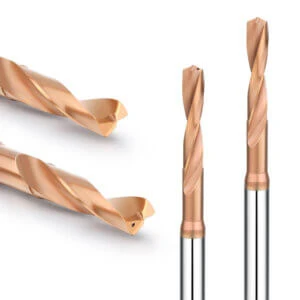
Shedding the “Low-End” Label: Criteria for Evaluating Manufacturing Processes for High-Quality China Tungsten Carbide Drill Bits
As engineers working daily on the front lines of tool design, we understand why Western buyers hesitate when evaluating Chinese tooling suppliers. The market was once flooded with cheap, disposable tooling that competed strictly on price, branding the entire region with an unfavorable stereotype. However, top-tier domestic plants have made a massive technological leap in equipment integration and quality control. When vetting an industrial supplier, you need to ignore the glossy marketing brochures and look closely at how they execute micro-level production details.
The true quality of a solid carbide drill bit—one capable of holding tight tolerances under high feed rates—is decided during powder sintering and initial grinding. If you are struggling with soaring tooling overhead in the US or Europe and need a reliable alternative, shift your focus to substrate metallurgy and micron-level consistency. When you audit a modern domestic facility using the exact same strict engineering metrics applied to premium German or American brands, you will see a world-class manufacturing process in action.
Starting with Substrate Materials: Ensuring Fracture and Impact Resistance through Premium Micrograin Rods for China Tungsten Carbide Drill Bits
Every machinist knows that hardness and toughness are opposing forces in tool steel and carbide. Blindly chasing a massive Rockwell hardness rating makes a drill body brittle, leading to catastrophic failure during interrupted cuts or when hitting hard inclusions. To solve this for demanding applications, we manufacture our premium china tungsten carbide drill bits using virgin, ultra-pure micrograin carbide rod stock sourced from Zhuzhou. By optimizing the cobalt binder distribution, these rods offer a highly uniform microstructure.
A sub-micron grain structure stops microscopic thermal cracks from propagating into major fractures when the tool takes high-frequency hits. This metallurgy significantly jacks up the tool’s Transverse Rupture Strength (TRS). If you are drilling through nasty, raw forged scaling or running deep-hole cycles on older, flexible machinery, substrate grain structure is your make-or-break factor. Drills built on these premium rods match the fracture toughness of any heritage brand, giving you the confidence to push your cycle feeds to the absolute limit.
Factory Inspection to Euro-American Quality Standards: Ensuring Geometric Tolerance Consistency for Tungsten Carbide Drill Bits Metal Applications
In B2B manufacturing, grinding a single perfect tool is easy; the real challenge is making sure the ten-thousandth drill is identical to the first. Western distributors checking out a supply chain for tungsten carbide drill bits metal applications are terrified of batch-to-batch tolerance drift. To eliminate this variation, we execute our final point and margin geometries exclusively on world-class 5-axis CNC grinders like Walter and ANCA. These machines operate inside fully climate-controlled, enclosed cleanrooms to stop thermal growth from drifting our grinds.
Our most critical quality safeguard is our final inspection protocol, which pairs automated 100% scanning with rigorous batch sampling. We use specialized Zoller infrared presessors to map the outer-diameter guide margins, flute symmetry, and back-taper of every production run. Any tool displaying a geometric variance beyond ±0.003mm is pulled from the line immediately. If you are upgrading to an unmanned setup and need flawless consistency, send over your part drawings, material specs, or current tool issues. Talking shop over real floor data is how we solve actual machining bottlenecks.