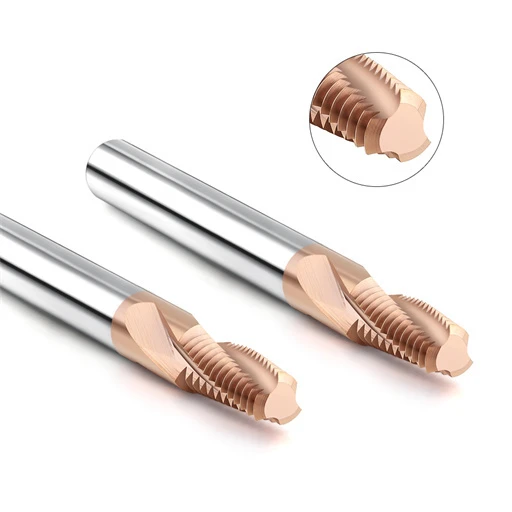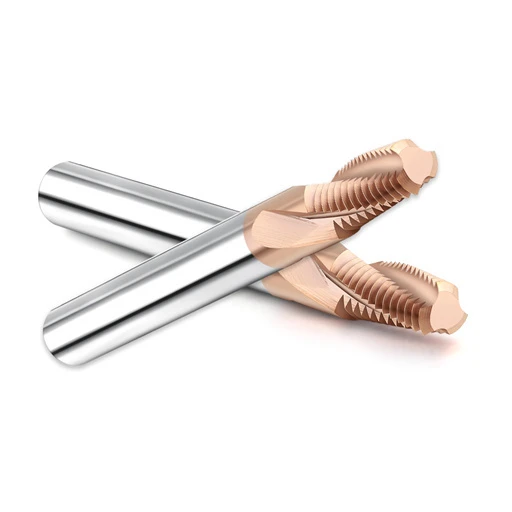

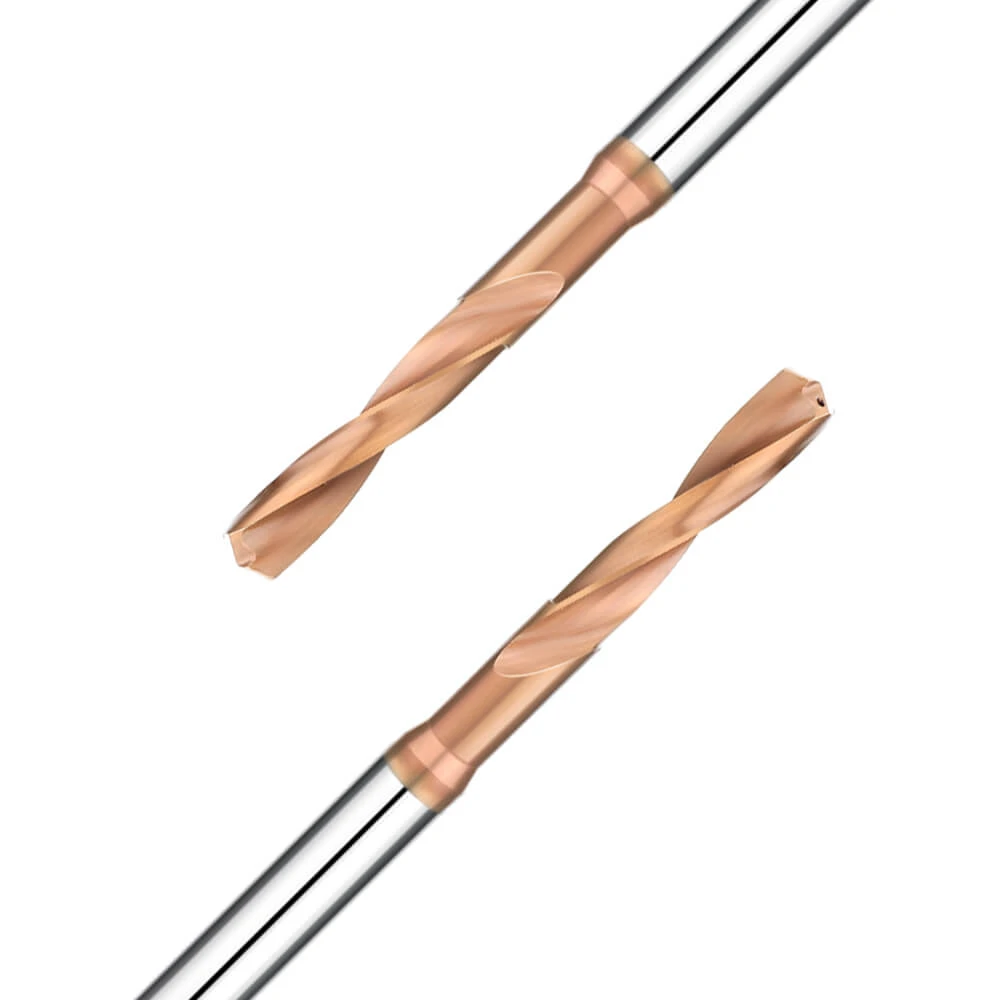
“Out of every ten Western shops that come to us for custom solid carbide drills, at least seven shatter the tool inside the hole during the first few passes. This happens simply because their parameters are either too conservative or too aggressive.”
As a cutting tool manufacturer with 15 years of shop-floor technical support, this is the exact scenario we encounter weekly. Just last month, an Ohio medical device manufacturer panicked after copying theoretical textbook speeds for their tungsten carbide hrc55 drill bits. The resulting brittle chipping killed the cutting edge in less than half a shift, bringing their entire high-hardness mold steel production line to a complete halt.
This is not an isolated incident. When tackling hard-to-machine metals, many machinists treat all drill bit types the same, mechanically applying mild steel feed logic to ultra-hard applications requiring tungsten carbide hrc65 drill bits. Real parameters that save your setup are never copied blindly from a manual; they are dynamic, calculated values adjusted for spindle rigidity, through-coolant pressure, and raw material hardness.
To eliminate tool breakage, burning, and chip packing, we are breaking down the exact calculation logic we use to rescue struggling CNC shops. As professional tungsten carbide drill bits suppliers, we skip the marketing fluff and deliver hard cutting speed (SFM), feed per tooth (IPT), and depth reduction ratios. Stop wasting premium tungsten carbide drill bits metal on guesswork—let’s look at how you can eliminate this avoidable sunk cost today.
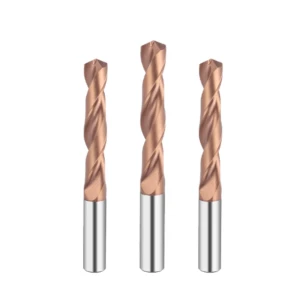
Why Western Workshops Often Miscalculate When Machining High-Hardness Materials: The Critical Parameter Threshold Between HRC55 and HRC65 Carbide Drills
We routinely see veteran CNC programmers fail when transitioning to materials exceeding 55 HRC. The common trap is assuming that a 10 HRC increase simply requires a proportional 15% to 20% drop in SFM. In reality, stepping past 55 HRC alters the metal’s core microstructure, causing shear strength to rise exponentially and inflicting severe thermal stress on the drill tip.
There is an absolute physical divide between tungsten carbide hrc55 drill bits and tools designed for extreme hardness. This variance dictates everything from the substrate’s grain size to the edge honing radius and high-temperature coating oxidation limits. Applying generic textbook formulas ignores these sudden fluctuations in cutting forces, leading to immediate tool failure.
Determining Critical SFM for HRC55 Carbide Drills in Mold Steel Machining: Insights from Real-World Customer Complaints
A German automotive mold shop recently reached out because their tungsten carbide hrc55 drill bits suffered severe thermal tearing after fewer than 20 holes in modified P20 steel. Their CNC axis load data revealed a cutting speed set to 180 SFM. At that velocity, the friction heat rapidly exceeded the coating’s thermal threshold, weakening the carbide matrix underneath.
We instructed their team to drop the speed to a critical 120–140 SFM range while cranking the internal coolant pressure. While many machinists fear that lower speeds sacrifice cycle times, our testing proves this specific window maintains optimal hot hardness. This minor adjustment stabilized the edge wear, guaranteed hole consistency, and protected their high-volume output.
Addressing Extreme HRC65 Hardness: The Golden Rule of Low Speed and High-Rigidity IPT for Tungsten Carbide HRC65 Drill Bits
When a workpiece hits HRC65—like fully hardened D2 tool steel—your standard machining logic must be completely flipped. A US client, terrified of breaking high-value tungsten carbide hrc65 drill bits, paired an ultra-high spindle RPM with a microscopic feed rate. Within three seconds, the tool tip friction-melted inside the hole because the tiny feed couldn’t actually bite into the metal.
Our shop rule for these extreme materials is simple: run low speed combined with a heavy, rigid IPT. This forces the spindle’s axial thrust to convert into immediate penetration, shearing the metal before it can work-harden. Forcing the chips to carry away the heat is the only way to shield hard drills from mechanical fatigue.
Preventing Brittle Chipping: Fine-Tuning IPM for Carbide Drills via Peck Drilling When Machining Metals of Varying Hardness
To stop catastrophic chipping at the bottom of the hole, we abandon uniform feed rates in favor of dynamic peck drilling strategies. As a high-performance carbide drill bit for metal cuts deeper, chip evacuation space shrinks and coolant pressure drops. Keeping a constant IPM at deep depths triggers instantaneous torque spikes from packed chips, snapping the tool.
We resolve this by programming a G83 cycle or custom macro to drop the feed rate in 10% to 15% steps once the depth passes 2D. This technique keeps cutting highly efficient at the hole entry while providing essential breathing room at the bottom. This flexible parameter control has helped our clients drop scrap rates to near-zero while extending tool life.
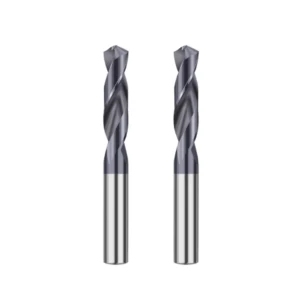
CNC Shop Floor Practice: Calculating Cutting Speed and Feed Rate Based on Drill Bit Types
Technicians chasing high-efficiency machining often overlook how a tool’s structural limits affect cutting parameters. In our on-site technical support, we see that different drill bit types—varying in geometry, shank clamping, and overhang—withstand completely different torque and axial forces. Focusing solely on material composition while ignoring structural rigidity will trigger severe chatter during actual CNC operation.
Our team treats tool geometry as the primary correction factor when calculating speeds and feeds. On a machining center, spindle runout combined with overhang setup directly alters the effective working angle of the cutting edge. Before adjusting parameters, you must analyze how different structures deform under mechanical loads to dynamically fine-tune performance within the optimal rigidity range.
The Impact of Body Rigidity on Cutting Load Across Drill Bit Types (Solid Carbide vs Replaceable Head)
Overseas clients often face uncertainty when choosing between different drill bit types, specifically solid carbide versus replaceable-head designs. Shop-floor experience shows that solid carbide drills feature a continuous, integral web thickness that offers unmatched torsional rigidity. This allows them to easily withstand extremely high cutting loads per tooth during heavy metal removal.
Conversely, while replaceable-head drills offer convenience, the mechanical interface introduces a weak joint. Minute clearances at this junction amplify vibrations during high-speed rotation, limiting their rigidity to 70%–80% of solid carbide. Therefore, we use aggressive feed-per-revolution rates on solid tools to minimize friction, but slightly reduce the load and bump the speed on replaceable heads to ensure smooth chip evacuation.
Speed Calculation Correction Factors for Carbide Metal-Drilling Bits: Through-Coolant vs. External Cooling
If your machine tool lacks through-spindle coolant capability, you must proactively reduce your cutting speed by at least 30%. We resolved this exact deep-hole bottleneck for a UK valve manufacturer using conventional external coolant spraying. Unable to overcome high air resistance, the external fluid failed to reach the cutting zone, causing drill tip temperatures to spike and ruining tool life.
Switching to a high-performance carbide drill bit for metal with through-coolant channels solved the problem. High-pressure coolant delivered directly from the cutting edge lowers friction zone temperatures and provides powerful axial thrust to eject chips. Given this superior chip evacuation mechanism, we confidently apply a speed correction factor of 1.3 to 1.5 for through-coolant setups while strictly limiting external cooling parameters.
Machining Titanium Alloys and Stainless Steel: What Is the Minimum Feed Per Revolution to Prevent Work Hardening?
When machining titanium or austenitic stainless steel, a common mistake made by Western shops is blindly reducing the feed rate out of fear. These difficult-to-machine materials possess extremely high hot strength and a strong tendency toward work hardening. If your feed rate is too light, the cutting edge will merely slide and rub against the hardened layer left by the previous pass.
This friction burns out the tool tip within seconds and deepens the work-hardened layer for subsequent cuts. When programming tungsten carbide drill bits metal for these materials, our primary task is to enforce a minimum feed threshold. For stainless steel, mandate at least 0.08 mm/rev; for titanium, maintain above 0.05 mm/rev. Your depth of cut must exceed the previous work-hardened layer—aggressive force is often the only way to preserve tool life.
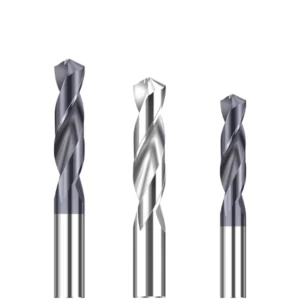
Practical Calculation: Determining Precise Parameters for Machining with Tungsten Carbide Drill Bits
On the front lines of CNC machining, theoretical formulas only get you through the door. The real key to successful mass production lies in dynamic parameters fine-tuned based on actual machine conditions, fixture rigidity, and coolant concentration. We regularly see programmers rigidly input theoretical handbook values into their systems, resulting in either immediate spindle overload or frustrating chatter marks on the workpiece.
We maintain that no single formula perfectly matches the actual performance of every machining center. Factors like spindle dynamic balance, guideway wear, and coolant spray angle subtly influence your final cutting results. Therefore, when guiding a workshop, we implement a flexible parameter correction mechanism. This allows operators to make coordinated adjustments to spindle speed and feed rate to hit that sweet spot balancing efficiency and tool longevity.
Moving Beyond Theoretical Formulas: Back-Calculating Actual RPM for Tungsten Carbide Metal Drills Based on Material Hardness
A US automotive parts supplier optimized their connecting rod drilling by plugging theoretical Brinell hardness (HB) values into standard formulas. The resulting RPM caused severe thermal spalling at the drill tip after machining fewer than ten parts. We immediately halted this approach and back-calculated the actual RPM based on the workpiece’s true microstructure and surface hardness (HRC) gradient.
Our back-calculation logic for high-performance tungsten carbide drill bits metal is straightforward. If the workpiece surface exhibits a significant work-hardened layer from previous milling, we reduce the theoretical RPM by 15%–20% to protect the coating upon entry. If the material microstructure is uniform, we incrementally increase the spindle speed until the machine’s axial load current stabilizes at approximately 75% of its rated power.
Feed Rate Calculation: Scaling Down Feed Rates Based on Hole Depth Ratios (3D, 5D, 8D) to Prevent Drill Breakage
In deep-hole drilling, the hole depth ratio (3D, 5D, 8D) is the critical factor determining your feed rate. Many peers habits use a constant feed rate (mm/min) throughout the entire drilling cycle, which works for shallow holes up to 3D. However, it spells disaster when drilling deeper toward the 8D limit because chips packing the bottom cannot evacuate fast enough, triggering tool failure.
Our standard operating procedure involves a stepped reduction of the feed rate based on hole depth multiples. For depths up to 3D, we operate at 100% capacity to ensure efficient chip breaking. At 5D, we proactively reduce the feed to 85% to allow a margin of error for chip evacuation. When pushing toward 8D, the feed rate must be decisively cut to 65%–70% to eliminate downtime caused by broken tungsten carbide drill bits metal.
On-site Sound and Spark Recognition: How Engineers Adjust Calculated Speeds and Feeds Based on Chip Topology
Excellent CNC operators know how to listen and observe your machining zone. No matter how perfect your program calculations are, once cutting begins, you must focus on the sound emanating from the tool and the shape of the flying chips. When field-testing a new carbide drill bit for metal, our primary indicator is chip topology; perfect chips should resemble compact “6” or “C” shaped curls.
A piercing screech from the spindle or long, ribbon-like strands indicate your spindle speed is too high or your feed is too low. This causes the tool to rub dangerously against the hole walls, work-hardening the metal. At this point, decisively override the control panel to lower the speed while simultaneously nudging up the feed rate. Interpreting these chip color and shape signals allows you to save the tool before catastrophic failure.
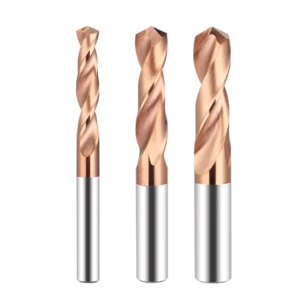
A Manufacturer’s Perspective: Why Can’t You Simply Copy the Parameter Charts from Tungsten Carbide Drill Bit Suppliers?
Workshop supervisors frequently ask us while holding a product manual: “Why did this drill fail to last even two shifts when we ran it exactly at your recommended speeds and feeds?” As professional tungsten carbide drill bits suppliers, we must share an open industry secret: any parameter chart printed by a manufacturer represents theoretical reference values measured under “ideal lab conditions,” not your specific shop floor reality.
When we build these charts, all cutting data comes from tests on brand-new vertical machining centers with maximum rigidity, using high-end hydraulic holders and optimized coolant systems. When those same tools are installed on a five-year-old machine with slight spindle runout, those perfect theoretical numbers instantly accelerate tool fatigue. Learning to read the subtext behind supplier charts and adjusting for your specific hardware is an essential skill for seasoned programmers.
The Gap Between Testing Benchmarks Used by Major Western Tungsten Carbide Drill Bit Suppliers and Your Workshop’s Actual Machine Rigidity
When you open technical manuals from established Western tungsten carbide drill bits suppliers, the authoritative SFM and IPT data assume zero-backlash precision spindles and near-zero dynamic runout. We once diagnosed a British aerospace shop that applied maximum textbook parameters directly to an old pillar-style machine. The drill bit shattered the moment it engaged the workpiece surface due to high-frequency, low-amplitude oscillation.
Real setup rigidity is collectively determined by four components: the machine, the fixture, the tool holder, and the cutting tool. If your workholding relies on standard mechanical clamps or worn collet chucks, your actual cutting rigidity might be less than 60% of lab data. In these cases, we advise operators to reduce the feed rate by 15%–20% relative to recommended parameters to compensate for system flexibility and ensure safe operation.
How We Adjust Cutting Parameters Based on Your Machine Spindle Power and Dynamic Balance Limits
For high-volume custom projects, the first thing we analyze isn’t the metal grade—it’s your machine spindle specs and maximum RPM limits. When using large-diameter tungsten carbide drill bits metal on hard alloys, shops often overlook the massive axial thrust generated by aggressive feeds, which overloads the spindle motor. If the spindle experiences even a momentary 1% drop in speed due to insufficient torque, the feed per tooth spikes instantly, snapping the tool.
Furthermore, when spindle speeds exceed 8,000 RPM, the dynamic balance of your tool holder assembly becomes the critical factor determining tool life. If your holders haven’t undergone G2.5-grade dynamic balancing, high-speed centrifugal forces cause the drill tip to oscillate erratically inside the hole. Faced with these hardware constraints, our engineers prefer to sacrifice some spindle speed, fine-tuning the cutting edge geometry instead to achieve a smoother cutting action.
How to Request Customized Cutting Edge Geometries and Coating-Specific Parameters from Your Tungsten Carbide Drill Bit Supplier
If you are dealing with massive production volumes of difficult metals or low-margin competitive bids, relying solely on standard, off-the-shelf tools makes it impossible to maximize efficiency. At this stage, you should proactively request in-depth technical customization from your carbide drill bit for metal supplier. Manufacturers possess a wealth of proprietary edge-honing solutions and specialized coating formulas tailored to specific metals that are rarely listed in public catalogs.
When seeking our technical support, do not simply provide the name of the material. A smarter approach is to supply a detailed report on your exact machining conditions, including the target hole depth-to-diameter ratio, the presence of intersecting holes, your coolant delivery method, and current cycle time bottlenecks. Specifying whether your primary challenge is difficult chip evacuation, entry burrs, or edge chipping allows us to precisely recommend the optimal rake and relief angles.
Insights from 16 Years of On-Site Experience: Building a Workshop-Specific Parameter Optimization Database for Carbide Drill Bits
High-profit, low-scrap manufacturing enterprises invariably possess a core asset: an internal, fully digitized cutting parameter database that does not rely on individual memory. Workshop supervisors often complain that losing a senior setup technician causes an immediate drop in machining efficiency and tool life. If your parameters remain locked in a technician’s head—or if operators must consult manuals every time—your workshop will never escape the uncertainties of mass production.
For over a decade, we have helped Western clients transform tool breakage lessons and optimization successes into replicable process standards. Building a shop-specific database does not require complex software development; it simply involves establishing a closed-loop record-keeping process spanning from first-article testing to batch-run wear compensation. To consistently extract maximum potential from every carbide drill bit for metal, you must establish a dynamic parameter library tailored to your hardware.
Establishing a Standard Procedure for First-Article Testing: Rules for Incremental Speed and Feed Adjustments
When performing first-article test cuts for new projects or unfamiliar materials, neither blind operation nor excessive caution is advisable. If you are machining batches of metal with unknown hardness, you can use our internal “safe incremental adjustment rule” to find the optimal parameters. We strongly advise against jumping straight to theoretical limits; instead, start safely at 75% of the supplier’s recommended starting parameters.
Once chip formation and spindle loads stabilize after the first three holes, gradually increase the cutting speed and feed-per-revolution in steps of 5% to 10%. Meticulously record data for each incremental step. If you reach a critical point where the cutting sound shifts abruptly from a dull thud to a high-pitched vibration, you have found the physical limit of your setup for that specific drill bit types selection, allowing you to back off one step for safe production.
Tracking Parameter Compensation for Tool Wear Over the Tool’s Lifecycle: When to Reduce Speed and When to Replace the Tool
Waiting until a drill bit snaps completely or parts fall out of tolerance before replacing a tool is a highly reactive approach that destroys profitability. If you aim for superior surface finishes and lower overall tooling costs, you can establish a parameter compensation mechanism by tracking load fluctuations throughout the tool’s entire service life. With any high-performance tungsten carbide drill bits metal, cutting resistance inevitably rises during mid-stage machining due to normal, predictable coating wear.
When monitoring high-volume projects, we require operators to record the spindle load percentage at the 1st, 100th, and 500th holes. If the spindle load rises by 15% compared to the initial state, or if visible micro-burrs appear at the hole entry, the database automatically flags the tool. This indicates the tool has entered a severe wear stage, triggering an automatic switch to a protective mode with reduced speeds or prompting an immediate tool change.