
白底-主图2.webp)
Last week, a German client specializing in heavy-duty vehicle chassis components reached out to us. Their CNC machining unit was processing a batch of 12mm-thick Q355B steel plates using 14mm HSS drill bits. While the drilling went smoothly, the thick, hardened extrusion burrs formed at the hole exits forced them to add a costly manual deburring step, wiping out nearly 30% of the project’s profit.
This is by no means an isolated case. Over the past 15 years as cutting tool engineers, we have worked with countless precision manufacturing workshops across the US and Europe. We’ve found that almost everyone stumbles into this hidden “cost black hole” when machining high-strength steel plates.
Many workshop supervisors’ first reaction is: “Why not just swap the HSS drill bit for a carbide drill bit?”
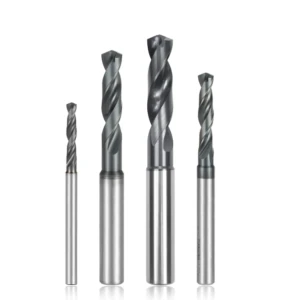
Indeed, as professional drill bit manufacturers, we know that upgrading to a carbide drill bit for steel is the crucial first step toward a solution. The high hardness and superior rigidity of carbide significantly reduce the exit burrs caused by tool deflection.
However, it would be naive to think that simply buying a high-end carbide drill bit and running the machine blindly will completely eliminate burrs. Burr control is a complex system involving tool geometry, cutting parameters, coolant pressure, and the thermoplastic deformation of the steel itself.
If the point angle is incorrect, or if the feed rate isn’t reduced at the moment of breakthrough, even the most expensive tool will “squeeze” the steel out of the hole. As a fellow machinist constantly working with various drill bits steel, do you often face that frustrating scenario where cleaning up the resulting burrs drives you to the brink of despair?
Why do traditional HSS drill bits struggle to control burrs on steel plates?
During workshop visits, we often see technicians trying to salvage poor-quality holes by lowering spindle speeds or frequently regrinding standard high-speed steel (HSS) drill bits. From the perspectives of both materials mechanics and shop-floor reality, these efforts yield little success. When machining medium-to-high-strength steel plates, the inherent physical limitations of traditional HSS tools make it difficult to achieve satisfactory burr control.
As engineers dedicated to the R&D of cutting tools, we know that the quality of a drilled hole depends heavily on the cutting dynamics at the exact moment of breakthrough. An HSS drill bit lacks “red hardness” and is prone to elastic deformation under high heat, making it difficult to maintain a sharp edge during continuous operation. As the tool dulls, its interaction with the steel shifts from “cutting” to “extruding”—the root cause of those large, hard exit burrs.
Material Rigidity and the Annealing Effect: “Tool Deflection” and Extrusion at the Exit Point
In a recent automotive chassis project, a client using standard HSS bits for mass production encountered extremely stubborn, flared exit burrs. This occurred because HSS has a relatively low modulus of elasticity compared to other different types of drill bits. Under immense axial cutting forces, the bit undergoes minute elastic buckling—or “tool deflection”—just as it is about to break through the steel plate.
When the dulled tip fails to cleanly sever the final metal fibers, it uses its blunt, heated chisel edge to forcibly “push” the remaining steel out of the hole. Subjected to intense friction at high temperatures, the metal undergoes thermoplastic deformation and adheres to the hole’s edge upon cooling. We attempted to adjust various cutting parameters, but simply tweaking machine settings cannot fundamentally eliminate the root cause of these burrs.
A Real-World Cost Analysis for Western Clients: Efficiency and Deburring Cost Comparison—HSS vs. High-Performance Carbide Drill Bits
Procurement managers in Western workshops are often deterred by the high initial purchase price of solid carbide drill bits. However, we analyzed actual data from a US client machining structural steel plates: their production line processed thousands of holes daily. While HSS tools were inexpensive, the constant downtime for tool changes or regrinding every few dozen holes—combined with the requirement for manual deburring—resulted in a bloated production cycle.
At our recommendation, the workshop switched its entire line to high-performance carbide drill bits. Although the cost per tool was higher, the carbide’s ability to withstand higher cutting speeds and feed rates slashed the machining time per hole by over 60%. More importantly, because exit burrs were virtually eliminated, the manual deburring step was removed entirely, saving the client tens of thousands of dollars in labor expenses within just three months.
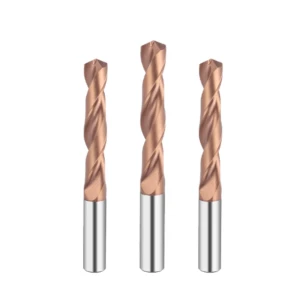
Selecting the Right Drill Bits for Different Steel Plate Materials
Throughout years of developing customized cutting tools, we have frequently reminded our peers that steel plate is not a uniform material. Materials range from ordinary low-carbon structural steel to high-strength alloy steel, exhibiting vast differences in ductility, hardness, and work-hardening tendencies. Expecting a single tool geometry to handle every steel plate drilling task will likely result in frequent drill bit chipping or thick metal burrs at the hole exit.
As process engineers, we must learn to select the appropriate different types of drill bits based on the material’s microstructure. When dealing with soft, ductile, and gummy steels, cutting shear capability is the primary consideration. Conversely, for hard, wear-resistant steels with poor thermal conductivity, maintaining edge heat resistance and coating stability is crucial to determining the severity of exit burrs.
Why Do Drill Bit Geometries Differ Drastically Between Thin Sheets and Medium-to-Thick Plates?
On the shop floor, machining a 2 mm thin sheet is a completely different proposition from machining a 30 mm medium-to-thick plate. We once handled a project for a Western client where drilling thin steel sheets consistently caused severe, flared tearing—resembling a trumpet bell—at the exit point. This occurs because the axial cutting force of standard drill bits steel pushes the sheet downward and deforms it just before breakthrough.
To mitigate this elastic deformation in thin sheets, we recommend increasing the point angle or employing a specialized geometry with a broaching-style edge. For medium-to-thick plates, the long cutting paths and limited chip evacuation space lead us to favor rigid tool designs featuring wider chip flutes. This prevents chips from re-scoring the hole walls and proves that plate thickness dictates the underlying logic of geometric tool design.
Performance Differences Between Internal and External Coolant Carbide Drill Bits in Minimizing Exit Burrs
When drilling steel plates, high temperatures in the cutting zone are the primary cause of thermoplastic deformation and burr formation. Laboratory comparative tests show that when using a standard external-coolant carbide drill bit on high-carbon steel, coolant struggle to reach the cutting tip. The back-pressure of the chips blocks the fluid as the drill penetrates deeper, causing a sharp rise in temperature at the bottom of the hole.
In contrast, carbide drill bits with internal coolant channels perform far better in controlling exit burrs. High-pressure coolant is delivered directly to the tip, instantly dissipating cutting heat and preventing localized metal softening. If your workshop’s hardware cannot maintain a constant pressure of at least 20 bar, a combination of external cooling and a specialized stepped deceleration process serves as a viable alternative.
Helping European Clients Achieve Single-Pass Drilling and Deburring with Custom Non-Standard Step Drills
At times, simply adjusting the parameters of standard tools is insufficient to meet the rigorous demands of Western clients for zero-burr results. Last year, an Italian manufacturer of hydraulic components approached us because manual deburring after the drilling stage was bottlenecking their automated production line. After evaluating their part drawings, we broke with convention and custom-designed a non-standard multi-step drill for them.
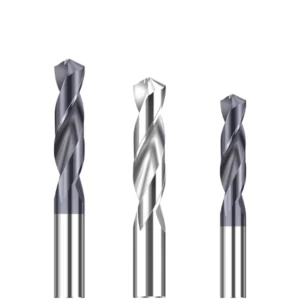
These specialized step drill bits feature a finishing edge located behind the primary cutting edge, designed specifically for chamfering and shearing off exit-side fibers. The moment the primary edge penetrates the steel plate, the trailing secondary step edge precisely shaves off the burr, leaving a perfect 45° chamfer. This composite geometry allows customers to combine drilling and deburring into a single operation, eliminating time-consuming secondary setups.
Adjusting CNC Parameters: How to Drill Burr-Free Holes with a Carbide Drill Bit?
In our years of providing shop-floor scheduling, we frequently encounter customers who purchase premium solid carbide drill bits but rely on outdated machining parameters. As a fellow professional, you know that high-quality hardware is only half the battle. Without knowing how to adjust CNC parameters to suit specific operating conditions, even the best tools cannot deliver their full burr-suppression performance.
In actual production, adjusting cutting parameters involves more than simply tweaking spindle speed or feed rate on the control panel. We must strike a delicate balance between machine rigidity, tool life, and workpiece surface quality. By scientifically controlling the dynamic forces acting on the chisel edge during plate penetration, we can achieve near-zero burr results using a premium carbide drill bit.
Breaking the Critical Point: Optimizing Feed Rates at the Exit to Minimize Burrs
The most effective strategy for controlling exit burrs often lies in how the process is managed the moment the drill bit is about to break through. We assisted a Western client in optimizing the machining program for their large gantry machining center. While the drill bit advances downward normally, a standard high feed rate is maintained to ensure efficiency; however, we adjust the parameters right before the breakthrough point.
When only about 1 mm to 1.5 mm of material remains above the bottom surface, we utilize a macro program to instantly reduce the feed rate by 50% to 70%. Under standard high feed rates, the thinning residual material lacks sufficient structural support and pushes out, causing jagged burrs. Sowing the feed rate at the exit allows the outer cutting edge of the carbide drill bit for steel sufficient time to perform a precise, clean shear.
The Direct Impact of Cutting Speed (SFM) and Surface Speed on Extrusion Burrs with Carbide Drill Bits
Beyond feed rate, SFM has a significant physical impact on the performance of a carbide drill bit when machining steel plate. During on-site commissioning for an agricultural machinery manufacturer, we observed technicians pushing spindle speeds to extremes to meet tight schedules. This resulted in hole exits characterized by massive burrs and edges that were severely blued and work-hardened.
Excessive surface speed generates intense frictional heat that surpasses the coating’s thermal limits, causing the local steel to instantly enter a state of high plasticity. Under the pressure of the drill’s blunt chisel edge, this softened metal accumulates upward along the chip flutes, solidifying into stubborn extrusion burrs. In practice, we prefer a moderate cutting speed to leverage the high hardness of carbide without causing excessive heat accumulation.
Insights on Fine-Tuning Coolant Pressure and Concentration for Machining High-Hardness Drill Bit Steels
When machining high-hardness drill bits steel—such as quenched-and-tempered steels—the physical properties of the cutting fluid often determine success or failure at the hole exit. While many workshops typically maintain emulsion concentrations around 5%, this standard setup often proves inadequate for hard, brittle steels prone to thermal tearing. We have successfully resolved exit-side burring issues by increasing the water-soluble cutting fluid concentration to the 10%–12% range.
Increasing concentration enhances extreme-pressure lubrication at the interface, reducing the likelihood of metal particles adhering to the drill tip. Additionally, if your machine tools are equipped with through-spindle cooling, we strongly recommend setting the coolant pressure to 30 bar or higher. This powerful impact force suppresses cutting heat and uses the high-pressure flow to flush away incipient micro-burrs the moment the tool breaks through.

Drill Bit Wear and Cutting Edge Geometry: A Root Cause of Burrs Often Overlooked by Engineers
When troubleshooting machining issues on the shop floor, we often see peers focus solely on spindle speeds or cutting fluids while overlooking real-time tool wear. In reality, subtle changes in the cutting edge directly dictate how the metal fractures and flows. If the initial edge geometry is poorly chosen—or if there is a lack of sensitivity regarding edge dulling—achieving a clean exit cut on a steel plate becomes difficult, regardless of machine rigidity.
As professionals dealing with metal cutting daily, we know that tool wear does not progress uniformly. Especially in high-volume, heavy-load steel plate drilling, any deviation in the micro-geometry of the main cutting edge deteriorates chip evacuation. The resulting surge in axial force often manifests as an elongating rollover burr on the underside of the workpiece long before the naked eye detects a dull tool.
135° Dual Point Angle vs. 140° Standard Point Angle: Which Carbide Drill Bit Structure Best Suppresses Steel Plate Burrs?
When selecting a high-performance carbide drill bit, the point angle design dictates the distribution of cutting forces as the bit breaks through the steel. Conventional 140° single-point-angle bits perform reliably on standard structural steel, but the entire cutting edge pierces the bottom surface almost simultaneously. This causes axial thrust to concentrate instantly at the hole’s exit edge, frequently pulling up a thick, extruded rollover burr.
To mitigate this concentration of force, we recommend a 135° dual-point-angle structure when machining high-toughness steel plates. This design features a transitional secondary angle near the outer periphery that performs a reamer-like finishing action on the hole wall just before breakthrough. By segmenting the cutting process, the design significantly reduces the axial tearing force, making it our go-to choice for balancing tool longevity and burr control.
Identifying Micro-chipping: How to Determine When a Drill Needs Regrinding Based on Burr Morphology?
On fully automated production lines, halting operations to inspect tools under a microscope is impractical, but exit burr morphology serves as an intuitive barometer. During line inspections, if we observe that the typically uniform, fine, and brittle burrs suddenly become enlarged, stringy, or jagged, the primary cutting edge has likely suffered micro-chipping.
Such micro-chipping compromises edge sharpness and coating integrity, causing cutting resistance at that specific point to rise exponentially. Failure to take decisive action, like immediately removing the carbide drill bit for regrinding, allows the chipped area to intensify friction and trigger catastrophic tool failure. Mastering the ability to diagnose edge degradation by observing subtle changes in burr characteristics is an essential, core skill on the shop floor.
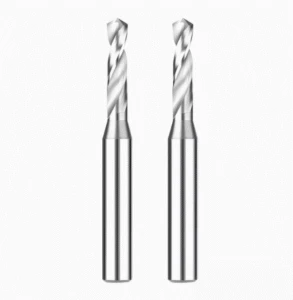
A Drill Bit Manufacturer’s Perspective: How to Evaluate a Supplier’s Capability in Anti-Burr Tool Design?
Having discussed parameter adjustments and edge geometry selection, we must finally turn our attention to the source of the supply chain. As industry peers with years of hands-on experience, we know there is a vast number of drill bit manufacturers operating in the market today. However, there is a massive technical gap between executing standard hole-making operations well and designing custom tools tailored to suppress burrs on specific steel grades.
When supplying tooling to B2B clients, we often advise technical purchasers and process managers not to focus solely on the unit price. A competent tool supplier’s core strength lies in their ability to integrate the principles of cutting mechanics into microscopic edge treatments. To evaluate a manufacturer, look at their ability to optimize flute geometry and chip-evacuation volume based on your workshop’s machine rigidity and spindle output.
Why must competent drill bit manufacturers possess precision coating and edge-honing technologies for steel applications?
If you are handling projects involving high-toughness steel plates prone to work hardening, pay close attention to the supplier’s edge preparation and nano-coatings. Many mistakenly believe that sharper drill bits are always better; in reality, unhoned, razor-sharp carbide edges are highly susceptible to microscopic chipping upon contacting tough steel. Top-tier drill bit manufacturers apply micron-level honing to the cutting edge prior to coating, creating a smooth, uniform radius.
This microscopic edge reinforcement—combined with precision coatings like AlCrN that offer exceptional hot hardness—allows the carbide drill bit for steel to maintain its geometry under intense heat. If a supplier’s drill bits show extensive coating delamination after drilling only a few dozen holes, it usually indicates that their honing process and coating adhesion are substandard.
Avoiding Pitfalls in B2B Procurement: How to Request Authentic Burr-Prevention Test Reports from Drill Bit Manufacturers?
If you are seeking a long-term strategic partner for your primary production lines, consider asking prospective drill bit manufacturers for cutting test reports tailored to specific materials. A truly valuable anti-burr test report goes far beyond a dry list of parameters or vague claims of excellent tool life. Instead, it should clearly document the progression of burr height under varying axial thrust forces and provide data on geometric consistency after multiple regrinds.
Every workshop has a unique operating environment, making it difficult to perfectly replicate the successful parameters used by others on your own machines. If you are struggling with exit burrs, cycle times, or chip-breaking issues on high-strength steel, we invite you to share your specific on-site conditions, machining drawings, and steel grades so we can discuss a solution.