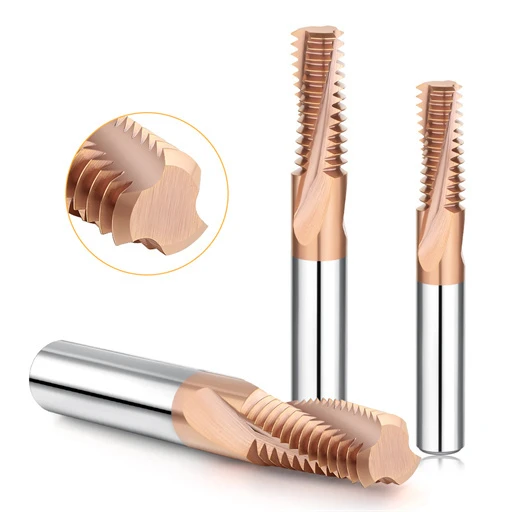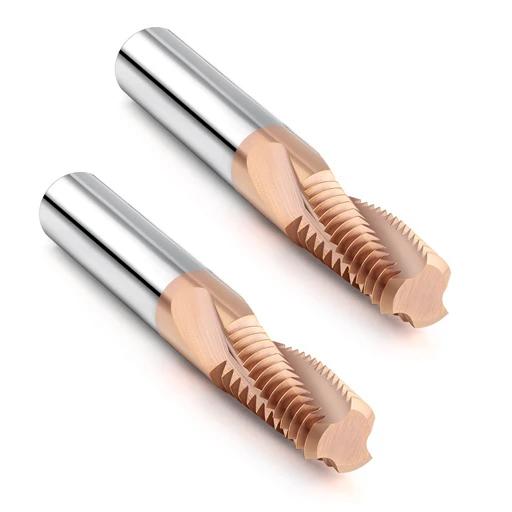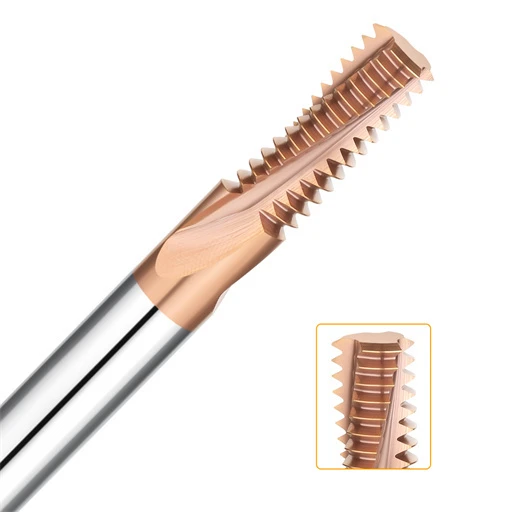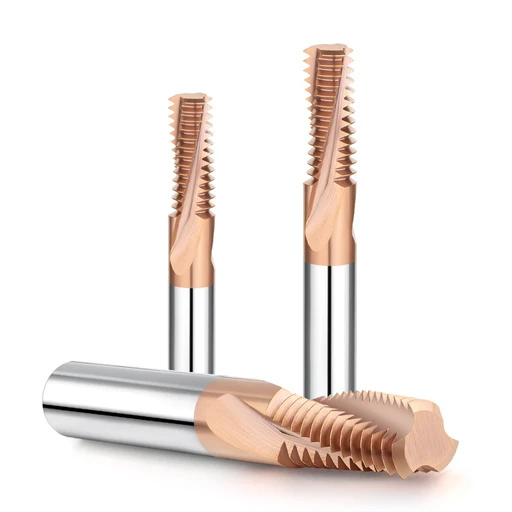

Last week, an Ohio client sent us a package of over a dozen scrapped solid carbide drill bits. They were machining 314 stainless steel manifolds, and bits rated for 200 holes were frequently chipping or snapping by the 30th hole without warning, forcing frequent CNC shutdowns and wrecking their production schedule.
This scenario is all too familiar to us. Over the past 16 years as tungsten carbide drill bit suppliers providing global B2B technical support, we have solved countless cases of premature tool failure. When a drill operates in high-pressure environments, the root cause is rarely just a simple issue of tool quality.
In high-efficiency machining, the slightest parameter deviation—whether it is feed per revolution (IPR), cutting speed (SFM), total indicator runout (T.I.R.), or low coolant pressure—manifests directly in the tool’s wear pattern. Blindly switching to a more expensive tungsten carbide drill bit for metal without reading the wear marks is just throwing money away.
We compiled this guide from a decade of analyzing broken tools under shop-floor microscopes to help you identify these invisible killers. We will skip the textbook jargon, walk you through 5 common early failure modes of a metal cutting drill bit, and provide field-proven G-code and machine adjustments. Is your CNC line currently slowing its feed rate due to the unexplained wear of a metal drilling bit?
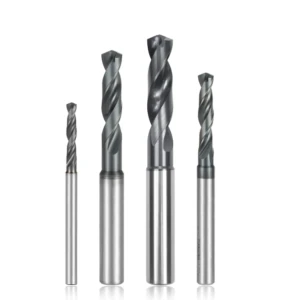
Why do workshops frequently complain about the premature failure of high-performance metal cutting drills?
We often talk to purchasing managers who wonder why their lines still suffer from high tool breakage rates after switching to premium carbide tools. In our discussions with automotive machine shops in Texas and Ohio, we see a common misconception: an over-reliance on nominal hardness while ignoring the dynamic machining environment. High-performance tools are like Formula 1 cars; they have a very low tolerance for errors regarding cutting parameters, clamping rigidity, and cooling conditions.
Shop-floor feedback reveals that most abnormal failures stem from mismatched machine tool rigidity or poor thermal stress management. Running aggressive feeds on aging machining centers allows minute spindle vibrations to amplify at high RPMs, subjecting the cutting edge to fatal alternating stresses upon contact. Blindly pursuing premium brands without optimizing the actual machining process is futile, which is why many technical managers find that a high-performance drill bit for cutting metal fails to reach its expected service life.
Identifying the most common “silent killers” based on 16 years of technical support
Over 16 years of industrial technical support, we have found that tools are rarely ruined by bad material hardness, but rather by elusive “silent killers.” The most deceptive ones are spindle radial runout (T.I.R.) and collet clamping force decay. When troubleshooting work-hardening materials like titanium or Inconel, many engineers obsess over cutting speeds but rarely dial-indicate the holder. If runout exceeds 0.01 mm, the cutting balance is disrupted, causing one edge to take double the load and suffer premature micro-chipping.
Another overlooked killer is pressure fluctuation in Minimum Quantity Lubrication (MQL) or internal coolant systems. When handling high-volume orders with deep holes exceeding 8D, incorrect coolant concentration or low center-pressure fails to flush out chips, causing dangerous secondary cutting. The sudden torque spike from this chip compression is the primary culprit behind a metal cutting drill bit snapping inside the hole, an event often wrongly logged as simple tool fatigue.
Stop Blindly Swapping Tools: Why We Insist on Analyzing Wear Patterns Before Discussing Tool Life
When new clients want to switch vendors due to tool life issues, we—as experienced tungsten carbide drill bit suppliers—never rush to drop a quote. Instead, we require them to send their used bits, complete with their wear marks, to our laboratory. Under high-magnification optical microscopy, features like flank wear, coating delamination, or plastic deformation clearly reveal the actual physical processes the tool endured inside the hole.
Blindly replacing tools without analyzing wear patterns typically leads to repeating the same expensive mistakes. We firmly believe machining is a rigorous science requiring the correlation of data with physical evidence. By accurately characterizing these patterns, we can reverse-engineer the optimal IPR range for the machine tool and even identify misaligned coolant nozzles, ensuring our tungsten carbide drill bits for metal deliver their true cost-effectiveness.
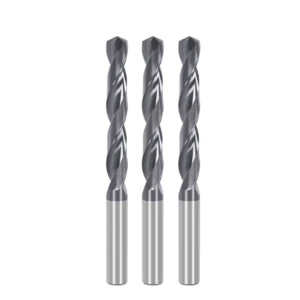
Issue 1: Chipping — Solving the problem of drill bit breakage caused by unstable rigidity
On a high-volume production line, sudden, minute fracturing of the carbide cutting edge—commonly known as chipping—is often more troublesome than uniform flank wear. This failure rarely gives advance warning via prolonged sparking or abnormal noise; instead, it occurs instantly. We often see a tool performing perfectly until a corner of its cutting lip suddenly chips, causing an immediate imbalance in cutting forces that completely destroys the metal cutting drill bit.
When using drill bits that are extremely hard but inherently brittle, minor vibrations from interrupted surfaces, sand inclusions, or machining stresses translate into unacceptable impact loads. The key to solving this is not just seeking a more wear-resistant material, but enhancing the rigidity of the entire machining chain. Minimizing the minute tool deflection and oscillation that occur during dynamic machining is essential to preventing the physical tearing of the tool tip.
Real-world Case Study: Why do the cutting edges of tungsten carbide drill bits suffer from micro-chipping when machining austenitic stainless steel?
Last year, we handled a tough project involving 316L austenitic stainless steel for a valve manufacturer. While using our tungsten carbide drill bits for metal to drill deep holes, the client frequently encountered micro-chipping on the primary rake face. Austenitic stainless steel work-hardens aggressively, meaning the surface left by a previous cut becomes exceptionally hard. If the drill slips even slightly upon entry due to poor rigidity, the edge rubs and squeezes against this hardened layer rather than cutting it cleanly.
This physical compression instantly generates intense localized heat and shear stress, causing the inter-granular bonding strength of the carbide to reach its limit and chip. We advised the client that, rather than lowering parameters, they should increase the feed per revolution (IPR) by 15%. This forced the tool tip to penetrate past the cold-worked layer and utilized the material’s own plastic deformation to stabilize cutting forces, effectively eliminating the brittle chipping.
Our CNC Shop-Floor Troubleshooting Checklist: Hardcore Solutions Ranging from Collet Runout to Spindle Rigidity
If you encounter cutting-edge fracturing in your shop, stop the machine immediately and use a dial indicator to check the tool’s radial runout (T.I.R.). We recommend measuring at a distance of 3D from the collet face; if runout exceeds 0.008 mm, the multi-edge cutting balance is destroyed. In such cases, cleaning the spindle bore or switching to a high-precision shrink-fit or hydraulic holder is far more effective for your metal drilling bit than messing with speeds and feeds.
Next, look closely at the rigidity of the machine spindle and the workholding fixtures. If the XYZ-axis ball screws exhibit backlash, or if a hydraulic fixture loses clamping force under prolonged operation, the workpiece will undergo minute displacements under heavy axial drilling forces. Incorporating a rigid spotting operation to stabilize the entry path or slowing down the entry feed in the G-code are robust technical strategies that most directly extend the life of your drill bit for cutting metal.
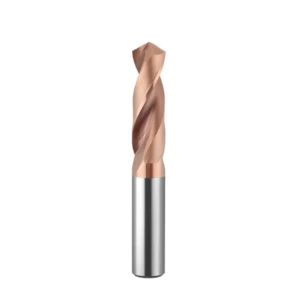
Failure Mode 2: Flank Wear — Maximizing the Service Life of Metal Drilling Bits in Highly Abrasive Materials
In high-volume machine shops, uniform flank wear is considered the ideal sign of normal tool life. However, when normal abrasive friction accelerates into excessive wear, an edge expected to run for hours can flatten out in minutes. We frequently see shops fail to catch this gradual deterioration early on, causing cutting forces to spike, holes to shrink, and catastrophic heat-induced tool failure to take over.
To stop this rapid dulling in abrasive metals, you must manage the microscopic friction and heat at the cutting zone. Unlike a sudden chip, excessive flank wear is a slow battle against hard inclusions that act like tiny grinding wheels scraping away your tool’s protective coating. Maximizing the life of a premium metal drilling bit requires recalibrating your parameters to alter how heat and friction interact at the tool-workpiece interface.
Real-World Customer Pain Point: The Root Cause of Rapid Flank Wear on Metal Drilling Bits When Machining Cast Iron or High-Hardness Mold Steel
We ran an on-site diagnosis for a midwestern contract manufacturer drilling compacted graphite iron (CGI) brake discs and HRC 50 mold steel. Their bits were suffering from rapid flank spalling and dulling after just a few cycles. The abrasive matrix of cast iron and the hard alloy carbides in mold steel mercilessly grind down the carbide substrate, causing the cobalt binder to soften under heat and drop its protective tungsten grains.
When technical supervisors spot a dull flank, they instinctively cut the feed rate to “protect” the tool, but this actually accelerates the damage. A low feed rate forces the tool tip to rub and slide against the work-hardened friction layer longer, generating massive frictional heat. This issue stems from an imbalance between the coating’s red-hardness and the substrate’s wear resistance, meaning you must alter the cutting mechanics rather than just slowing down.
Optimizing Cutting Parameters: Mitigating Frictional Wear through Precise Adjustments to Speed and Feed
When fighting highly abrasive metals, our go-to shop floor strategy is to fine-tune the relationship between surface footage (SFM) and chip load (IPR). If flank wear progresses too quickly, we immediately drop the cutting speed by 15% to 20%. Because cutting temperature scales non-linearly with SFM, lowering your RPM directly suppresses thermal softening, preserving the substrate hardness of your tungsten carbide drill bits for metal.
Simultaneously, we maintain or slightly bump the feed per revolution by 10%. A heavier feed forces the cutting edge to bite deeply past the abrasive surface layer, reducing friction at the hole wall while throwing the heat out into a thicker chip. Combined with an AlTiN nano-coating that forms a thermal-shielding aluminum oxide film during cut, this parameter adjustment is how we maximize output for a metal cutting drill bit under harsh conditions.
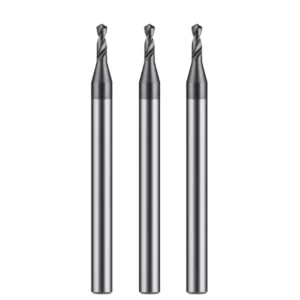
Issue 3: Built-Up Edge (BUE) — The Fatal Clinging of Sticky Metal to Carbide Drill Bits
If your CNC machine exhibits erratic spindle load spikes or spits out holes with a finish as rough as a wood file, you are likely battling a Built-Up Edge (BUE). This occurs when machining gummy, ductile metals with low melting points under high heat and pressure. The chip fragments literally cold-welded themselves to the rake face, forming a hardened mass of material that alters the geometry of your tungsten carbide drill bits for metal.
Some operators mistakenly think this material buildup acts as a “false edge” that protects the tool tip. In reality, this buildup is highly unstable under drilling forces, constantly breaking off and reforming in split seconds. Every time the BUE tears away, it rips microscopic carbide grains right out of the tool substrate, causing rapid spalling and catastrophic failure. This cold-weld tearing is the top killer of a high-performance metal cutting drill bit in sticky metals.
The Machining Nightmare of Aerospace-Grade Aluminum and Low-Carbon Steel: How BUE Can Instantly Ruin a High-Quality Drill Bit
Our B2B clients machining 7075-T6 aerospace aluminum or 1018 low-carbon steel have all dealt with the sudden wreckage caused by chip adhesion. We recently solved a project involving aluminum hydraulic valve blocks where the drilling sound went from a clean hum to a dull thud before the tool snapped. When we pulled the broken tip from the part, the flutes were completely packed with melted, welded aluminum chips.
Aluminum and soft steels share a high chemical affinity with carbide at elevated temperatures, causing chips to enter a state of plastic flow under pressure. If these chips cannot escape the hole smoothly, they freeze onto the tool face, turning your sharp cutting edge into a blunt extrusion wedge. This extrusion spikes axial thrust and causes severe secondary chip packing in the flute, snapping an expensive metal cutting drill bit in less than a second.
Our Workshop Solution: Beyond Increasing Coolant Pressure, What Polishing Fine-Tuning Can Be Done to the Drill Bit Flutes?
While bumping up your through-coolant pressure helps flush chips, a real long-term fix requires dropping the friction coefficient inside the flute itself. We solve this by introducing localized, mirror-finish polishing to the drill flutes on a 5-axis tool grinder. Bringing the surface roughness down below Ra 0.1μm eliminates microscopic grinding ridges, ensuring chips slide out seamlessly without grabbing.
Additionally, fine-tuning the edge honing at the cutting corner is a critical manufacturing art. When drilling gummy metals, an overly sharp razor edge actually invites premature adhesion, so we apply a slight “waterfall” radius to strengthen the lip. Pairing this geometry with low-affinity coatings like DLC or TiB2 allows chips to glide out smoothly, disrupting the cold-welding conditions and restoring the life of your drill bit for cutting metal.

Failure Mode 4: Plastic Deformation — Edge Collapse Caused by High-Temperature Softening
Under extreme cutting conditions, you might encounter a frustrating failure where the tool shows no chips or abrasive wear, yet the cutting edge looks collapsed or rolled over. This is plastic deformation, caused by extreme heat building up in the cut faster than the tool can dissipate it. The cutting edge undergoes a localized softening process, causing the rigid carbide to deform like modeling clay under thousands of Newtons of axial force.
This edge collapse is notoriously hard to spot early on without a microscope, usually starting as slight edge rounding. However, as the deformation worsens, the drill loses its shear angles, the contact friction area expands exponentially, and a rapid thermal failure cycle takes over. This material structural breakdown tells you that your SFM or material hardness has breached physical limits, making it a critical flaw you must design out of any high-intensity metal drilling bit operation.
Machining Inconel (Superalloys): Why Do Even the Hardest Tungsten Carbide Drills Experience Cutting Edge Softening?
When supporting aerospace machine shops running nickel-based superalloys like Inconel 718, hole-making is always a brutal challenge. One partner reported that their tungsten carbide drill bits for metal were suffering from severe edge rolling and micro-chipping after only a few holes. The underlying culprit here is thermal conductivity: superalloys transfer virtually no heat, meaning roughly 70% of the cutting energy stays trapped right at the tool tip.
During continuous drilling, temperatures at the bottom of the hole can blast past 900°C (1650°F) within seconds. At this threshold, the cobalt binder phase that holds the carbide matrix together softens completely, losing its structural grip on the hard tungsten grains. This is why simply buying the hardest tool on the market fails; if your SFM isn’t matched to the material’s thermal properties, the edge will deform under the combined assault of heat and mechanical stress.
The Underlying Logic of Coatings and Materials: How We Block Heat with High-End Nano-Coatings
As industrial tungsten carbide drill bit suppliers, we know that stopping plastic deformation requires advanced material science, not just higher bulk hardness. We address these extreme thermal applications by using ultra-fine or nano-grained carbide substrates that offer superior hot-hardness and creep resistance. This advanced grain structure allows the drill skeleton to maintain its rigid shape even when operating at environments well above 800°C.
Our primary line of defense is a specialized nanocomposite coating like nACo or AlTiN, applied at a thickness of just a few microns. We enrich the aluminum content of this coating so that when drilling temperatures spike, the surface aluminum reacts with oxygen to form a dense, micro-thin layer of aluminum oxide (Al2O3). This layer acts as a thermal shield, blocking 900°C temperatures from penetrating the substrate, allowing our metal drilling bit to maintain a sharp, stable edge under red-hot conditions.
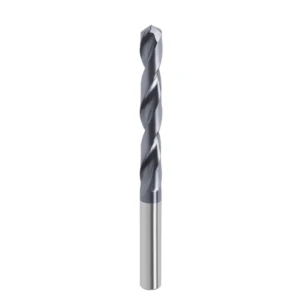
Failure Mode 5: Shank or Body Breakage (Catastrophic Breakage)—A Disaster for CNC Automated Machining
Nothing stresses a workshop supervisor more than a drill bit snapping completely inside a hole. It brings the CNC automated line to a grinding halt, and the hard carbide fragment left behind is notoriously difficult to extract, often scrapping a high-value workpiece. The spindle is spinning at high speed one moment, and the next, a jarring snap leaves the operator zero time to hit the emergency stop.
This total breakage occurs when cutting torque or axial resistance momentarily exceeds the torsional strength limit of the carbide substrate. Unlike gradual wear, a catastrophic snap is the explosive culmination of multiple adverse factors packing together at the bottom of the hole. To defuse this hidden bomb on unmanned lines, you must identify the physical culprit causing fatal stress concentration on the tool body, eliminating the risk of a broken drill bit for cutting metal at the source.
Chip Evacuation Obstruction or Instantaneous Overload? A Deep Dive into the Real Culprit Behind Sudden Drill Bit Breakage at the Hole Bottom
When we examine the torsional shear cracks of broken bits under a microscope, the root cause is rarely excessive cutting force, but secondary chip packing. This is incredibly common in deep holes with length-to-diameter ratios exceeding 5D. If chips fail to break into clean “comma” shapes and form long, wide ribbons instead, they twist and compress within the helical flutes, instantly choking the evacuation channels.
Once the flute is choked, newly generated chips smash together at the hole bottom, generating massive frictional resistance. To maintain its programmed RPM, the spindle forces a massive torque spike that exceeds the torsional limit of the carbide, snapping the tool instantly. When troubleshooting, we advise peers never to immediately blame material hardness; instead, inspect your chip nests, as poor evacuation is the true killer of a metal cutting drill bit.
Engineering Programming Techniques: Practical Choices Between G83 Peck Drilling and No-Peck Cycles to Optimize Drill Bit Loading
Controlling the mechanical loads inside a hole depends heavily on your choice of canned programming cycles. Many machinists habitually default to a G83 high-speed peck drilling cycle for deep holes, relying on frequent retractions to clear chips and get coolant to the tip. While effective on older machines without through-spindle coolant, every re-entry strikes the hole bottom again, which triggers premature micro-chipping in work-hardening metals.
If your machining center has high-pressure through-spindle coolant, we highly recommend a “No-Peck” single-pass strategy. Steady internal coolant pressure flushes chips out effortlessly, allowing a high-quality metal drilling bit to maintain a constant cutting load and thermal balance. Of course, when dealing with extreme depth-to-diameter ratios or highly viscous metals, a hybrid strategy combining a straight plunge with a localized G83 peck cycle is where your practical shop-floor experience is put to the test.
Partnering with Trusted Tungsten Carbide Drill Bit Suppliers to Build Comprehensive Machining Failure Records
Whether dealing with chipping, flank wear, built-up edge, plastic deformation, or catastrophic breakage, no tool failure occurs in isolation. Every instance of unplanned CNC downtime stems from a lost equilibrium between machine rigidity, parameters, nano-coatings, and metallurgy. As tungsten carbide drill bit suppliers serving top-tier manufacturers, we believe selling the tool is just step one; the real value lies in helping your workshop build a systematic failure log.
Blind guesswork or frantic brand-switching during a production crisis only inflates trial-and-error costs while prolonging downtime. Logging details for every failed tool—including cutting speed (SFM), feed (IPR), and material heat numbers—allows you to correlate wear patterns and optimize your toolpaths. This data-driven approach is the ultimate key to stabilizing your production line and getting the maximum value out of your tungsten carbide drill bits for metal.
Send Us Your Broken Tools: How We Use High-Power Microscopy to Create Customized Metal Cutting Drill Bit Optimization Plans for Western Clients
If you are currently battling unresolved tool failures, or if your line is forced to back off on feed rates due to constant breakage, let’s look at the evidence. You can collect your worn or broken bits and send them directly to our technical laboratory. Under high-power optical microscopes and scanning electron microscopes (SEM), we analyze the primary cutting edges and fracture surfaces to reconstruct the exact thermal and mechanical stresses the tool endured.
Every shop operates with different equipment rigidity, coolant delivery, and operator habits. If you are preparing for a new project involving complex parts, or trying to boost efficiency on hardened steels or superalloys, we invite you to share your operating conditions, part drawings, and material grades with us. We are ready to provide tailored recommendations covering tool geometry, coating selection, and CNC programming to help you recover the costs otherwise lost at the bottom of the hole.