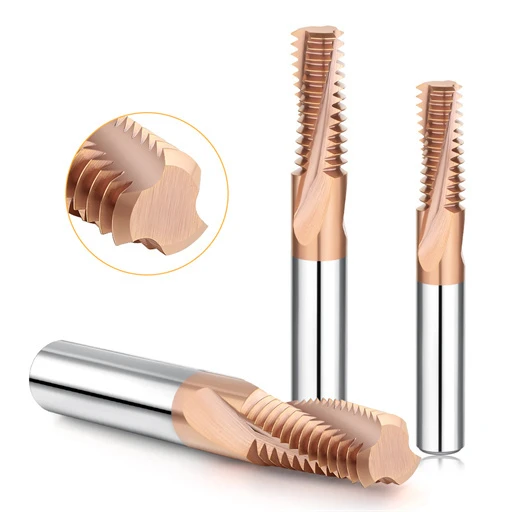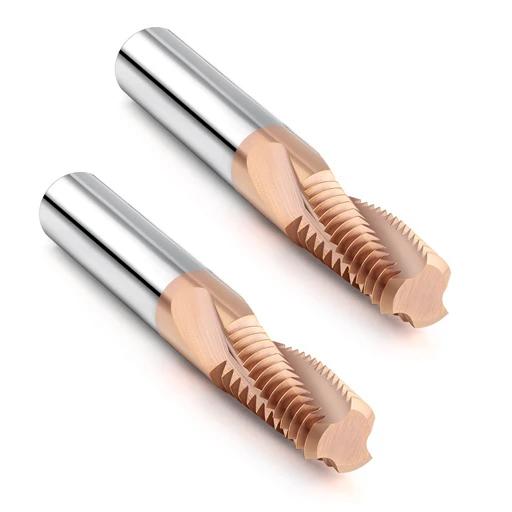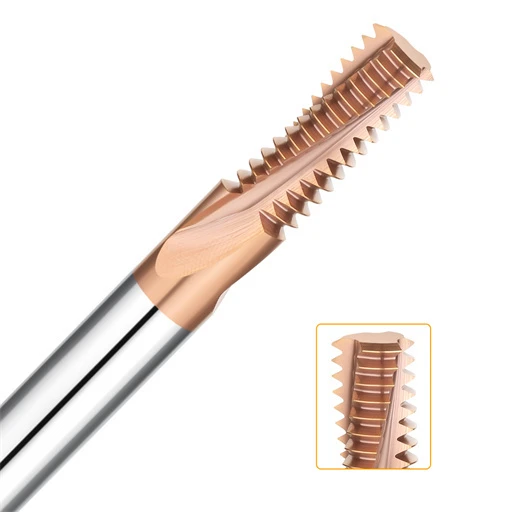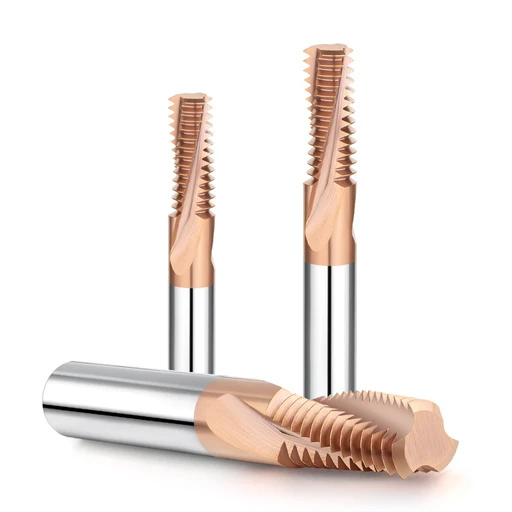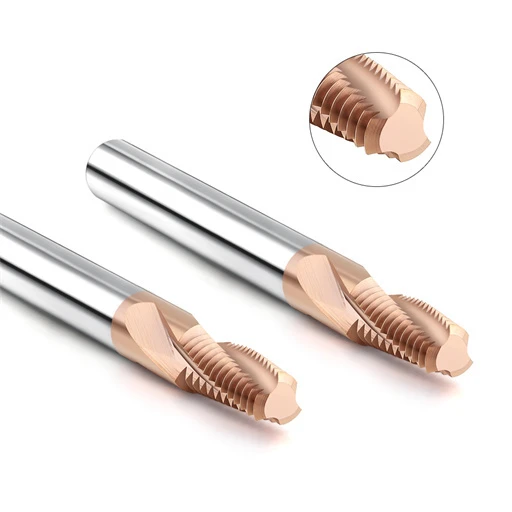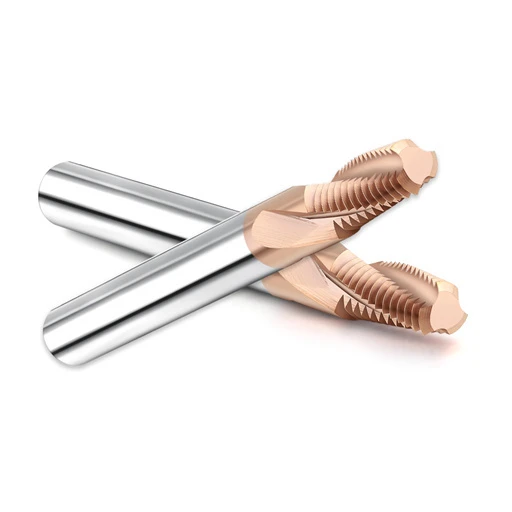

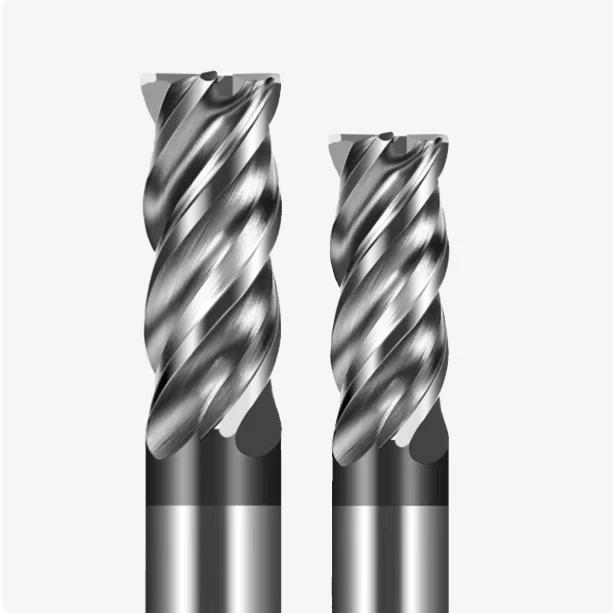
Last month, a long-standing client—a precision machine shop in Texas specializing in aerospace hydraulic components—emailed us with a severe complaint. They reported that the service life of our latest carbide milling cutter HRC60 batch had been cut exactly in half. They were running a batch of heat-treated 4140 mold steel. Typically, each solid carbide tool could handle 15 workpieces. This time, the cutting edges developed severe micro-chipping after just five parts. The shop supervisor was furious. He bluntly asked whether we had messed up the grain size of the carbide rods or the composition of the PVD coating.
As a long-term carbide milling cutter manufacturer, we are all too familiar with these “sudden, inexplicable” field failures. Instead of engaging in bureaucratic back-and-forth from our office, we immediately hopped on a video call with their process engineer. I instructed him to leave the damaged end mill milling cutter right in the spindle. Then, I had him set up a high-precision dial indicator (accurate to 0.001mm) to measure the radial runout at the tool tip.
The result was exactly what I expected: the indicator needle wavered by a full 12 microns (0.012mm).
This 12-micron reading represents a critical blind spot that we encounter repeatedly in B2B technical support. Many shop supervisors assume that buying the most expensive tooling and calculating precise speeds and feeds makes the process foolproof. However, they overlook a crucial mechanical fact. For high-hardness, high-rigidity tools, the margin for toughness is pushed to its absolute limit. This leaves virtually zero tolerance for radial runout.
Think about the math behind a 12-micron runout. As the tool spins at high RPMs, the actual chip load or inches per tooth (IPT) borne by one specific flute instantly doubles. Meanwhile, the flute on the opposite side cuts absolutely nothing. This uneven mechanical shock and thermal stress will destroy a precision tool within minutes. Whether it is a ball nose CNC milling cutter finishing intricate mold cavities or a standard end mill doing aggressive roughing, excessive runout always ends in chipped edges.
Worse still, frontline operators spend days troubleshooting programming, materials, or coatings. Yet, they consistently overlook a heavy-duty tool holder that has been abused for two years, or a microscopic layer of grime lurking inside the spindle taper.
To my fellow engineers working on the shop floor: take a moment to reflect. Regarding the high-hardness cutters that inexplicably snapped or chipped in your shop last month—are you truly certain the problem lay with the tool quality, or was it those few ignored microns of runout?
The Cost of Neglecting Runout When Using a Carbide Milling Cutter HRC60
Radial runout is a massive hidden shop cost. When evaluating efficiency, workshops focus on machine power, cycle times, or raw material costs. Few calculate how much profit is devoured by a dozen microns of runout. Upgrading to an HRC60 milling cutter while maintaining lax setup practices will disrupt your entire workflow.
Runout shatters the delicate force balance across the tool’s cutting edges. This triggers localized overheating, rapid mechanical fatigue, and frequent downtime for tool changes. It degrades CNC machine utilization and ruins surface finishes. Shops lacking precision measurement capabilities often mistakenly blame these losses on poor tool wear resistance or flawed programming.
Why a 0.01mm Runout Can Instantly Chip a High-Hardness End Mill
Before tightening your next 4-flute end mill milling cutter, consider this number: 0.01mm. While 10 microns seems insignificant—about one-eighth the thickness of a human hair—it is a death sentence during high-speed finishing. A 0.01mm runout forces a single cutting edge to bear double or triple the intended chip load, concentrating extreme stress on one flute and exceeding the material’s flexural strength limit.
Ultra-fine-grain HRC60 cemented carbide exhibits exceptional hot hardness but severe brittleness. It cannot yield or deform plastically to absorb uneven loads. When an eccentric tool repeatedly strikes a hardened workpiece at high speeds, the leading edge takes violent, intermittent impacts. Under a microscope, these failed tools show distinct high-frequency fatigue fractures rather than standard abrasive wear.
From Our Tech Support Files: How an American Aerospace Client Lost $5,000 in Dead Tooling
Last autumn, we customized a batch of premium ball nose CNC milling cutters for a U.S. shop machining aerospace actuator components. Due to strict surface roughness ($R_a$) specs, they ran the job on a high-end 5-axis machining center using light depths of cut. On day one, the supervisor reported that the tools lost their geometry in less than two hours due to severe chipping near the ball apex, scraping three expensive composite workpieces.
Our technical support team ruled out programming errors and had the operator check the dynamic runout at the spindle nose. The culprit was a layer of fine metal dust packed inside a seemingly brand-new hydraulic tool holder. This contamination caused a 14-micron eccentricity when clamped. This tiny error reduced a thousand-dollar tool to scrap metal in hours, costing the shop $5,000 in the first week. Once they established a standardized tool-holder cleaning protocol, tool life immediately hit its target.
Why Traditional Metal Milling Cutters Forgive Runout, but HRC60 Tooling Does Not
Operators transitioning from older job shops often wonder why a worn collet or a wobbling tool works fine on 45-gauge steel or aluminum but fails on harder materials. A traditional, lower-hardness milling cutter for metal (like HSS) shows high tolerance for minor runout. The tool substrate has enough structural toughness to deform elastically and absorb uneven loads, and soft materials do not exert intense reactive forces against the edge.
When machining through-hardened HRC60 workpieces, that empirical approach fails. The workpiece hardness pushes the load-bearing capacity of the carbide substrate to its absolute limit while cutting zone temperatures soar. Under these extreme conditions, the tool lacks the toughness to forgive spindle eccentricity or collet wear. Every micron of lateral overload instantly transforms into a destructive force, causing catastrophic chipping.
3 Hidden Sources of Runout in Your CNC Machine Setup
Troubleshooting premature tool wear in machine shops across North America reveals a clear pattern. When machining issues arise, operators usually check the program, drop the feed rate, or complain to the tool vendor. However, our on-site diagnostics show that 70% of these problems stem from workholding and machine hardware setups. These minute errors seem harmless when cutting soft materials, but they amplify runout during high-load, precision operations.
A complete machining setup is a single, rigid chain: spindle, tool holder, collet, and cutting tool. The setup is only as strong as its weakest link. Many shops invest in expensive machining centers but buy cheap ancillary components to save money. Based on our 16 years of manufacturing and troubleshooting experience, three hidden setup errors consistently sabotage high-precision work and diminish shop efficiency.
The Collet Failure: Why Premium Tools Are Ruined by Cheap Chucks
As a dedicated carbide milling cutter manufacturer, we use high-precision inspection equipment to ensure tool shank concentricity meets strict tolerances. However, engineers frequently insert these meticulously crafted tools into worn ER collets or components sourced from discount suppliers. This practice prevents the collet’s elastic clamping leaves and taper angles from achieving a flush fit with the tool shank, triggering geometric eccentricity at the cutting edge.
Cheap or fatigued chucks harbor taper errors and internal indentations. When tightened, this uneven clamping force forces the cutting tool to tilt sideways inside the holder. In field diagnostics, a spindle with excellent static runout often sees its overall runout skyrocket once a cheap chuck is installed. This practice wastes high-quality equipment and ruins the micro-precision achieved during tool manufacturing.
Spindle Contamination and Wear: The Enemy of Precision Ball Nose Performance
Finishing complex mold cavities with a ball nose CNC milling cutter leaves no room for compromise on surface finish. In precision 3D profiling jobs running over dozens of hours, microscopic wear or oil residue inside the spindle taper acts as an invisible killer. Operators often swap tools rapidly without wiping down the spindle interior with a specialized taper cleaning stick, allowing oil mist and microscopic chips to pack tightly inside the taper pocket.
An oily layer of grime just 5 microns thick induces asymmetric eccentricity across the clamping system under drawbar pressure. Projected down to the tip of a long-reach ball nose mill, this eccentricity translates into high-frequency vibrations and cutting imbalances, leaving visible chatter marks on the workpiece. If mechanical wear within the spindle pocket is not corrected through grinding and calibration, this runout permanently caps the performance of your precision ball nose tools.
Improper Pull Stud Torque: An Overlooked Cause of Sudden End Mill Deflection
Pull stud torque control is a heavily underestimated assembly detail. Many machinists install pull studs using a standard wrench and brute force, or use a pneumatic impact gun to tighten them to the limit. They mistakenly believe that tighter means safer. However, excessive torque transmits immense tensile force through the threads to the thin-walled section of the holder’s 7:24 taper, causing a minute outward expansion at the tail end of the tool holder.
This metal deformation prevents the tool holder from achieving uniform, full-surface contact when seated into the spindle socket, resulting in localized binding. At high operating speeds, this distortion causes severe lateral deflection and vibration in your end mill milling cutter setup. We once worked with a contract shop where we simply introduced a calibrated torque wrench to standardize pull stud tightening. This minor adjustment successfully doubled the lifespan of their end mills.

Real Machining Symptoms: Diagnosing Runout Before Your HRC60 Carbide End Mill Fails
Nothing is more frustrating than a high-value tool suffering a sudden, catastrophic failure with zero warning. It is far better for a tool to reach its natural end of life through progressive abrasive wear. When running high-value HRC60 carbide end mills in heat-treated steels, the margin for error is razor-thin. If your shop lacks the discipline to regularly check spindle and fixture runout with an indicator, you must learn to read the machine like a diagnostician to catch excessive eccentricity early.
While machine spindles and solid carbide cutters cannot talk, their operational anomalies serve as direct warning signals. When you hear an unusual cutting pitch or see strange changes on the workpiece surface, do not blindly alter the G-code or swap the coolant brand. Based on our 16 years on the machining front lines and in tool regrinding rooms, three distinct symptoms indicate that your system’s runout has crossed the red line.
Unexplained Micro-Chipping on One Specific Flute of Your Metal Milling Cutter
A brand-new milling cutter for metal used for side milling or roughing can sometimes show severe micro-chipping on just one specific flute after less than ten minutes of runtime, while the other cutting edges remain pristine. Shop supervisors often assume this particular flute suffered from a material defect during manufacturing and file a complaint. However, the odds of a modern five-axis CNC grinder producing a defect on a single isolated flute from a solid carbide blank are extremely low.
This single-flute micro-chipping is almost 100% attributable to eccentricity within the tool clamping system. When the cutter spins at high speeds, this eccentricity makes that specific flute the most aggressive point on the tool body. The actual feed per tooth and impact force it endures during every single entry into the metal far exceed what the other flutes experience. This uneven mechanical hammering causes the PVD coating on that single edge to peel away, leading to micro-chipping and an eventual cascading failure across the remaining flutes.
High-Frequency Chatter and Poor Surface Finish with Your Ball Nose CNC Milling Cutter
When a workshop uses a ball nose CNC milling cutter for high-precision 3D mold finishing, surface quality (Ra value) is measured strictly in microns. If you hear a sharp, piercing, high-frequency screech during a profiling pass and notice the machined surface looks like fish scales instead of a silky mirror finish, sound the alarm immediately. This phenomenon means your cutting system has lost its dynamic balance.
During contouring operations, the linear velocity of a ball nose tip drops toward zero as it approaches the central axis, making the tool highly sensitive to fluctuations in cutting forces. If the setup is further burdened by even a few microns of static or dynamic runout, this asymmetrical eccentricity transforms into a potent source of high-frequency harmonics at high RPMs. This excitation disrupts the stable contact between the tool and the workpiece, causing the cutter tip to skip and bounce rapidly across the metal, turning the part into scrap.
Uneven Tool Wear Patterns: Why One Flute Does 80% of the Heavy Lifting
Our customer service archives contain numerous technical inquiries regarding tool life falling short of expectations. When we analyze these returned tools under a high-magnification microscope, we frequently see a dramatic sight: on a four-flute tool, the flank face of one primary cutting edge exhibits severe mechanical wear, a completely abraded coating, and early thermal fatigue cracks. Meanwhile, the wear on the remaining three flutes is negligible.
This scenario represents one flute doing all the heavy lifting while the other three just watch. Due to severe radial runout, the rotational center of the entire clamping assembly shifts toward that single leading edge. Consequently, during the actual metal-cutting process, this single flute shoulders up to 80% of the entire cutting workload. This extreme load imbalance cuts the tool’s theoretical service life to a fraction of its potential, creating a vicious cycle where runout accelerates wear, and that accelerated wear worsens the runout.

Practical Solutions: How We Help Clients Eliminate Runout and Double Tool Life
Many shop supervisors facing bottlenecks with high-hardness materials chase expensive, drastic fixes. They buy brand-new machining centers or cycle through endless grades of cutting fluid. However, 16 years on the shop floor proves that focusing on workholding details and basic maintenance resolves most runout-driven failures at a fraction of the cost. Optimizing the tool-holding chain consistently doubles tool life without changing programming or toolpaths.
Eliminating runout is not mysticism; it requires standardizing “anti-runout shop protocols.” When precision plateaus, do not blindly back off your feed rates and sacrifice productivity. Instead, systematically inspect the tool-holding chain from the spindle down to break the chain of error propagation. The following real-world strategies are proven to eliminate tool chipping and premature wear.
The 4-Step Spindle and Holder Cleaning Protocol We Recommend to Every CNC Workshop
When clients report abnormal tool wear, our technical support staff rarely checks the cutting parameters first. Instead, they pull out a clean spindle taper cleaning stick. In 24/7 shops, the interface between the spindle internal taper and the tool holder mating surface quickly collects a thin film of oil mist, microscopic carbide dust, and metal chips. Under tons of drawbar force, this tiny layer of grime induces a lateral tilt in the assembly, amplifying geometric runout at the cutting edge.
We mandate this strict four-step cleaning protocol across the B2B facilities we serve:
-
Solvent Spray: Thoroughly spray the spindle taper bore with a non-corrosive solvent during every shift change to dissolve residue.
-
Taper Wipe: Use a fiber cleaning stick matched to your spindle model to perform a full rotating wipe, removing all sludge.
-
Component Inspection: Meticulously clean and inspect all tool holder tapers and pull studs for handling burrs before installation.
-
Rust Prevention: Apply a thin, light coating of anti-rust protective oil to the mating surfaces once dry.
Standardizing this single daily procedure reduces sudden tool chipping incidents by nearly 30%.
Switching to Hydraulic or Heat-Shrink Holders for Your Precision End Mill Milling Cutter
If you are running high-quality end mills at high metal removal rates in hard materials, re-evaluate your tool-holding hardware. Traditional ER collets excel in general-purpose machining, but their multi-slotted design limits clamping rigidity and natural concentricity. At speeds exceeding 10,000 RPM, ER collets fail to suppress harmonic resonance, causing lateral deflection in your end mill milling cutter.
Upgrading to hydraulic chucks or heat-shrink holders yields immediate performance spikes. Shrink-fit holders use thermal expansion and contraction to achieve a 360-degree, gap-free grip on the carbide shank, locking static runout under 0.003mm. Hydraulic chucks use an internal oil chamber to deliver exceptional coaxiality paired with superior vibration damping. This clamping system upgrade triggers massive increases in tool service life during high-speed cutting.
How to Correctly Measure Dynamic Runout on a Ball Nose CNC Milling Cutter Under Load
A common trap is relying strictly on static measurements. A tool showing 3 microns of runout on a dial indicator while stationary can misalign completely under dynamic loads. When a ball nose CNC milling cutter spins at tens of thousands of RPM while enduring heavy lateral cutting forces, spindle bearing clearances and uneven thermal expansion amplify those minor static errors.
To resolve this hidden issue, use dynamic measurement methods like non-contact laser tool setters or high-frequency eddy current sensors. Spin the ball nose end mill at its actual operating speed without touching the workpiece (“air-cutting”) to see how the rotational trajectory distorts into an ellipse on the monitor. Test and fine-tune the alignment phase of the tool holder within the spindle taper (phase compensation) to find the exact balance point that minimizes dynamic runout. Controlling the tool’s actual trajectory under load guarantees success in complex 3D surface machining.
The Manufacturer’s Perspective: How We Minimize Tool Runout at the Factory
Eliminating runout is a shared responsibility. If the tools we deliver possess inherent eccentricity or roundness defects, no high-end shrink holder or clean spindle can save the cut. When evaluating a carbide milling cutter manufacturer, look beyond the price tags and sample batches; look at the production investments they make in the invisible aspects of quality control.
In our grinding workshop, controlling runout is an end-to-end battle. From raw carbide rod selection and 5-axis tool grinder temperature compensation to final-axis precision micro-polishing, every step has a cumulative effect on the cutting edge. True manufacturing maturity means ensuring that thousands of high-hardness tools rolling off the line consistently adhere to the exact same tolerance standards.
Why a Reliable Carbide Milling Cutter Manufacturer Must Control Shank Cylindricity Within 0.002mm
While you fight runout on the shop floor, we enforce a strict production rule at the source: shank cylindricity must stay within 0.002mm. The tool shank is not just a simple cylinder. If shank cylindricity errors creep in, the tool cannot achieve 100% circumferential contact when inserted into a hydraulic or shrink-fit holder, creating asymmetrical gaps inside the chuck.
Clamping forces amplify these microscopic surface irregularities, projecting them onto the cutting edge as dynamic runout. If the service life of your high-hardness end mills remains erratic despite clean spindles and fresh holders, measure the shanks of your tooling. Reliable suppliers hold extreme cylindricity tolerances because those two microns at the source represent the line between high-efficiency production and frequent, costly downtime.
How Our Precision Grinding Processes Ensure Perfect Concentricity for Every Milling Cutter for Metal
To guarantee impeccable concentricity for every milling cutter for metal, we execute flute grinding, relief angle grinding, and outer diameter finish grinding automatically within a single clamping setup on our 5-axis CNC grinding machines. We strictly forbid secondary clamping or re-chucking during manufacturing. If a carbide blank is flipped or repositioned, even a one-micron fixture alignment error destroys multi-flute concentricity.
Because grinding carbide generates intense heat, our factory’s cutting fluid temperature control system limits fluctuations within ±0.2°C to prevent microscopic thermal expansion within the grinding machine’s spindle. This rigorous environment ensures geometric consistency from the first tool to the last.
If you are currently fighting chatter marks on complex cavities or hitting tool-life bottlenecks with high-hardness materials, assess your current fixturing rigidity and process parameters. We study materials and geometric deformation daily and want to hear your authentic shop-floor feedback. Let’s exchange details regarding your operating conditions, workpiece blueprints, or difficult materials to optimize your setup.