
With over 15 years in the trenches—from the shop floor to the grinding room—I’ve learned one thing for sure: machining mold steel hardened to HRC65 is where reputations go to die. For most CNC programmers, slotting these materials is the ultimate nightmare.
Just last month, a long-term partner—a precision shop in the U.S.—called us in a panic. They were battling a batch of narrow slots in quenched D2 steel (HRC62–64). Their end mills for hardened steel were chipping in less than five minutes. Worse, the surface finish at the bottom of the slot looked like a plowed field.
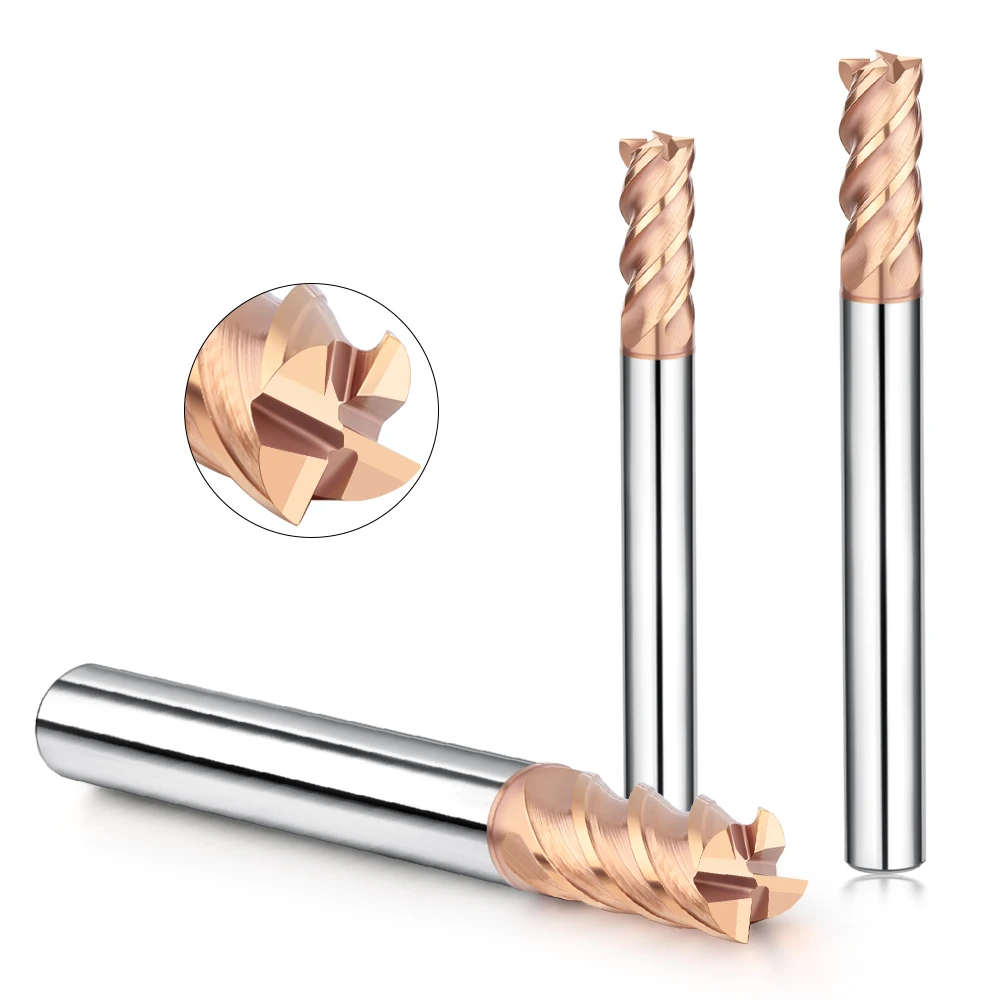
This isn’t a one-off issue. We see it constantly. Many shops buy wholesale carbide milling cutters but use the same old-school, straight-line slotting strategies they use for mild steel. In HRC65 territory, “red hardness” (the tool’s ability to resist heat) isn’t enough. If your toolpath isn’t dialed into the specific behavior of an HRC65 carbide square milling cutter, the best coating in the world won’t save you from thermal fatigue and chip packing.
In our CNC lab, we ran a series of stress tests on radial force distribution. We found that during full-width slotting, the heat doesn’t just rise; it spikes instantly at the sharp corners of the cutter. That localized thermal shock is the “silent killer” of your tools. We’ve developed strategies to bypass these “dead zones,” moving beyond textbook theory to hard-won shop floor rules. If your HRC65 end mill is screaming and snapping, the problem probably isn’t the tool—it’s the toolpath giving it no “escape route.
Why Traditional Slotting Logic Destroys Your End Mills for Hardened Steel
If you’re cutting HRC30 pre-hardened steel, you can usually brute-force your way through a full-width slot. But try that on steel over HRC60, and you’re asking for trouble. In our tests, full-engagement slotting forces the tool to fight two battles at once: massive radial impact and compressed chip evacuation in a tiny space.
Because hardened steel has immense shear resistance, the heat doesn’t stay in the chip; it stays in the tool. This “soaks” the carbide substrate, causing it to lose its edge in seconds. This is the primary failure mode for even the best end mills for hardened steel.
We tell our clients: in hard milling, don’t just “cut into” the part; “cut stably.” Through our B2B technical support, we’ve seen that shops sticking to old linear commands spend three times more on tool costs than those using dynamic milling. This isn’t about tool quality—it’s about the fact that traditional force models simply don’t work for a modern HRC65 carbide square milling cutter.
The Pitfalls of 100% Full-Width Cutting: Lessons from the Shop Floor
I remember a project involving a deep slot in HRC65 SKD11 mold steel. The client was in a rush and tried to force a 10mm HRC65 carbide square milling cutter into a full-width cut at a depth of 1D. Within three seconds, the tool was micro-chipped.
The problem with a “full-width” approach is the 180-degree contact angle. The tool has zero time to breathe or dissipate heat. We monitored the data and saw the radial runout spike instantly—no machine is rigid enough to handle those vibrations.
The rule of thumb we use now is simple: whenever possible, turn a full-width slot into asymmetrical side milling. Use step-down strategies or pre-drill a start point to relieve the pressure. Even on the toughest alloys, this keeps the cutting forces in a predictable, linear range. Don’t “brute force” a slot to save a few seconds of programming. The resulting downtime from a snapped tool will cost you much more.
Heat at the Slot Bottom: Why Your Ears are Better than the Manual
Tool catalogs give you parameters based on “ideal” laboratory rigidity. But at the bottom of a deep slot, an HRC65 carbide milling cutter is in a furnace. Chips get re-cut, and heat travels straight back into the spindle.
We’ve learned that when the sound of the cut shifts from a crisp “hiss” to a dull, vibrating rumble, the slot is saturated with chips. If you keep pushing the feed rate without clearing that debris, the tool will crack from thermal shock in seconds.
Your ears are the best sensors in the shop. Heat moves faster than your coolant can wash it away. In closed-slot scenarios, we often sacrifice 20% of the nominal feed rate to add retraction cycles. This lets the tool cool and guarantees chip evacuation. It might feel slower, but when you look at the total part yield and tool life, it’s the only way to win in high-hardness machining.
High-Efficiency Toolpath Strategies for HRC65 Carbide Milling Cutters
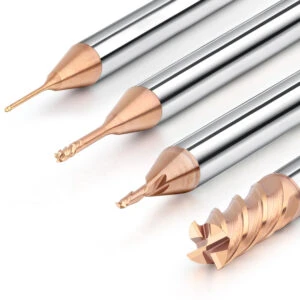
In hard milling, everything comes down to managing the “engagement angle.” When you’re cutting steel hardened to HRC65, traditional linear paths are dangerous. They subject the tool to massive, sudden spikes in radial force every time it enters or exits the material. After years of monitoring production lines, we’ve learned that the secret to a perfect toolpath for an HRC65 carbide square milling cutter is maintaining a constant cutting load.
Programmers shouldn’t just focus on feed rates in their CAM software. You have to prioritize how smoothly the tool enters the material. Avoiding shock-like load spikes is the only way to keep the carbide from shattering. A superior toolpath doesn’t just save the tool; it saves your spindle. We recommend ditching outdated algorithms that “bury” the tool in corners (180-degree contact). Instead, use dynamic toolpaths that give the cutting edge “breathing room.” You might take a shallower radial cut, but because you can jack up the surface speed and feed rate, your overall Metal Removal Rate (MRR) will actually go up.
Stop “Ramming” the Material: Using Trochoidal Milling to Protect Your Edges
There is nothing more painful than watching a square milling cutter “ram” straight into HRC65 steel. In the old days, this “direct-entry” method was a tool killer. Most cutters would chip or snap before finishing a third of the slot because the chips had nowhere to go. We’ve moved entirely to trochoidal milling strategies. By combining a small radial step-over (Ae) with a large axial depth (Ap), the tool spends more than half its time not touching the metal.
This “cut-and-rest” cycle is a game-changer for heat dissipation. It fundamentally changes your chips. Instead of long, hot ribbons that weld to the tool, you get fine, fragmented chips that blow away easily with compressed air. In our shop tests, the temperature at the tool tip during trochoidal milling was over 150°C lower than linear cutting. If you want stability, this is the most effective way to prevent thermal fatigue.
Depth-First vs Width-First: What Our Tool Life Tests Actually Show
We’re constantly asked: “Is it better to do multiple shallow passes or one deep pass with a tiny step-over?” For wholesale carbide milling cutters in high-volume shops, our data is clear: Depth-first wins. When you take shallow passes, the corner of the tool rubs the surface repeatedly. This concentrates heat right at the tip—the most fragile part of the tool.
Adopting a depth-first strategy spreads that heat across the entire cutting length of the flute. This slows down tip wear significantly. However, this isn’t a “one-size-fits-all” rule. It depends on your setup. If your spindle isn’t rigid or your fixturing is weak, deep cuts will cause high-frequency chatter. We look for a balance: use as much of the cutting length as possible until the machine starts to “sing.” Silence is the sound of a tool that’s going to last.
The Art of the Helical Entry: Avoiding the “Instant Shock”
The second your tool touches the workpiece, its fate is decided. Plunging straight down into HRC65 is basically self-destruction. Our standard SOP is a Helical Entry with an angle between 1° and 3°. This lets the end mill for hardened steel slice into the material like a drill bit rather than slamming into it with brute force. It gives the carbide substrate time to adapt to the stress.
On precision HRC65 molds, we even increase the helical radius to give chips more room to escape. If the radius is too tight, chips pack into the center of the hole and blow out the center cutting edge. We always tell our operators: back off the feed rate override during the entry. A gentle start is always faster in the long run than an aggressive plunge that breaks the tool.
On-Site Tuning: Getting the Most Out of HRC65 Square Milling Cutters
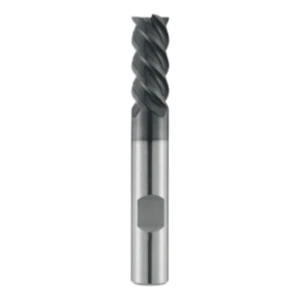
A screaming machine and a vibrating tool holder are signs that your parameters are out of whack. Usually, the issue isn’t the HRC65 carbide square milling cutter—it’s the imbalance between the machine’s response and the cutting load. In hard milling, the brittle nature of the steel amplifies every tiny vibration. We always listen to the cut before we trust the numbers. Experience tells you more than a simulation ever will.
Watch your spindle load meter. If it’s bouncing more than 10%, your tool is hitting uneven resistance in the slot. We usually fine-tune the RPM to find a “sweet spot” that avoids the machine’s resonant frequencies. We also double-check the clamping rigidity. This “micro-surgery” on the shop floor is tedious, but it’s what keeps you from scrapping a $10,000 workpiece. In the HRC65 world, theoretical rigidity is a myth; real-time adjustment is reality.
Air vs Mist: Why Chip Evacuation Is Your #1 Priority
We’ve had heated debates in our shop about “dry” vs. “wet” cutting for hard steel. For deep slots, traditional coolants often cause “thermal cracking” because the temperature change is too violent. We’ve found that a mist solution—High-Pressure Air + MQL—is the winner. It’s not just about cooling; it’s about the “blast.” High-pressure air clears those abrasive chips out of the slot instantly.
Even a tiny bit of chip resistance will kill your tool life. We’ve seen cutting edges wear out in seconds just because a few chips were re-cut at the bottom of a 15mm slot. Your cooling system’s main job isn’t cooling—it’s “clearing the path.” If you can’t get the chips out, the most expensive coating in the world won’t save you.
Radial Step-over (Ae) Control: Let Your Edges Cut with “Dignity”
When setting your Radial Step-over (Ae) for HRC65 carbide milling cutters, you have to be careful. Maintaining a consistent “chip thinning” effect is the only way to preserve tool life. A lot of guys habitually set their Ae at 10% or 15%. For HRC65, that’s way too high. We prefer 3% to 5% of the tool diameter. By using a tiny radial engagement, you can take much deeper axial cuts and run much faster.
This “fast feed, small step” approach keeps the heat in the chip and out of the tool. It requires a machine with fast acceleration and high-speed look-ahead to keep the motion smooth. When we run high-volume orders, we don’t rush. We’d rather take an extra pass to ensure every cutting edge is loaded linearly. When you see fine, blue-violet granules coming out of that slot, you know you’ve nailed it.
Managing Rigidity: Why the L/D Ratio Is Non-Negotiable
In our tech support cases for wholesale carbide milling cutters, the #1 cause of failure is the wrong length-to-diameter (L/D) ratio. Adding just 5mm of overhang increases tool deflection exponentially. Using a long-neck tool to cut a deep slot from start to finish is a recipe for disaster. Our rule: “Keep it short as long as you can.” Use a short-flute tool for roughing and only switch to the long-neck for the final passes.
Managing rigidity is really about fighting deflection. At HRC65, even a tiny bit of “push-off” leads to inaccurate depths and snapped edges. If your L/D ratio is over 3:1, you have to slow down or switch to a high-rigidity heat-shrink holder. This obsession with detail is how we maintain accuracy in extreme conditions. When you’re staring at a deep slot, don’t gamble with a single pass—stay calculated and go in stages.
Three Case Studies: Solving Premature Tool Failure in Hard Steel Slotting
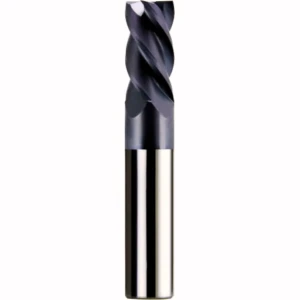
In over a decade of providing technical support, I’ve walked onto countless shop floors facing “emergency” tool failures. Usually, the headache isn’t caused by poor tool quality. Instead, it’s a well-designed workflow that suddenly collapses under the high-pressure reality of production. When you’re slotting HRC60+ materials, even a slightly misaligned coolant nozzle or a tiny spindle speed flicker can scrap a five-figure workpiece. I’m sharing these real-world case studies to help you avoid the pitfalls we’ve already mapped out.
Most “catastrophic failures” stem from a misunderstanding of the material’s physics. We often find that the feed logic is simply too rigid to adapt to the feedback of HRC65 steel. By optimizing these paths in the field, we’ve pushed our HRC65 carbide square milling cutters to their true operational limits. You might recognize your own current challenges in one of these three scenarios.
Case Study 1: Medical Components—How Changing the Feed Vector Saved the Tool
We were working with quenched 440C stainless steel (HRC62). The client was frustrated; no matter how much they slowed down the spindle, their HRC65 carbide milling cutters chipped the moment they touched the slot. On-site, we saw the issue: they were using a singular, linear vertical plunge. This forced the corners of the tool to absorb the entire impact of the entry at once.
We decisively switched the toolpath to an “Arc Entry” (or “Roll-in” entry) and re-calibrated the X and Y feed synchronization. This allowed the cutting force to load gradually. The jarring “pop” of the entry turned into a smooth hum. By preventing that “hard-on-hard” initial friction, tool life jumped from processing two parts per cutter to over fifteen. In medical-grade precision work, a flexible entry strategy is your best insurance policy.
Case Study 2: Automotive Mold Repair—Maintaining Consistency in Weld Overlays
Repairing automotive body panel molds is a “tough nut to crack.” These molds often have multiple weld-overlay repairs, making the hardness distribution incredibly uneven—some spots hit HRC65, while others are softer. Our client, who buys wholesale carbide milling cutters in bulk, was seeing wild fluctuations: one tool would last 30 minutes, the next would shatter in five.
We introduced “dynamic load monitoring” and allocated a larger machining allowance for the finishing passes. We advised the client to stop chasing maximum depth in one pass. Instead, we used smaller step-downs to “dilute” the impact of the hard spots. The program got longer, but the process became consistent. For high-volume B2B shops, prioritizing stability over raw speed is the fastest way to lower your overall consumable costs.
Case Study 3: Precision Narrow Slots—Preventing Corner Wear with Layered Clearing
On a high-hardness cold-stamping die project, a client noticed that the 90-degree corners of their square milling cutters were wearing out way faster than the side edges. This left “meat” at the bottom of the slot, ruining the assembly precision. We found that in the tight space of a narrow slot, fine chips were being crushed against the tool’s corner radius, causing secondary abrasion.
Our solution was “stepped root clearance.” We used a smaller-diameter tool to clear the material in layers, then used the standard square milling cutter for a single lateral finishing pass. This moved the pressure from the vulnerable tool tip to the rigid side edges. It added a tool change, but saved the tool’s life. Ask yourself: is saving 30 seconds on a tool change worth ruining a $200 cutter?
Final Advice: It’s Not Just About Buying the “Best” Tool
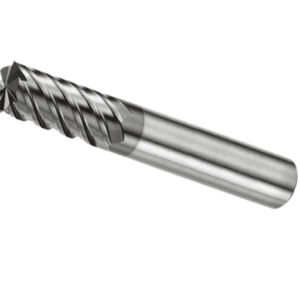
After sixteen years in this industry, I always tell my peers: “The tool is 30% of the solution; how you use it is the other 70%.” In the world of HRC65 steel, blind faith in a premium end mill for hardened steel isn’t enough. The tool is the most active, but also the most fragile, part of a complex system. If you’ve upgraded your coatings and are still seeing unpredictable wear, the problem is likely outside the tool.
When we consult for Western B2B clients, we look at the whole “stack”—spindle dynamic balance and fixture rigidity. HRC65 steel has zero “forgiveness.” It acts like a mirror; it will reflect every flaw in your system, from an abrupt toolpath change to a weak clamp, right back onto the cutting edge. If your tool life is inconsistent, stop looking at the tool catalog and start looking at your machine’s mechanical health.
Toolholder Runout: The “Invisible Killer”
In HRC65 slotting, runout is your worst enemy. Our tests show that if tool-tip runout increases by just 0.01 mm, the life of an HRC65 carbide square milling cutter drops by over 50%. Since your chip load per tooth is often only a few microns, excessive runout forces one tooth to do all the work. It chips instantly, starting a catastrophic chain reaction.
If you’re using standard ER collets for hard steel, switch to shrink-fit or hydraulic holders immediately. If your system can’t stay under 0.005 mm of runout, no carbide substrate is tough enough to survive. Stop searching for “magic” coatings and fix your clamping precision first.
Why “Short Flute” Tools Belong in Your Wholesale Order
When you’re planning your next wholesale carbide milling cutters order, add “short flute” specs to the list. Many engineers habitually buy standard lengths for deep slots, but doubling the flute length can result in an eightfold increase in tool-tip deflection.
If your slot is shallow but the material is HRC65, prioritize tools with a short cutting edge and a long, relieved neck. This design gives you maximum rigidity and prevents “push-off.” In our high-volume production, short-flute tools consistently win on dimensional accuracy and vibration control. It’s not about buying more models; it’s about respecting physics. When facing hardened steel, rigidity always beats length.
Every shop has its own “ghosts” in the machine. If you’re struggling with a specific HRC65 blueprint or a weird hardened alloy, reach out. We’ve probably got a fix in our archives that can solve your bottleneck. Are you seeing those tiny chatter marks on your finish right now? That’s the machine telling you it’s time to rethink your rigidity.