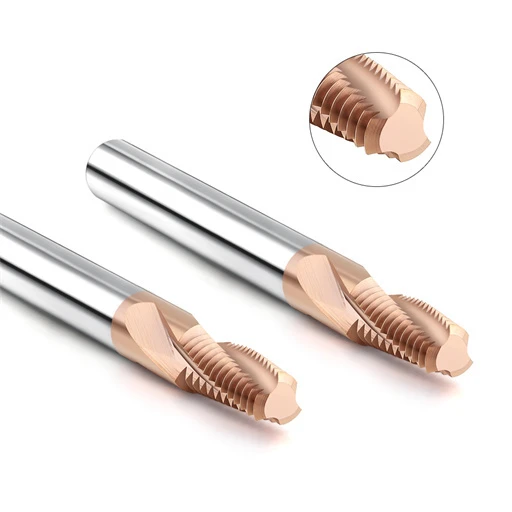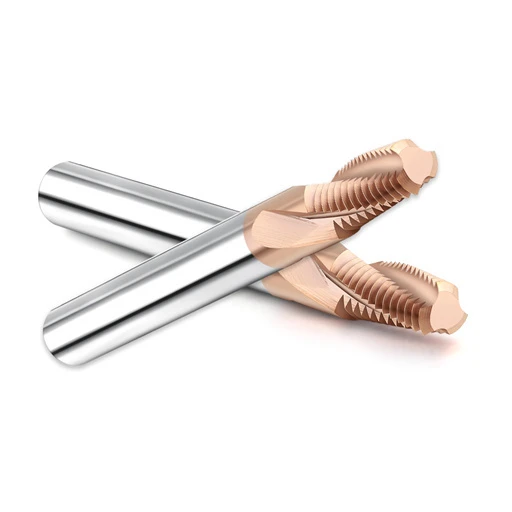

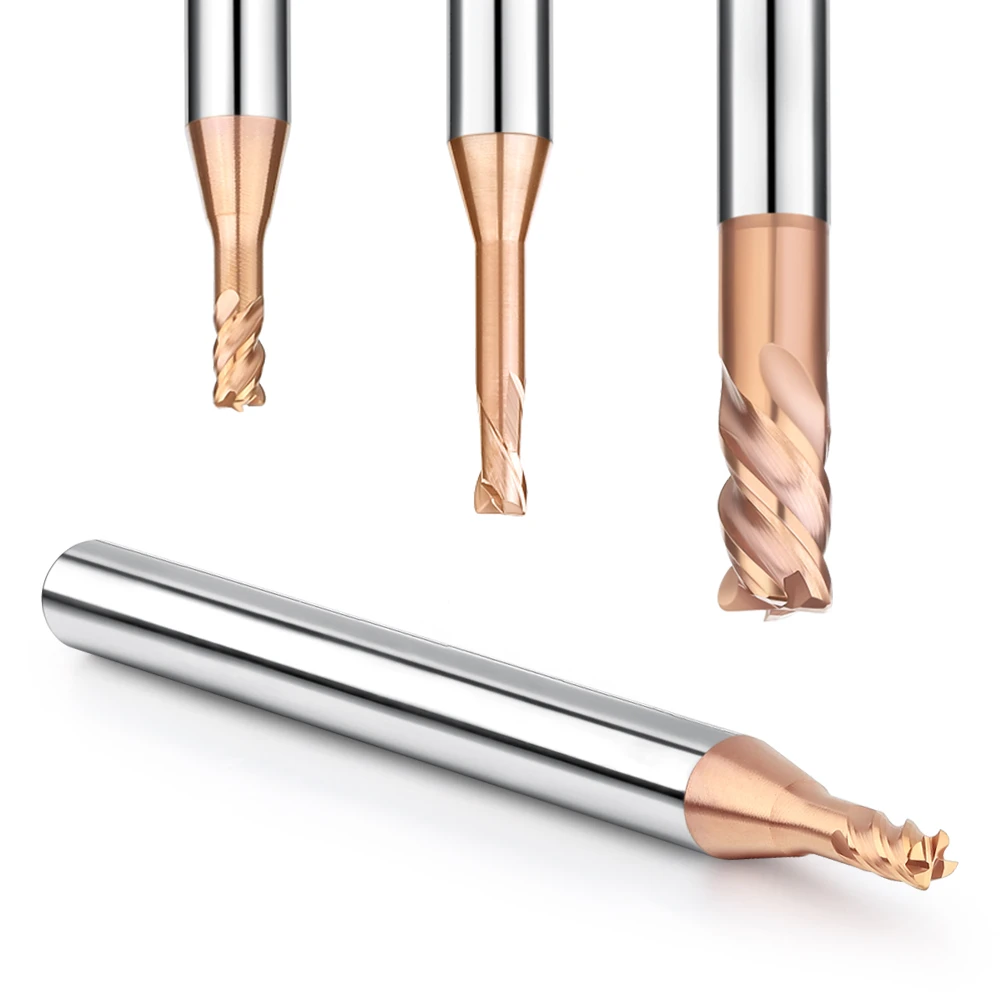
A long-established mold manufacturing plant in Ohio recently reached out to us regarding a critical failure. They were machining a stamping die made from D2 tool steel, hardened to HRC65. The client was frustrated; their “high-performance” tools were failing in less than 15 minutes. Every carbide end mill cutter either exhibited extreme flank wear or shattered completely. This cost them an expensive workpiece and forced their CNC machining center into an unplanned shutdown.
We have seen this scenario countless times during our 15 years as China milling cutter tools manufacturers. When tackling materials this hard, many shops stick to the same logic they use for standard steels. However, once you cross the 60 HRC threshold, the physics of cutting change completely. It is no longer about simple material removal. It becomes a high-stakes balance of thermal control, edge load distribution, and system rigidity.
As experienced CNC milling cutter suppliers, we’ve found that most failures aren’t caused by the tool material itself. Instead, they stem from subtle operational habits. For example, many operators still use traditional heavy-cut strategies for roughing milling cutters, ignoring how thermal expansion kills tool life during trochoidal paths.
In this article, we distill practical lessons learned from our labs and client workshops. These are not textbook theories. They are field-tested guidelines forged from the wreckage of thousands of scrapped tools. Are you ready to stop letting parameter errors waste your expensive machine hours?
Why Do Most Failures of HRC65 Steel Milling Cutters Occur Within the First 30 Seconds?
In our testing facility, the most dangerous moment is the split second the tool first bites into the steel. With steel milling cutter HRC65 applications, the cutting edge faces impact forces several times higher than conventional machining. If you don’t establish thermal equilibrium within the first 30 seconds, micro-cracks form in the carbide substrate almost instantly. This isn’t a lack of tool hardness. It is a failure to manage the instantaneous force that exceeds the material’s fatigue limit.
Analysis of thousands of datasets shows that success depends on a smooth Tangential Entry. When cutting forces surge from zero to peak in milliseconds, the material’s hardness amplifies even tiny vibrations. We advise our peers: don’t rush into a full load on the first pass. Give your tool a “warm-up” period. Let the coating and substrate adapt to the cutting heat. It is a much smarter approach than chasing a few seconds of cycle time.
Improper Entry Methods: Even Top-Tier Carbide End Mills Are Vulnerable to Chipping
We have handled many cases where tools were destroyed by Plunging (vertical entry). On steel exceeding 60 HRC, a vertical plunge is tool suicide. The theoretical cutting speed at the center of the tool is zero. This means the material isn’t being cut; it is being crushed and extruded. Even the best carbide end mill cutter cannot survive this asymmetrical axial pressure. It will snap the delicate central edge every time.
We always recommend Ramping or Helical Entry. These methods distribute pressure across the peripheral flutes and the end face. In practice, we keep the ramp angle between 0.5° and 2°. This range is a calculated compromise. An angle too shallow creates excessive friction, while an angle too steep overloads the transverse edge. We would rather spend extra programming time optimizing the ramp than risk micro-chipping the moment the tool touches the part. Once that chip forms, your finishing process is doomed.
The Cost of Insufficient Rigidity: How Toolholder Runout and Overhang Kill Your CNC Milling Cutter
Many veteran machinists overlook the toolholder’s role in high-hardness jobs. We once helped an aerospace shop troubleshoot persistent chatter marks. After testing multiple tools, we found the culprit: the tool overhang was just 5mm too long. When milling HRC65, a 10% drop in rigidity leads to an exponential drop in tool life. If your CNC milling cutter suppliers give you a high-precision tool, don’t waste it in a standard ER collet with over 0.01mm runout.
We strongly push our clients toward shrink-fit or hydraulic holders. Ultra-hard materials require extreme radial runout accuracy and superior damping. If your overhang-to-diameter ratio exceeds 3:1, the deflection will trigger high-frequency chatter. This shatters the carbide edge and beats up your machine spindle bearings. Our workshop rule is simple: if clearance allows, shorten the overhang. Never sacrifice rigidity for convenience. If you can save even 1mm of overhang, do it.
The “Fatal Temptation” in Rough Machining: Common Pitfalls with Roughing Milling Cutters
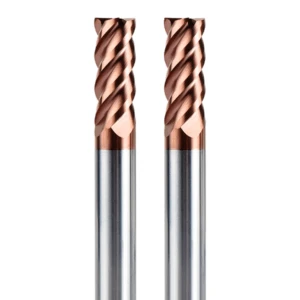
When facing workpieces at HRC65, many shops fall into the trap of prioritizing “rapid material removal.” We frequently see experienced machinists—often under pressure—apply standard steel roughing strategies to ultra-hard materials. In this realm, roughing isn’t about brute force; it is a precise, layer-by-layer peeling process. If you try to use large-diameter roughing milling cutters for heavy-stock removal, you won’t get efficiency. Instead, you will see the cutter body deform under immense thermal resistance.
Our test records show that the “fatal temptation” is misjudging cutting resistance. Many assume roughing requires aggressive parameters. However, at 65 HRC, shear resistance is exceptionally high. We advocate for “compensating for depth with speed.” Stop chasing massive chips. Instead, optimize your tool paths to ensure the cutting edge maintains a constant load. This approach reduces machine spindle stress and prevents deep micro-cracks on the workpiece surface.
Prioritizing Depth of Cut (Ap) Over Width (Ae): The Primary Cause of Heat Accumulation
In the shop, we emphasize that the Ae value (width of cut) is your primary dial for heat management. Many engineers increase the Ap to minimize passes. This is a mistake. It forces the cutting edge to dwell in the high-heat zone for too long. Heat cannot dissipate through the chips fast enough. Once you hit the thermal threshold, even the best coatings for steel milling cutter HRC65 applications will fail as the carbide substrate softens.
We recommend a “large depth, small width” trochoidal strategy. By using an extremely narrow radial Ae, you give the cutting edge brief intervals in the air to cool down. This “thin-chip” method keeps the heat in the chips, not the tool. When Ae is kept within 5% to 10% of the tool diameter, chips should appear purplish-brown or blue. If they are black or fused, your Ae is too high. No high-end tool can compensate for that level of accumulated heat.
Dry Cutting vs Flood Coolant? Managing Thermal Shock in HRC65 Machining
We have paid heavy “tuition fees” learning about cooling methods. When machining steel above 60 HRC, flood coolant is often the enemy. When a cutting edge at 800°C hits cold water, the thermal shock instantly induces micro-cracks in the carbide. As china milling cutter tools manufacturers, we almost always advise our clients to ditch flood coolant. Use high-pressure air or MQL instead.
Dry cutting maintains thermal equilibrium. High-pressure air clears away hardened chips, preventing “re-cutting” and secondary damage. It also protects the tool from fatigue fractures caused by constant heating and cooling cycles. This strategy requires a tool with high “red hardness” and oxidation-resistant coatings. If the workpiece gets too hot, adjust your step-over to let the material “breathe.” Controlled thermal management is the secret to running continuously for hours without edge failure.
The Overlooked Parameter Trap: Operations That Instantly Ruin Carbide End Mills
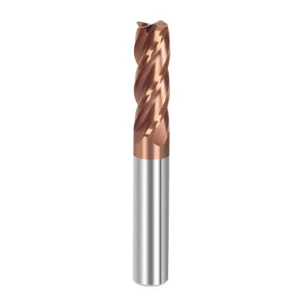
Machining high-hardness steel is like dancing on thin ice. Even if you master the entry and heat management, you can still “crash and burn” on basic parameters. We often see practitioners get nervous about the material’s hardness, leading them to make arbitrary adjustments to speed and feed. In the ultra-hard world, tolerance for error is nearly zero. A 5% deviation can cause a carbide end mill cutter to suffer a catastrophic thermoplastic collapse in seconds.
The core principle is this: parameters for ultra-hard steel are about managing the micron-scale region at the tool tip. If tool life is inconsistent, don’t just switch brands. Check your cutting speed (Vc) against the material’s transformation points. Many operators overlook tiny dynamic balance deviations in the spindle at high RPMs. These oscillations, amplified by cutting resistance, cause microscopic chipping. This “invisible killer” is usually responsible for premature tool failure.
Excessive Spindle Speed (RPM): Why You Need “Cold Cutting”
Excessive RPM is the number one cause of failure in high-hardness jobs. Machinists accustomed to aluminum often try to improve surface finish by cranking up the speed. At 65 HRC, high RPMs create extreme temperatures that bypass the tool’s coating. Heat then conducts back into the substrate, softening the edge. We advocate a “cold cutting” philosophy: maintain necessary cutting forces but keep spindle speeds as low as possible. This keeps your steel milling cutter HRC65 in its most stable physical state.
Your goal is to find the point where “chips carry away the heat.” If sparks are flying, your tool is undergoing high-temperature oxidation. We prefer lower RPMs combined with an appropriate feed per tooth. This allows chips to show natural heat-induced colors rather than a scorched black. Remember: excessive speed leads to annealing. Your tool will lose its hardness before it even completes a single pass.
Mismatched Feed Rates: Avoiding Work Hardening and “Rubbing”
Setting the feed rate is a common point of confusion. Many operators use a very low feed rate out of fear of breaking the tool. However, an insufficient feed per tooth (Fz) causes the edge to rub against the surface rather than bite into it. This “rubbing” or “scraping” creates intense friction and heat, instantly inducing work hardening. A 60 HRC surface can jump to 70 HRC after one bad pass, creating an insurmountable hard shell for the next pass.
We advise our clients to never set the feed rate lower than the tool’s honing radius (edge chamfer). The edge must “bite” to form a proper chip and evacuate heat. As cnc milling cutter suppliers, we fine-tune feed rates based on material plasticity, not just a manual. You need a balance that preserves the cutting edge while preventing the formation of a work-hardened layer. This requires an engineer’s understanding of material deformation.
Mitigating Risk at the Source: How to Select High-Quality China Milling Cutter Tools
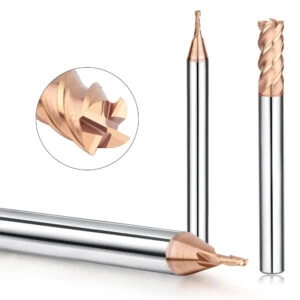
In high-hardness machining, the adage “you get what you pay for” is a physical law, not just a business principle. Many of our Western clients initially harbor doubts about supply chain stability. They have been burned by inferior tools with exaggerated specifications. To find a supplier that can truly handle HRC65 materials, you must look beyond the brochures. You must scrutinize the factory’s mastery over foundational processes. We believe true quality stems from rigorous consistency in raw material batches and strict climate control in the production environment. These “hidden costs” determine whether a tool performs reliably on your CNC machine.
When talking with industry peers, I always say the easiest way to gauge a supplier’s professionalism is how they handle anomalies. At 60 HRC and above, tool failure is unpredictable. A great partner offers more than just a physical carbide end mill cutter; they provide a matrix of parameters tailored to your specific application. We have seen distributors who merely “sell products” fail because they don’t understand how carbide grain size influences impact resistance. Choosing such a partner is a high-stakes gamble with your expensive workpieces and machine hours.
The Secret Behind Coating Peeling: Tier-2 vs Top-Tier CNC Milling Cutter Suppliers
Coating peeling is a “chronic ailment” in our industry. Many clients report that tool color fades within minutes—a classic sign of poor adhesion. When machining high-hardness steel, instantaneous temperatures at the cutting zone push nanometer-thick coatings to their physical limits. If the substrate pretreatment is inadequate or the vacuum levels in the furnace are unstable, the coating will delaminate. As CNC milling cutter suppliers, we know our competitive edge isn’t just the brand of our equipment—it is our proprietary, undisclosed process parameters.
Our comparative tests show that second-tier suppliers often shorten the plasma cleaning cycle to cut costs. This might go unnoticed on standard steel, but it is fatal at HRC65. Thermal stress will cause the coating to peel off in sheets, leaving the unprotected substrate to fail within seconds. We prefer multi-layered nanostructured coatings. By manipulating the stress distribution within each layer, we can stop cracks from spreading. It is a more complex manufacturing path, but it is the only way to ensure uninterrupted machining.
Minute Geometric Deviations: Why Edge Honing is Vital for HRC65 Tools
There is a common myth that “sharper is better.” In the HRC65 world, that belief is disastrous. We often see general-purpose cutters crumble instantly because the edge is too sharp. For ultra-hard applications, we use a technique called “honing” to create a microscopic radius or chamfer. This micron-level adjustment bolsters the edge’s compressive strength, preventing brittle fractures upon contact with the hardened surface. The presence of precise edge-honing is what separates professional china milling cutter tools from mass-market products.
The challenge is the balance. If the honed radius is too small, the edge chips. If it is too large, cutting resistance spikes and causes vibration. On our production lines, we use high-magnification microscopic inspection to keep edges within the “golden range” of 15 to 25 microns. This invisible geometric compensation is what allows your machine to run unattended late at night. If your tool makes a piercing sound or produces irregular chips, check the edge. The truth is hidden in those micron-level deviations.
Laboratory Data Summary: Extending the Life of HRC65 Milling Cutters
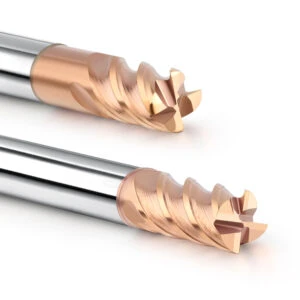
In our lab, fatigue tests on HRC65 materials span hundreds of hours. We have found that the key to tool life isn’t pushing the tool to its absolute limit, but maintaining “static stability.” If your environment has spindle runout or uneven cooling, even the best steel milling cutter HRC65 will fail prematurely. Our data shows that if you keep cutting-edge temperature fluctuations within ±50°C, chemical wear decreases by nearly 30%. This is why we prioritize parameter stability over raw efficiency.
If you are processing large batches of hardened molds, we recommend building a “service life profile.” Record the actual Material Removal Volume (MRV) for every tool. You will find that tool life in high-hardness machining is a predictable science, not a guessing game. Pay attention to your chips and spindle load fluctuations. These subtle feedbacks reflect the health of the cutting edge better than most software. In this field, success is found in controlling the “1% variables.”
Use Wear Pre-warnings, Don’t Wait for the Cutter to Snap
Too many shops use a tool until it breaks. On HRC65 steel, that is a recipe for a disaster. Once a carbide end mill cutter reaches a flank wear (VB value) of 0.15mm, cutting forces increase exponentially. This ruins the surface finish and risks damaging your spindle. We guide our technicians toward “preventive tool replacement.”
If you see frequent breakage or parts falling out of tolerance, mandate an inspection stop at 80% of the projected tool life. Check the edges under a microscope for delamination or micro-chipping. It might seem like you are increasing tool costs, but consider the “hidden” costs: machine downtime, clearing broken fragments, and salvaging scrapped parts. Proactive wear management is always the most economical strategy.
Collaborating with Technical China-Based Milling Cutter Manufacturers
In high-hardness machining, buying the tool is only the beginning. The real value is in the collaboration. We often solve “impossible” challenges by adjusting a tool’s helix angle or edge reinforcement by just 2° or 3°. If standard off-the-shelf tools aren’t meeting your needs for depth or clearance, reach out to china milling cutter tools manufacturers with strong R&D backgrounds for custom solutions.
We encourage you to share your specific parameters, drawings, or material sheets with us. If your yield rate on an HRC65 workpiece is low, let’s analyze your toolpaths and failed samples together. As manufacturers, we often spot blind spots that are invisible from the shop floor. Don’t run repetitive trials alone. Use our laboratory data to find the perfect balance between efficiency and longevity.
In your current workflow, which specific stage do you consider your most uncertain “variable”?