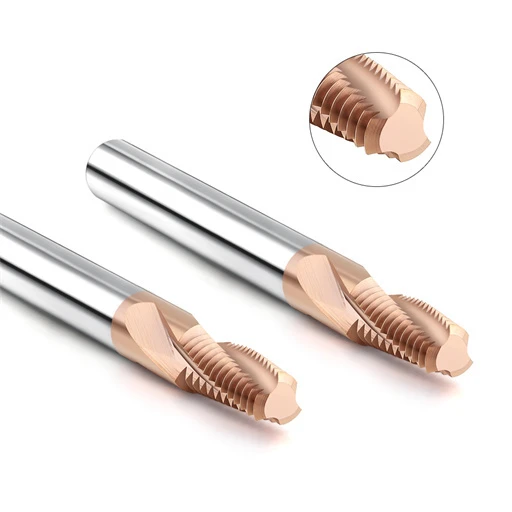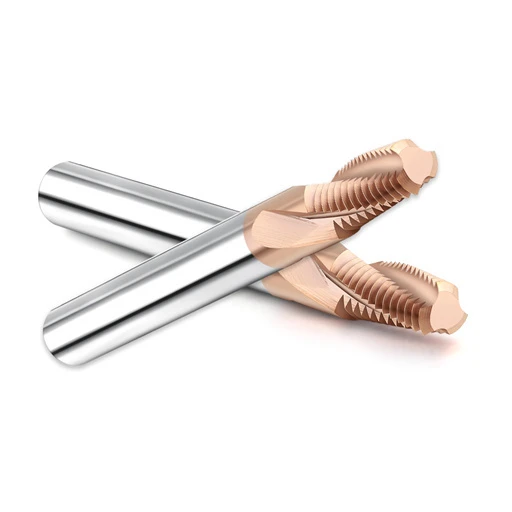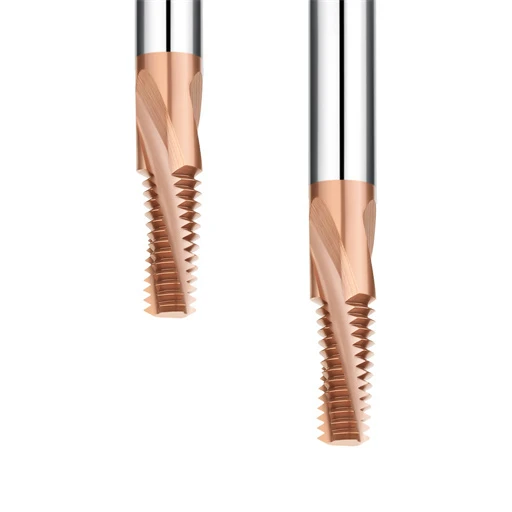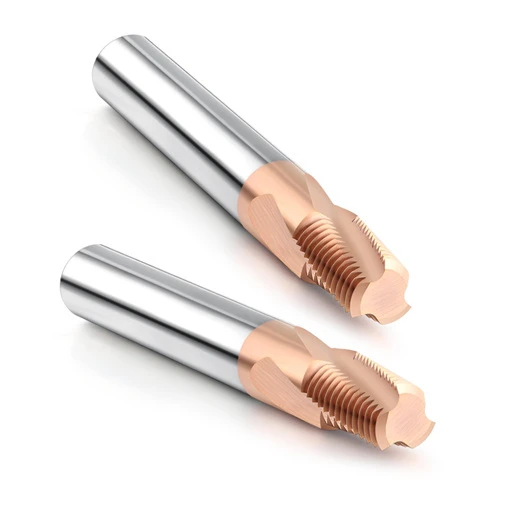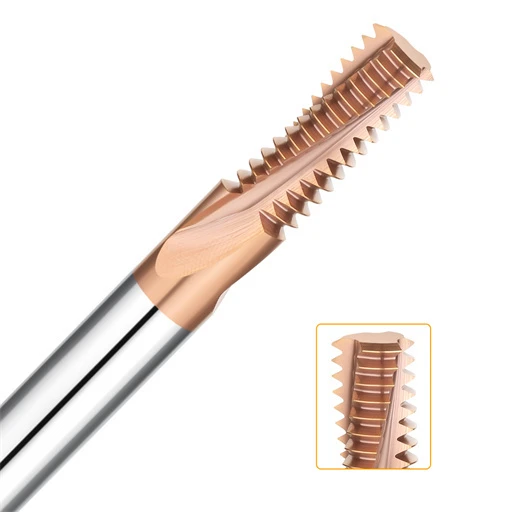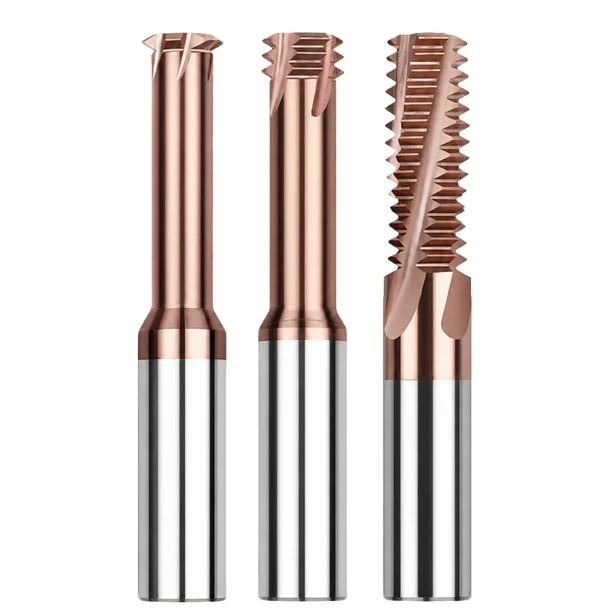


A client recently brought us a difficult threading job involving heat-treated SKD11 tool steel hardened to HRC62. Standard taps chipped and snapped almost immediately, while general-purpose carbide end mills suffered severe flank wear and left heavy chatter marks. In high-hardness machining, these failures stall production and quickly drive up scrap rates.
When workpiece hardness exceeds HRC60 or approaches HRC65, thread milling hardened steel requires a precise balance between cutting load, tool wear, and surface finish. Traditional tapping binds because the material cannot deform plastically. Switching to dedicated HRC65 thread mills eliminates tap breakage risks, protects high-value dies, and maintains thread pitch accuracy even in blind-hole configurations.
A solid carbide substrate with ultrafine sub-micron grain sizing is mandatory to prevent microscopic edge chipping under high radial loads. Paired with a high-aluminum PVD coating like AlTiN or TiAlSiN, the tool forms a protective oxide layer that resists temperatures exceeding 900°C. A reinforced core diameter combined with negative radial rake angles helps stabilize the cutting edge in hardened tool steel.
Toolpath strategy directly dictates tool life. Always program a tangential arc-in and arc-out motion to prevent shock loading on the cutting teeth. For materials over HRC60, split the thread depth into multiple radial passes rather than cutting in a single circular pass. This practice reduces deflection, maintains tight pitch tolerances, and keeps chips manageable.
Coolant selection is another frequent point of failure on the shop floor. For thread milling SKD11 at HRC62–HRC65, dry machining with high-pressure air blast is often superior to flood coolant. Cold air evacuates hardened, abrasive chips instantly while preventing thermal shock, which causes micro-cracking along carbide cutting edges.
Achieving repeatable thread milling hardened steel results is never about running the most aggressive feeds. It comes down to pairing a dedicated tool geometry with a rigid setup and controlled radial step-overs. By controlling cutting forces and heat buildup, you protect your tooling, secure tight thread fits, and eliminate costly tap-extraction rework.
What Is an HRC65 Thread Mill for Hardened Steel?
An HRC65 thread mill is an engineered solid carbide cutter designed specifically for materials exceeding HRC60. In high-hardness mold steels, standard tools chip quickly because cutting loads spike dramatically at deep hole bottoms. Choosing the right tool requires evaluating workpiece hardness, flute core thickness, and overall machine tool rigidity.
For steel rated at HRC62 or higher, success depends on micro-grain substrate stability and edge prep. The cutter profile must feature a strong negative rake to resist edge chipping under high radial pressure. Pairing an ultra-fine carbide substrate with advanced PVD coatings allows stable thread milling in extreme hardness without premature tool wear.
HRC65 Thread Mill vs. Solid Carbide Thread Mill
The distinction between an HRC65 thread mill and a general solid carbide thread mill comes down to targeted design. While both tools utilize a carbide body, standard carbide cutters are built for softer, pre-hardened steels around HRC50. They lack the specialized edge prep and heat-resistant nanocomposite coating required for extreme hardness.
When machining hardened steels like heat-treated SKD11, general-purpose carbide thread mills suffer rapid flank wear and chatter. An HRC65-rated cutter incorporates a reinforced web core and honed cutting edges. This rigid geometry reduces tool deflection during high-pressure circular interpolation, ensuring your pitch diameters remain perfectly consistent.
Why Use a Thread Mill for Hardened Steel
Thread milling hardened steel eliminates the extreme part-scrapping risks associated with conventional taps. If a tap seizes and breaks inside an expensive, heat-treated mold cavity, EDM burning is usually the only rescue. Thread mills operate via helical interpolation, meaning a chipped cutter can simply be retracted without damaging the part.
Furthermore, thread milling gives CNC machinists precise control over radial cutting depths through multi-pass programming. You can thread blind holes right down to the bottom with zero clearance issues. This approach minimizes cutting loads, improves chip evacuation, and maintains tight thread tolerances on high-value components.
Thread Milling HRC62 vs. HRC65 Hardened Steel
Machining HRC62 steel allows some leeway, but pushing to HRC65 fundamentally changes the cutting dynamics. At HRC65, hardened steel generates intense shear zone temperatures, making cutting edges hypersensitive to shock. Even slight spindle runout or aggressive radial stepovers will cause instant edge chipping and pitch taper.
When transitioning from HRC62 to HRC65, you must lower surface footage and decrease the radial depth per pass. Keep tool overhang as short as possible, switch to air blast cooling, and monitor tool wear across production runs. Consistent process stability and rigid tool holding are what truly protect your thread milling tolerances.

How Does Thread Milling HRC62–HRC65 Hardened Steel Work?
Thread milling HRC62–HRC65 hardened steel relies on rigid helical interpolation to generate accurate internal threads without overloading the cutting edge. In extreme hardness ranges, high cutting pressures and instantaneous impact loads can trigger rapid edge chipping. Balancing chip evacuation, tooth engagement, and radial depth ensures predictable tool life and tight tolerances.
Machinists must manage cutting loads across tool overhang, pitch geometry, and machine rigidity to prevent tool deflection. Taking light, multi-pass cuts reduces shear forces and maintains pitch accuracy across production runs. Consistent process control keeps tool performance reliable when machining high-hardness die and mold components.
Thread Milling HRC62 Steel Cutting Mechanism
When thread milling HRC62 steel, the cutter distributes cutting forces across multiple flutes using a programmed helical path. Fine, powdery chip morphology indicates clean shear action, while jagged flakes suggest excessive radial pressure or runout. Monitoring spindle load and tip condition helps machinists spot micro-chipping before it causes pitch taper.
Tool engagement strategy directly controls edge integrity during entry, circular interpolation, and retract movements. A smooth roll-in arc prevents entry shock, which is the primary cause of chipped carbide teeth. Combining short tool overhang with rigid hydraulic holders stabilizes the cutting mechanism in hardened materials.
Thread Milling Hardened Steel vs Conventional Thread Cutting
Thread milling hardened steel provides superior process safety compared to conventional tapping under heavy torsional loads. If a solid carbide tap binds in a deep hole, extracting it often requires destructive EDM burning. A thread mill utilizes a smaller diameter than the hole, allowing safe retraction without damaging expensive workpieces.
Conventional taps struggle with chip packing and high friction in steels above HRC60. Thread milling divides the cutting load across radial passes, making it ideal for blind holes and tight tolerances. This flexibility allows CNC operators to fine-tune pitch diameters via tool wear offsets rather than swapping tooling.
Thread Milling SKD11 at HRC60–65
Machining heat-treated SKD11 at HRC60–65 requires adjusting cutting data to match carbide wear patterns. High chromium carbide content makes SKD11 abrasive, accelerating flank wear if cutting speeds run too hot. Stable clamping, low radial engagement, and constant compressed air blasts protect the cutting edge from thermal breakdown.
Small-diameter internal threads in SKD11 amplify deflection, making minimal tool overhang and ultra-low runout mandatory. Machinists should run initial test passes to verify surface finish and pitch diameter stability before full production. Prioritizing setup rigidity over aggressive feed rates delivers repeatable thread forms in hard tool steels.
HRC65 Thread Mill Geometry and Coating Selection
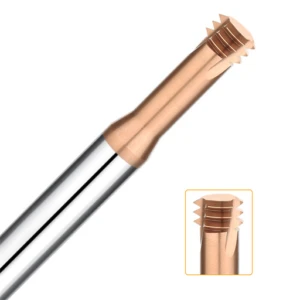
Machining hardened steel in the HRC60–65 range requires viewing the cutting tool as an integrated system. Carbide substrate handles impact loads, tool geometry distributes cutting forces, and the coating reduces shear heat and friction. Even with identical CNC programs, poor tool geometry accelerates cutting edge breakdown and causes severe pitch diameter drift.
When selecting an HRC65 thread mill, machinists must match core thickness, flute count, and edge prep to part hardness. High-hardness mold steels generate massive radial pressures that expose weak cutter designs immediately. Engineering the tool around workpiece hardness, hole depth, and machine rigidity ensures consistent edge life and stable thread quality.
Solid Carbide Thread Mill Substrate
A dedicated solid carbide thread mill for high-hardness materials requires an ultra-fine, sub-micron tungsten carbide grade. Grain size and cobalt binder percentage must balance extreme hardness with fracture toughness to resist micro-chipping during interrupted cuts. Standard carbide grades are often too brittle, leading to sudden tooth breakage when machining heat-treated SKD11.
Substrate selection changes based on tool diameter and operating rigidity. Larger cutters benefit from harder grades with maximum abrasive wear resistance under high torque loads. For small-diameter thread milling, fracture toughness becomes the priority to absorb spindle vibration, ensuring long-term edge stability in HRC65 hardened steel.
Flute Number and Cutting Edge Geometry
Flute count and edge prep directly dictate tool rigidity and chip clearance when thread milling high-hardness alloys. Increasing the number of flutes boosts metal removal rates and structural core strength, but narrows the flute valleys. For deep blind holes, fewer flutes prevent chip packing, avoiding premature catastrophic failure inside hardened workpieces.
Cutting edge geometry must feature a reinforced negative rake and a precision-honed micro-radius. An overly sharp edge fractures instantly under heavy shear forces, while excessive honing spikes cutting loads and frictional heat. Balancing edge prep with a thick web core minimizes tool deflection and preserves true thread profile geometry.
Coating Selection for HRC 65 Hardened Steel
High-performance PVD coatings extend tool life by forming a thermal barrier against extreme friction when cutting HRC65 hardened steel. Nanocomposite coatings such as AlTiN, AlCrN, and TiSiN offer superior hot hardness and oxidation resistance above 900°C. These thermal layers prevent heat from migrating into the carbide substrate, eliminating premature edge collapse.
Even the best coating cannot compensate for excessive spindle runout or incorrect cutting parameters on the shop floor. Match coating chemistry to your machining environment, whether utilizing dry compressed air blasts or minimal quantity lubrication. A stable combination of tough carbide, rigid geometry, and advanced PVD coating guarantees predictable results in hard milling setups.
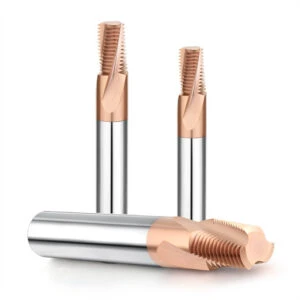
HRC65 Thread Milling Parameters: Speed, Feed, and Depth of Cut
When defining HRC65 thread milling parameters, applying standard steel data inevitably leads to rapid edge wear and pitch errors. In a recent batch of HRC62 SKD11 components, standard settings caused tip chipping within minutes. Machining hardened steel requires analyzing speed, feed, and depth of cut individually to find a stable window. You cannot rely on universal data for extreme material hardness.
Actual cutting loads vary wildly depending on tool overhang, machine rigidity, and thread pitch. For HRC65 hardened steel, always start with conservative test cuts. Gradually adjust your HRC65 thread milling parameters based on spindle load, chip formation, and edge wear. This methodical approach guarantees long-term dimensional stability across the entire production run.
HRC65 Thread Milling Cutting Speed and RPM
Establishing the correct HRC65 thread milling cutting speed and RPM dictates heat generation at the cutting edge. Excessive surface footage spikes temperatures, causing rapid thermal breakdown of the carbide. Conversely, running RPMs too low creates thick chips that overload and snap the micro-grain cutting teeth. Balancing this thermal and mechanical load is vital for tool survival.
Always base your initial RPM on the specific tool diameter, coating type, and machine tool rigidity. During test cuts, monitor the spindle load meter and inspect the tool for abrasive wear. If the cutting speed feels stable and chips evacuate cleanly, you can incrementally increase the RPM. Small-diameter tools require hyper-vigilance, as they are extremely sensitive to incorrect cutting speeds.
Thread Mill Feed Rate and Feed per Tooth
Setting the right thread mill feed rate and feed per tooth requires calculating actual radial chip thinning during circular interpolation. Linear CNC feed rates do not accurately reflect the true load on each cutting edge. Pushing feed rates too high in HRC65 materials instantly triggers chatter marks, micro-chipping, and severe dimensional inaccuracies.
We frequently see machinists achieve one perfect thread, only to encounter severe chatter on subsequent parts due to aggressive feeds. To fix this, reduce the feed per tooth and utilize a roll-in toolpath to distribute cutting forces smoothly. When adjusting feed rates for hardened steel, prioritize consistent tool wear and stable cutting loads over raw cycle time speed.
Radial Engagement and Axial Depth of Cut
Radial engagement dictates the exact cutting pressure applied to the tool during every interpolation pass. In high-hardness threads, an aggressive radial stepover instantly deflects the cutter and chips the carbide edge. We strongly recommend splitting the total radial depth of cut into multiple lighter passes. This multi-pass strategy is mandatory for small-diameter threads in HRC65 hardened steel.
The axial depth of cut must account for maximum tool overhang and blind-hole bottom clearance. When balancing radial engagement and axial depth of cut, prioritize rigid setups and smooth chip evacuation. Pushing extreme material removal rates on the first part often destroys the cutter prematurely. Maintaining consistent thread accuracy across fifty parts is always the true mark of success.
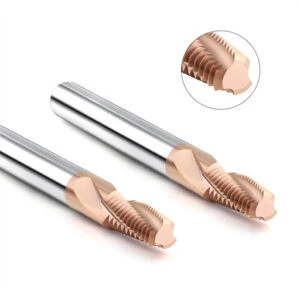
How to Improve Thread Milling Accuracy and Surface Finish for HRC65 Materials
Maintaining thread milling accuracy and surface finish for HRC65 materials requires looking beyond the cutting tool itself. A perfect first part does not ensure batch consistency in hardened SKD11 mold steels. Spindle runout, tool deflection, and workholding flex accumulate, causing pitch taper and chatter marks as cutting loads climb.
Controlling thread milling accuracy in steels above HRC62 requires monitoring pitch diameter drift alongside surface finish. Machinists must balance tool overhang, machine rigidity, and multi-pass toolpaths to prevent dimensional deviations. Tracking edge wear throughout the batch prevents out-of-spec internal threads and preserves mirror-like surface quality.
Thread Milling Accuracy and Thread Tolerance
Achieving precise thread milling accuracy and thread tolerance in hard tool steels requires evaluating the full thread profile. Relying solely on standard Go/No-Go thread gauges can mask early pitch errors and progressive tool deflection. Regularly measuring pitch diameter allows operators to compensate with CNC wear offsets before dimensions drift out of tolerance.
Total indicator reading (TIR) at the tool tip must be kept below 0.005 mm to prevent uneven tooth loads. For small-diameter internal threads, minor runout in the toolholder translates into distorted thread forms and premature edge fracture. Ensuring maximum machine positioning accuracy and rigid shrink-fit clamping protects strict thread tolerances in HRC65 hardened steel.
How Toolpath Affects Thread Accuracy
The programmed toolpath dictates how cutting forces engage the workpiece during helical interpolation. Direct radial plunge entries create shock loads that fracture carbide teeth and distort the initial thread crest. Utilizing a tangential roll-in arc cushions tool entry, distributing shear forces evenly to protect cutting edge integrity.
Distributing the full thread profile across multiple radial passes prevents tool deflection and pitch taper in deep holes. A final light spring pass eliminates deflection errors and wipes away residual micro-burrs along the thread flanks. Stable, climb-milling toolpaths deliver superior thread milling accuracy compared to single-pass programs in hardened materials.
How to Reduce Chatter, Burrs, and Poor Surface Finish
Eliminating chatter, burrs, and poor surface finish in HRC65 steel begins with maximizing tool assembly rigidity. Keep tool overhang as short as possible and verify that workpiece clamping resists heavy radial cutting pressures. Harmonic vibration rapidly chips micro-grain carbide edges, leading to rough thread flanks and inconsistent pitch diameters.
To stop burr formation at thread entry and exit points, program smooth 90-degree roll-in and roll-out toolpath sweeps. Run a dedicated high-pressure compressed air blast to flush out abrasive chips and prevent re-cutting in blind holes. Controlling vibration and optimizing chip evacuation restores flawless thread surface finish while dramatically extending tool life.
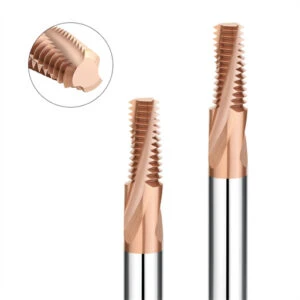
How to Extend the Tool Life of HRC65 Thread Mills
Tool breakdown in hardened steel (HRC62–HRC65) rarely happens without warning; it follows a predictable path of gradual flank wear. In heat-treated SKD11 components, parts initially maintain tight tolerances and fine surface finishes. Over extended runs, progressive flank wear triggers micro-vibrations, dimensional drift, and premature tool failure.
Extending your HRC65 thread mill tool life means catching the transition from uniform abrasive wear to accelerated chipping. Instead of pushing cutters to arbitrary part counts, track spindle loads, thread surface finishes, and tooth flank conditions. Maintaining the solid carbide tool within its stable wear zone guarantees predictable, high-yield production.
HRC65 Thread Mill Tool Wear and Edge Chipping
Managing HRC65 thread mill tool wear and edge chipping requires distinguishing predictable abrasive wear from mechanical shock damage. Hardened steel naturally abrades the cutting edge over time, but sudden chipping points directly to high tool runout or harmonic chatter. Micro-vibrations inside deep holes quickly crack brittle carbide tips before normal wear limits are reached.
Inspect the failure pattern under magnification before altering your feed and speed parameters. Chipping at tooth crests indicates excessive entry impact or tool deflection during helical ramp-in. Localized wear on a single side points to toolholder runout exceeding 0.005 mm, which overloads individual flutes in HRC65 materials.
How Cutting Parameters Affect Thread Mill Tool Life
Cutting parameters directly govern the thermal and mechanical loads applied to carbide cutting teeth. Increasing cutting speeds raises interface temperatures beyond coating thresholds, accelerating abrasive breakdown in HRC65 steel. Conversely, excessively low feed rates cause edge rubbing, burnishing, and work-hardening rather than clean, shearing cuts.
Adjust only one cutting parameter at a time while logging thread dimensions, cycle counts, and flank wear. Keep surface footage moderate, distribute radial passes evenly, and rely on constant air blasts to prevent thermal shock. A well-balanced machining parameter window provides far higher tool life than simply slashing feed rates.
How to Prevent Thread Mill Breakage in Hardened Steel
To prevent thread mill breakage in hardened steel, eliminate catastrophic chip packing and excessive tool overhang. Cutters frequently snap near blind hole bottoms because chips cannot escape and end up re-cut by the flutes. Keeping tool shank stickout short and applying high-pressure compressed air reliably clears abrasive chips from the hole.
For small-diameter internal threads, use a multi-pass toolpath to reduce radial cutting pressures against fragile web cores. Avoid straight linear plunges by programming a smooth tangential arc into the cut to absorb shock. Controlled radial passes combined with rigid hydraulic chucks effectively prevent tool breakage in tough HRC62–HRC65 applications.
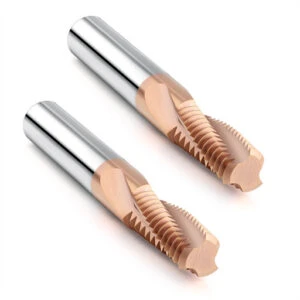
Thread Milling vs Tapping for HRC65 Hardened Steel
Choosing between an HRC65 thread mill vs tapping for hardened steel depends on part value, hole geometry, and process safety. In heat-treated SKD11 components around HRC62, taps frequently bind and fracture under extreme cutting loads. Broken taps lodged in blind holes require costly EDM extraction, creating scrap risks and production delays.
Thread milling eliminates these catastrophic failure risks by forming the thread profile through controlled helical interpolation. Machinists can regulate cutting pressure per pass using multi-pass radial stepovers. For hardened steel above HRC60, thread milling provides the process stability, toolpath control, and predictability that conventional taps lack.
Thread Milling vs Tapping HRC62 Hardened Steel
When evaluating thread milling vs tapping HRC62 hardened steel, the key difference lies in torsional stress management. Taps engage all cutting teeth continuously, generating massive friction and torque in deep holes. A solid carbide thread mill uses intermittent cutting action, allowing heat and small chips to clear out efficiently.
Tapping may still offer shorter cycle times in high-volume, softer through-hole work where setups are proven. However, for tight pitch diameters, blind holes, or expensive tool steel mold cavities, thread milling is superior. Thread milling allows CNC operators to adjust pitch diameters via wear offsets without risking broken tools inside HRC62 steel.
Why Thread Milling Is Suitable for Hard and Brittle Materials
Thread milling for hard and brittle materials is ideal because CNC toolpaths distribute shear forces across multiple passes. Hardened steels have minimal ductility, causing cutting edges to fracture under sudden shock or heavy radial engagement. Programming light cuts and smooth tangential roll-in sweeps shields fragile carbide teeth from mechanical impact.
Controlling vibration is essential when thread milling hard, brittle materials like heat-treated dies. Even slight spindle runout or excessive tool stickout leads to instant micro-chipping along the tool flanks. Combining short overhangs, rigid toolholders, and air blasts creates a stable cutting system that preserves surface finish and edge geometry.
When to Choose Thread Milling Instead of Tapping
Choose thread milling instead of tapping whenever workpiece hardness exceeds HRC60 or hole depths pose severe chip evacuation challenges. High-value mold plates, blind holes, and tight thread tolerance bands demand the fail-safe reliability of milling cutters. Furthermore, a single thread mill can generate different thread diameters of the same pitch, reducing tool inventory.
Conventional tapping remains useful for high-volume jobs with soft alloys, but it is too risky for critical hardened components. If a broken tool risks scrapping an expensive pre-machined part, thread milling is the clear engineering choice. Balancing workpiece hardness, cycle times, and scrap risk confirms why thread mills excel in high-hardness machining setups.
How to Choose the Best HRC65 Thread Mill for Hardened Steel
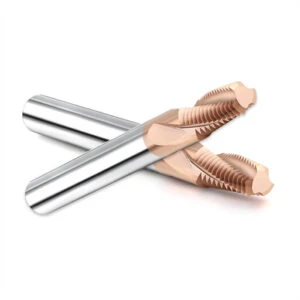
Choosing the best HRC65 thread mill for hardened steel requires matching the entire tool geometry to your machining environment. In a recent job, a client tried using an off-the-shelf carbide cutter on HRC65 SKD11 mold steel. The cutter lost its edge within three cycles, causing immediate pitch taper because the core was too slender to resist radial deflection.
Evaluating an HRC65-rated cutter involves reviewing part hardness, thread depth, machine taper rigidity, and toolholder runout. For hard steels in the HRC62–HRC65 range, the best tool provides balanced fracture toughness and wear resistance rather than aggressive material removal rates. A stable, repeatable process always trumps raw cutting speed when machining expensive hardened steel components.
How to Choose a Solid Carbide Thread Mill
Selecting a solid carbide thread mill for high-hardness materials begins with evaluating the tungsten carbide substrate. Sub-micron grain grades with 8% to 10% cobalt binder offer the optimal balance of hot hardness and fracture toughness. Standard carbide grades are often overly brittle, leading to catastrophic tooth chipping during the radial shock of interrupted cuts.
Setup rigidity, spindle runout, and gauge length directly influence how the cutter behaves under load. If deep hole features require long tool overhang, prioritize cutters with reinforced web cores and honed micro-radii on cutting tips. Choosing a solid carbide thread mill based on your specific setup ensures dependable performance and prevents unexpected tool failure.
How to Select Thread Mill Diameter, Pitch, and Flute Number
Selecting the right thread mill diameter, pitch, and flute number requires evaluating chip clearance and cutting pressures. A tool diameter around 60% to 70% of the minor hole diameter leaves adequate radial clearance for chip flushing. Oversized tools reduce chip space, causing packing, while undersized cutters deflect under load, distorting the thread profile.
Thread pitch dictates profile depth, while flute count determines feed rates and flute valley volume. When machining abrasive SKD11 steel, higher flute counts boost rigidity, but deep blind holes demand fewer flutes to prevent chip re-cutting. Calculate your required chip space and toolholder stickout first, then establish flute count based on workpiece hardness.
Thread Mill Selection for HRC62, HRC65, and SKD11
Thread mill selection for HRC62, HRC65, and SKD11 depends heavily on the workpiece’s specific heat treatment. Steels at HRC62 allow slight parameter adjustments, but pushing to HRC65 makes the carbide teeth hypersensitive to shock and vibration. SKD11 contains tough, abrasive chromium carbides that accelerate micro-flank wear if the tool geometry lacks adequate edge prep.
Small-diameter threads and deep blind holes in HRC65 parts require prioritizing tool life predictability over rapid cycle times. Always verify actual core hardness and heat-treat depth before setting feed rates and radial stepovers. Choosing dedicated thread mills tailored to HRC62, HRC65, and SKD11 guarantees consistent pitch diameters across demanding production runs.
SAMHO HRC65 Thread Mill Manufacturer for Hardened Steel Machining
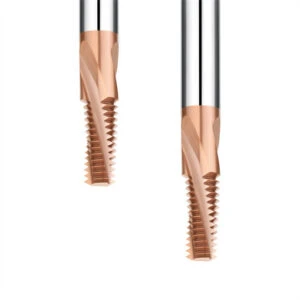
Finding a dependable SAMHO HRC65 thread mill manufacturer means partnering with tooling engineers who understand the physics of high-hardness cutting. Thread milling materials from HRC62 to HRC65 demands balancing micro-grain carbide substrates, flute core thickness, and heat-resistant PVD coatings. Machine rigidity and radial cutting pressure dictate tool survival in extreme die steels.
Before selecting a tooling vendor, evaluate your specific shop floor conditions: part hardness, hole type, thread pitch, and tool overhang. Pinpointing existing bottlenecks—like edge chipping, rapid flank wear, or pitch taper—ensures you get the correct tool geometry. Sharing your CAD prints and setup parameters allows us to tailor a stable hard-milling solution.
SAMHO HRC65 Thread Mill Manufacturing Capability
Evaluating SAMHO HRC65 thread mill manufacturing capability requires looking at the total tool design rather than isolated features. We engineer solid carbide cutters with reinforced web cores, negative rake angles, and precision-honed cutting edges to withstand shock. This structural rigidity prevents deflection during high-pressure helical interpolation in steels above HRC60.
Different thread diameters and hole depths require distinct tool profiles to ensure efficient chip evacuation. Machining HRC62 tool steel demands different flute geometry than cutting extreme HRC65 mold cavities. Our manufacturing capabilities deliver purpose-built cutters that match your specific workpiece hardness, machine taper, and cycle time goals.
Custom Solid Carbide Thread Mill for Hardened Steel
When catalog tooling fails in deep blind holes or specialized pitches, a custom solid carbide thread mill for hardened steel is necessary. We engineer custom cutters by optimizing neck relief, flute count, and core diameter for tight-clearance applications. This custom approach eliminates cutter deflection and chatter, ensuring tight pitch diameter control in expensive workpieces.
If you are threading non-standard profiles in hardened dies, provide your part drawings, material grade, and hole depth specifications. We evaluate your spindle runout, toolholder type, and coolant setup to design the ideal custom carbide cutter. Tailoring the flute geometry and coating ensures dependable results without catastrophic tool breakage.
SAMHO Thread Mill Solutions for HRC62–HRC65 and SKD11
Long-term success in heat-treated SKD11 depends on integrating tooling geometry with optimized CNC cutting parameters. Simply dropping a high-hardness cutter into an unproven program often causes premature chipping from incorrect radial engagement. Our SAMHO thread mill solutions for HRC62–HRC65 and SKD11 combine specialized cutters with tested speeds, feeds, and toolpaths.
We assist machinists in logging actual cutting loads, spindle runout, and flank wear patterns across entire production runs. Sharing your setup details allows our application engineers to fine-tune your roll-in toolpaths, surface footage, and compressed air cooling. This complete machining strategy guarantees consistent thread accuracy, smooth surface finishes, and extended tool life.