
Last month, a long-standing automotive client in Detroit reached out to us with an urgent issue. While slotting pre-hardened 4140 steel with a standard flat end mill cutter, the shop echoed with a piercing, high-pitched screech. Even after the operator dropped the feed rate by 40%, the machined surface was ruined by heavy chatter marks. The cutting edges fractured frequently, and the spindle load fluctuated wildly.
This severe vibration represents the exact “tough nut to crack” challenge we repeatedly encounter in real-world B2B technical support. For over a decade, we have helped machine shops across North America and Europe conquer these exact production bottlenecks.
When chatter hits, the intuitive reaction is simply to back off on spindle speed and feed rate. However, as a cutting tool manufacturer working daily with 5-axis grinding machines, we know blindly reducing parameters often backfires. Milling chatter is fundamentally caused by regenerative vibration. When a cutting edge repeatedly passes over the ripples left by the previous pass, dynamic cutting forces amplify exponentially.
This becomes critical during high-load operations or when using an end milling cutter hrc55 to tackle tough materials. To permanently resolve this persistent issue, you must investigate the root cause systematic. This means optimizing the edge preparation of your carbide end milling cutter, choosing variable helix/pitch geometries, and controlling radial runout.
As a manufacturing facility dedicated to producing high-stability tool options, like our china cnc end mill cutter lines, we focus on dynamic solutions. We have spent years helping clients optimize CAM trochoidal milling paths and engineering anti-vibration tools to maximize the Metal Removal Rate (MRR). Since every second of vibration kills your expensive machine spindle, why not shift from “speed reduction” to fundamentally disrupting resonance through tool structure design?

Why Do Your Carbide End Milling Cutter Constantly Suffer from Abnormal Vibration?
In our workshops and at our clients’ machining sites, abnormal tool vibration is the number one threat to production efficiency. When you frequently encounter fish-scale ripple patterns on machined surfaces, the problem is rarely just a matter of setting parameters too high. Over the past 16 years, we have analyzed thousands of cases where a carbide end milling cutter was prematurely scrapped. The underlying physics we uncovered is actually quite simple: excitation forces within the machining system trigger regenerative resonance.
We cannot attribute this instability to a single factor. Instead, it is the dynamic interplay between the machine spindle, fixture rigidity, CAM strategies, and the tool’s geometric features. Many experienced operators fall into a vicious cycle of repeatedly lowering the feed rate while still suffering from edge chipping. To help you gain absolute clarity, we have summarized the core factors most likely to destabilize your process so you can conduct a thorough self-assessment.
The Top Three High-Frequency Machining Scenarios Where European and North American Clients Report the Most Vibration Issues
During our long-term technical support for aerospace and automotive component manufacturers, we noticed chatter erupts most intensely under three specific extreme conditions. The first is deep-cavity slotting with a high depth-to-width ratio, where restricted chip space triggers instantaneous impact vibrations. The second critical stage is the 90-degree corner-clearing phase. As the tool advances into a corner, the arc of engagement surges without warning, abruptly multiplying the cutting forces.
Another scenario that causes major headaches involves the high-material-removal-rate machining of thin-walled parts. When cutting these flexible components with end mill bits for metal, the workpiece itself begins to flex at high frequencies like a guitar string. This induces intense forced vibrations throughout the entire setup. When confronted with these scenarios, we advise against rushing to discard your parameters; instead, prioritize checking the points where the tool load changes drastically.
Sound, Spindle Load, and Chips: How to Identify Resonance Points in Metal Milling by Ear
In a noisy machine shop, veteran tooling experts like us require no diagnostic instruments to gauge the severity of tool vibration. Our senses alone are sufficient to make a spot-on judgment. The most immediate feedback is sound, which ranges from a low-frequency rumble to a high-pitched shriek. When a piercing scream approaching the kilohertz range is heard, the system has already plunged into severe self-excited oscillation while the spindle load meter needle fluctuates violently.
Beyond sound and load, our favorite diagnostic secret to share with clients is to examine the chips. During stable cutting, the chips exhibit a healthy, uniform appearance with consistent coloration and a smooth curl. However, the moment the machining system loses equilibrium, the chips become fragmented, sharp, and jagged. By learning to interpret these on-site indicators, you can detect system instability in an end milling cutter hrc55 before a catastrophic fracture occurs.
The Fatal Lever Effect of Excessive Tool Overhang and Insufficient Clamping Rigidity on End Mill Bits for Metal
If cutting parameters act as the triggers for resonance, then structural physical defects serve as the amplifiers. The most classic example of this is excessive tool overhang. In our technical support work, we frequently observe engineers reluctantly extending their end mill bits for metal to clear tall fixtures or deep cavity steps. According to cantilever beam physics, a tool’s rigidity is inversely proportional to the cube of its overhang length.
This means that if you double the overhang length of a flat end mill cutter, its bending rigidity plummets to just one-eighth of its original value. Insufficient rigidity in the clamping system is another insidious culprit behind tool vibration. Aging collets or power tool holders often suffer from microscopic wear on the clamping surfaces, which generates periodic, intermittent impact forces. Our primary rule is simple: if there is no interference, shorten the overhang and keep the collet clean.
A Look at Tool Geometry Design: How We Suppress Physical Resonance Using China CNC End Mill Cutters
Many machinists believe solving chatter relies solely on adjusting parameters at the controller. However, as a manufacturer working daily with 5-axis grinding machines, we build anti-vibration properties directly into our tool geometry. During the R&D of our china cnc end mill cutter lines, we focused on disrupting resonance frequencies the instant the edge contacts the workpiece. Exceptional structural rigidity and damping features handle adverse conditions far better than merely tweaking data on a control panel.
We do not pursue the absolute limits of any single geometric parameter. Guided by client feedback, we seek a dynamic equilibrium between rigidity, chip evacuation, and damping. Fine-tuning the micron-level ratios of the rake and relief angles absorbs cutting impact forces without ruining the surface finish. These physical silencers are meticulously honed through millions of precision grinding cycles.
Variable Helix and Unequal Pitch: Breaking the Fundamental Logic of Periodic Simple Harmonic Vibration
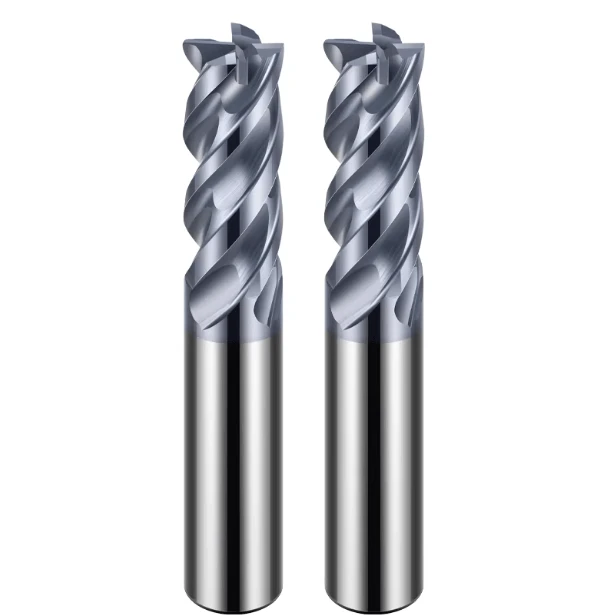
Standard cutters with equal pitch and a constant helix cause every edge to strike the workpiece at identical intervals. This rhythmic, pulsed force makes the setup highly susceptible to simple harmonic vibration. To disrupt this rhythm, we incorporate asymmetrical, unequal pitch spacing and variable helix angles into our advanced carbide end milling cutter designs. This randomizes the time intervals between successive cutting edges entering the material.
Since the vibration frequencies generated by each tooth differ, this design suppresses resonance wave superposition at the source. The variable helix design constantly alters the direction and magnitude of cutting forces as it advances axially. This non-constant force distribution acts as an invisible damper during the cutting process. Even at full feed rates, you hear nothing but a smooth, fluid cutting sound.
The Tug-of-War Between Core Diameter and Flute Depth: Balancing Rigidity with Chip Evacuation Space
Optimizing cross-sectional geometry involves navigating a painstaking trade-off between core diameter and flute depth. The core diameter determines the tool’s resistance to torsion and bending. If we blindly increase it for absolute rigidity, we severely constrict the space available for chip evacuation. Impeded chip evacuation triggers violent forced vibrations and leads to tool breakage when cutting steel.
Conversely, if flutes are cut too deeply, chip evacuation improves but structural rigidity plummets. Under radial cutting forces, the tool becomes highly susceptible to deflection. When designing end mill bits for metal intended for heavy-duty cutting, we employ a tapered core or parabolic flute profile. This provides ample chip space near the tip while progressively increasing rigidity toward the shank.
Edge Preparation (Dulling/Damping) Process for Flat End Mill Cutters
Many young machinists assume that a sharper milling cutter is always better. However, our practical experience with difficult materials shows that an excessively sharp cutting edge is fragile and fatal. When using a flat end mill cutter for slotting, an overly acute micro-edge geometry chips easily. This chipping triggers sudden, localized fluctuations in cutting forces and induces severe vibration.
Before our tools leave the factory, they undergo micro-edge passivation and polishing. Utilizing precision nylon brushes or micro-blasting, we create a micron-scale chamfer or a rounded honed edge. This modification vastly enhances the impact strength and alters the frictional dynamics of chip evacuation. These micro-rounded mills ensure a much smoother transition during initial engagement, nipping chatter in the bud.
Conquering High-Hardness and Difficult-to-Machine Materials: Field-Proven Vibration Suppression Strategies for HRC55 End Mills
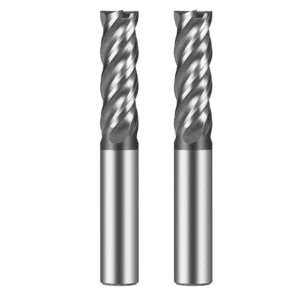
When workpiece hardness exceeds HRC50, the physics of metal cutting undergo a radical transformation. Cutting forces multiply exponentially, temperatures skyrocket, and the slightest mechanical instability becomes infinitely amplified. To suppress resonance under these rigorous conditions, traditional cutting methodologies often prove inadequate. You must employ a specialized end milling cutter hrc55 integrated with a comprehensive suite of rigidity-enhancing safeguards.
High-hardness machining is a direct confrontation between tool hot hardness and workpiece brittleness. We cannot rely on a single set of universal parameters to tackle every hard material. Instead, we must strike an extremely delicate balance between cutting heat distribution and metal removal rates. Our field-proven parameters were discovered through significant testing and tool wear insights.
A Real-World Case Study: Adjusting “Speed & Feed (S&F)” to Escape the Vibration Zone When Machining Pre-Hardened Mold Steel
Last summer, we encountered a classic hard-milling bottleneck at a mold facility in Ohio. They were using our four-flute tool to machine internal cavity steps in NAK80 pre-hardened mold steel. The machine tool generated severe forced vibrations at a specific spindle speed, ruining the surface finish. The process supervisor automatically began gradually reducing the spindle speed, but the tool began exhibiting microscopic chipping.
We instructed the operator to immediately increase the spindle speed by 15% and boost the feed per tooth. As the cutting speed surged past the resonant frequency zone, the piercing screech ceased abruptly. The chips transformed into healthy, light-blue curls. This proved that when confronting carbide end milling cutter instability during hard milling, advancing parameters is often the most efficient solution.
Why Does Blindly Reducing the Feed Rate Actually Exacerbate Frictional Vibrations in End Mills Machining HRC55 Materials?
The phrase we hear most often in workshops is: “Chatter? Quick—lower the feed rate!” However, when machining high-hardness materials, this instinctive reaction pushes the tool into the abyss of destruction. When you reduce the feed rate too drastically, the cutting thickness falls below the radius of the cutting edge’s micro-rounding. At this point, the edge no longer cuts cleanly; instead, it engages in high-pressure rubbing.
This intense interfacial friction generates terrifying levels of heat, causing severe work hardening on the material’s surface. Consequently, the cutting edge faces an even harder shell when it attempts to make its next cut. This cyclical rubbing action triggers severe self-excited vibrations, causing end mill bits for metal to burn out or fracture due to thermal fatigue. You must maintain a reasonable minimum feed per tooth so the edge truly bites.
The Decisive Role of Climb Milling Strategies in Suppressing Chatter During High-Hardness Machining
When performing contour milling on high-hardness materials, your machining strategy directly determines process success. In the vast majority of cases, we are staunch advocates of climb milling. With climb milling, the cutting thickness is at its maximum the instant the edge enters the workpiece, then decreases to zero. This thick-to-thin chip formation establishes a stable cutting resistance immediately upon contact.
Conversely, if you choose conventional up-milling, the cutting thickness is zero at the moment of entry. The edge is forced to endure a prolonged phase of extrusion and rubbing until cutting forces build up. This initial extrusion phase subjects a flat end mill cutter to immense radial deflection forces, creating high-frequency chatter marks. While climb milling requires tight lead screw backlash control, its contribution to vibration suppression remains unparalleled.
Breaking Through Machining Bottlenecks: How Optimizing CAM Paths Can Save Your Flat End Mill Cutters
Many workshops believe machining efficiency and tool life inherently conflict. When chatter occurs, their first instinct is to tweak parameters on the machine control panel. However, our frontline technical support shows that over 60% of abnormal chatter can be resolved by optimizing CAM programming paths. Blindly relying on outdated toolpath strategies subjects carbide cutting edges to abrupt fluctuations in cutting forces.
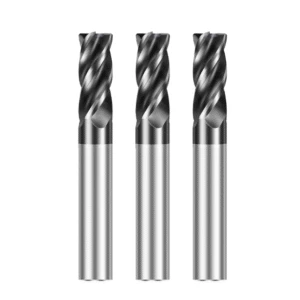
This is critical when using a standard flat end mill cutter for deep-cavity roughing or side milling. Poorly designed toolpaths cause the arc of engagement to fluctuate wildly, triggering transient chatter. Reviewing CAM designs and introducing modern milling strategies restores stability without altering machine hardware. Dynamic path planning effectively extends tool lifespan by creating a stable load environment.
Abandoning Traditional “Right-Angle Plunge” Strategies: Embracing Trochoidal Milling to Control the Cutting Arc
In traditional slotting, the “right-angle plunge” method forces the tool to engage at full cutting width. When a tool bites into metal across its entire diameter, radial cutting forces instantly spike. The combination of restricted chip space and a sudden increase in the cutting arc guarantees severe forced vibrations. To resolve this, we extensively implement trochoidal milling strategies in real-world projects.
This approach replaces linear engagement with a continuous, sliding-in cutting motion via tiny spiral or circular entry movements. This ensures the cutting edge experiences a smooth transition of cutting forces. Controlling the angle of engagement within a constant, low range allows heat to evacuate rapidly with chips. This shallow radial depth enables maximum axial depth of cut (Ap) without violent tool chatter.
How to Programmatically Mitigate Chatter Caused by “Sudden Load Spikes” During Corner Cleanup (Rest Machining)
The residual material left in corners by larger tools often acts as a guillotine for smaller finishing tools. When a smaller carbide end milling cutter enters a right-angle bend, the tool-workpiece contact area surges exponentially. This sudden intensification of cutting resistance generates severe impact loads, causing the mill to deflect and oscillate. This leaves deep chatter marks or causes sudden tool fracture.
To mitigate this geometric flaw, we abandon traditional single-pass dead cuts during programming. Instead, we adopt a secondary roughing strategy involving multiple, incremental passes. Enabling corner smoothing or progressive peeling instructs the tool to execute micro-arc cuts before entering the corner. This nibbles away residual material in small batches, preventing high-frequency tool chatter.
Field Tuning Insights: Maintaining Constant Chip Thickness (Hex) in Dynamic Milling
Modern high-speed dynamic milling requires a true understanding of the chip thinning effect to unleash tool potential. In traditional linear cutting, feed per tooth remains constant. However, during circular interpolation or shallow radial engagement, the actual chip thickness (Hex) is significantly thinner than nominal CAM values. Overlooking this phenomenon drops the tool into a destructive rubbing vibration zone.
When tuning leading machining centers, we leverage advanced CAM algorithms to provide real-time table feed rate compensation. This adjustment occurs as the tool undergoes variable radial engagement or navigates corners. Ensuring every cutting edge shears off a uniform metal chip thickness maintains a smooth, consistent cutting sound. This rigorous adjustment prevents your end mill bits for metal from prematurely failing.
Beyond the Tool Itself: Identifying the Machine-Side “Hidden Culprits” Behind Cutting Vibrations During Technical Support
We cannot focus our attention solely on the cutting edge when troubleshooting shop-floor stability. The entire machining system constitutes a closed loop comprising the machine tool, holder, workpiece, and cutting tool. If persistent resonance plagues your shop after optimizing parameters and CAM paths, the root cause lurks within your hardware. We have uncovered countless machine-side hidden culprits during on-site technical support.
While these minute mechanical defects escape notice under static conditions, they transform into destructive vibration amplifiers during high-speed cutting. When encountering unexplained tool chipping or surface waviness, you must examine the health of your spindle and drive system. Reviewing these latent hardware defects allows you to conduct a thorough diagnostic check against your equipment.
Excessive Radial Runout in the Tool Holder and Collet Assembly
If you observe uneven tool wear or consistent microscopic edge chipping, you must inspect your clamping system’s radial runout. Under ideal conditions, the cutting load distributes equally among every cutting edge. However, microscopic wear on the tool holder taper or debris inside the collet throws the tool axis off-center. This eccentricity artificially generates periodic, intermittent impact loads.
Field measurements show that when tool tip radial runout exceeds 0.01 mm, the load distribution across flutes becomes severely unbalanced. This imbalance triggers intense self-excited resonance and causes tool fatigue life to suffer a catastrophic decline. If replacing collets fails to suppress chatter, use a dial indicator to check your spindle bore and holder runout. Controlling precision at the micron level is essential for high-efficiency tools.
Simple On-Site Diagnostics for Spindle Bearing Wear and Z-Axis Ball Screw Backlash
If your spindle head emits a low-frequency rumble during deep axial cuts with an end milling cutter hrc55, your spindle bearings may have developed microscopic spalling. As bearing balls wear down, the spindle undergoes minute displacements when subjected to radial cutting forces. This leaves fine chatter marks on the workpiece. Z-axis ball screw backlash also prevents the tool from locking firmly, causing vertical oscillation.
To diagnose this without a laser interferometer, mount a magnetic dial indicator on the worktable and position the tip against the spindle nose. Apply moderate radial force by hand and observe whether the needle returns precisely to zero. Next, jog the Z-axis in micron-level increments to check for physical displacement lag against the control panel readout. Mechanical clearance errors must be fixed at the hardware level.
Custom Modification Solutions for China CNC End Mills to Address Rigidity Deficiencies in Older Western-Made Machine Tools
If you operate older machine tools with physically degraded bed structures, customized tool modifications offer a viable solution. When engineering a china cnc end mill cutter for these applications, we deliberately alter standard design aspects for specialized performance. Based on weak spindle rigidity common in aging machines, we fine-tune standard helix angles to feature high helix or unequal helix combinations.
This structural modification utilizes internal geometric variations within the tool to compensate for machine guideway and spindle deficiencies. It converts aggressive radial cutting forces into upward-pulling axial forces to stabilize the process. If you face hardware bottlenecks or tool breakage, we invite you to share your specific setup, part drawings, and material reports. Targeted tool geometry design resolves these problems fundamentally.