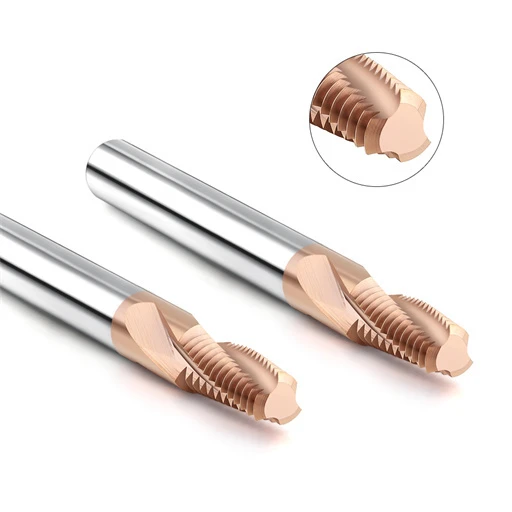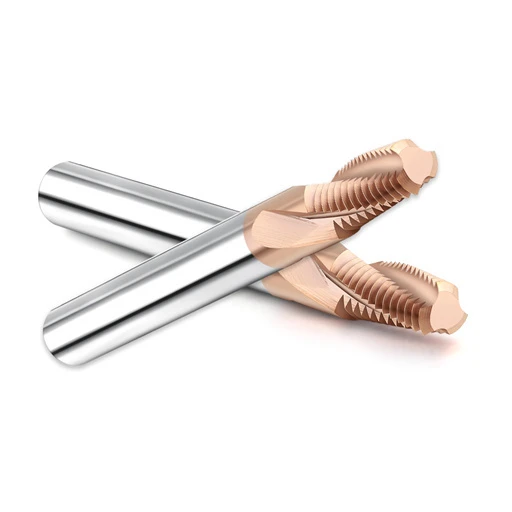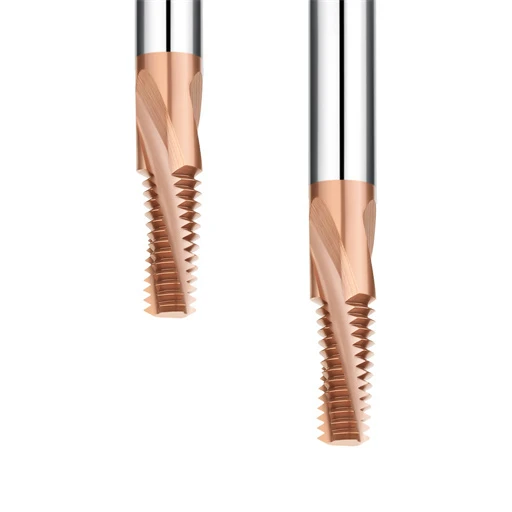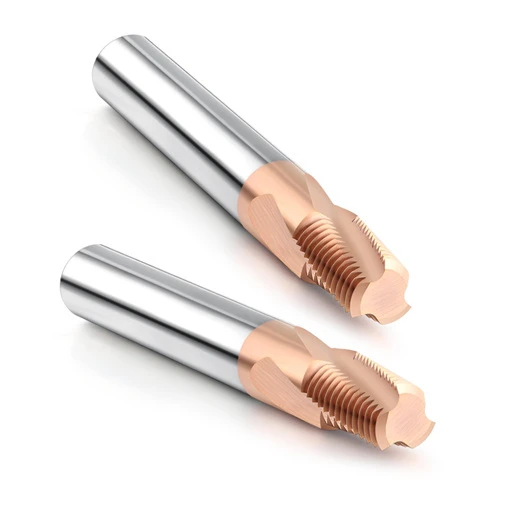

Last month, a long-time German client emailed us in frustration. He was machining a batch of 42CrMo4 pre-hardened steel mold bases, but his standard flat-bottom carbide endmills kept micro-chipping at the corners in less than 30 minutes. This caused nasty chatter marks across the workpiece and sent his per-part machining costs soaring due to constant tool changes.
This is a common headache in the shops we support across North America and Europe. Machinists often try lowering feed rates or buying expensive coatings, but the real issue is tool geometry. Many operators default to flat-bottom endmills, overlooking how a simple corner radius—a bullnose endmill—can fundamentally change cutting performance.
As a bullnose endmill factory, we have ground thousands of tools on our 5-axis CNC machines and helped hundreds of shops optimize their setups. For medium-to-hard steel, we know that for cavity roughing, contouring, and semi-finishing, a quality carbide bullnose endmill beats a flat endmill every time.
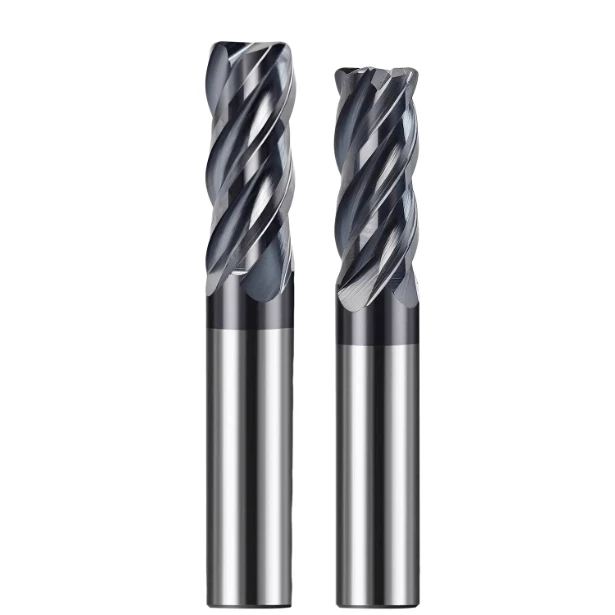
This advantage is even clearer in high-feed dynamic milling with sizes like a 6mm bullnose endmill. The radiused corner redistributes cutting forces away from the vulnerable tip and balances axial and radial loads, drastically reducing spindle vibration. When using a carbide 4 flutes bullnose endmill optimized for steel, the rigid core and variable helix design deliver smoother finishes and faster cycle times. If you are tired of chipped tool tips and chatter marks, ask yourself: is all that downtime really necessary?
Insights from European and American Workshops: Why Do We Recommend a Bullnose Endmill for Steel Roughing and Semi-Finishing?
Over the past decade, we have worked with numerous machine shops across North America and Europe. Whenever client reports cite “abnormal tip wear” or “chipping after two passes,” we know a flat endmill is struggling through tough material. When machining pre-hardened tool steels like P20, H13, or 4140, a sharp 90-degree corner acts as a natural stress concentration point, making fragile carbide grains break off instantly under uneven loads.
That is why we always advise engineers to prioritize a bullnose endmill for steel applications. Workshop machining requires stability and predictability during continuous eight-hour shifts or unattended overnight runs, not theoretical perfection. Modifying the sharp corner into a radiused arc fundamentally alters force distribution mechanics, helping our customers drastically reduce overall tool wear costs.
Relieving Stress Concentration at the Tool Corner: Why Are Flat-Bottom Endmill Tips Prone to Micro-Chipping When Machining P20 or H13 Steel?
When machining tough mold steels like H13 (HRC 48–52) or P20, the delicate tip of a flat-bottom tool is always the weakest link. As the cutter engages the workpiece, cutting forces concentrate entirely on the sharp corner, which has virtually no mass to dissipate heat. During cornering or plunge milling, combined impact forces instantly exceed the transverse rupture strength of the carbide substrate, making micro-chipping inevitable.
While initial micro-chipping is hard to spot with the naked eye, it triggers rapid flank wear and thermal spikes. On the shop floor, a muffled spindle sound or darkened chip color usually signals that the sharp tip has already failed. Replacing flat-bottom endmills in roughing operations is always our first step to eliminating this hidden downtime cost.
Real-World Cutting Force Dynamics: How a Bullnose Endmill Uses Corner Radii to Disperse Heat and Impact
When switching to a bullnose endmill, cutting forces shift smoothly across the entire arc of the corner radius. This significantly reduces the load per unit length of the cutting edge. Meanwhile, the solid carbide volume directly behind the radius acts as a natural heat sink, rapidly conducting high cutting heat away from the engagement zone.
Mechanically, the corner radius cleverly redirects a portion of the radial force into axial thrust along the spindle axis. Because CNC spindles feature much higher rigidity axially than radially, this force conversion minimizes tool deflection and chatter during long-overhang cuts. The result is a steady spindle load that easily absorbs impacts from hard spots or forged outer scale.
Real-World Machine Tool Data: Comparative Testing of Tool Life and Metal Removal Rate (MRR)
To give our clients concrete data, we ran a comparative test on a vertical machining center cutting 42CrMo4 steel. Under identical speeds and feeds, a standard flat endmill hit the 0.2mm wear limit in just 45 minutes, leaving visible chatter lines. In contrast, a carbide bullnose endmill with an R0.5 radius maintained clean cutting edges after 120 minutes of continuous cutting.
This extended durability directly translates into a higher MRR. With the corner radius buffering heavy impact forces, operators can confidently increase axial depth of cut and feed rates by over 30% in dynamic milling strategies. This shorter cycle time per part ensures dependable feasibility for unattended, lights-out manufacturing.
Material and Rigidity Assurance: Carbide Substrates and 4-Flute Designs in Mold Steel Machining
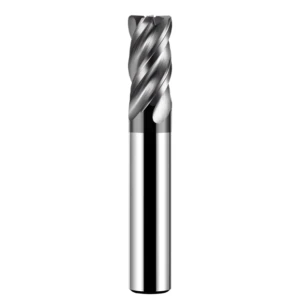
During tool setup at mold shops in Europe and the US, clients often ask whether to choose HSS, powder metallurgy, or solid carbide. When machining hardened mold steels like H13, NAK80, or SKD61, the substrate rigidity dictates the baseline for cutting performance. Mold cavity milling involves dozens of hours of heavy-load cutting; any elastic deformation causes severe tool deflection at corners, potentially scoring expensive workpieces.
That is why we consistently select ultra-fine grain carbide as our core substrate for steel machining. Combining this material with flute geometries optimized on 5-axis grinders, our solid carbide tools offer exceptional resistance to bending deformation. This dual assurance of material and structural rigidity withstands heavy cutting impacts while maintaining tight dimensional tolerances and superior surface finishes on complex cavity contours.
Why We Choose Solid Carbide for Steel Tools: Flexural Strength and Wear Resistance of Carbide Bullnose Endmills
When machining mold steels at HRC 45–55, standard tool materials soften and wear rapidly under high heat and pressure. The ultra-fine grain carbide substrate we select features small, uniformly distributed grains, allowing a carbide bullnose endmill to maintain high hardness alongside outstanding flexural strength. This ensures the main cutting edge resists microscopic bending during deep cuts under massive lateral loads.
Beyond the substrate, coating adhesion is critical for tool life. We employ high-temperature PVD technology to bond nanostructured AlTiN or nACo coatings to the substrate, creating a robust thermal barrier. When touching the tool body after machining steel, this combination blocks most cutting heat from entering the cutter, significantly slowing crater wear on the rake face.
Suppressing Vibration and Improving Surface Finish: Rigidity Advantage of a Carbide 4 Flutes Bullnose Endmill in Interrupted Cutting
For workshop engineers, machining mold steels with pre-drilled holes, slots, or intersecting cavities often triggers intense vibration. When using 2-flute or 3-flute tools for interrupted cuts, few active cutting edges create significant periodic load spikes. In contrast, a carbide 4 flutes bullnose endmill features a larger core diameter and maintains continuous multi-flute engagement, stabilizing force transmission.
In practice, this rigidity advantage directly improves the workpiece surface texture and scallop height. A uniform cutting force distribution suppresses chatter marks and pitting across the workpiece. For mold cavities requiring subsequent polishing, this superior finish drastically reduces manual polishing time for mold makers while preventing dimensional errors caused by deep chatter marks.
Practical Application in Corners and Cavity Clearing: How Corner Radius Stock Prepares the Way for Finishing
During cavity roughing, many machinists overlook how roughing tools affect subsequent finishing tool life. Using a standard square-end mill leaves a 90-degree stepped corner of residual material at the junction of the sidewall and floor. When a finishing tool—such as a small ball-nose or square-end cutter—engages this area, cutting loads spike instantly, making the tool prone to snapping.
In contrast, using a bullnose endmill for semi-finishing leaves a smooth, gradual arc transition instead of a steep, right-angled step. This uniform stock distribution allows finishing tools to maintain a stable cutting load when entering corners. This strategy of “paving the way” for finishing exponentially extends expensive tool life and enables safer, automated, unmanned workflows.
Real-World Analysis of the “Golden Size”: Application Tips for 6mm Bullnose Endmills in Small Steel Parts and Deep Cavity Machining
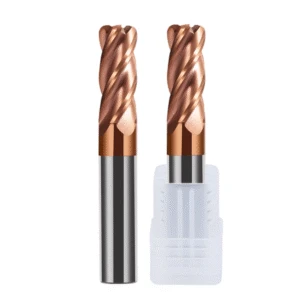
Whether in German precision job shops or North American mold facilities, the 6mm diameter consistently ranks among the fastest-consuming small tools. For small structural components, precision inserts, and compact cavities, 6mm tools offer an ideal balance: excellent maneuverability in tight channels paired with high core rigidity. When machining hardened steel, this size hits the “sweet spot” between controlling cutting forces and maximizing metal removal rates.
We consistently advocate replacing traditional square-end mills with a 6mm bullnose endmill for small steel parts and complex cavities. Small tools are sensitive to load spikes; even minor stress concentrations at sharp corners cause total tool breakage. A 6mm radiused tool provides higher forgiveness, smoothly handling frequent directional changes and high feed rates during small-cavity milling.
Why Is the 6mm Bullnose Endmill the Top Choice for Repeat Orders from Overseas Customers?
Export data from our factory shows high repeat order rates for the 6mm bullnose endmill among European and American clients, driven by practical shop-floor needs. Larger 8mm or 10mm tools often cannot enter tight corners, while smaller 3mm or 4mm tools lack the rigidity for aggressive cut depths. A 6mm cutter with an R0.5 or R1.0 corner radius bridges the gap between roughing and semi-finishing.
During setup, operators frequently use a single 6mm radiused tool on BT30 or BT40 spindles to perform corner clearing, sidewall roughing, and bottom semi-finishing sequentially. This multi-purpose capability reduces occupied tool magazine slots and minimizes tool-setting errors caused by frequent tool changes. For workshops prioritizing peak efficiency and cost control, this versatility makes it an indispensable stock item.
Clearance Design and Overhang Control: Solving Tool Deflection and Breakage with Small Bullnose Endmills
When machining deep cavities, the greatest challenge for small tools is deflection caused by excessive overhang. Operators often extend tools significantly to avoid interference, but weak axial rigidity triggers severe chatter upon workpiece contact, leaving step marks. In our experience, every time tool overhang doubles, rigidity at the cutting tip drops exponentially.
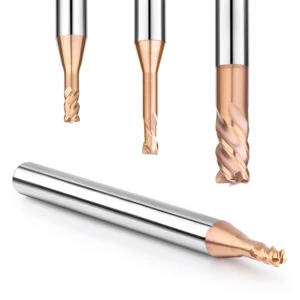
To solve this, we incorporate a necked-shank design into our small-diameter tools, retaining only the effective flute length while slightly reducing the neck diameter. Paired with a short overhang setup, a bullnose endmill can reach deep cavity bottoms while clamped securely in a shrink-fit or hydraulic holder. This enhances resistance to bending, keeping tool deflection within the micron range even in 45-grade steel or stainless steel.
Dynamic Milling Toolpaths: Recommended High-Feed Parameters for a Bullnose Endmill for Steel
In modern CNC machining, many workshops adopt dynamic or trochoidal milling strategies, and small radiused endmills are the ideal cutters for this approach. Traditional cutting methods use a large radial depth of cut (Ae) and small axial depth of cut (Ap), stressing the tool tip. Dynamic milling uses a small radial cut with a large axial cut, engaging the entire side flute and corner radius to distribute heat evenly.
When using a bullnose endmill for steel in dynamic milling on pre-hardened steel (HRC 38–45), we recommend a radial depth of cut (Ae) of 5%–10% of the tool diameter (0.3mm–0.6mm) and an axial depth of cut (Ap) of 1.5–2 times the diameter (9mm–12mm). Paired with high feed rates, spindle load remains stable while producing tiny, bright blue C-shaped chips, proving cutting heat is effectively evacuated away from the workpiece.
Manufacturing Processes at the Source: How a Bullnose Endmill Factory Ensures Quality
As a bullnose endmill factory with extensive experience serving global clients, we know that manufacturing a reliable cutter goes far beyond basic machining. Clients in Europe and the US routinely measure tool geometry and runout using Zoller or Keyence systems before tools hit the machine. When shops experience premature wear or chatter on steel parts, the root cause is often geometric defects introduced during grinding rather than bad cutting parameters.
In our facility, quality control integrates geometric precision, substrate quality, and advanced coating technologies. Manufacturing a cutter capable of reliably machining high-hardness steel requires strict process discipline across every phase. From stress-relief annealing of raw rod stock to 5-axis grinding and PVD coating deposition, every step ensures exceptional runout repeatability and long-lasting cutting stability on your shop floor.
From Rollomatic Grinders to AlTiN/nACo Coatings: Tolerance and Runout Control at the Source
To maintain dynamic balance during high-speed rotation, a bullnose endmill factory cannot compromise on grinding hardware or workholding precision. We equip our production lines with high-precision 5-axis CNC grinders from Rollomatic and ANCA, utilizing shrink-fit holder systems to keep grinding runout under 0.002mm. In hardened steel machining, a runout deviation of even 0.005mm causes one cutting edge to bear double the load, leading to premature chipping.
Precise geometry alone is not enough; surface engineering determines ultimate service life. After grinding, we apply nanoscale AlTiN or nACo coatings using physical vapor deposition. A specialized post-grinding polishing process eliminates micro-droplets on the coating surface, creating an ultra-smooth rake face that reduces friction and prevents hot steel chips from welding to the cutting edge.
Avoiding “Pseudo-Radius” Tools: How Factory Precision Ensures a Seamless Transition at the Corner Radius
When troubleshooting client issues, we occasionally spot a subtle manufacturing defect: a micro-step at the junction where the bottom edge meets the corner radius. We refer to tools with this discontinuous edge transition as “pseudo-radius” cutters. During flat-bottom cavity milling, this junction acts like an engraving tip, leaving stubborn score marks on the workpiece and failing prematurely due to stress concentration.
To achieve perfect tangent continuity, our grinding software executes coordinated interpolation between the end tooth relief angle and the corner radius arc. High-magnification CCD monitoring ensures a continuous transition from the bottom edge to the peripheral flute without micro-pauses. Ground this way, a carbide bullnose endmill allows cutting forces to transfer smoothly during ramping and face milling, preventing localized stress overloads.
Advice for B2B Procurement and Engineering Teams: Customizing Non-Standard Corner Radii Based on Steel Hardness (HRC 35–60)
When supporting engineering teams across North America, we always advise against blindly relying on standard off-the-shelf catalog sizes. For medium-hardness steel (HRC 35–42), increasing the corner radius from R0.5 to R1.0 accommodates larger axial depths of cut safely. However, when milling hardened tool steel above HRC 55, an excessively large corner radius increases radial push forces, causing severe vibration on long-overhang setups.
In these situations, working with a responsive manufacturer to adjust tool geometry is essential. Based on your axial depth of cut (Ap) and radial step-over (Ae), we calculate optimal corner radii and rake angles to produce a tailored bullnose endmill for steel. This application-specific customization solves complex machining roadblocks while driving down cost-per-part across your entire production line.
Engineer’s Troubleshooting Guide: Addressing Common Issues When Using a Bullnose Endmill for Steel
Even with optimal tool selection, machine shops frequently encounter sporadic machining issues when cutting tough steel alloys. Machining is an interdependent system where weaknesses in machine rigidity, fixture stability, spindle runout, or coolant delivery prevent high-performance cutters from reaching their potential. Anomalies usually stem from an imbalance between the machine, workpiece, and tool rather than cutter failure alone.
We compiled this guide from years of field troubleshooting to help you resolve common processing roadblocks. If you encounter poor surface finish, rapid flank wear, or unpredictable tool life, check these operational factors systematically. Fixing these details helps you translate solid carbide rigidity, 4-flute stability, and precision factory grinding into consistent, high-efficiency output.
Stepped Patterns or Chatter Marks on the Bottom Surface? Checking Tool Holder Runout and Axial Feed
When milling cavity bottoms or flat surfaces, visible step marks or chatter patterns indicate you should check spindle and tool holder runout first. If total system runout exceeds 0.005mm, the effective cut depth varies across each flute during rotation, overloading the highest tooth and leaving uneven scallops. Switching to a high-precision hydraulic or shrink-fit holder is the fastest way to eliminate this runout error.
Furthermore, match your axial feed rate to the corner radius geometry. If you notice deep surface tool marks while using a carbide 4 flutes bullnose endmill on high-feed passes, try reducing axial depth (Ap) and recalculating feed-per-tooth (Fz). Ensuring smooth chip formation without scraping or recutting against the floor helps you achieve a clean, mirror-like or uniform matte finish.
Addressing Built-up Edge and Thermal Cracking: Choosing Between Dry Air and Oil Mist Cooling for Steel Milling
When milling adhesive steels like 42CrMo, P20, or stainless steel, machinists often use flood coolant assuming it cools the tool best. However, if microscopic inspection reveals thermal cracking perpendicular to the cutting edge, you should stop flood cooling immediately. Thermal shock from alternating between extreme cut heat and rapid liquid quenching fractures the carbide substrate internally.
For high-speed milling of pre-hardened steels, we strongly recommend high-pressure cold air or Minimum Quantity Lubrication (MQL/oil mist). A cold air blast clears chips from deep pockets to prevent recutting and built-up edge (BUE) formation. Meanwhile, oil mist applies a micro-thin lubricating film on the corner radius, reducing friction and extending tool life significantly.
How Much Can a Machine Shop Save by Switching from Flat End Mills to a Bullnose Endmill?
Upgrading from sharp square-end mills to radiused cutters represents a proven strategy for shop floor stability. While flat endmills are common, their sharp tips act like stress concentration points during roughing passes. In contrast, radiused geometries distribute heavy impact forces smoothly, delivering double the usable tool life, reduced machine downtime, and fewer scrapped parts.
When factoring in tool costs, machine hourly rates, and manual benchwork time, total savings per part are substantial. If you are setting up a new project or optimizing a 6mm bullnose endmill for deep cavity roughing, re-evaluating your toolpath and corner radius selection yields quick dividends. Contact our engineering team with your drawings or material specs to design a customized cutting solution for your shop.