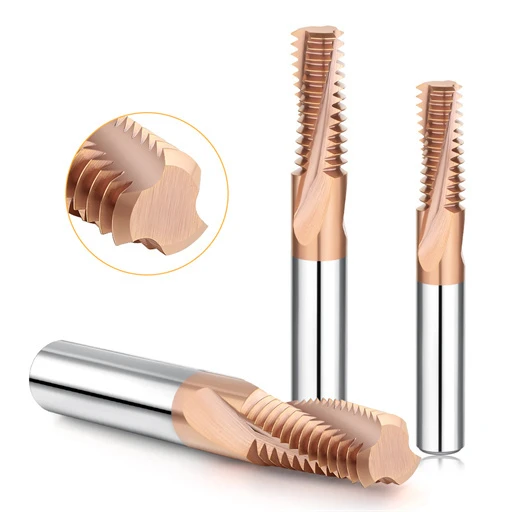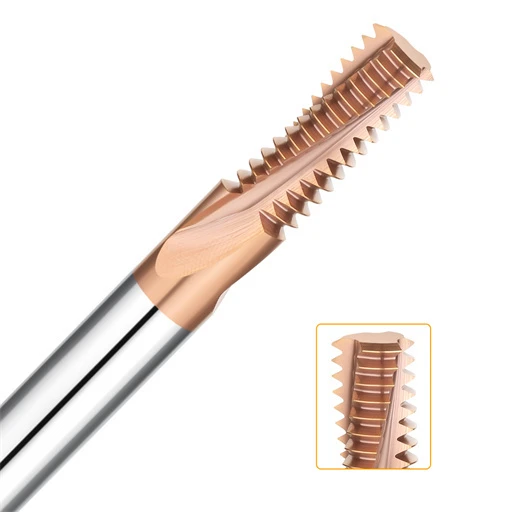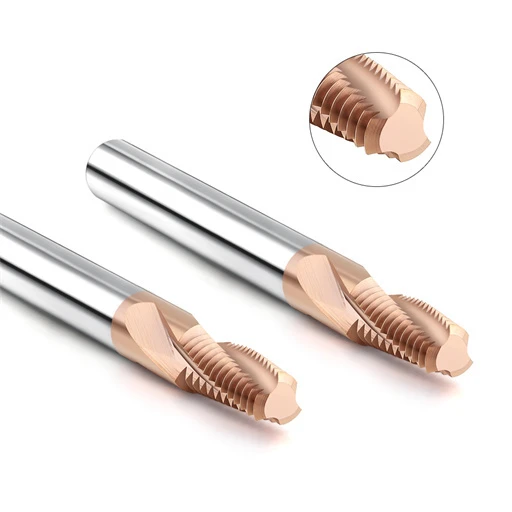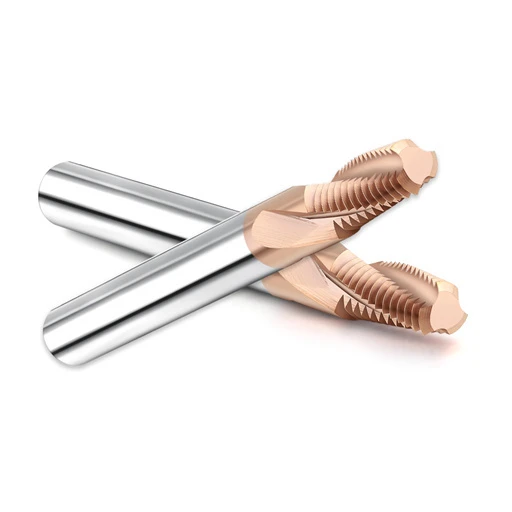

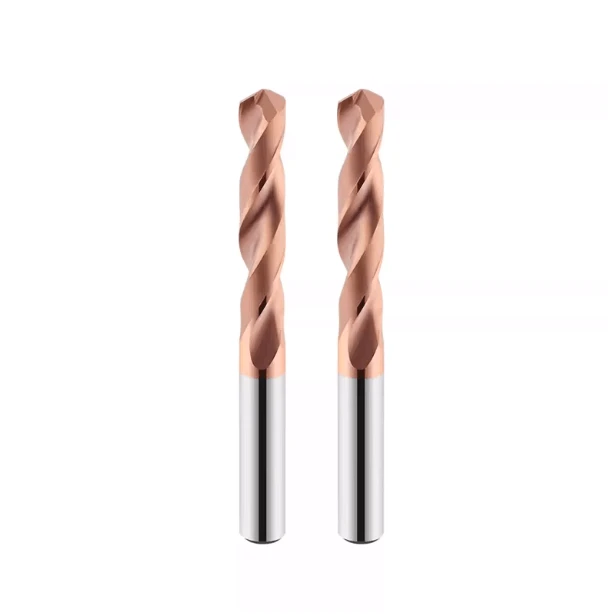
Last month, a European automotive mold client sent us an urgent email. They hit a wall drilling D2 hardened steel workpieces at HRC62. After snapping four “high-performance imported bits” in a row, their production line ground to a halt. This nightmare is all too familiar on the shop floor. In real-world machining, dealing with high-hardness materials is never as simple as copying theoretical speeds and feeds from a catalog.
As a team with 15 years of experience in CNC tool manufacturing and hands-on machining, we know this pain well. Standard hard steel drill bits marketed as universal solutions almost always fail on these tough projects. They either chip instantly upon contact or burn out from poor chip evacuation before even reaching twice the tool diameter. When tackling hardened die steels, generic tools are a joke. That is why we constantly test and optimize our specialized drill bit for hard steel options on high-precision CNC machines.
When material hardness exceeds HRC55 and approaches HRC65, you leave too much to chance without a rigid carbide hrc65 drill bit. Spindle runout, extreme cutting heat, and poor peck-drilling cycles act as silent killers that can instantly scrap an expensive mold.
We compiled this real-world performance review based on a decade of custom tool data and troubleshooting for Western machine shops. Whether you are a manufacturing engineer struggling with tough alloys or a procurement manager searching for reliable carbide drill bit suppliers, this guide offers unvarnished shop floor truths. Once the spindle ramps up and coolant hits the workpiece, your machine delivers the ultimate verdict. Are your hard drill bits genuinely up to the task, or are they just marketing hype?
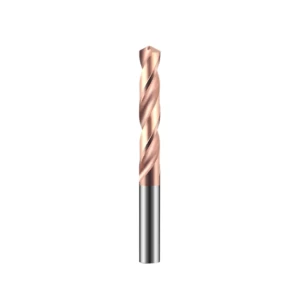
Why Skip the Theory? 16 Years of Real-World Experience in High-Hardness Machining
Over the past 16 years, we have solved countless hole-making challenges across North America and Europe. When overseas engineers approach us with shattered tools, we never recite textbook formulas. In a real shop, handbook parameters are rendered meaningless by machine flex and residual material stresses. Truly valuable expertise is forged amidst the roar of spindles and paid for in broken carbide.
Many R&D engineers specify material hardness over HRC60 to maximize part wear resistance. However, they rarely consider the catastrophic difficulties this creates for the machining department. The instant the cutting edge contacts that hardened layer, the slightest process oversight is drastically magnified. What follows is not idealized laboratory data, but hard-won insights from years of hands-on troubleshooting.
Common Pain Points in Hard Steel Machining Reported by Western Clients: Tool Burning and Instant Edge Chipping
We receive hundreds of help requests from shop supervisors, and two complaints dominate: overheating and edge chipping. To meet tight deadlines, users often blindly increase spindle speeds on quenched materials. This drives cutting temperatures past the thermal limits of standard hard steel drill bits. The surface coating undergoes rapid thermal annealing, and the unprotected substrate blunts within seconds.
Sudden, catastrophic edge chipping is even more frustrating because it happens without warning. A German client recently showed us a failed mold where the drill shattered after penetrating less than 3mm. This happens because machining high-hardness materials generates immense axial resistance. If the micro-geometry deviates slightly during regrinding, localized high pressure will instantly snap the brittle carbide edge.
From HRC45 to HRC65: How System Rigidity and Spindle Runout Determine Success or Failure in Hole Making
When material hardness crosses HRC45 and climbs toward HRC65, your margin for error drops to zero. We always remind customers to look beyond the tool itself; overall system rigidity is your invisible ceiling. Even a premium carbide hrc65 drill bit has a highly brittle substrate. A radial runout of just 0.005mm transforms into a destructive, cyclical impact load that shatters the tool inside the hole.
For these intense applications, we strongly advise moving away from standard ER collet chucks. Instead, switch to hydraulic or shrink-fit toolholders to maximize clamping rigidity and concentricity. When machining at the absolute limits of hardness, even micro-vibrations trigger massive fluctuations in cutting forces. Success hinges on taking the time to calibrate your machine and tightly control tool overhang.
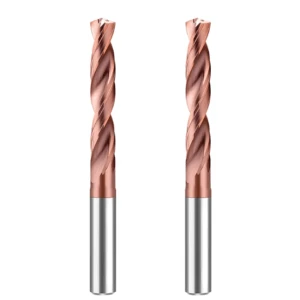
Practical Review: How to Select the Most Durable Hard Steel Drill Bits for Workpieces of Varying Hardness
Selecting the right tool for heat-treated workpieces requires a delicate balance between wear resistance and impact toughness. Many workshops use a single tool type for convenience, resulting in soaring costs or frequent tool breakage. Our 16 years of on-site experience proves that a “one-size-fits-all” approach fails in hard steel hole-making. Machinists must choose tools based on final material hardness, hole depth, and machine capability.
Increased tool hardness frequently comes at the cost of reduced resistance to impact and vibration. Based on firsthand field data, we categorize hard machining into two primary hardness ranges. By combining this with geometry optimization, we will break down our selection process for real CNC projects. This approach reduces your cost per hole and ensures predictable stability for automated hard steel drill bits lines.
HRC 45–55 Quenched & Tempered Steel and Mold Steel: Why We Recommend High-Cobalt Steel or Standard Solid Carbide
Pre-hardened mold steels and quenched alloy steels in this range retain some plasticity. When planning production for Western clients, we evaluate the specific cutting conditions first. On older machining centers with poor clamping rigidity, standard hard drill bits with brittle substrates snap easily. In these rigid-poor setups, M42 high-cobalt drill bits offer a tough, cost-effective alternative that tolerates minor vibrations.
Conversely, if your CNC spindle is highly rigid, conventional solid carbide tools deliver a massive cutting speed advantage. Paired with appropriate nanocomposite coatings, a standard carbide drill bit exhibits exceptional resistance to frictional wear around HRC50. We favor higher feed rates here to let chips carry away heat rapidly. This prevents secondary work hardening inside the hole and optimizes your tooling budget.
The Hardcore Challenge of HRC 55–65 Hardened Steel—When an HRC 65 Carbide Drill Bit Is Essential
When workpiece hardness exceeds HRC55 or approaches HRC65, material ductility drops to virtually zero. This extreme cutting process generates intense compressive friction and destructive heat. Field tests prove that standard tools burn out or shatter within three seconds under these conditions. For these demanding scenarios, you must deploy a premium carbide hrc65 drill bit designed specifically for hardened materials.
These specialized tools feature ultra-fine grain carbide substrates that maintain superior hot hardness at temperatures exceeding 1,000°C. Machinists must remain vigilant against edge chipping at this hardness level, meaning conventional flood cooling should be avoided. We recommend Minimum Quantity Lubrication (MQL) or high-pressure air cooling to prevent thermal shock. This high-level trade-off leverages extreme tool rigidity to power directly through a stubborn, hardened shell.
135° vs. 140° Point Angles and Chisel Edge Modification: Insights from Our CNC Cutting Force Tests
The geometry of the drill tip dictates the axial cutting force during engagement. Our test machines use force sensors to track mechanical feedback when entering hard steel. The data shows the traditional 118° point angle is completely unsuitable; its long cutting edge creates lateral resistance that causes tool wandering. Today, 135° and 140° point angles dominate high-precision hole-making, each serving a distinct role.
Our testing shows a 135° point angle with a modified chisel edge offers excellent self-centering at HRC50. This geometry reduces axial thrust and prevents the drill bit for hard steel from skating across the surface. For extreme materials over HRC60, we prefer a wider 140° point angle. It requires higher initial axial force but protects the outer corners by minimizing micro-chipping under heavy loads.
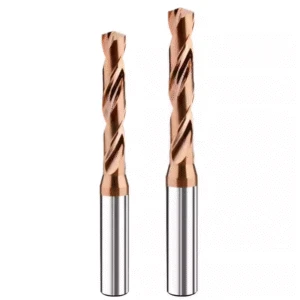
Lessons Learned the Hard Way: Why Do Standard “Hard Material” Drill Bits Break on the Shop Floor?
In hard steel CNC machining, real performance is measured at the 50th or 100th hole, not on the invoice. Too many shop supervisors buy cheap, off-the-shelf “hardened steel” bits to trim upfront procurement costs. The consequences are predictable: cutting edges rapidly anneal, or the tools snap instantly inside the hole. This classic mistake easily ruins a precision mold worth thousands of dollars.
Standard commercial tools fail immediately because they lack stress-matching engineering for extreme cut environments. Machining hardened materials demands exceptional substrate flexural strength, precise microscopic grain distribution, and specialized macro-flute designs. Relying blindly on the generic hardness ratings printed on the box will only lead to deeper shop floor pitfalls. To succeed, you must source from proven carbide drill bit suppliers who understand these engineering nuances.
The Coating Deception—Comparing the Real-World Lifespan of AlTiN Nano-Coatings vs. Cheap Imitations Under High Heat and Pressure
The coating acts as critical body armor for the carbide substrate, yet many industrial clients get burned here. To win price wars, low-end suppliers use cheap, chemically diluted imitation coatings while still labeling them as AlTiN. In real cutting tests where temperatures exceed 800°C, these inferior imitations flake off rapidly. This exposes the raw substrate, causing immediate failure from high-temperature chip abrasion.
In contrast, genuine, high-quality AlTiN nano-coatings feature a dense internal lattice structure that resists extreme thermal stress. Under high heat, surface friction actually generates a protective aluminum oxide (Al2O3) layer at the cutting edge. When buying high-performance carbide drill bit options, always verify the coating’s red hardness capability. Switching to a true nano-coating doubled tool life for a French client with zero parameter changes.
Through-Coolant vs. External Coolant: The “Chain-Reaction Tool Breakage” Caused by Chip Evacuation Issues
Relying on traditional flood coolant nozzles is a massive gamble when hole depths exceed three times the diameter (3D). The centrifugal “air wall” generated by high-speed spindles completely blocks external fluid from reaching the hole bottom. The cutting zone quickly dries out, causing chips to expand, harden, and jam the flutes. Once evacuation fails, the ongoing machine feed force instantly shatters brittle hard drill bits.
This is why we strongly advocate for high-pressure through-coolant technology on Western production lines. Internal cooling channels force coolant directly to the cutting interface, instantly dropping temperatures that can exceed 1,000°C. More importantly, the hydraulic pressure flushes hard, fine chips out of the hole smoothly. Through-coolant is not an optional luxury; it is your primary defense against catastrophic tool failure.
Real-world Case Study (US/Europe): Tool Life Increased by 300% After Adjusting Feed and RPM
Last year, a US hydraulic component manufacturer struggled with machining HRC58 valve blocks. Their cost per hole was exorbitant because a single custom tool could barely complete five holes. Assuming the material was too hard, they used an extremely conservative strategy: very low RPM and minimal feed. This low feed rate caused the tip to rub violently, triggering severe work hardening on the surface.
We re-evaluated their cutting force model and proposed a bolder strategy: reduce RPM by 20% but increase feed per revolution by 50%. This heavier chip load successfully forced the drill bit for hard steel to break through the work-hardened layer instantly. The results astonished their engineers; tool life skyrocketed from five holes to twenty-two holes per drill. Proper feeds and speeds often protect your tools better than overly conservative parameters.
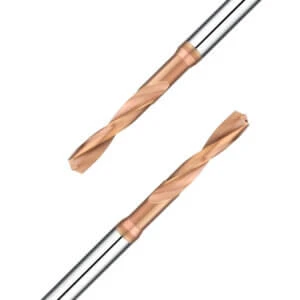
CNC Process Optimization: How to Squeeze Every Last Drop of Value from a Premium Carbide Drill Bit
Maximizing a tool’s cutting potential through meticulous on-site parameter tuning is vital in automated machine shops. We often see factories purchase expensive solid carbide tools only to have them fail prematurely due to outdated programming habits. This waste stems from a clear disconnect in the manufacturing process chain. Hole-making in high-hardness steel is a complex system requiring precise engineering intervention.
Every CNC command and axial advance of the spindle directly impacts the microscopic stress distribution at the cutting edge. Strategic process adjustments not only extend tool life but also ensure consistent surface quality. To extract maximum productivity on the shop floor, we must optimize three critical areas. We will focus directly on spotting strategies, cycle command selection, and downstream operational integration.
Spotting Strategies for High-Hardness Materials: Is a Center Drill Really Necessary?
Older manuals insist that drilling hard steel requires a center drill to create a pilot indentation. However, our experience with B2B industrial clients proves this rule can spell disaster on high-hardness materials. When material hardness exceeds HRC50, a smaller spotting point angle concentrates all axial impact forces on the main drill’s fragile tip. This mismatch causes instant tip failure upon initial machine engagement.
If the main tool has a length-to-diameter ratio of 3xD or less and features self-centering geometry, we recommend plunging directly. If tight positional tolerances require a pilot hole, procurement teams must source specialized wide-angle centering tools. Always ensure you partner with reliable carbide drill bit suppliers who can provide a matching 142° spotting geometry. Letting the long cutting edge contact the workpiece before the tip provides the safest entry barrier.
A Fatal Misconception About Peck Drilling Cycles: Why Micro-Pecking Accelerates Carbide Wear
Driven by safety instincts, many programmers use deep-hole peck cycles (like G83) with tiny incremental depths (Q-values) to break chips. While highly effective for ordinary carbon steel, this approach proves counterproductive when machining hardened steel. The Achilles’ heel of solid carbide is its poor resistance to fatigue and thermal shock. Frequent retraction cycles force the cutting edge to repeatedly endure unstable entry-exit stress.
Every time your high-end carbide drill bit fully retracts and slams back down, residual chips inside the hole crush the cutting edge. This mechanical hammering causes microscopic fatigue spalling and rapid thermal cracking. In practice, we prefer using the G73 high-speed peck cycle to break chips without fully exiting the hole. When through-coolant pressure is sufficient, a single-pass strategy drilling straight to the bottom yields much better tool longevity.
Preventing Work Hardening in Pilot Holes Before Rigid Tapping: A Strategy for Success in Subsequent Operations
Drilling is never an isolated process; its execution directly determines the fate of expensive taps in subsequent operations. High-hardness steels are highly susceptible to cold work hardening induced by compressive cutting stresses. If your carbide hrc65 drill bit causes excessive friction, an ultra-hard “white layer” forms on the hole wall. When the tap engages this hardened surface, it snaps instantly as if striking solid granite.
To ensure success in downstream tapping, we employ rigorous temperature-control and anti-hardening techniques during the pilot hole stage. We strictly limit friction time by optimizing cutting speeds; if chips discolor or the tool screeches, replace it immediately. Additionally, we slightly increase the feed rate for the final millimeter of the cut to rapidly penetrate any potential hardened layer. This simple adjustment reduces the risk of tap breakage by at least 40%.
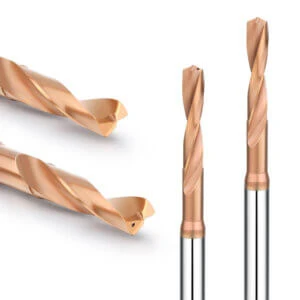
A Guide to Avoiding Pitfalls: How European and US Procurement Teams Can Select Reliable Carbide Drill Bit Suppliers
Selecting carbide drill bit suppliers requires the same rigorous evaluation as fine-tuning parameters on the shop floor. Having assisted numerous procurement managers in Europe and the US, we understand the difficulty of choosing amidst a vast landscape of traders. If you struggle with high quarterly tool consumption or frequent downtime, shift your focus away from unit purchase prices. True value lies in manufacturing quality control and technical support infrastructure.
High-quality cutting tools are forged through high-precision 5-axis grinding machines and rigorous inspection equipment. When tackling the challenge of machining high-hardness steel, a competent supplier must speak the same language as shop-floor engineers. They must understand the process logic behind every minute adjustment in spindle speed. Below, we outline baseline criteria for evaluating partners based on quality control, customization, and emergency response.
Look Beyond Price: Essential Industrial-Grade Standards for Dynamic Balance and Comprehensive Quality Control
An ordinary tool with a rock-bottom price tag often ends up costing you many times more in ruined components. When evaluating samples from new carbide drill bit suppliers, ask directly about their dynamic balance standards and inspection procedures. At high spindle speeds, micron-level deviations in tool symmetry trigger violent centrifugal vibrations. When machining workpieces exceeding HRC55, these micro-vibrations are the primary cause of instantaneous edge failure.
Qualified industrial tool manufacturers must subject every batch to rigorous optical profile inspections before shipment. They must guarantee that cutting-edge symmetry, chisel angles, and radial runout are controlled within extremely tight tolerances. Low prices always signal cost-cutting in unseen testing stages; in high-precision machining, inconsistent tool quality is the greatest risk to your production line.
Why We Prioritize Non-Standard Customization (OEM/ODM) Over Selling Only Standard Off-the-Shelf Tools
Over 15 years of field service, we have found that no two manufacturing clients operate under identical machining conditions. Even with identical material grades, variations in machine tool rigidity, fixture overhang, or coolant pressure limit standard tools. If you are dealing with challenging features like stepped holes, consider moving away from mass-produced hard steel drill bits. Turning to a supplier capable of non-standard customization is often the only way to succeed.
We commit to providing in-depth OEM/ODM customization because fine-tuning flute helix angles or substrate compositions can exponentially boost shop efficiency. Tailoring nanocomposite coatings to your specific alloy eliminates the unpredictability of generic catalog tools. If you are facing an impossible project, try sharing your specific operating conditions and machining goals with a manufacturer that has true R&D capabilities.
A Key Metric for Evaluating a Supplier’s Technical Support: Can They Resolve a Tool Breakage Crisis Within 24 Hours?
The true test of a supply chain isn’t the contract signing, but how quickly the supplier responds when a tool snaps. If you are looking for a long-term partner for heavy-duty hard drill bits, test their technical responsiveness. When an anomaly occurs, can their team provide an engineering-based solution within 24 hours, or do they just tell you to try another tool? Industrial procurement is about purchasing reliable production capability, not just piece-parts.
A knowledgeable supplier analyzes broken tool remnants, chip morphology, or spindle audio to diagnose the root cause of failure. They can pinpoint whether the issue is excessive spindle runout, improper coolant concentration, or an error in the programmed feed rate. If your process is stalling due to poor communication, feel free to share your specific operating conditions, blueprints, and material reports with us.