
Last month, a process supervisor at a German Tier-1 automotive supplier—a long-time partner for our custom tooling—sent an urgent email. They were machining high-purity alumina insulating bushings and faced a 24% scrap rate due to radial micro-cracks at the hole entrance and catastrophic shattering during tool breakthrough. This critical bottleneck was delaying their entire production timeline.
We have seen this exact shop-floor failure hundreds of times while supporting our North American and European machining clients. When tiles or industrial ceramics shatter, machinists immediately question whether their diamond drill bits for ceramics are defective. However, our 16 years of tool manufacturing experience proves that the root cause is rarely the tool itself, but rather the lack of a specialized machining strategy for brittle materials.
Unlike ductile metals where you can simply force the feed, rigid ceramics have zero tolerance for excess axial force. Blindly pushing a ceramic drill bit turns it into a blunt crusher rather than a precision grinding tool. The secret lies in managing the micro-fracture mechanics in the cut zone, ensuring the diamond mesh size on your diamond coated drill bit effectively grinds the material without inducing subsurface cracks.
We have compiled our field-tested parameters for CNC machining centers and stable bench drills into this guide. By shifting your approach from brute force to controlled abrasion, you can eliminate workpiece breakage and extend your diamond ceramic drill bits lifespan by at least 300%. As an engineer dealing with advanced ceramics daily, aren’t you tired of pulling out a burnt, stripped bit even though your coolant was cranked to the max?
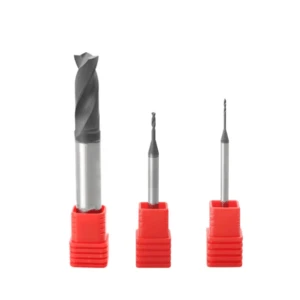
Why do your ceramic drill bits frequently cause tile cracking?
Whenever we run a failure analysis on a ruined ceramic workpiece, we almost always see distinctive dovetail-shaped stress cracks radiating from the bore entry. Many CNC machinists who excel with titanium or stainless steel fail here because they rely on conventional metal-cutting intuition. In the world of advanced technical ceramics and high-density porcelain, standard shearing mechanics do not apply, and overlooking material brittleness leads to instant failure.
When a ceramic drill bit engages a rigid substrate, it does not cut; it performs ultra-high-frequency micro-grinding via embedded diamond crystals. Because these materials cannot undergo plastic deformation to relieve mechanical strain, any minor spike in thrust force or spindle vibration creates highly concentrated internal stresses. Once this localized tension exceeds the material’s ultimate tensile strength, catastrophic macro-cracking becomes inevitable.
The fatal cause of stress concentration: A case study of workpiece shattering solved for a German client
Last year, a German manufacturer struggled with 12mm-thick silicon nitride plates using standard diamond drill bits for ceramics. Without exception, the plates suffered sudden, explosive fracturing just as the tool reached two-thirds of the hole depth, right before breaching the bottom surface. The client’s engineering team was ready to blame the material’s sintering density, but our on-site data logging revealed a completely different mechanical culprit.
By analyzing the CNC spindle’s live axial load, we identified massive chisel edge extrusion during the final breakthrough phase. Because the tool’s center linear velocity drops to zero, it stops grinding and starts punching, blowing out the unsupported bottom material. We solved this by dropping the feed rate by 70% during the final 1.5mm of cut depth and introducing a rigid, flat backing fixture, which dropped their scrap rate to zero.
Improper Diamond Mesh Size Selection: Differences in Brittle Fracture Behavior Between Electroplating and Brazing
In our manufacturing facility, we always push procurement managers to look past the price tag and evaluate the tool’s specific diamond mesh size. The size of the grit and the matrix bonding method directly dictate the micro-scratch depth and the net cutting resistance during operation. As a dedicated ceramic drill bit supplier, we manufacture both electroplated and vacuum-brazed tools because each handles crack propagation differently.
Our laboratory testing confirms that while electroplated bits offer great initial sharpness, their single-layer bond cannot handle high-load continuous cycles, leading to rapid diamond stripping. Once bare steel rubs against the ceramic, frictional heat spikes and induces immediate thermal cracking. Conversely, a vacuum-brazed diamond ceramic drill bit features a chemical metallurgical bond, offering superior grit retention and uniform protrusion that minimizes structural impact during heavy roughing.
Thermal Shock: Mechanisms of Micro-crack Propagation in Dry Drilling vs Wet Cutting
Beyond mechanical stress, technical ceramics are highly vulnerable to thermal shock due to their exceptionally low thermal conductivity. The intense friction generated during high-speed grinding can drive cutting zone temperatures up by hundreds of degrees in seconds, forming severe temperature gradients across the part. Under a microscope, workpieces that appear perfect on the outside often reveal a dense network of internal thermal micro-cracks ready to fail under load.
Many field operators opt for dry drilling for convenience, relying on a diamond-coated drill bit featuring built-in cooling wax. While acceptable for quick, on-site utility modifications, dry drilling is a massive risk for continuous industrial CNC production lines. If the water stream misses the cutting interface for even a second, subsequent intermittent fluid contact shocks the superheated ceramic, causing micro-cracks to propagate instantly through the core.
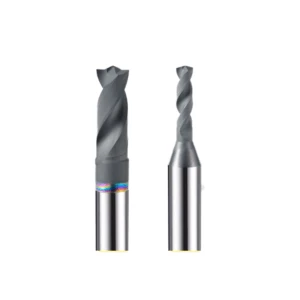
Insights from 16 Years of Tool Manufacturing: Standard Operating Procedures for Diamond Drill Bits for Ceramics
In our tool manufacturing plant and on our clients’ shop floors, we always emphasize one core truth: a high-quality tool is only half the battle; a standardized cutting process determines the actual workpiece success. Many overseas buyers purchase our high-spec tools, only to see their lifespan cut in half because operators stick to old habits used for metal cutting. To fix this, we compiled these field-tested best practices for processing hard, brittle materials.
This procedural framework is the distilled wisdom gained from analyzing thousands of field cases involving premature ceramic chipping and fracturing. When you deal with specialized technical substrates that feature extreme hardness and near-zero elongation, any minor operational deviation is disastrously amplified. Following these standardized steps for the three critical machining stages will fundamentally secure your approach and ensure your diamond drill bits for ceramics deliver highly stable performance.
Ditch the Center Punch: Preventing Bit Slippage with the Recommended “45° Angled Entry Method”
Many CNC machinists accustomed to working with steel or aluminum instinctively use a center punch to create a pilot indentation on hard tiles or technical ceramics. In our engineering view, this approach is a recipe for disaster. Such high-load, localized impact instantly creates micro-cracks on the material’s surface that are invisible to the naked eye. However, skipping the punch causes a different issue: because this ceramic drill bit lacks a center point, a direct vertical entry leads to uncontrolled lateral slippage.
To eliminate this shop-floor bottleneck, we have long advocated for the “45-degree angled entry method” when providing remote technical support. In practice, you position the rotating edge of the tool at roughly a 45-degree angle to the workpiece surface. Use the grinding force of the single-side diamond particles to score a shallow, crescent-shaped groove. This groove acts as your natural guide, allowing you to smoothly straighten the tool and transition to standard vertical drilling.
Dynamic Feed Control: Deceleration Strategies for Entry and Breakthrough
During continuous high-speed hole-drilling operations, the two moments most prone to operator oversight are the initial entry and the final breakthrough phase. Our failure analysis of defective parts returned by clients in the UK and US reveals that over 70% of catastrophic chipping occurs on the back of the workpiece. This is a classic case of brittle spalling caused by uneven structural resistance. As the diamond ceramic drill bit approaches the bottom of the material, the remaining thickness cannot withstand the localized axial pressure.
We strongly recommend implementing a staged, dynamic feed logic during your CNC programming or manual drilling operations. When the tool first contacts the surface, perform a slow trial cut at half the standard feed rate until a complete circular cutting path is established. During the high-risk breakthrough phase (the final 1–2 mm of depth), we advocate for a highly conservative strategy: drastically reduce your feed rate to give the tool ample time to perform precise, micron-level grinding.
Rigid Workholding Systems: Why We Advise Against Pushing Tool Life to the Limit with Unstable Handheld Drills
In field construction or emergency workshop repairs, operators frequently use a standard handheld tool to drive the bit. If you are using light-duty diamond coated drill bits with built-in cooling wax for quick utility modifications, this type of operation is indeed feasible with careful manual control. However, for industrial-grade material thicknesses or high-volume precision machining, we strongly advise against relying on purely handheld operations to push the tool to its absolute lifespan limit.
The minor, unavoidable instability inherent in handheld operation causes the bit to experience high-frequency lateral runout inside the hole. This lateral deflection generates massive shear stress outside the primary cutting direction, leading to rapid diamond shedding from the metal matrix. Whenever conditions permit, you should secure the workpiece on a rigid drill press or a stable CNC machining center. Ensuring absolute spindle concentricity is the only way to guarantee hole-wall perpendicularity.
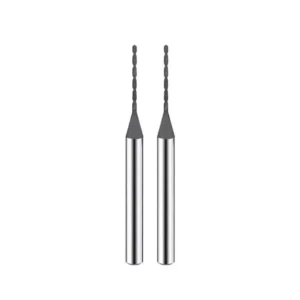
Machinist’s Parameter Guide: Optimizing RPM and Pressure for Diamond Ceramic Drill Bits
In standard metal cutting, you can easily gauge tool status by listening to the spindle sound or observing chip coloration. However, these empirical shop-floor methods completely fail when you are machining high-hardness, brittle technical ceramics. Ceramic grinding generates no ductile chips to carry away frictional heat, nor does it produce distinct changes in cutting audio. By the time your operator hears an abnormal noise, the expensive workpiece has already cracked.
We consistently emphasize to process engineers in Western workshops that successful ceramic machining requires strict adherence to quantified speed and pressure data. Our laboratory testing shows that blindly increasing spindle speed to meet tight deadlines causes the bonding matrix on the tool surface to melt instantly. To achieve the optimal grinding efficiency with a premium diamond ceramic drill bit, you must strike a precise, dynamic balance between rotational speed and axial pressure.
Practical Conversion Table: Surface Speed (SFM) vs Rotational Speed (RPM) for Hole Diameters Ranging from 6mm to 35mm
When conducting tool-life validation tests in our factory, we measure grinding performance using SFM. For most high-density industrial ceramics, the ideal SFM range for diamond tools sits between 150 and 300. However, because the outer circumference varies significantly across different tool sizes, applying a uniform rotational speed to all diameters is problematic: small bits fail to cut due to insufficient surface speed, while large bits burn out from excessive friction.
To simplify parameter selection during your production planning, we compiled our recommended rotational speeds for different sizes of the ceramic drill bit. For instance, when machining small 6mm holes, we set the spindle speed between 2,000 and 3,000 RPM to ensure an adequate grinding frequency. Conversely, for a standard 35mm plumbing hole, the speed must be strictly reduced to between 400 and 600 RPM to prevent the premature carbonization of the outer diamond grit.
Controlling Axial Feed Pressure (Thrust Force): Avoiding “Overload Chipping” Through Operator Feel
If you are using fully automated CNC machining centers, axial feed pressure is easily programmed as a constant feed rate per revolution (mm/rev). However, for frontline craftsmen relying heavily on manual bench drills, controlling axial pressure depends entirely on tactile feel. Based on our shop experience, the feedback when using a diamond drill bit for ceramics differs significantly from drilling steel; you must never apply heavy, continuous downward pressure.
In practice, we use a simple rule of thumb: the manual axial pressure applied should be just enough to ensure a steady discharge of fine, white ceramic dust. If the discharged powder turns yellow or shows black specks, it indicates excessive thrust force, resulting in severe mechanical friction in the cut zone. When feeding manually, we recommend an “intermittent peck” rhythm—slightly retracting the bit after every 1 to 2 millimeters of penetration to relieve structural stress.
Optimal Coolant Spray Angle and Flow Rate: Preventing Diamond Edge Overheating
Many machinists report that, despite activating their flood coolant, the diamond coating on their tools peels off completely after drilling just a few holes. Upon reviewing on-site surveillance footage, we typically find that while the fluid volume was substantial, it was directed entirely at the upper section of the tool body. The actual cutting edge at the bottom of the hole was running dry because the tubular body blocked the fluid path, causing severe thermal cycling.
We highly recommend using a through-tool coolant system to deliver fluid directly to the cutting zone via the tool’s hollow core. If your workshop equipment limits you to external cooling, you must adjust the nozzle angle to 15°–30° relative to the tool axis, aiming directly at the interface where the diamond-coated drill bit meets the ceramic surface. Maintaining an abundant flow rate (at least 5 L/min) is crucial to flush abrasive powder out of the hole.
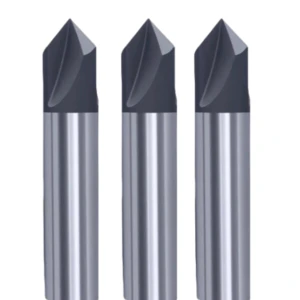
How to Extend the Service Life of Diamond-Coated Drill Bits and Reduce Cost-Per-Hole
For high-volume industrial ceramic processing, tooling wear represents a massive operational expense. When vetting potential tool vendors, many procurement managers look only at the unit price, completely ignoring the critical metric of “cost-per-hole.” Our experience supplying major Tier-1 operations proves that the downtime costs of frequent tool changes and the high scrap rates caused by cheap, inferior tools far outweigh the initial premium of professional-grade alternatives.
We believe reducing production costs depends on using advanced metallurgy to maximize the grinding potential of every single diamond crystal. As an R&D-focused tool manufacturer, our engineering goes beyond optimizing the bond strength of our diamond coated drill bit lines. We study the live application, helping clients eliminate field wear, chip packing, and premature grit glazing to deliver immediate, tangible cost savings to your production lines.
Preventing Premature Diamond Coating Failure: Our Hardness Requirements for Substrate Steel
Failure analysis for our North American clients revealed that many tools are discarded not because the diamond abrasive is spent, but due to extensive coating peeling. While many blame this on electroplating or brazing defects, our laboratory heat-treatment tests prove that substrate deflection is the real culprit. If the tool’s core steel is too soft, the heavy extrusion torque during high-speed feed cycles causes microscopic elastic deformation, instantly rupturing the bond line.
To eliminate this engineering bottleneck, we upgraded our ceramic drill bit cores from standard carbon steel to premium alloy structural steel that is through-hardened via vacuum quenching. We strictly maintain our core hardness within a rigid HRC 42 to 45 window. This precise range delivers the perfect technical balance between structural rigidity and shock toughness, ensuring the tool body remains geometrically stable so the wear life of the cutting face is effectively doubled.
The Challenge of Chip and Core Removal in Blind and Through-Holes: Quickly Clearing Ceramic Slugs from Diamond Hole Saws
When grinding large-diameter through-holes with hollow tubular core drills, operators constantly battle wedged material. After breakthrough, the circular ceramic slug frequently locks inside the tool cavity due to thermal expansion. If your operators attempt to clear this plug by hitting the tool body with a hammer or wrench, they will permanently bend the high-precision diamond drill bit for ceramic or shatter the fragile cutting edge.
To resolve this on the shop floor, we engineered a specialized inner cavity draft angle combined with wide lateral clean-out slots. In fully automated CNC environments, we recommend leveraging the high fluid pressure of through-spindle internal coolant to automatically eject the slug during the tool retract cycle. For manual operations lacking internal fluid, we provide integrated mechanical ejection springs to ensure minimum friction and maximum cycle efficiency.
Secondary Dressing Techniques: Restoring Sharpness with White Aluminum Oxide Blocks When Diamond Particles Dull
After long production runs, every abrasive grinding tool will eventually experience surface degradation. When the sharp diamond cutting edges dull down, the feed rate drops, and the spindle begins to emit a harsh, high-pitched screech. Many shops assume the diamond ceramic drill bit is dead and throw it away. In reality, the tool is usually just glazed over with packed ceramic micro-powder, and discarding it is an expensive waste of inventory.
We highly recommend implementing a fast “dressing” routine right next to your machine tools. When a bit dulls, drop the spindle speed to one-third of your normal operating parameter and make a light 2mm plunge into a soft, high-porosity white aluminum oxide dressing stick. This abrasive action strips away the loaded ceramic dust and spent metal binder, instantly exposing fresh, razor-sharp diamond layers beneath and slashing your tool consumption costs by over 40%.
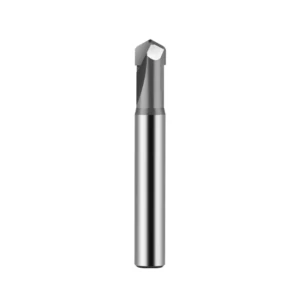
How We Ensure Quality Control for European and American B2B Clients as a Professional Ceramic Drill Bit Supplier
In global industrial procurement, B2B sourcing managers care far less about a perfect initial sample than they do about batch-to-batch consistency in high-volume production. Precision machining of rigid, brittle compounds leaves zero room for geometric error; even a two-micron deviation in runout can shatter a high-value workpiece. As an established ceramic drill bit supplier, we anchor our quality management system in hard, verifiable metrology data rather than empty promises.
We understand that precision manufacturers in the West demand highly predictable tool lifespans to schedule automated production runs. To meet these rigorous standards, we equipped our quality control labs with high-end optical comparators and dynamic balancing systems to vet every production lot. Transforming machining expertise into tight manufacturing controls ensures that every single tool arriving at your receiving dock delivers identical, reliable performance.
100% Concentricity Testing: Minimizing Lateral Impact Forces on Ceramics
In high-speed grinding operations, tool runout is the primary catalyst for edge chipping on brittle workpieces. If there is even a fractional misalignment between the shank axis and the working matrix of a ceramic drill bit, that error amplifies into severe lateral vibration at high RPMs. This continuous micro-hammering fatigues the ceramic hole wall, generating subsurface micro-cracks that cause the part to fail under subsequent assembly torque.
Our quality assurance protocol requires every single tool to pass an inspection on a high-precision optical concentricity projector, capping runout error at a strict maximum of 0.02mm. If you are milling high-value semiconductor substrates or aerospace insulation where tolerance fields are exceptionally tight, we suggest verifying your machine’s collets and tool holders to ensure your workholding matches the precision concentricity of our tools.
Consistent Diamond Concentration: Why Our Custom Drill Bits Maintain Uniform Cutting Rates
Machinists often face a frustrating problem: using a diamond ceramic drill bit of the exact same specification from a generic supplier, one tool cuts flawlessly while the next batch fails to penetrate and burns the workpiece. This critical defect stems from poor control over diamond concentration during the electroplating or brazing cycles, which creates massive variations in grit protrusion height and chip clearance space between manufacturing runs.
By tightly controlling our vacuum brazing thermal profiles and electroplating bath current densities, we lock in an incredibly uniform diamond distribution per square millimeter of substrate surface. If your factory runs automated, lights-out manufacturing blocks that depend on fixed CNC cycle times and steady spindle torque, utilizing these high-consistency tools will protect your margin by eliminating the unpredictable downtime caused by erratic tool quality.
OEM/ODM Support for European and American Machining Clients: How to Obtain Test Samples and Reports
With decades of experience serving international machine shops, we know that no two manufacturing setups are identical. Even when running the exact same technical grade of material, variations in fixture rigidity, coolant delivery, and spindle torque directly impact the operational lifecycle of your diamond drill bit for ceramic inventory. Because of this variability, we position our factory as an agile engineering partner capable of delivering tailored, non-standard solutions.
If your engineering team is preparing to quote a new project involving advanced technical ceramics, fused quartz, or armor glass, we invite you to share your application parameters with us. We can readily adjust diamond grit sizing, bond matrix hardness, and custom shank geometries to match your exact part blueprints. Let us collaborate on a low-risk pre-production prototype batch backed by full laboratory test reports to prove the process on your spindles first.