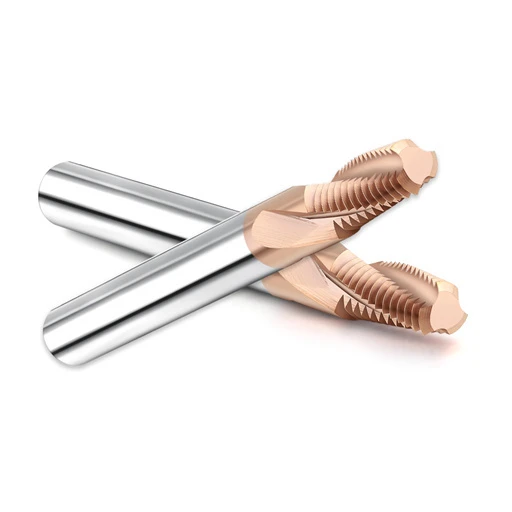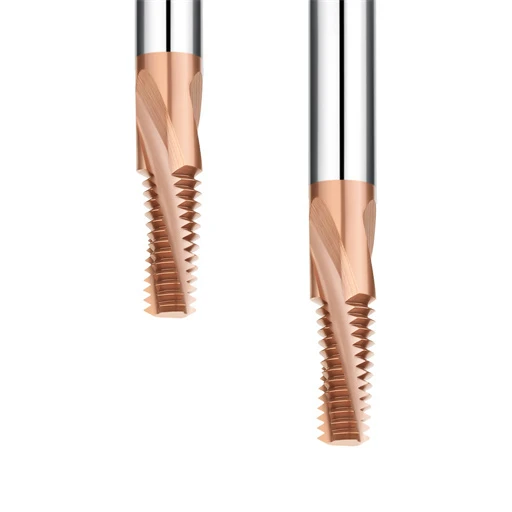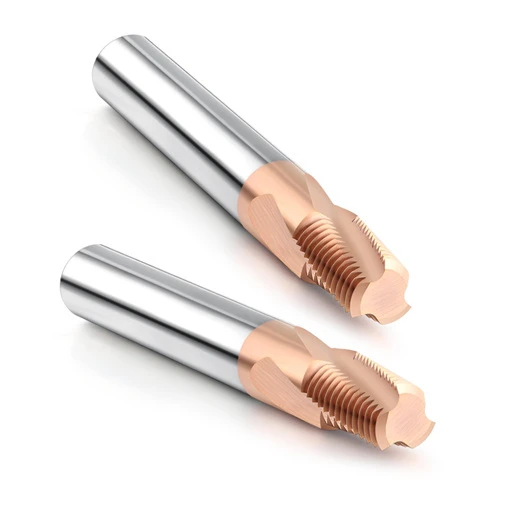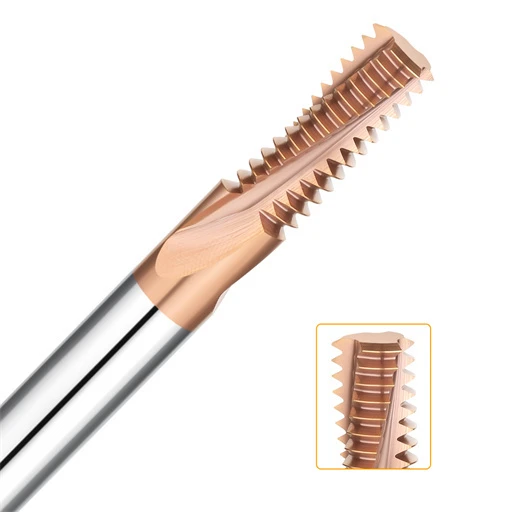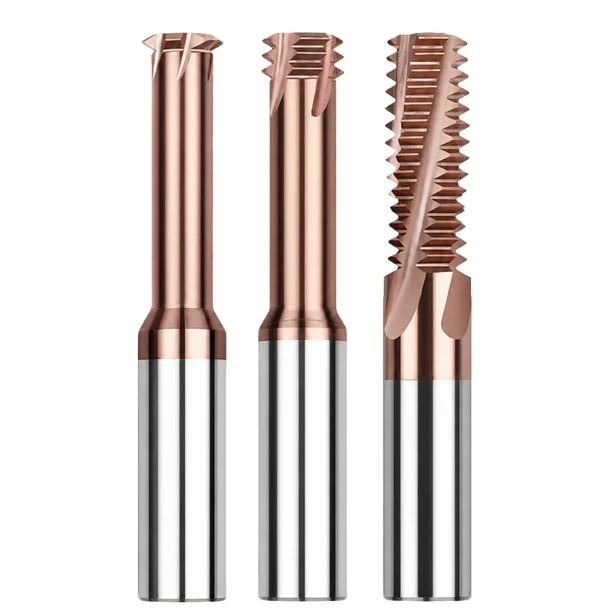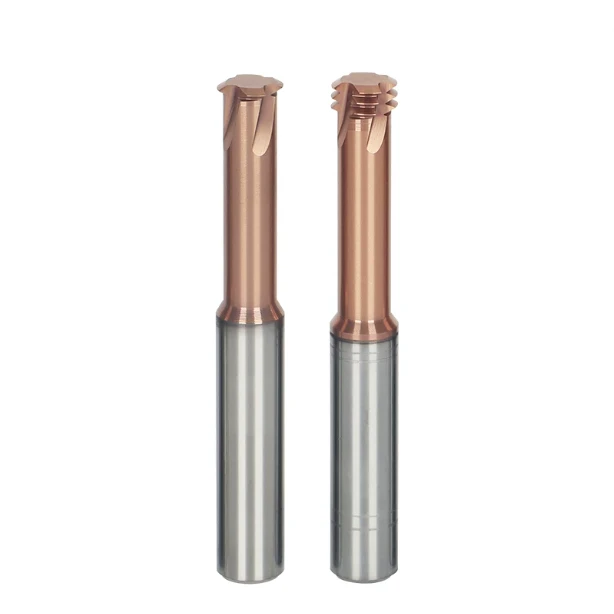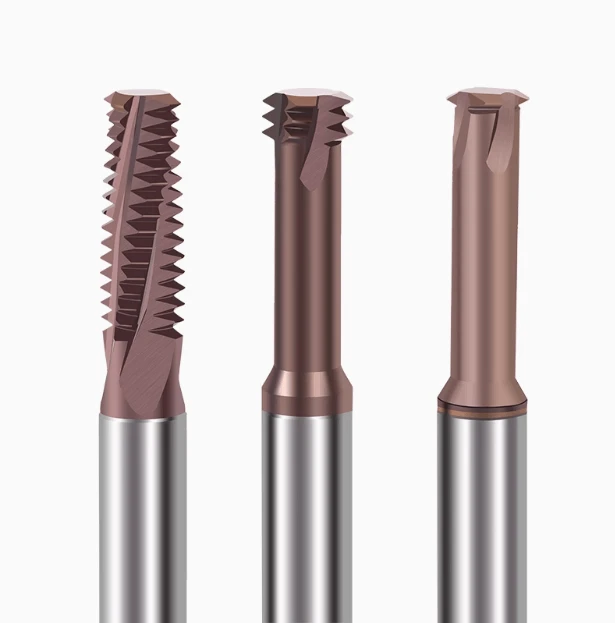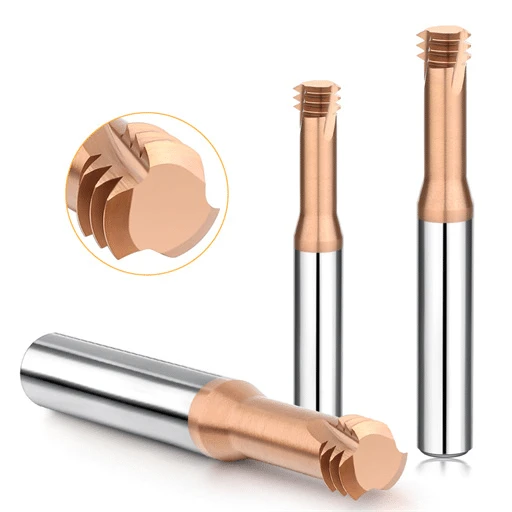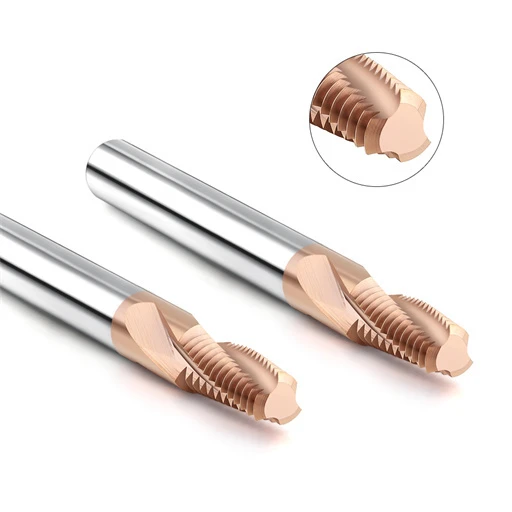
Thread Mill for Hardened Steel

thread mills

Thread Mill Flute Geometry for Hardened Steel: Flute Design for HRC60–65 Thread Milling

Three months ago, a German client making stamping dies reached out with an urgent bottleneck. They were milling M6×1.0 blind-hole threads into CPM 10V inserts hardened to HRC 62–64 using a commercial carbide tool. Every tool chipped at the tooth tip by the third hole. Macro-fracture inspection showed no standard flank wear or torque breakage.

Thread Mill Flute Geometry for Hardened Steel: Flute Design for HRC60–65 Thread Milling Read More »

thread mills

Thread Mill Helix Angle for HRC65 Steel: How Helix Angle Affects Thread Milling Performance

Last month, a precision stamping die client in Stuttgart, Germany reached out to us with an urgent production bottleneck. They were threading M3×0.5 holes in 1.2379/D2 cold-work die steel hardened to HRC 64–66. Using off-the-shelf 45° high-helix thread mills, their tools failed almost immediately. By the second hole, the neck suffered microscopic fatigue fractures or

Thread Mill Helix Angle for HRC65 Steel: How Helix Angle Affects Thread Milling Performance Read More »

thread mills

HRC65 Thread Mill Geometry: How to Choose the Right Geometry for Hardened Steel

Recently, a Detroit stamping die customer contacted our engineering team with an urgent production bottleneck. They were milling M6×1.0 blind threads into D2 tool steel hardened to 63–65 HRC using high-rigidity 5-axis vertical machining centers and shrink-fit tool holders. Standard tooling chipped within the first pass, and when a tool finally finished a hole, the

HRC65 Thread Mill Geometry: How to Choose the Right Geometry for Hardened Steel Read More »

thread mills

Thread Milling HRC65 Steel: A Complete Guide to Thread Milling Hardened Steel

We recently machined M4 internal threads into heat-treated S136 mold steel at near HRC65 hardness. The core challenge was not just cutting the profile. It was maintaining tight pitch diameter tolerances, clean crest forms, and uniform surface finishes across thousands of parts. Initial trial cuts looked acceptable on the optical comparator. However, batch production quickly

Thread Milling HRC65 Steel: A Complete Guide to Thread Milling Hardened Steel Read More »

HRC65 full tooth thread cutter

Thread Milling HRC60 Steel: Complete Guide to Thread Milling Hardened Steel

We previously solved a challenging job for a client machining internal threads into heat-treated mold steel at HRC 60. While the thread profile was standard, a small bore diameter, deep thread engagement, and tight batch tolerances pushed the limits. Single-part trials ran fine, but serial production triggered premature flank wear and micro-chipping, causing pitch diameter

Thread Milling HRC60 Steel: Complete Guide to Thread Milling Hardened Steel Read More »

thread mills for hardened steel

Best Thread Mill for Hardened Steel: How to Choose the Right Thread Mill for HRC60–65 Steel

We recently handled a thread machining project involving hardened steel above HRC 60. The customer needed to produce internal threads in small-diameter, deep holes. The initial tool did not fail immediately. Instead, thread dimensions gradually drifted, minor edge chipping appeared, and surface quality declined after several machining cycles. The customer initially suspected the cutting parameters.

Best Thread Mill for Hardened Steel: How to Choose the Right Thread Mill for HRC60–65 Steel Read More »

thread end mills

Thread Milling vs Single Point Threading: Key Differences for CNC Machining

Last year, our shop tackled a tough mold steel project requiring tight-tolerance internal threads on material exceeding HRC60. The customer initially relied on single-point threading. While the first few parts passed inspection, tool wear quickly caused pitch diameter fluctuations and profile degradation during high-volume runs. Confined deep-hole features made chip evacuation difficult, and tweaking standard

Thread Milling vs Single Point Threading: Key Differences for CNC Machining Read More »

thread mills

Thread Mill vs Tap: Key Differences for CNC Threading

A mold-making shop came to us struggling to machine deep threaded holes in hardened tool steel at HRC 62. They relied on a conventional tap, but the tool snapped deep inside a late-stage mold plate. That single broken tool scrapped an expensive, semi-finished workpiece, costing them thousands of dollars in lost labor and raw materials.

Thread Mill vs Tap: Key Differences for CNC Threading Read More »

HRC65 full tooth thread cutter

Types of Thread Mills: A Complete Guide to Thread Milling Tool Types

We once tackled a demanding project where a customer had to cut multiple internal thread sizes into mold steel. The run included both standard pre-hardened stock and much harder tool steel. They initially picked cutters based purely on thread diameter and nominal pitch. Once chips started flying, tool life collapsed on the harder blocks, chatter

Types of Thread Mills: A Complete Guide to Thread Milling Tool Types Read More »

cnc thread milling

How Does Thread Milling Work? Understanding the Process for Hardened Steel

A client recently brought us an urgent project requiring precision internal threads in heat-treated mold steel exceeding HRC60. Initial test parts passed inspection cleanly, but as production scaled, thread tolerances began drifting. Go/No-Go gauges bound inconsistently, minor burrs emerged along the crests, and cutting edges chipped prematurely. The client suspected poor tool quality, but a

How Does Thread Milling Work? Understanding the Process for Hardened Steel Read More »