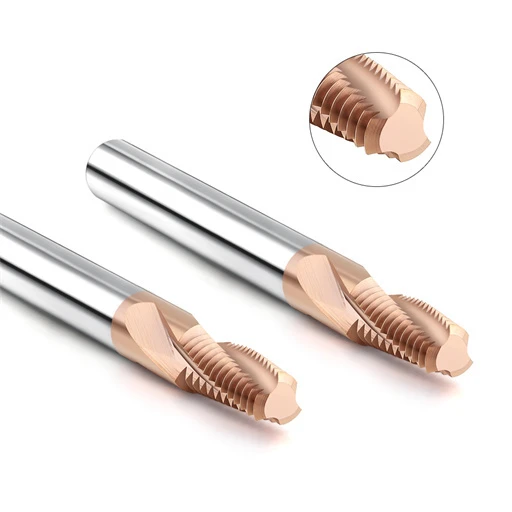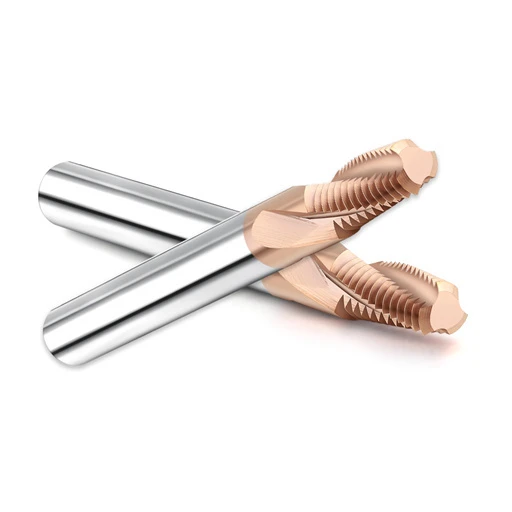

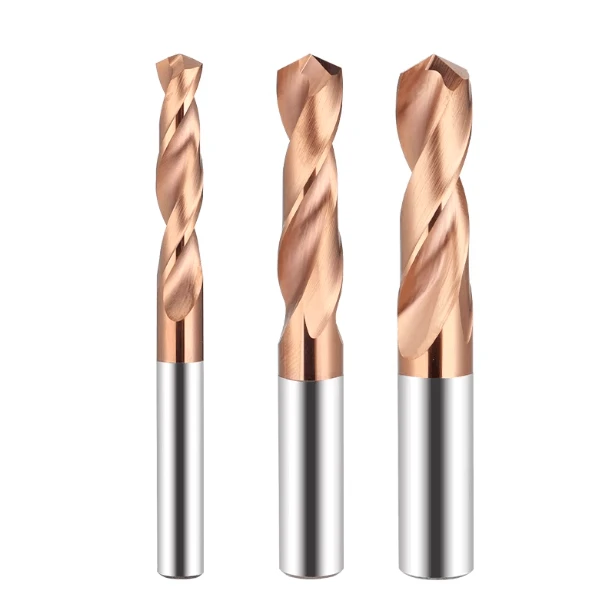
Last week, the owner of a European mold shop—a partner of ours for five years—sent me a WhatsApp video with a wry smile. The clip showed a Mazak machining center, running for less than ten minutes, forced to a dead halt. The carbide drill bits for hardened steel—freshly installed on the spindle—had snapped clean off inside a hole in a NAK80 (HRC52) mold.
We have witnessed this exact scenario countless times over our 16-year career providing technical support to machine shops across the US and Europe. As tool manufacturers who live in cutting fluids and grinding operations, we know that frustration all too well. When machining high-hardness materials, dealing with chipped edges or instantaneous breakage is a nightmare almost every CNC shop faces.
When a tool blows up, the immediate reaction is often to blame uneven heat treatment in the material. Others suspect they purchased inferior-quality wholesale drill bits. However, in our experience troubleshooting these issues, the root cause is rarely that superficial.
Machining high-hardness materials—especially when running an hrc65 carbide drill bit on ultra-hard mold steels—is a grueling battle of rigidity. Even a microscopic deviation in spindle runout (TIR), feed rate control, or coolant pressure can cause a hardened steel drill bit to suffer brittle failure in a fraction of a second. It is a harsh battle of physics on the shop floor, and we see peers waste thousands on ruined workpieces due to these overlooked pitfalls.
Are you currently staring at a broken tool, wondering why that premium drill bit snapped despite following the speed and feed chart to the letter?
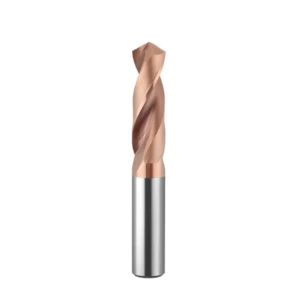
16 Years in the Shop: The Brutal Truth Behind Broken Drill Bits for Hardened Steel
Over our 16 years in tool manufacturing and on-site technical support, we have heard endless complaints about drill bits for hardened steel breaking mid-cut. When machinists see a tool snap, their first instinct is to blame poor quality or substandard manufacturing. However, as engineers who deal with high-hardness metal cutting daily, we must state a hard truth: there is no room for luck when drilling quenched materials.
Every broken tool is actually the direct result of a microscopic physical imbalance in the cutting zone. Factors like spindle rigidity, tool holder clamping force, and thermal expansion directly determine tool survival on high-strength alloys. A snapped bit is merely the warning sign that your machining system has reached its absolute limit. Unless you analyze the fundamental process logic, switching to more expensive tools is just repetitive trial and error.
Stop Blaming the Material — Why HRC50 to HRC65 Hardened Steel Demands Different Physics
Whenever a customer calls saying their material is too hard to cut, we advise them to pause and re-examine the physics of the cut. Transitioning from standard steels to the ultra-hard range of HRC50 to HRC65 fundamentally alters the mechanics of metal deformation. Conventional shearing action gives way to continuous extrusion and scraping under immense pressure, causing heat generation and work-hardening to escalate exponentially.
In practice, many shops still apply ordinary steel logic, assuming they should reduce the feed rate if the tool struggles. However, “babying” the cut causes the cutting edge to rub violently against the workpiece, driving local temperatures past 800°C and triggering secondary hardening. In this scenario, even premium carbide drill bits for hardened steel will suffer thermal cracking and instant failure. This is not a material fault; it is a failure to adhere to high-hardness cutting principles.
The Hidden Costs of Broken Tools: How Shop-Floor Failures Kill Your Margin
During technical support turnarounds, we always help clients run the actual numbers. While a hardened steel drill bit might cost only a few dozen dollars, the collateral damage of a failure is often hundreds of times that amount. When a tool snaps inside a deep hole, it triggers a costly cascade: machine downtime, EDM extraction, tool re-zeroing, and potentially scrapping a complex workpiece worth tens of thousands.
This unplanned downtime and high scrap rate act as the invisible killers eroding your shop’s actual profit margins. Far too many production managers sacrifice thousands on the floor just to save a tiny percentage on tool procurement costs. As industry peers, we advocate for evaluating your setup based on “cost per hole” and overall cycle stability. Keeping your CNC machines running steadily without unexpected breakage is the only real way to safeguard your bottom line.
-白底主图1-300x300.webp)
Tool Selection Pitfalls: Why Your Current Hardened Steel Drill Bit Fails in the Cut
In our daily technical consultations, clients frequently bring us broken tools, asking the same question: “I bought a drill bit designed for high-hardness materials, so why did it burn out after penetrating less than two millimeters?” These situations always remind us of our own early trials and errors on the shop floor. Selecting the wrong tool geometry or overestimating a tool’s versatility are the most common pitfalls workshops face when machining hardened metals.
Machining high-hardness materials is a precision process that demands a tailored approach. A bit that performs brilliantly on standard AISI 1045 steel can suddenly find its cutting angles and flute volume becoming fatal liabilities on hardened components. There is rarely such a thing as a truly universal tool. Without analyzing the compatibility between material wear resistance and cutting-edge heat tolerance, blindly proceeding with the cut guarantees failure for both your tool and the hardened steel drill bit.
The HSS Illusion: Why Standard Drill Bits Burn Out Instantly on Heat-Treated Alloys
We often meet peers new to hard metal machining who attempt to use cobalt-bearing high-speed steel (HSS-Co) bits on fully heat-treated alloy parts to save on procurement costs. They assume that lowering the spindle speed and increasing coolant flow will allow a standard HSS bit to slowly grind its way through. However, hard-learned lessons from hundreds of burnt-out tools have taught us that this is a completely unrealistic illusion; the reality of the shop floor is far more brutal.
When an HSS-Co bit contacts these hard alloys, immense cutting resistance causes the temperature at the contact point to instantly exceed the material’s red hardness limit. The drill tip rapidly softens, anneals, and melts within seconds due to intense friction. Even the highest-quality high-speed steel plummets in hardness at high temperatures. When facing these challenging conditions, it is essential to abandon any reliance on HSS and switch directly to high-performance carbide drill bits for hardened steel.
Not All Carbides Are Equal: Micro-Grain Structure Secrets Behind Reliable Carbide Drill Bits for Hardened Steel
Given that the industry recognizes the necessity of tungsten carbide, why do tool lifespans vary so drastically between different brands? Last month, we assisted an automotive mold client whose inexpensive carbide bits were frequently shattering when machining materials under HRC50. We sectioned the broken bits for microscopic metallographic analysis, and the answer was immediately apparent: the substrate featured extremely coarse grains and highly uneven binder distribution, destroying its rigidity under heavy cutting impacts.
This brings us to a core secret of tool manufacturing: grain size. A reliable carbide drill bits for hardened steel setup must utilize nano-scale or micro-grain tungsten carbide rod stock. Fine grains imply a denser molecular arrangement within the same volume, ensuring extreme hardness to withstand high-friction contact while maintaining the transverse rupture strength (TRS) needed to prevent chipping. One must look beyond the grade designation; the microstructure dictates whether the tool cuts stably or instantly shatters into powder.
Pushing the Limits: When to Deploy a Specialized HRC65 Carbide Drill Bit for Extreme Hardness
When workpiece hardness skyrockets into the hellish range of HRC60 to HRC65—such as with high-frequency quenched guide pillars—even standard high-quality carbide bits prove inadequate. At this stage, we must push our tool designs to the absolute limit. Standard 135-degree split points and razor-sharp cutting edges will instantly chip when faced with such hardness; only a specialized hrc65 carbide drill bit featuring heavy edge honing and negative chamfers can handle the stress.
However, we want to be upfront with you: these specialized bits are not suitable for standard, everyday machining applications. Their high cost and reduced toughness mean they require a rigid machining center with absolute spindle stability and zero vibration. Blindly using such high-end tooling on older, lightweight machine tools often yields counterproductive results. We recommend adopting this ultimate solution only when material hardness truly reaches the extreme limit and no other process alternatives remain.
白底-主图1-300x300.webp)
Machine Rigidity and Setup Errors That Snap Your Carbide Drill Bits for Hardened Steel
In our technical support database, over half of the reported tool breakage issues turn out to have nothing to do with the tool itself, but rather stem from the rigidity of the machining system. When machining heat-treated parts, cutting forces increase exponentially. If there is even the slightest looseness or elastic deformation in your setup—from the spindle and tool holder to the fixture—it can instantly destroy expensive carbide drill bits for hardened steel.
We often tell visiting clients that machining high-hardness materials is like a fistfight between two tough guys: the one with the more stable stance wins. While carbide is extremely wear-resistant, its fatal weakness is brittleness; it cannot withstand lateral forces or sudden vibrations. If you notice a sharp, abnormal noise the moment the bit enters the workpiece, or if it consistently snaps at the base, look at your setup precision before adjusting cutting parameters.
Total Indicator Runout (TIR): The #1 Silent Killer of Premium Carbide Drill Bits
In the US and European workshops we support, spindle and tool holder runout (TIR) is unequivocally the number one silent killer of premium carbide drill bits. Last month, a client complained about highly inconsistent tool lifespans on an automotive suspension job. We asked them to measure the runout at the tool tip using a dial indicator; the result was 0.04mm. While this figure might be acceptable for soft materials, it is a complete disaster for hard alloys.
Excessive runout means the two cutting edges experience highly uneven forces during rotation: one edge overloads while the other merely rubs. This intermittent, uneven impact causes premium bits to suffer micro-chipping within seconds of entering the hole, rapidly leading to total tool failure. In our experience, when machining hard materials exceeding HRC50, runout at the tool tip must be strictly controlled to within 0.01mm or even 0.005mm; otherwise, no advanced tooling can save your process.
Fixturing Flex: How Micro-Vibrations Snapped Your Last Hardened Steel Drill Bit
Many CNC operators focus exclusively on the spindle and tool holder, completely overlooking the design of the workholding fixture on the table. We once assisted a shop drilling high-hardness impellers; because the workpiece had thin walls, the client secured it using only a standard vise and simple clamps. Consequently, a distinct snap sound inevitably occurred halfway through the drilling cycle. This is a classic case of the workpiece undergoing micro-deflection under intense cutting forces.
When a hardened steel drill bit advances rapidly, any downward or lateral displacement of the workpiece exerts immense squeezing pressure on the drill’s web against the hole wall. The resulting micro-vibrations can instantly compromise the integrity of the carbide cutting edge. Consequently, our design specifications mandate the use of high-rigidity hydraulic fixtures or custom heavy-duty support blocks for drilling hardened materials; absolutely no room for elastic deformation can be tolerated.
Spindle Backlash and Feed Compression in Aging CNC Machining Centers
We must face the reality that many workshops do not operate brand-new, high-precision machining centers; much of the equipment has been in service for five or ten years. While backlash in the Z-axis leadscrew might not be apparent when machining soft aluminum or carbon steel, the situation changes when driving a heavy slide assembly into a hardened material. The immense counter-force generated during cutting directly exposes the mechanical shortcomings of this aging equipment.
The moment the drill bit centers and engages the hardened surface, a powerful reaction force pushes back up along the leadscrew. If mechanical clearance exists in the Z-axis, the actual feed rate experiences a momentary pause or surge—a phenomenon known as feed compression. Such instantaneous feed irregularities caused by machine aging are catastrophic for a drill bit operating at its physical limits. When using older equipment, we recommend reducing the initial entry speed and applying backlash compensation.
-白底主图5-300x300.webp)
Feeds, Speeds, and Programming Mistakes We See in Customer Technical Support
In our daily after-sales technical support, we frequently receive CAM screenshots and G-code programs from customers. When tools break, many engineers immediately check the hardware, but our years of on-site machine tuning show a different culprit. The root causes of frequent breakage in carbide drill bits for hardened steel usually lie in incorrect cutting parameters and subtle toolpath flaws.
The figures found in parameter manuals are merely theoretical references, and you must fine-tune them based on actual workpiece hardness and machine dynamics. When helping US and European customers optimize their processes, we often see a tendency to apply standard material programming logic to harder alloys. Real hard metal machining requires strict toolpath strategies during CAM programming; any oversight will trigger a disaster within a fraction of a second.
The “Fear Factor” Mistake: Why Babying Your Feeds Causes Work-Hardening and Instant Snap
This is a classic scenario we encounter frequently on-site. When dealing with expensive, high-hardness workpieces, many machine operators feel apprehensive, fearing that an aggressive feed rate might snap the tool. Consequently, they inadvertently lower the feed rate (IPR) or turn down the feed override knob on the control panel. Yet, this seemingly safe approach—intended to baby the tool—is precisely what sets a high-quality hardened steel drill bit on the path to destruction.
When the feed rate is too low, the cutting edge fails to effectively penetrate the metal matrix, causing high-pressure, high-frequency rubbing. This intense friction causes a rapid spike in localized temperature, triggering secondary quenching at the bottom of the hole and creating an ultra-hardened skin layer. As the drill bit attempts to advance on the next rotation, it encounters this hardened crust, causing the fragile cutting edge to instantly suffer a brittle fracture.
Thermal Shock Failure: Why Intermittent External Cooling Fractures Carbide Drill Bits
Whenever our engineers visit a factory to troubleshoot issues, the debate over whether to use coolant never ceases. Recently, a customer machining induction-hardened components complained that their bits would inexplicably shatter into pieces after penetrating only 20 to 30 millimeters. We observed their process on-site and found a standard external coolant nozzle spraying directly at the shank, but the ejected high-temperature chips completely blocked the liquid from reaching the hole bottom.
This is a classic case of thermal shock failure. When carbide is subjected to intermittent, uneven external liquid cooling at extreme temperatures, rapid thermal expansion and contraction generate microscopic cracks within the cutting edge. As these cracks propagate under cutting forces, the carbide drill bits for hardened steel setup can disintegrate inside the hole without warning. For hard alloys, you must choose between high-pressure thru-coolant systems or complete dry machining while avoiding intermittent external cooling.
Peck Cycle Disasters: The Correct Way to Program Deep Holes in HRC65 Hardened Steel
When machining relatively deep holes in ultra-hard mold steels (HRC60 to HRC65), your choice of programming cycle determines success or failure. We find that many programmers instinctively apply the G83 deep-hole peck drilling cycle, causing the drill bit to fully retract to the reference plane every few millimeters. However, in our comparative tests involving an hrc65 carbide drill bit, this repeated full retraction logic proved disastrous on high-hardness workpieces.
When the drill fully retracts and re-enters at high speed, tiny chip remnants at the bottom or minor spindle runout subject the drill tip to massive axial impacts. For high-hardness applications, we recommend the G73 high-speed chip-breaking cycle without full retraction, or custom programming that retracts the tool by only 0.2mm to 0.5mm. This maintains a continuous load on the cutting edge, eliminates secondary impact risks, and maximizes tool service life.
白底-主图5-300x300.webp)
The Sourcing Reality: How Low-Grade Wholesale Drill Bits Are Ruining Your Cycle Times
In our discussions with purchasing managers and shop supervisors across the US and Europe, we frequently see companies prioritize price above all else when bulk-purchasing tools. However, as engineers deeply involved in tool manufacturing and global supply, we must highlight a harsh reality of the industrial supply chain. Low-cost wholesale drill bits are often quietly eroding your machining productivity and stealing your shop floor margins.
In high-volume CNC production lines, cutting tools are not merely a material expense; they directly dictate your line’s utilization rate and cycle time per part. While you might congratulate yourself on saving a few dollars during procurement, the shop floor suffers from frequent downtime due to inconsistent tool life. The truly economical tool is never the one with the lowest price tag, but the one that enables your machine to run continuously and reliably.
The Trap of Cheap Imports: Spotting Inconsistent Geometry in Wholesale Drill Bits
We once hosted a US OEM parts distributor who brought us a batch of budget wholesale drill bits purchased from an online platform for inspection. He was facing a frustrating issue: within the same batch, some tools could easily drill 50 holes, while others failed completely on the third hole. We subjected the samples to geometric dimension comparisons using a Coordinate Measuring Machine (CMM) and a precision toolmaker’s microscope, and the results were shocking.
These cheap imported tools exhibited massive variations in flute symmetry, relief angles, and critical edge honing radiuses. Such geometric inconsistencies might go unnoticed when machining soft materials, but in hard metal environments, a height difference of just two microns between cutting edges skews cutting forces heavily to one side. As industry peers, we advise anyone making bulk purchases to prioritize a manufacturer’s ability to control geometric consistency over cheap brochure specifications.
Our Batch-to-Batch Consistency Test: Why We Insist on German Carbide Rods for Custom Wholesale Orders
Having identified the root cause of tool failure, we make principled choices when undertaking large-scale custom orders and industrial-grade wholesale business. Many long-time clients know that our quotes for non-standard custom tools are slightly higher than those from small workshops, and the core reason lies in our material sourcing. To ensure that every batch of specialized drill bits delivers a consistent service-life profile, we insist on top-tier, German-made micro-grain carbide rods.
These imported rods meet exceptionally stable industrial standards regarding sintering processes, uniform cobalt distribution, and transverse rupture strength (TRS). In our quality inspection workshop, every batch must undergo rigorous simulated cutting and consistency fatigue testing before leaving the factory to ensure defect-free microscopic grain distribution. For high-volume manufacturing, the value of process reliability and 24-hour unattended operation far outweighs the marginal savings of cheap tungsten steel.
白底-主图4-300x300.webp)
Quick Troubleshooting Checklist: What to Check Right Now Before You Ruin Another Drill Bit for Hardened Steel
If your machine is currently idle—perhaps after an expensive tool just snapped and you are about to load a replacement—we strongly recommend hitting the pause button first. When machining high-hardness materials, repeating the same operational errors will only lead to the rapid destruction of your next drill bits for hardened steel. As industry veterans who have spent years on the shop floor, we know how frustrating these moments can be. That is why we have put together this practical, step-by-step checklist to help you catch the root cause before that next sickening crack.
This checklist isn’t based on obscure academic theory; it covers the critical factors we verify when providing remote technical support to our Western clients. Machining high-hardness materials is a precision experiment that tolerates zero deviation—not even at the micron level. If you are struggling with inconsistent tool life, use this guide to cross-check your setup, parameters, and chip formation to systematically rule out three commonly overlooked process pitfalls.
Step 1: Check Your Runout at the Tool Tip (Keep It Under 0.02mm)
If you are using a standard ER collet chuck—or an old tool holder showing signs of surface wear—grab a dial test indicator immediately. Position the indicator tip against the drill bit near the cutting edge and manually rotate the spindle to measure the Total Indicated Runout (TIR). While 0.03mm of runout might only result in a slightly oversized hole on soft materials, that same deviation causes high-frequency, eccentric impacts against the hole wall when drilling hardened metals.
Based on our years of field experience, when machining parts exceeding HRC50, the radial runout at the tool tip must be strictly maintained below 0.02mm; keeping it under 0.01mm offers even greater reliability. If your values exceed this limit, clean out any tiny residual metal chips from the chuck, or switch to a heat-shrink or hydraulic tool holder. Only by ensuring perfectly uniform force during rotation can high-quality carbide drill bits for hardened steel deliver the chip-resistance performance they were designed for.
Step 2: Recalculate Your SFM and IPR Based on Our Shop-Proven Chart
If you are simply copying the recommended parameters from the tool packaging or blindly lowering the speed, it is time to recalculate your Surface Feet per Minute (SFM) and Inches Per Revolution (IPR). In our technical support experience, we often see machinists set feed rates too low out of fear of tool breakage. This causes the cutting edge to rub violently against the workpiece surface, instantly triggering work hardening and snapping your drill bit for hardened steel.
For high-hardness machining, we use a set of rules of thumb validated through countless shop-floor trials. While surface speed should be lowered based on material hardness to manage cutting heat, the feed rate must be decisive—ensuring the cutting edge bites cleanly into the substrate. If you are unsure about your setup’s rigidity, feel free to send us your specific operating conditions, machining center model, and material specifications so we can work together to verify the safest cutting parameters.
Step 3: Inspect the Flute Wear — Reading the Chips Before the Tool Snaps
If you are frustrated by tools snapping suddenly without warning, try retrieving some freshly cut chips from the coolant tank or using a loupe to examine the flutes for early wear. In a CNC shop, chips are the tool’s language. During healthy machining of hard materials, chips should appear as tiny C-shapes or fine, granular fragments with a normal yellowish or silvery-gray hue. If the chips have turned severely black or show signs of melting, the cutting temperature has spiraled out of control.
Furthermore, microscopic chipping along the secondary cutting edge signals that the tool is experiencing secondary extrusion during chip evacuation. If you encounter such evacuation issues—particularly when attempting deep-hole drilling with an hrc65 carbide drill bit—please feel free to send us your drawings or specific hole-depth ratios. As engineers who work daily with custom flute geometries, we would be happy to help you determine whether to switch from G83 to a high-speed chip-breaking G73 cycle to eliminate tool jamming at the source.