
Last month, a long-standing client in the Midwest called us, sounding deeply anxious. They were rushing to fulfill an order for 4140 chromoly steel hydraulic valve blocks. Because the material hardness hovered around HRC35, the standard taps they had originally purchased to cut costs kept snapping inside deep blind holes. Since this was the final machining step, a single broken tap meant scrapping a part worth hundreds of dollars, completely disrupting the entire workshop’s production rhythm.
This is by no means an isolated incident; it is a scenario we encounter almost monthly while providing technical support to B2B clients in Europe and the US. When preparing budgets, many shop supervisors focus solely on the unit price listed on the invoice, overlooking the total machining cost that truly determines a factory’s survival. Cheap thread cutters might appear to save a dozen dollars upfront, but the hidden costs associated with tool deflection, micro-chipping, and frequent wear compensation quietly eat away at your machine’s productive hours.
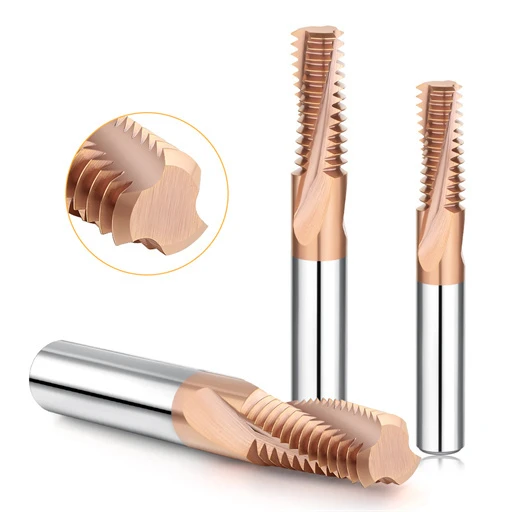
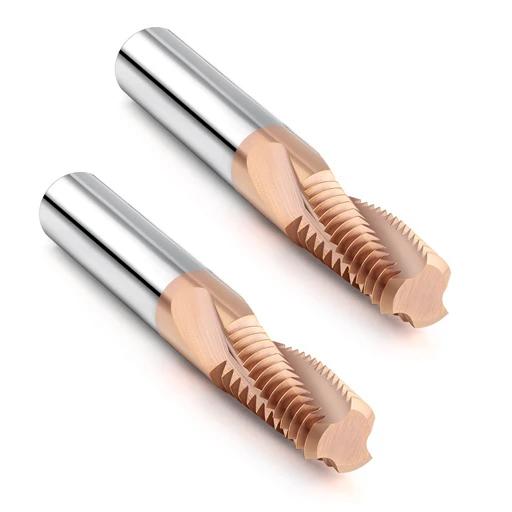
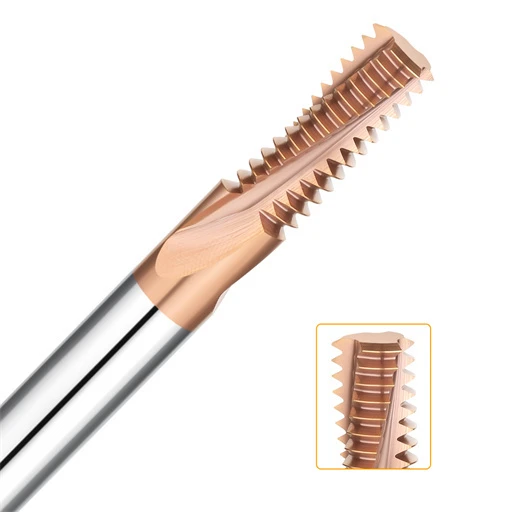
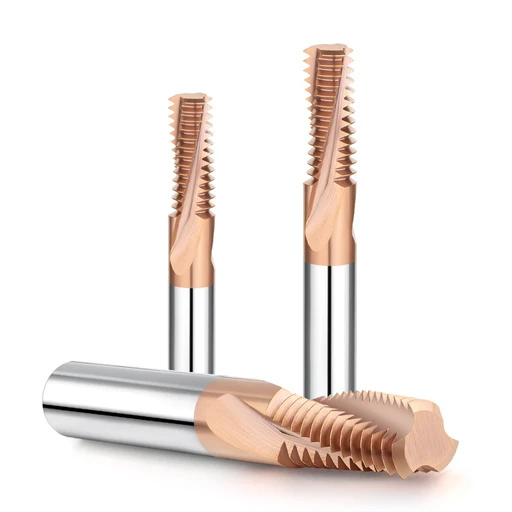
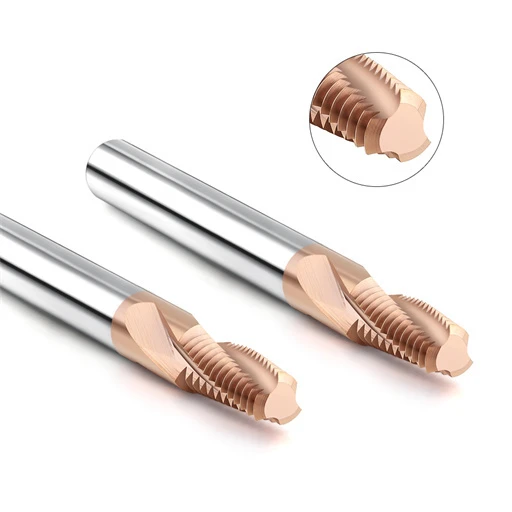
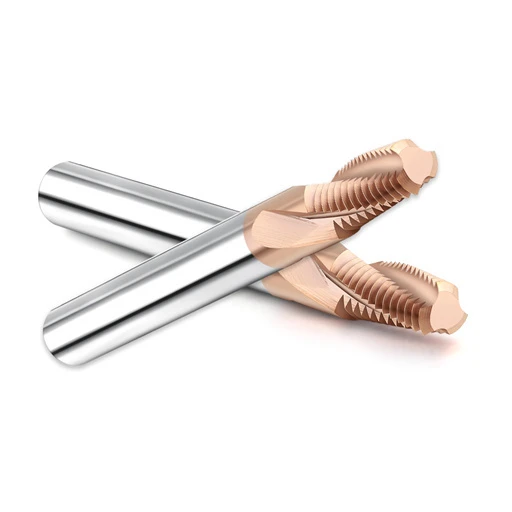
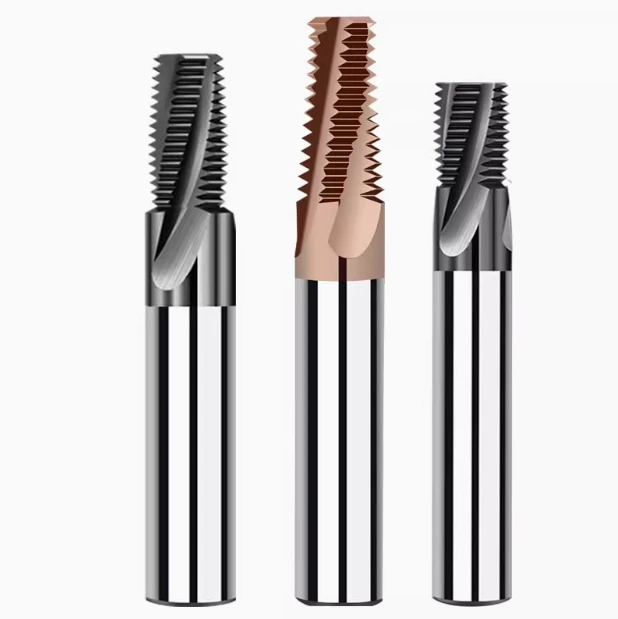
That is why we consistently advise clients to switch to high-quality thread end mills for steel when handling stable, medium-to-large projects or high-value materials. To tackle these challenging materials, we developed and fine-tuned heat-resistant nano-coatings and ultra-fine grain carbide substrates specifically for hrc55 thread end mills. Our goal is to ensure superior hot hardness and smooth chip evacuation during high-speed machining.
As a trusted supplier of thread end mills, we do more than just sell tools; we help workshops calculate the technical economics of hourly machine output, scrap rate control, and tool life consistency. Honestly, as you watch your machine tools spinning day in and day out, have you ever calculated how much spindle time—lost to frequent tool changes and machine setups—could have been converted into the purchase of truly high-efficiency npt thread end mills?
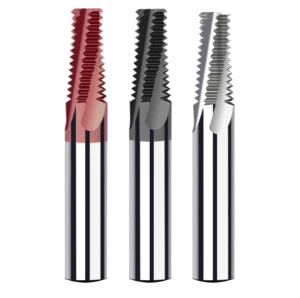
Why Cheap Thread Cutters Can Double Your Steel Machining Costs
In mid-sized job shops across the US and Europe, we constantly see procurement orders focused entirely on finding a thread cutter that saves five or ten dollars upfront. While this cost-control mindset works fine for free-machining brass or standard aluminum, it completely backfires when dealing with tough steel alloys. Steel features unpredictable hardness zones, high stickiness, and a severe tendency toward work hardening, making cheap tools a primary trigger for shrinking shop margins.
Based on our 16-plus years of optimizing floor processes, upfront tool costs represent a mere 3% to 5% of your total manufacturing budget. The remaining 95% is consumed by machine overhead, labor, and unexpected downtime. A low-end tool compromised in substrate toughness or coating quality will quickly develop thermal micro-cracks under severe cutting resistance. Buying cheap tools to save a few bucks inevitably drives your real production costs through the roof.
The Real Cost of Downtime and Broken Tools: Data from European and US Workshops
Let’s break down the actual floor numbers that give machine shop managers constant headaches. When a tool snaps inside a part, you haven’t just lost a twenty-dollar tool; the moment that spindle stops, your profits evaporate. Data tracked from our long-term contract clients shows that a standard CNC workshop in North America or Europe carries a real spindle rate between $80 and $150 per hour.
An unexpected tool breakage forces the operator to halt production, clear alarms, and painstakingly extract the broken carbide shank. If you have to recalibrate coordinates, swap tools, and reset work offsets, you lose 30 to 45 minutes of dead time. That lost net profit alone is enough to buy several premium thread end mills for steel, proving that low procurement invoices cannot offset hidden technical costs.
Scrap Rates and Consequential Losses for High-Value Steel Parts
When machining high-value alloy steels that have undergone pre-hardening or quench-and-temper treatments, threading is almost always the final operation. By the time the block reaches this station, it has already swallowed up extensive roughing, finishing, drilling, and boring cycles. Consequently, the workpiece carries a massive accumulation of expensive machine hours and labor value.
If an inferior tool defects, causes the pitch diameter to blow past tolerances, or fails a Go/No-Go gauge test, that near-complete part becomes scrap. We once watched a client attempt to cut hardened mold steel using substandard hrc55 thread end mills; a cutting edge chipped on the final hole, gouging the surface and scrapping a mold module worth thousands of dollars. Entrusting a high-value workpiece to cheap tooling is an incredibly poor engineering gamble.
Comparing the Service Life of Traditional Taps vs Low-Quality Milling Cutters Under Chip Evacuation Constraints
When optimizing threading processes for deep blind holes, clients frequently ask whether they should stick with traditional taps or switch to milling. Taps can be efficient for simple through-holes, but their cutting edges engage the workpiece simultaneously along the full circumference. Once inside a deep hole, there is simply no room for chips to escape, leading to severe chip packing and catastrophic tool failure.
Advanced machine shops avoid this by upgrading to planetary interpolation with high-performance milling cutters. Premium tools make intermittent contact with the material, and when paired with high-pressure internal coolant, chips are easily flushed out through the helical flutes. Our shop data proves that the superior rigidity and generous chip clearance of specialized npt thread end mills deliver a service life several times longer than traditional methods.

Machining Hardened Die Steel: How HRC55 Thread End Mills Reduce Per-Part Costs in Hard Milling
When machining cold-work or hot-work die steels heat-treated above HRC50, many job shops traditionally rely on slow EDM operations or mill threads prior to heat treatment. However,today’s brutal delivery schedules make direct hard milling into hardened steel the shop floor norm. This high-stress environment places severe demands on your tooling; if the substrate cannot handle alternating thermal shock, threading quickly becomes an unpredictable bottleneck.
We always tell our mold and injection tooling clients in the US and Europe that hard milling threads directly into these materials requires specialized hrc55 thread end mills. Running standard carbide tools usually results in severe flank wear after just two or three holes, causing pitch diameters to drift immediately. Only tools engineered with optimized micro-geometries and specialized coatings can withstand this high-pressure, interrupted cutting to lower your real cost-per-hole.
The Cost of Micro-Chipping When Machining HRC55 Steel
When hard milling tool steels like D2 or H13 at HRC55, tools rarely fail from normal linear wear; instead, they suffer from micro-chipping along the cutting edge. Operators usually catch this too late—only after the Go/No-Go thread gauge binds—discovering tiny microscopic nicks under inspection. Once micro-chipping starts, cutting forces spike exponentially, leading to a catastrophic snap inside the workpiece.
Every chipping incident forces your team to constantly halt production and manually dial in wear offsets on the CNC control. If a cheap thread cutter requires manual intervention every few holes, the wasted labor hours and spiked inspection costs eat up your margins. In our experience, eliminating micro-chipping does far more for your net profit than chasing arbitrary tool life hours.
Real-World Performance of Premium Coatings and Ultra-Fine Carbide Substrates Regarding Hot Hardness
Hard milling hardened steel generates extreme friction, pushing cutting zone temperatures between 800°C and 1000°C instantly. Under these brutal thermal conditions, standard carbide substrates soften rapidly and lose their edge geometry. Our field testing proves that using a nano-scale, ultra-fine tungsten carbide substrate combined with an AlCrN or TiAlSiN multi-layer nano-coating creates a reliable thermal barrier.
This advanced coating forms a dense oxide film at high temperatures, blocking intense cutting heat from penetrating the substrate and evacuating it through the chips. This is why, when supplying high-end thread end mill suppliers, we never compromise on our specialized substrate formulations. Matching the hot hardness of the coating and substrate prevents thermal softening, ensuring consistent tool life and mirror-like thread finishes.
Saving Tool-Change Time by Helping Customers Adjust to “Roll-in” (Arc Entry) Strategies
Beyond tool quality, your CNC toolpath programming dictates whether a tool survives or snaps during hard milling. Many legacy shops in the US still use a basic straight-in entry when programming their thread mills. While a straight plunge works in mild steel, hitting HRC55 hardened steel straight-on subjects the fragile thread crests to an instantaneous 100% shock load, causing immediate brittle fracture.
We recently resolved this for a mold shop in Ohio by switching their program to a 90-degree roll-in arc entry. This path allows the tool to blend into the cut smoothly, letting cutting forces build up gradually rather than shocking the carbide. This simple programming shift, paired with our premium thread end mills for steel, extended tool life by 2.5 times and saved hours of monthly spindle time.
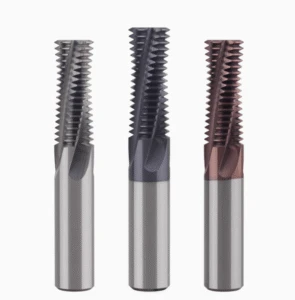
Mastering Demanding Pipe Threads: Solving Costly Leakage and Gauge Failure with NPT Thread End Mills
Cutting 1:16 tapered pipe threads is a notorious headache when manufacturing hydraulic manifolds, high-pressure valves, and oilfield fittings. These components face extreme sealing requirements, often running under pressures of several hundred atmospheres. Relying on traditional taps often causes chip packing along the taper, tearing the thread flanks and causing costly pressure-test leaks that scrap finished parts.
Having helped countless valve manufacturers optimize their setups, we highly recommend utilizing planetary interpolation with rigid npt thread end mills. By switching from full-surface tap engagement to an interrupted milling path, you drastically lower the simultaneous-axis cutting load on your CNC machine. This approach improves thread root form and allows you to adjust taper depth perfectly via CNC wear offsets, ensuring high yields.
Pitch Errors and Economic Losses Caused by Tool Deflection in Traditional Taper Machining
Tool overhang and rigidity are the primary bottlenecks when machining tapered pipe threads in tough steels. Machinists running standard thread cutters often find that their L1 plug gauges fail to thread down to the proper working depth. This is rarely a coordinate calculation error; it is almost always tool deflection caused by heavy lateral cutting forces as the taper deepens.
Once tool deflection distorts the pitch or the 60-degree profile angle, the thread’s effective mating contact area is compromised. This defect creates a massive risk for high-pressure fluid leaks once the component is deployed in the field. Remedying these out-of-tolerance holes requires slow manual rework or secondary operations, destroying your production line automation and costing far more than a premium tool.
Tool Life Differences between Single-Pass and Multi-Pass Strategies for Premium NPT Thread Mills
We frequently see operators program a single-pass roughing path to cut a tapered pipe thread in one shot just to save a few seconds. While a single pass might fly in aluminum, it subjects the thread crests to intense radial impact in tough alloy steels. This rapid thermal stress fatigue degrades the cutting edge, and our field data shows it cuts tool life by up to two-thirds.
Taking a strategic multi-pass approach by splitting the stock across two or three passes is the best way to safeguard your tooling. High-quality hrc55 thread end mills feature the substrate toughness needed to maintain edge sharpness across multiple light cuts without glazing. Adding a few seconds to your cycle time eliminates sudden tool breakage, delivering the predictable tool life required for profitable, unattended shifts.
Ensuring 100% Thread Gauge Compliance through Precision Cutting Edge Geometry
Passing rigorous L1 thread plug and 6-step taper gauge inspections requires both a tight CNC machine and precision tool geometry. If your supplier’s rake and relief angles aren’t precisely tuned for steel, the material will tear, leaving microscopic burrs along the thread crests. These tiny burrs jam precision gauges, leading to false failures and wasted QC time.
When defining manufacturing standards with elite thread end mill suppliers, we emphasize micro-polished cutting edges to minimize friction. Eliminating microscopic edge roughness ensures a crisp, clean shearing action that forms flawless 60-degree thread profiles. This precision gives you “drop-in” gauge compliance right off the machine, eliminating the need for labor-intensive manual deburring or full part inspections.
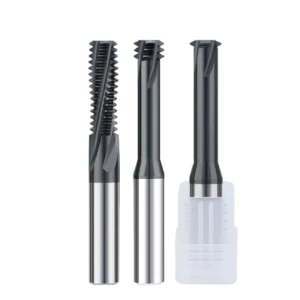
Selecting Thread End Mill Suppliers Who Understand the Technical Economics
A constant tug-of-war plays out between purchasing managers and shop floor supervisors. Procurement teams focus on direct costs and prefer the lowest bidder to hit their KPIs. Meanwhile, shop floor managers watch spindle utilization and actual parts shipped. Based on our 16-plus years of troubleshooting, a supplier that merely drops a static price quote without asking about your machine rigidity or material hardness will damage your long-term profitability.
We always tell clients that elite thread end mill suppliers must do more than just ship carbide; they should sit down at the machine with you. Threading is never an isolated step—it depends on your pre-drilled holes, upstream tolerances, and downstream QC. Evaluate whether a supplier is simply pushing cheap tool bundles or actively breaking down your cost-per-hole. A partner who calculates the technical economics behind the process is the real foundation of a stable supply chain.
Why European and US Clients No Longer Focus Solely on Price Per Tool
We have seen a major mindset shift among medium-to-large job shops across North America and Europe toward tool pricing. Shops have learned the hard way that saving five dollars on a cheap thread cutter backfires when machining tough steels. In production, an unstable substrate or premature coating failure triggers unexpected downtime or scraps an expensive steel component that was already 90% machined.
Savvy factory managers treat cutting tools as a production asset rather than a cheap commodity. A tool’s real value is measured by how many compliant holes it cuts safely across its entire service life. When you factor in the machine downtime from a snapped shank, operator idle time, and spiked scrap rates, low-end tooling wipes out your procurement savings in a few shifts. High-quality tools are always the more economically viable choice.
How Premium Suppliers Save You Money with Customized Cutting Parameters
The exact same milling cutter will perform drastically differently depending on your setup rigidity and the heat-treatment state of the steel. Relying on the generic cutting data printed on the back of standard plastic tool packaging rarely unlocks your machine’s true capacity. Many process engineers play it safe by running conservative surface footage (SFM) and feed-per-tooth (IPT), which drags out cycle times and wastes high-end spindle capacity.
A highly technical engineering team will customize your speeds and feeds based on your exact alloy composition, blind-hole depth, and coolant pressure. By optimizing a toolpath for a hydraulic client, we safely increased the feed rate of an hrc55 thread end mills setup by 20%. This adjustment speeded up cycle times without sacrificing tool life, letting the shop ship their batch ahead of schedule and maximize their profit.
Three Shop-Floor Metrics for Evaluating Tool Life Consistency
Relying on peak tool life data generated in a perfect supplier laboratory is of little practical value on a real-world production line running 24/7. In a high-production shop, consistency is everything. If your first tool cuts 500 holes but the second snaps at hole 200, that unpredictability will completely destroy your automated lines or unmanned ghost shifts. We recommend tracking stability using three core shop floor metrics.
First, check for predictable, linear flank wear rather than sudden micro-chipping. Second, ensure batch-to-batch consistency—your npt thread end mills must hold identical dimensions across different ordering cycles on the same steel valve seats. Third, monitor tolerance retention, which measures how many parts the tool cuts before requiring manual wear offset adjustments. Nailing these three metrics is the key to worry-free operations.
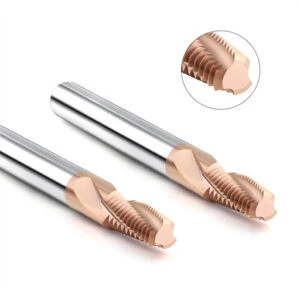
Real-World Case Study: How We Boosted Machining Efficiency by 35% for a Hydraulic Component Manufacturer Using Thread End Mills for Steel
Theory and cost metrics sound great, but the ultimate proof always comes straight from a machine tray covered in cutting oil. Early last year, a manufacturer specializing in high-pressure hydraulic manifolds for heavy equipment approached us. They were struggling with quenched-and-tempered alloy steel blocks requiring multiple high-precision sealing threads. Their existing process setup was triggering high scrap rates and constant, unexpected spindle stoppages.
When our technical team reviewed the application alongside their on-site programmers, we discovered their tool performance and CNC toolpaths were working against each other. After mapping out the cutting forces, we engineered a comprehensive solution combining hardware upgrades with optimized circular interpolation. This system overhaul boosted overall machining efficiency by 35%, proving what high-performance thread end mills for steel can achieve when paired with proper programming.
Bottlenecks Faced by the Client: Frequent Carbide Tool Breakage and Delayed Deliveries
The primary bottleneck for this hydraulic shop was the highly erratic tool life of the standard thread cutter units they ran in deep blind holes. Because quenched-and-tempered steel is incredibly tough, cutting heat builds up rapidly at the bottom of the hole. This thermal stress caused the cutting edges to chip or snap off entirely without warning, forcing operators to halt production to manually extract the broken shanks.
These frequent stoppages wrecked their tight production schedules and put them at risk for late-delivery penalties. Furthermore, because tool failure was completely unpredictable, the shop could not run unmanned night shifts. Process engineers had choked back the speeds and feeds to conservative levels just to keep the tools alive, which killed their daily throughput on high-value alloy steel parts.
Optimization Strategy: Switching to High-Performance Thread Milling Cutters and Adjusting CNC Toolpaths
We immediately swapped out their low-tier tooling for specialized hrc55 thread end mills engineered for high-hardness, high-toughness steels. This design features an ultra-fine carbide substrate and an aluminum-rich nano-coating that maintains exceptional red hardness during interrupted cutting, eliminating thermal chipping. For the deep blind holes, we replaced external flood lines with high-pressure through-tool coolant to forcefully flush out chips.
Next, we overhauled their CNC programming by replacing the harsh, linear entry with a 90-degree roll-in arc entry to smoothly dissipate initial impact forces. We also shifted from a single-pass plunge to a strategic multi-pass routine, using a roughing pass to clear 85% of the material followed by a finishing pass. This hardware-and-software combo eliminated tool deflection and resulted in a smooth, consistent cutting hum.
Final ROI Analysis: Comparing Tooling Costs, Machining Time, and Overall Profitability
Upgrading to premium npt thread end mills bumped their upfront tooling procurement bill up by about 25%. However, the technical data revealed a massive 3.2-fold increase in actual tool service life, which slashed the downtime previously wasted on constant tool changes. This tool consistency effectively gave the workshop back nearly 40 minutes of highly productive spindle time per shift.
More importantly, the predictable process achieved a 100% pass rate on Go/No-Go plug gauge inspections, completely wiping out their scrap costs. Shaving 18 seconds off the cycle time per part, combined with zero rework, easily offset the higher tool investment. This optimization generated a 35% net profit increase on the job. If you are battling threading tolerances or high scrap rates on steel components, send us your part drawings and material specs so we can find your optimal solution.