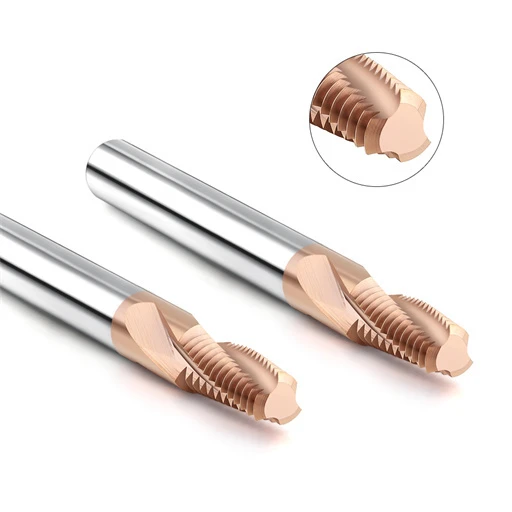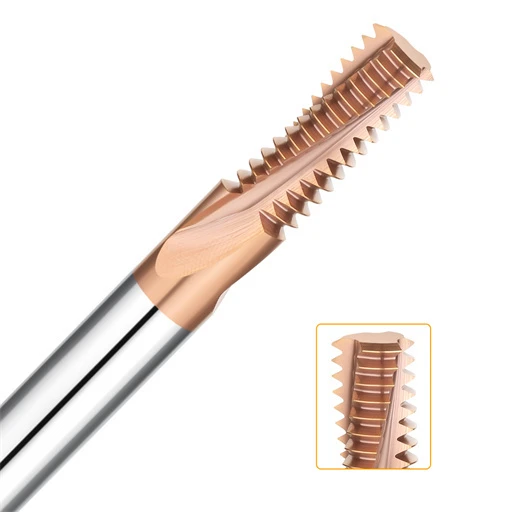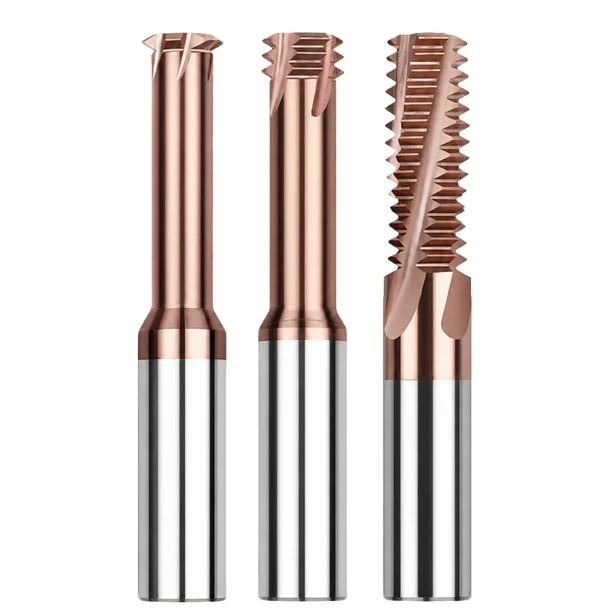
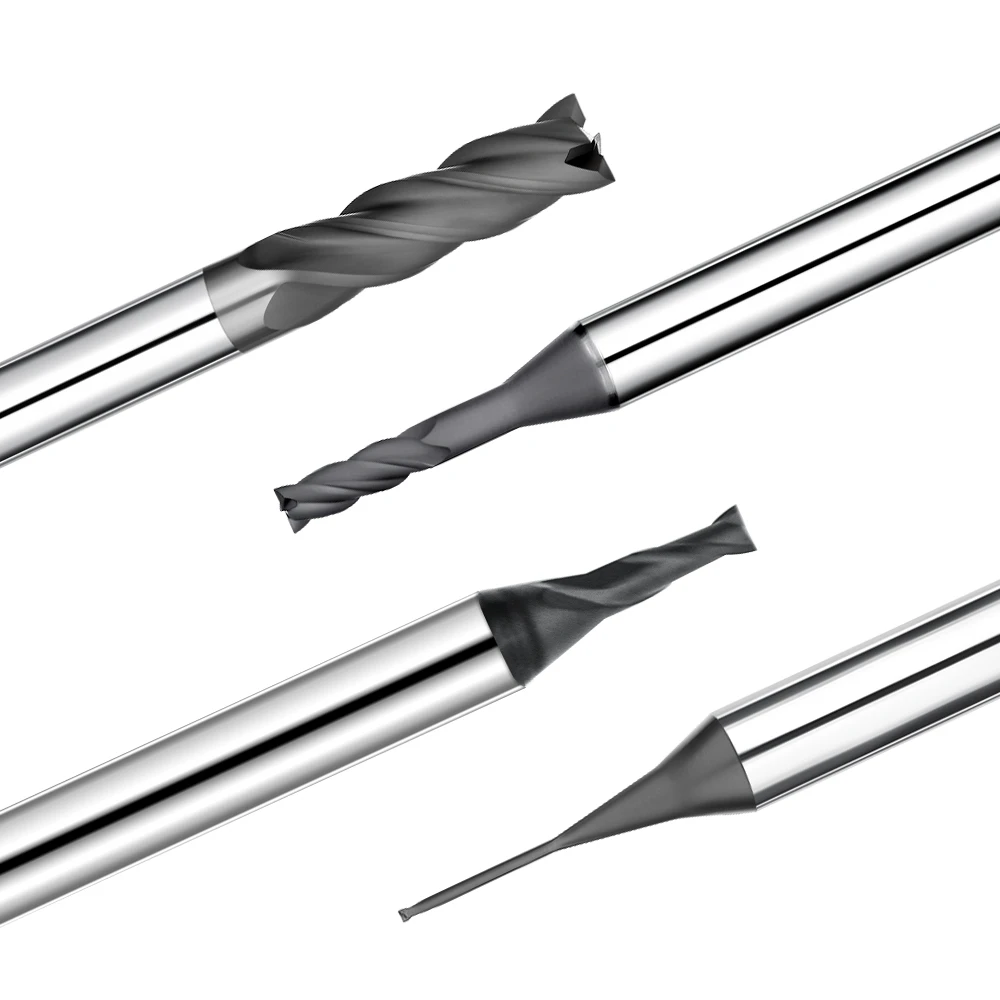
When delivering graphite electrode machining solutions, we often face a persistent challenge. Given identical CNC machinery and similar graphite grades, why do some shops achieve consistent, long-lasting tool performance, while others suffer from severe graphite end mill wear or edge chipping within hours?
We recently assisted a precision mold manufacturer facing this exact issue. During EDM electrode production, standard carbide tools yielded unpredictable results across complex multi-cavity designs. While initial passes went smoothly, subsequent operations suffered from rapid cutting edge degradation, poor surface finish, and tight-tolerance drift. On-site technical audits revealed that graphite end mill wear isn’t just about tool material. Instead, it stems from the interaction between abrasive graphite dust, cutting parameters, tool geometries, and overall system dynamics.
Unlike metal cutting, CNC graphite machining subjects tools to unique stress profiles. Graphite’s inherent brittleness produces massive amounts of fine, abrasive dust. These loose particles continuously abrade the flank and rake faces, accelerating tool recession. Furthermore, sub-optimal cutting parameters—such as mismatched speeds, feed rates, or chip loads—trigger micro-vibrations and abnormal impact forces that fracture fragile cutting edges prematurely.
Extending tool life requires optimizing the entire machining ecosystem rather than merely buying pricier cutters. For high-precision electrode work, selecting tailored geometries—such as long-neck designs for deep cavity clearance—is essential. Additionally, applying CVD diamond coatings creates a formidable defense against abrasive dust, drastically extending tool longevity in demanding applications.
Partnering with a reliable tool manufacturer is critical for high-volume production. A top-tier supplier does not just sell cutters; they evaluate material grades, machine rigidity, and spindle capabilities to deliver turnkey graphite machining solutions. This holistic approach reduces tooling costs and maximizes throughput.
Through years of hands-on experience with mold graphite and precision components, we know that reliable tool life relies on aligning tool selection, parameter tuning, and dust management. Understanding these core wear mechanisms is the only way to minimize operating costs and achieve a stable, profitable CNC graphite machining process.
So, is your inconsistent tool life caused by the cutter itself, or a lack of synergy within your machining system? Below is our in-depth analysis covering wear mechanisms, parameter optimization, and tool selection.
Graphite End Mill Wear Analysis: Why Do Graphite End Mills Wear Out So Quickly?
In daily mold and electrode production, machine shops frequently report a frustrating issue: a brand-new cutter rapidly loses its edge or fails completely after machining only a few graphite electrodes. In reality, graphite end mill wear is not just simple surface friction, but the complex interplay of material physics, cutting zone micro-environments, and machine dynamics. Years of hands-on experience show that graphite machining differs fundamentally from metal cutting—it is essentially a process of discontinuous, microscopic brittle fracture that places extreme demands on substrates and coatings.
Understanding the root causes of premature failure is the first step toward stabilizing machining processes and controlling tooling expenses. Through extensive failure analysis of worn cutters, we find that shops often blame tool quality while ignoring the combined impact of cutting physics and dust management. To understand why tool breakdown happens so fast, we must analyze three core factors: micro-material spalling, dust recutting abrasion, and parameter suitability.
How Do Graphite Material Properties Affect End Mill Wear?
Although graphite feels soft macroscopically, its microstructure is extremely aggressive toward cutting tools. Synthesized from carbon grains fused with binders, graphite undergoes brittle fracture during high-speed cutting, disintegrating into fine abrasive particles. These loose particles create high-frequency micro-impacts that rapidly scour the rake and flank faces of the tool.
Isostatic graphite density and grain size directly dictate the rate of graphite end mill wear. High-density, fine-grained graphite yields superior surface finishes, but its tightly packed structure generates severe cutting resistance and friction. Without a high-hardness substrate and diamond coating, the tool tip rounds off instantly, destroying cutting sharpness and dimensional control.
How Does Graphite Dust Accelerate Edge Chipping?
Dry machining creates massive amounts of airborne dust, making chip evacuation a silent killer of cutting edges. Because liquid coolants are rarely used in CNC graphite machining, fine particles easily collect within deep slots and narrow cavities. High-speed cutter rotation traps this trapped dust between the cutting edge and workpiece, causing severe dust recutting.
Repeated friction from trapped particles creates severe stress concentration along the delicate cutting edge. High-frequency impacts convert steady cutting forces into micro-spalling on ultra-fine carbide substrates. Once tiny micro-chips form on the edge, localized cutting resistance spikes exponentially, escalating into catastrophic tool failure.
How Do Improper Machining Conditions Reduce Tool Life?
Applying traditional metalworking mindsets—such as deep axial cuts or heavy feeds—is disastrous for brittle non-metallic materials. Excessive cutting depth subjects the end mill to severe bending moments, while high feed rates overload individual teeth. This combination induces harmful chatter during tool entry, triggering premature fatigue failure.
Furthermore, running improper spindle speeds relative to surface feed rates accelerates localized heat buildup. To maximize tool life, we recommend a strategy of high spindle speeds, light axial cuts, and elevated feed rates. Pairing this parameter profile with high-pressure air blasts prevents dust accumulation and ensures stable, long-lasting performance.
Causes and Mitigation of Edge Chipping in Graphite End Mills
In graphite electrode and precision mold production, micro-chipping and edge spalling represent the most frustrating causes of premature tool failure. Technicians often observe tools performing corner clearing where the surface diamond coating appears intact, yet the cutting edge exhibits micro-nicks. Unlike gradual flank wear, sudden edge chipping is highly unpredictable. It instantly ruins workpiece surface finishes and frequently triggers a chain reaction leading to total tool breakage.
Based on years of on-site troubleshooting, edge chipping rarely stems from a single flaw. Instead, it results from mechanical shock, high-frequency chatter, and localized stress concentration. Because graphite lacks plastic deformation capacity, it cannot cushion cutting impacts. Achieving consistent performance requires optimizing tool geometry, process planning, and dynamic workholding systems. Understanding these failure mechanisms is key to maintaining stable, high-precision graphite production.
Impact of Edge Chipping on Graphite Machining Precision
When edge chipping occurs, it disrupts the cutter’s exact geometric profile and causes drastic cutting force fluctuations. Microscopic analysis shows that notched edges transform smooth micro-fracturing into irregular surface tearing. This breakdown leaves visible tool marks and localized edge crumbling on electrodes, rendering them unfit for high-precision EDM requirements.
Beyond causing surface defects, edge chipping induces severe dimensional errors and corner blowout. Loss of edge integrity increases cutting resistance, driving microscopic tool deflection in deep slots or thin walls. Furthermore, notched tools generate high lateral forces that easily snap delicate graphite features, scrapping expensive components during final finishing passes.
How Can Tool Structural Design Reduce Edge Chipping in Graphite End Mills?
Adjusting micro- and macro-tool geometry is the most effective way to suppress edge chipping in brittle materials. Standard end mills prioritize sharpness with large rake angles, which invites edge overloading. For graphite, we prefer modified edge preparations—such as negative chamfers and micro-honing—that slightly trade absolute sharpness for a dramatic boost in edge strength.
Additionally, helix angle selection and flute finishing play decisive roles in tool stability. A lower helix angle (around 30°) minimizes axial pulling forces, protecting fragile workpiece edges from tension damage. For deep cavities, long-neck graphite end mills engineered with tapered necks maximize structural rigidity, eliminating harmful chatter and edge chipping at the source.
How Can Abnormal Tool Breakage During Graphite Machining Be Prevented?
Preventing sudden tool breakage requires strict precision controls at the machine-tool interface. Our technical standards place heavy emphasis on tool holder balance and spindle runout. Any runout exceeding 0.005 mm amplifies vibrations during high-speed rotation, overloading individual flutes and causing rapid fatigue failure across the entire cutter.
From a programming standpoint, toolpath strategies must eliminate direct vertical plunging and abrupt direction changes. Operators should use helical ramping entries and corner-smoothing arcs to prevent force spikes during engagement. Combining smooth toolpaths with targeted air blasts maintains a clean cutting zone, maximizing graphite end mill service life and process security.
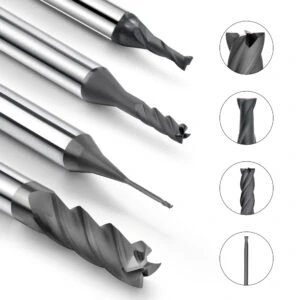
ptimizing Graphite Cutting Parameters to Extend Graphite End Mill Life
In high-volume mold shops, engineers under tight deadlines often increase feed rates blindly, causing rapid tool degradation or sudden breakage. Conversely, taking an overly cautious approach with low spindle speeds and slow feeds creates excessive friction, worsening microscopic abrasive wear. Through extensive process optimization, we know that fine-tuning graphite cutting parameters is the most direct way to balance throughput with tooling costs. Parameter selection is not a static formula; it requires matching material density, spindle rigidity, and tool overhang length.
Because graphite undergoes purely brittle micro-fracturing without plastic deformation, managing cutting force and friction depends on how edges fracture the material. The core logic of parameter tuning is pairing high cutting speeds with light chip loads per tooth. This strategy ensures the tool operates in a state of clean micro-pulverization rather than brute-force crushing. Establishing a scientific parameter framework protects surface quality, maximizes tool life, and eliminates unexpected downtime from frequent tool changes.
How to Set Graphite Milling Speed and Feed Rate?
Setting optimal parameters requires adhering to the principle of high spindle speeds, light engagement, and fast feeds. Because graphite produces no continuous ductile chips or thermal heat buildup, cutting speeds can remain high to promote micro-fracturing. In practice, we calculate spindle speed based on cutter diameter to maintain elevated surface speed while keeping feed-per-tooth low to minimize impact loads.
Feed rates must be coordinated closely with axial and radial depth of cut. During high-volume roughing, engineers should increase axial depth while restricting radial engagement and feed-per-tooth. This thin-chip strategy distributes lateral bending stress along the cutting flute. When clearing tight corners, feed rates should drop slightly to prevent inertial force spikes, ensuring stable CNC graphite machining performance.
The Impact of Spindle Speed and Feed Rate on Graphite End Mill Wear
The relationship between spindle speed and feed rate governs the friction frequency between the flank face and abrasive graphite particles. If spindle speed is too low relative to feed rate, chip load increases, causing cutting forces to surge and triggering micro-chipping. Conversely, excessive speeds paired with slow feed rates cause the edge to rub repeatedly against abrasive particles, accelerating graphite end mill wear.
Balanced parameters produce uniform, fine dust particles that clear instantly with targeted air blasts. Conversely, unbalanced settings create severe dust packing, faint friction sparks, and deep wear land grooves on tool flanks. Finding the optimal synergy between spindle speed and feed rate is essential for controlling wear rates and preventing premature edge failure.
How to Reduce Tool Wear Through Optimized Graphite Cutting Parameters?
Reducing tool wear requires building a holistic toolpath strategy rather than relying on fixed feed rates. When programming complex electrodes, engineers must pay close attention to motion control during tool entry and exit phases. Utilizing helical ramping and tangential arc entries eliminates direct vertical plunging, protecting sensitive end mill tips from localized shock loads.
Furthermore, applying phased parameter setups across different machining stages ensures stable long-term performance. During roughing phases, conservative engagement ratios minimize tool fatigue; during finishing passes, higher spindle speeds and light feeds deliver superior surface finishes. Dynamic parameter management maximizes graphite end mill service life, striking a perfect balance between efficiency and tooling expense.
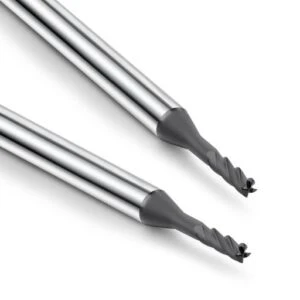
How Do Diamond Coated Graphite End Mills Extend Tool Life?
When machining high-density, fine-grained graphite, shop-floor engineers often face a harsh reality: standard carbide tools last only minutes before severe abrasion dulls their edges. Years of factory testing show that utilizing diamond coated graphite end mills is the most effective way to overcome this performance bottleneck. Unlike conventional PVD coatings, CVD diamond creates an extremely dense physical barrier, allowing the cutting edge to maintain absolute sharpness in highly abrasive environments.
Although high-grade diamond-coated cutters carry higher upfront costs, their long-term economic benefits are clear. Production data shows premium coatings reduce tool change frequency several-fold, eliminating non-productive machine downtime. Furthermore, diamond-coated tools maintain exceptional dimensional stability when machining complex deep cavities and micro-textures. Understanding their wear-resistance mechanism and mastering proper tool selection are critical steps toward achieving efficient, cost-effective CNC graphite machining.
Why Do Diamond Coated Graphite End Mills Offer Superior Wear Resistance?
Diamond-coated tools exhibit exceptional durability because Chemical Vapor Deposition (CVD) diamond films provide extreme micro-hardness and chemical stability. Microcrystalline and nanocrystalline diamond layers reach hardness levels between 8,000 and 10,000 HV, vastly outperforming uncoated carbide or standard AlTiN coatings. This ultra-hard surface allows the cutting edge to withstand high-frequency abrasion from dense graphite particles.
Additionally, diamond films possess an extremely low friction coefficient and superior thermal conductivity. In high-speed dry milling, low friction prevents abrasive dust from sticking to flute surfaces, reducing mechanical stress in the cutting zone. High thermal conductivity rapidly dissipates frictional heat, preventing thermal fatigue and substrate micro-fracturing under heavy cutting loads.
How Does Diamond Coating Reduce Graphite End Mill Wear?
Uncoated carbide cutters suffer from rapid flank wear and progressive micro-chipping during graphite milling. A high-density CVD diamond coating acts as protective armor, fundamentally altering how the cutter interacts with abrasive particles. The hard diamond film prevents graphite dust from eroding the cobalt binder inside the carbide substrate, eliminating binder leaching and delaying substrate degradation at the source.
Continuous machining tests show that diamond-coated tools maintain a razor-thin edge radius (R-value) over extended runs. This sustained sharpness lowers overall cutting resistance, preventing workpiece edge blowout caused by dull tool extrusion. As long as strong coating-to-substrate adhesion prevents premature delamination, diamond-coated graphite end mills deliver ultra-stable, long-term micro-machining performance.
How Do You Select the Right Diamond Coated Graphite End Mill for CNC Machining?
Selecting the ideal diamond cutter requires evaluating coating type, substrate prep, and grain structure rather than focusing solely on price. Engineers must verify the supplier’s substrate pre-treatment process, specifically whether surface cobalt has been chemically leached. Residual surface cobalt weakens adhesion, causing premature coating flaking under high-speed impacts and triggering instant tool failure.
Crystallinity selection should align directly with specific machining operations. For high-volume roughing, micro-crystalline diamond coatings provide thicker crystal structures and superior impact resistance. Conversely, for fine finishing requiring mirror surface quality, nano-crystalline diamond coatings deliver smoother surface finishes and lower friction, maximizing overall tool life.

Optimizing Tool Life with Long Neck Graphite End Mills in Deep Cavity Machining
In complex mold electrode production, machining deep slots, narrow ribs, and high-aspect-ratio cavities presents major engineering challenges. Attempting deep cavity milling using standard-length cutting flutes often triggers shank interference, severe cutting chatter, and dust packing. These hostile cutting conditions rapidly destroy tool edges and ruin workpiece tolerances. Years of shop-floor testing prove that strategically using long neck graphite end mills is the most effective solution for maintaining accuracy while suppressing premature wear.
The core advantage of relieved neck designs lies in balancing precise wall clearance with structural rigidity. By stepping down or tapering the non-cutting neck while retaining a short effective cutting length, the tool clears deep cavity walls without sacrificing shank stiffness. When faced with poor chip evacuation in deep features, this geometric approach lowers cutting resistance and thermal buildup, establishing a solid foundation for extended tool life.
Why Do Deep-Cavity Graphite Applications Require Long Neck Graphite End Mills?
Full-flute end mills struggle when clearing tight corners or deep vertical walls. Because extended flute lengths contact vertical cavity walls over large surface areas, excessive engagement triggers high-frequency chatter. Furthermore, abrasive dust gets trapped in narrow deep slots, causing severe secondary dust recutting. These harsh conditions routinely cause edge micro-chipping or sudden tool breakage under force spikes.
Using long-neck graphite end mills engineered for deep cavities transforms the cutting zone micro-environment. Short flutes concentrate cutting forces entirely at the tool tip, eliminating unwanted side-flute rubbing along deep walls. Furthermore, clearance between the relieved neck and workpiece wall creates an unobstructed path for air blasts and vacuum extraction, clearing abrasive dust immediately to prevent accelerated wear.
How Can Vibration and Tool Wear Caused by Long Overhangs Be Minimized?
As tool overhang increases, flexural rigidity drops exponentially, making chatter the primary driver of premature edge chipping. Our golden rule for long overhang tools is keeping projection lengths as short as possible while maintaining cavity clearance. For extreme reach applications, engineers should select tapered neck designs with thicker bases to maximize vibration resistance and structural stiffness.
Beyond tool selection, fine-tuning toolpaths and holder setups is crucial for stability. When machining with long overhangs, engineers should reduce radial depth of cut ($A_e$) and apply trochoidal milling or helical entry strategies to avoid shock loads. Pairing long-neck tools with high-precision hydraulic chucks or shrink-fit holders minimizes radial runout, suppressing vibration and flank wear during high-speed rotation.
How Do Long Neck Graphite End Mills Enhance Machining Stability?
Machining stability is vital for achieving tight electrode tolerances and controlling overall production costs. Production experience proves that a stable cutting process yields predictable wear patterns and minimal scrap rates. Thanks to optimized neck relief, these tools maintain constant cutting resistance throughout deep cavity operations, preventing tool deflection and ensuring high dimensional consistency across cavity floors and vertical walls.
More importantly, enhanced cutting stability optimizes shop-floor productivity. Eliminating unexpected edge chipping and cutter breakage allows CNC graphite machining centers to run unattended safely for extended periods. Combining optimized long neck end mills with smooth toolpath planning unlocks machine capacity while delivering superior deep-cavity electrode quality.

How Does a Graphite Machining System Enhance Tool Life and Machining Efficiency?
In electrode manufacturing, a common misconception is that purchasing premium cutters or tuning feeds provides a complete fix for tool failure. However, years of building automated lines show that isolated improvements yield limited results. A mature graphite machining system is a complete manufacturing ecosystem. It integrates high-rigidity spindles, high-vacuum dust extraction, precision workholding, and advanced toolpath strategies.
When viewing the machining system holistically, premature cutter degradation often stems from machine micro-vibrations, dust packing, and localized heat buildup. High-damping spindles mitigate harmonic chatter during high-speed cutting. Pairing rigid machine kinematics with sealed enclosure protection creates a clean micro-environment. This holistic platform establishes the ideal baseline for extending tool life while maintaining maximum throughput.
Synergistic Optimization of Tools, Parameters, and Dust Extraction
Sustaining high productivity requires managing a triangular synergy between tooling geometries, parameters, and vacuum extraction. Increasing spindle speeds without directional air blasts causes fine abrasive particles to clog cutting flutes instantly. This packing induces secondary dust recutting and violent force spikes. Dynamically matching extraction negative pressure and air blast angles to cavity depth ensures particles evacuate within milliseconds of detachment.
Furthermore, integrating motion control with diamond tooling characteristics is crucial for stability. When milling high-density electrodes, programming systems should apply smooth arc transitions and stepped feed increments at sharp corners. This prevents cutting force spikes from shocking the spindle edge. Combining machine dynamics, optimized parameters, and rapid dust evacuation transforms unpredictable cutting into a controlled, highly repeatable removal process.
How Does a Graphite Machining System Reduce Graphite End Mill Wear?
An advanced graphite machining system suppresses wear factors at their source by controlling cutting zone variables. High-precision machines with superior thermal stability keep spindle growth within tight tolerances during continuous high-speed operations. Eliminating thermal drift prevents unexpected depth-of-cut increases, protecting fragile cutter tips from force overloads during extended unattended shifts.
System-level dust collection plays an equally vital role in suppressing graphite end mill wear. Enclosed negative-pressure chambers prevent airborne particles from re-settling onto active toolpaths. Maintaining unobstructed airflow keeps flank friction consistent and predictable. This minimizes abrasive wear progression, allowing cutters to operate safely across their full expected lifespan in modern CNC graphite machining.
From Extending Tool Life to Optimizing Graphite Machining Efficiency
Pursuing maximum tool life at all costs is not always economically optimal. The primary goal is achieving the perfect balance between tooling consumption and overall throughput. Once wear patterns become predictable through system optimization, engineers can confidently increase feeds and speeds. Converting conservative safety margins into real output maximizes capital equipment utilization.
Shifting tool replacement cycles from frequent hourly stops to scheduled shift intervals transforms shop-floor logistics. This reliability drastically reduces manual tool-setting labor and minimizes unplanned downtime. More importantly, it provides the operational confidence needed to execute continuous, unattended lights-out manufacturing, dramatically elevating overall graphite machining efficiency and profitability.
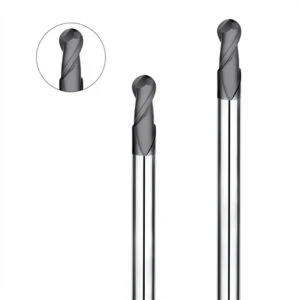
How to Choose a Diamond Coated Graphite End Mills Supplier?
Evaluating and selecting tool vendors is one of the most critical decisions for process engineering teams running automated electrode lines. While procurement managers often focus on initial unit cost, expanding production scales reveal a harsh reality: hidden costs from an unqualified supplier far outweigh tool price differences. Issues like coating delamination, inconsistent carbide substrates, and excessive runout trigger frequent tool failure, severely undermining machine productivity.
Selecting a reliable tool vendor requires looking beyond catalog specifications to examine the supplier’s quality controls and engineering expertise. A top-tier supplier is not merely a cutter vendor, but a technical partner who understands graphite physics, dynamic machine response, and chip evacuation. Evaluating a supplier of diamond-coated graphite end mills requires assessing technical R&D capabilities, application depth, and long-term engineering support.
What Technical Capabilities Should a Professional Graphite End Mill Supplier Possess?
When evaluating a graphite end mill manufacturer, process engineers prioritize substrate selection and coating adhesion technology. Brittle graphite machining requires a fine-grained carbide substrate that balances extreme hardness with high impact toughness. Professional toolmakers employ specialized surface pre-treatment and cobalt leaching technologies to ensure CVD diamond films do not suffer premature delamination during high-speed milling.
Beyond material science, geometric design capabilities and batch-to-batch consistency serve as critical technical benchmarks. Leading suppliers design specialized relief angle passivations and polished flutes optimized for fine dust evacuation. Crucially, key tolerances—such as edge radius, cutter diameter, and overhang runout—remain tight across every production lot, giving engineers confidence to execute unattended overnight shifts.
How Does a Supplier of Diamond-Coated Graphite End Mills Provide Optimization Solutions?
A competent tool manufacturer active in modern CNC graphite machining actively solves shop-floor problems alongside process engineers. When machining high-density micro-crystalline graphite or ultra-thin electrodes, standardized parameters often fall short. Technical application engineers should visit the facility, collaborating with programmers to establish custom parameter libraries tailored to spindle rigidity and vacuum capacity.
This collaborative engineering approach yields maximum value when troubleshooting unexpected shop-floor bottlenecks. When facing corner-clearing chatter or electrode edge chipping, experienced technical representatives quickly identify root causes like engagement spikes or vibration overload. They provide actionable fixes, such as adjusting feed-per-tooth, modifying toolpath motion, or engineering custom long-neck geometries to eliminate downtime.
From Tool Supply to a Long-Term Graphite Machining Solution Partnership
Transitioning tool procurement into a long-term partnership focused on total manufacturing solutions is essential for driving factory efficiency. Simple transactional relationships trigger constant price negotiations, whereas process-aligned alliances unlock substantial cost reductions. Sharing machining data allows suppliers to stock specialized inventory tailored to specific graphite grades, securing resilient supply chains during peak production runs.
Furthermore, technical collaboration drives continuous improvement across the entire manufacturing ecosystem. As partnerships mature, suppliers help establish lifecycle wear-monitoring systems and standardize programming templates using the latest industry developments. This strategic alignment ensures machine shops maintain superior part precision, maximize tool life, and retain a lasting competitive edge in precision electrode manufacturing.
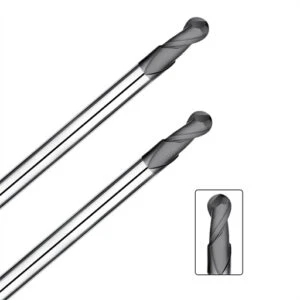
Achieving Long-Term, Stable Graphite Machining with a Graphite Machining System
Resolving persistent challenges like rapid tool wear and sudden edge chipping requires moving beyond piecemeal quick fixes. Graphite cutting is a highly sensitive process of dynamic equilibrium. From microscopic material spalling to macro toolpath planning, any detail mismatch is exponentially amplified at high spindle speeds. Only by treating cutter selection, parameter tuning, dust extraction, and machine dynamics as a holistic graphite machining system can shops achieve stable, predictable automation.
For process engineers and shop managers, controlling tooling costs and elevating part quality are complementary goals. Standardizing variables within the cutting environment turns unpredictable, catastrophic tool failures into gradual, manageable edge wear. A predictable wear profile allows machine tools to run at maximum cadence with minimal scrap rates, driving sustainable profitability across modern manufacturing lines.
Summary of Insights on Controlling Graphite End Mill Wear
Managing graphite end mill wear requires abandoning traditional metal-cutting mindsets. Graphite’s unique microstructure means wear stems primarily from high-frequency impacts and severe friction from hard micro-particles. When observing rapid edge degradation, engineers should inspect dust evacuation first. Trapped, recut dust is often the primary culprit behind severe flank scouring and edge chipping.
Regarding cutting strategies, we advocate high spindle speeds, light engagement, and fast feeds while avoiding heavy radial cuts and direct vertical plunging. If edge chipping occurs during corner clearing, adopting negative chamfers or micro-honed edge preparations provides vital impact resistance. Combining long-neck toolpaths with smooth arc entries mitigates force spikes and restores cutter longevity safely.
Selection Logic for Diamond-Coated Graphite End Mills
When selecting diamond tooling, engineers should look beyond raw hardness specs to evaluate total process compatibility. Choosing a diamond-coated graphite end mill is not about finding the thickest film; it is about matching coating adhesion, cobalt leaching technology, and grain structure to specific operations. For heavy roughing, micro-crystalline coatings provide superior impact toughness, whereas nano-diamond coatings deliver the smooth finishes required for intricate micro-details.
Furthermore, supplier relationships must extend beyond transactional tool purchasing. When facing lot-to-lot inconsistency or challenging graphite grades, shops should invite supplier technical engineers for on-site optimization. A competent vendor does not just supply cutters; they help build tiered parameter libraries tailored to your spindle rigidity, air-blast pressure, and material density to maximize tool life.
Building a High Efficiency Graphite Machining System to Enhance Long-Term Value
Achieving maximum machining throughput cannot rely on a single “miracle tool”; it requires full ecosystem synergy. If machine kinematics lack dynamic stiffness or dust extraction fails to penetrate deep cavities, even premium diamond tools cannot deliver expected longevity. Combining rigid spindles, high-vacuum dust extraction, precise runout control, and smooth motion programming creates an ultra-stable manufacturing platform.
Because spindle conditions, vacuum systems, and graphite grades vary by facility, there is no one-size-fits-all parameter set. If your shop faces abnormal tool wear or poor chip evacuation in complex electrodes, feel free to contact our engineering team. By analyzing part geometries, physical material properties, and equipment capabilities, we can develop a customized optimization plan tailored to your production line.