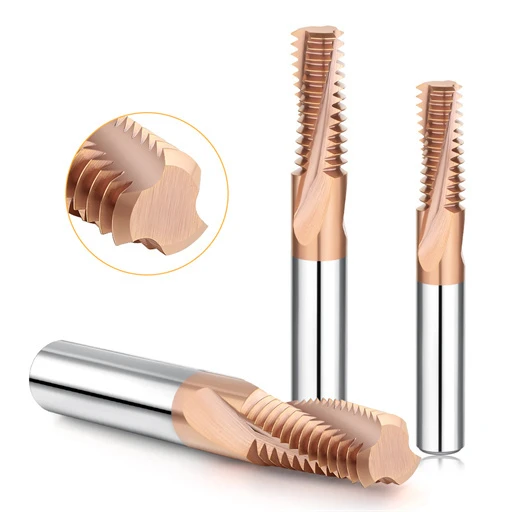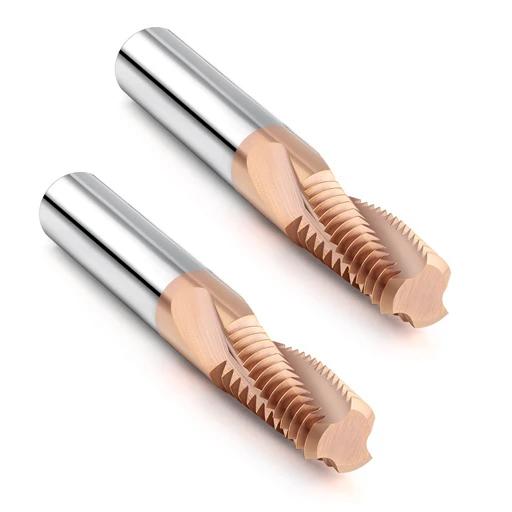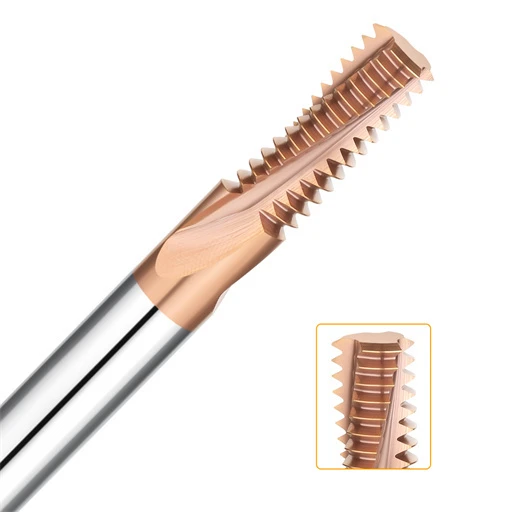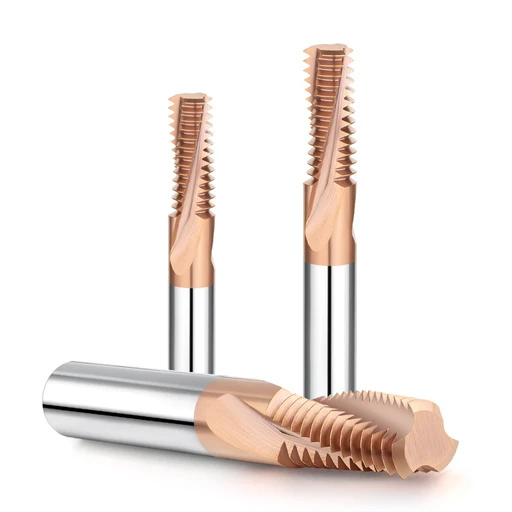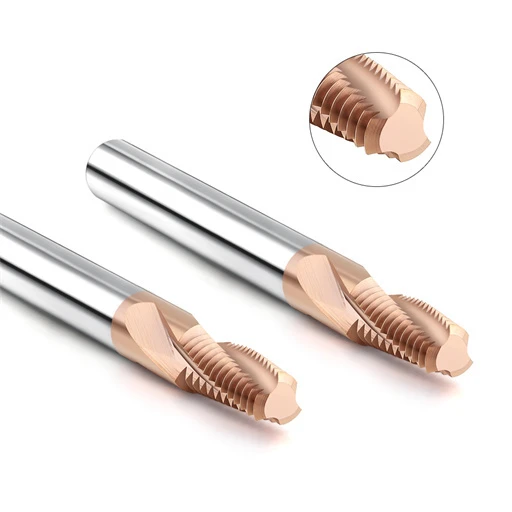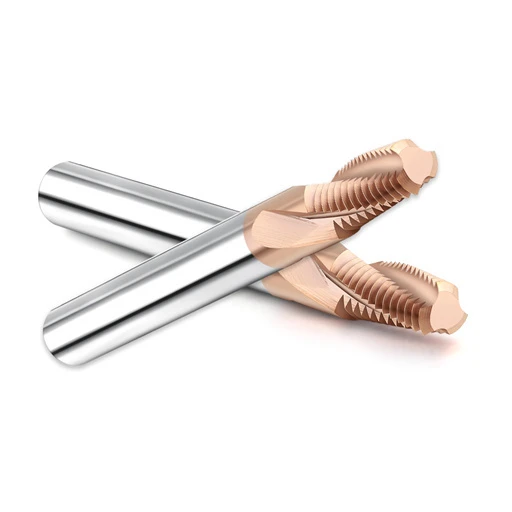

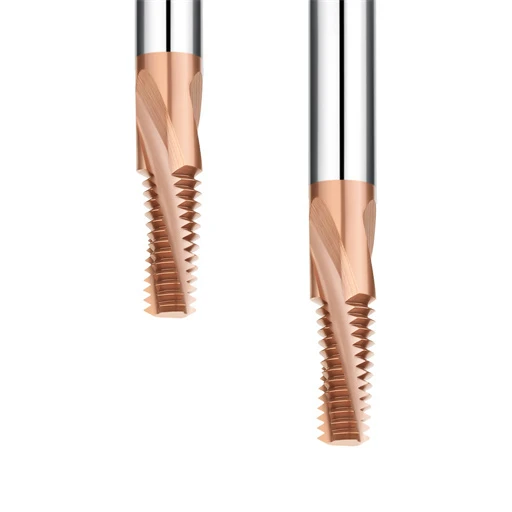
A mold-making shop came to us struggling to machine deep threaded holes in hardened tool steel at HRC 62. They relied on a conventional tap, but the tool snapped deep inside a late-stage mold plate. That single broken tool scrapped an expensive, semi-finished workpiece, costing them thousands of dollars in lost labor and raw materials.
We see this costly mistake often across production facilities. Machine shops routinely default to comparing the unit purchase price between a thread mill vs tap. However, factors like thread precision, cutting load, chip clearance, and the catastrophic risk of tool breakage determine real profitability—especially in hard milling applications where rigid tooling is non-negotiable.
Traditional tapping relies on synchronous rotation to engage the entire profile at once, delivering rapid cycle times in soft metals. In contrast, a thread mill uses helical interpolation on a 3-axis machining center. This path cuts threads incrementally, dispersing radial cutting forces and letting machinists dial in tight dimensional tolerances without excessive spindle torque.
Rigidity and tool design dictate success when working with hardened alloy steel above HRC 62. For solid carbide thread mills, optimizing the tool path, radial engagement, and nano-composite PVD coatings prevents thermal shock. For high-performance taps, specialized rake geometries and substrate toughness are vital to withstand excessive torsional loads.
There is no universal winner between a thread mill vs tap. Instead, the right choice hinges on production volume, raw material hardness, hole depth, and tolerance budgets. Choosing the wrong tooling method compromises hole accuracy and risks expensive part scrap.
We will break down real-world shop floor data comparing CNC threading tools by surface finish, cycle times, tool wear, and scrap rates. If you machine difficult materials or tight pitch diameters, understanding these core trade-offs will protect your workpieces and lower your overall cost per hole.
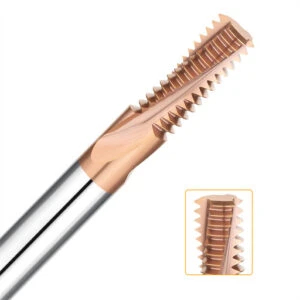
Thread Milling vs Tapping: Key Differences
We never decide between tooling methods simply because milling feels advanced or tapping runs fast. On mold steel exceeding HRC 60, standard taps often cut the first few holes cleanly before edge wear triggers pitch diameter shifts. Switching to a thread mill stabilized our process by fundamentally altering how the tool absorbs cutting load.
A thread mill generates threads progressively through 3-axis CNC helical interpolation, whereas a tap cuts the full thread profile simultaneously. Machine shops evaluating thread milling vs tapping must look beyond raw cycle time. Factors like spindle torque, chip clearance, rigidity, and material hardness dictate thread quality and process reliability on the floor.
Differences in Machining Principles: Thread Milling vs Tapping
Helical interpolation allows an indexable or solid carbide cutter to orbital-ramp down the hole wall to form threads gradually. This process lets machinists adjust radial depth of cut and feed rates dynamically across multiple passes. When machining hardened mold steel above HRC 60, tweaking tool paths prevents edge micro-chipping, harmonic vibration, and thermal fatigue.
In contrast, a tap cuts threads through direct 1:1 synchronization between spindle rotation and axial feed. While this delivers unbeatable cycle speeds in mass-producing softer metals, rising material hardness causes severe torque spikes. High friction in deep holes increases tool wear rapidly, making thread milling for hardened steel the superior choice for mitigating catastrophic breakage.
Differences in Toolpaths and Cutting Methods: Thread Milling vs Tapping
Toolpath flexibility is the main operational advantage of helical interpolation over rigid tapping. A thread mill moves circumferentially while feeding along the Z-axis, allowing variable radial depths of cut across multiple step-overs. This kinematic control lets programmers optimize chip evacuation and manage tool deflection, ensuring consistent pitch diameter and excellent thread surface finish on high-precision parts.
Conversely, a tap follows a fixed, linear toolpath constrained to the thread pitch. This rigid engagement leaves zero margin for error in spindle synchronization, pre-drill hole tolerance, or thermal expansion. Chip packing in blind holes quickly causes binding and spikes torsional stress, severely shortening tool life if coolant delivery is compromised.
Suitable CNC Machining Scenarios for Thread Mills vs Taps
For high-volume runs in standard steels, aluminum, or brass, conventional tapping remains hard to beat. Its lightning-fast cycle times and simple tool setups make it the premier choice for mass production. However, when machining hardened alloys, thin-walled workpieces, or expensive, late-stage components, switching to a thread mill safeguards against scrapped parts.
A thread mill also delivers unmatched versatility by cutting multiple hole diameters and left- or right-hand threads with a single tool. In operations like thread milling hardened steel, we assess machine rigidity, spindle power, and hole depth alongside hardness ratings. Matching the tool to actual shop-floor constraints guarantees consistent thread quality at the lowest cost per hole.
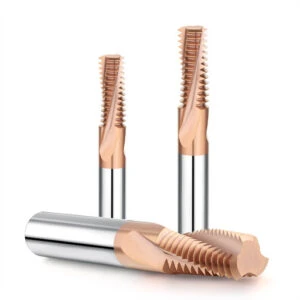
Thread Milling vs Tapping for Hardened Steel: How to Choose
Machining internal threads in hardened steel parts rated at HRC 60–62 quickly exposes tooling limits. A standard tap often handles initial parts well, but edge degradation accelerates rapidly in blind holes. Restricted chip clearance and rising cutting torque make tool wear unpredictable, turning stable production into an unexpected scrap hazard.
Never select a threading method based on raw Rockwell hardness alone. Effective thread depth, pilot hole tolerance, batch size, and workpiece value must drive the decision. When evaluating thread milling vs tapping for hardened steel, process stability matters most. Higher hardness levels demand tight control over mechanical loads to protect cutting edges from sudden failure.
Advantages of Thread Milling for Hardened Steel
For mold components exceeding HRC 60, helical interpolation makes a thread mill the preferred choice for complex setups. Progressive orbital cuts distribute cutting forces instead of engaging the full thread profile at once. This segmented approach suppresses machining vibration, reduces flank wear, and keeps tight dimensional control in deep cavities.
Process controllability is the key operational advantage. If dry run passes or acoustic monitors show excessive tool wear, operators can immediately tweak radial step-over, feed rates, or surface speeds. When high thread milling accuracy is required, CNC wear offsets let machinists correct pitch diameter drift on the fly without swapping tools.
Key Challenges in Tapping Hardened Steel
A specialized tap can thread hard tool steels under rigid conditions, but tight operational windows leave little margin for error. Torsional cutting torque spikes quickly as chips pack the bottom of blind holes. Once hardness exceeds HRC 60, micro-chipping on cutting teeth accelerates, causing pitch variations and rapid tool degradation.
The catastrophic danger is tool breakage. A solid carbide tap wedged tight in high-value mold steel rarely extracts cleanly without burning out the hole via EDM, often ruining the part. When assessing the tapping of hardened steel, cycle speed savings must always be weighed against torque spikes, chip packing, and the financial risk of scrapped workpieces.
Choosing Between Thread Milling and Tapping for Hardened Steel
Do not let a rigid hardness number dictate your tooling choice. For shallow through-holes in the HRC 60–62 range—especially during large production runs where rigid tapping cycles run smoothly—a premium tap remains the fastest, most economical approach. Sticking with a proven tapping workflow avoids unnecessary cycle time increases.
However, when working steels near HRC 62–65 with deep blind holes, tight gauge tolerances, or high scrap costs, switch to a thread mill. Baseline your decision on trial-cut data, tracking spindle loads, cutting harmonics, and Go/No-Go plug gauge wear. Choosing between thread milling vs tapping ultimately comes down to finding the lowest risk and most repeatable cost per hole.
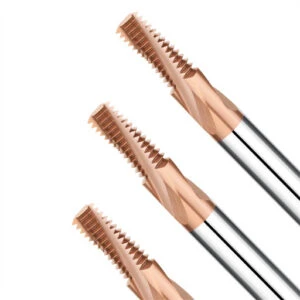
Thread Milling Accuracy vs Tapping: Which Offers Higher Precision?
On high-tolerance mold projects exceeding HRC 60, we never assume a milling cutter is inherently more accurate than a tap. Single-part QC checks often show perfect results with a rigid tap, but dimensional drift creeps in across longer runs. Root-cause audits show that holding tight pitch tolerances depends on the complete system—not just the cutting tool itself.
Both methods can hold class 2B or 3B tolerances, but they manage dimensional control in completely different ways. A thread mill allows dynamic tool-wear compensation and multiple radial finish passes, offering massive advantages on hard alloys. In contrast, tapping depends entirely on tap grind tolerances, pilot hole consistency, and spindle synchronization. Comparing thread milling accuracy and tapping precision requires analyzing the entire setup.
Factors Affecting Thread Milling Accuracy
During test cuts, we inspect tool runout, hydraulic toolholder clamping, and machine spindle concentricity before touching parameters. On small-pitch threads, even 0.0002″ (5 µm) of radial runout alters the final pitch diameter. Spindle thermal growth, radial depth of cut, and fixture rigidity also dictate whether identical hole locations hold uniform thread specifications.
Cutting loads and flank wear become critical when threading materials above HRC 62. Pitch diameters slowly shrink as the cutter wears, causing Go plug gauges to bind over continuous runs. To reliably increase thread milling accuracy, programmers must combine dialed-in feeds and speeds with structured tool wear offset adjustments and rigid workholding.
Controlling Thread Dimensions and Tolerances with Thread Mills
The main advantage of helical interpolation is real-time dimensional compensation. If a trial cut leaves a thread pitch diameter tight on the gauge, an operator simply shifts the radial offset in the CNC control. This eliminates the need to replace physical tooling, making it easier to hit tight thread tolerance limits during first-article setup.
However, helical interpolation does not automatically ensure high precision without strict baseline setup. We verify pilot hole roundness, program dynamic lead-in arcs, and inspect threads using Go/No-Go plug gauges and optical comparators. When machining HRC 62 hardened steel, tracking progressive wear across batch runs tells operators exactly when to apply radial compensation to prevent scrap.
Thread Milling vs Tapping: Differences in Thread Surface Quality
Assessing thread quality requires checking more than whether a Go plug enters the hole cleanly; thread flank roughness, burr formation, and thread lead-in matter just as much. Because a thread mill uses a low-load shearing action, programmed spring passes produce flawless flank finishes. This makes the process ideal for injection molds where microscopic tearing cannot be tolerated.
A conventional tap can deliver mirror finishes in ductile steels, but hardened metals quickly turn minor edge wear into torn flank surfaces. Restricted chip clearance can gall threads, score lead-in chamfers, and cause severe burring. When evaluating thread milling vs tapping for surface integrity, always assess thread roughness and tool wear over a continuous batch rather than judging the very first part.
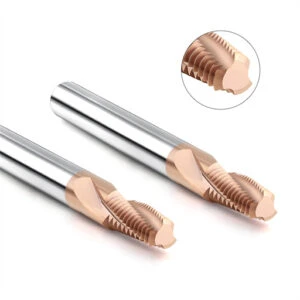
Thread Mill vs Tap Tool Life: What Are the Differences?
On mold steel projects exceeding HRC 60, measuring tool longevity simply by total hole count creates a false sense of security. A high-performance tap might cut the first thirty holes cleanly before torque spikes and pitch diameters drift out of spec. Tool longevity is dictated not just by carbide grade, but by hole depth, pre-drill tolerance, chip evacuation, and thermal load.
Evaluating thread mill vs tap tool life requires distinguishing between when a tool fractures and when it stops cutting in-spec threads. On hard metals around HRC 62, micro-wear on cutting edges causes Go gauges to bind long before catastrophic failure occurs. Relying on catastrophic breakage to define tool change intervals leads directly to out-of-tolerance parts and costly rework.
Factors Affecting Thread Mill Tool Life
Substrate toughness, edge prep, PVD coating, and radial chip load govern the wear rates of a solid carbide cutter. Excessive radial step-over triggers micro-chipping on the crests, while rubbing from overly conservative feeds generates excessive heat and accelerates flank wear. Machinists must dial in a balanced cutting window that manages radial deflection and minimizes thermal fatigue.
When cutting small internal threads in HRC 62 steel, tracking progressive wear prevents unexpected dimensional drift. In one project, recording spindle load and gauge resistance enabled us to tweak toolpaths and apply CNC wear offsets before pitch tolerances degraded. Practical thread mill tool life is never a static number; it reflects machine rigidity, tool runout, and adaptive cutting parameters.
Why Tap Tool Life Is Highly Sensitive to Machining Conditions
Rigid tapping tools engage the entire thread form at once, making them exceptionally sensitive to pilot hole diameter and chip clearance. An undersized pre-drill hole or severe work-hardening drastically spikes torsional stress across the chamfer teeth. In deep blind holes, chip packing at the bottom chokes coolant flow, dramatically accelerating cutting edge breakdown.
Tapping is equally unforgiving of spindle-feed synchronization errors and toolholder runout. Minor pitch tracking discrepancies produce flank friction, leading to rapid tooth wear and ragged thread forms during continuous production. When executing the tapping of hardened steel, watching torque spikes and cutting edge degradation is essential to prevent sudden tool seizure deep inside high-value parts.
Evaluating Tool Life: Thread Mills vs Taps
Accurate shop-floor tool tracking requires logging hole counts against Go/No-Go plug gauge limits, spindle load percentages, and edge wear states. If a tool cuts 100 holes but loses pitch tolerance at hole 80, its true production capacity is 80 holes. Counting parts past that wear threshold compromises part quality and risks unrecoverable scrap.
Never baseline your tooling budget on theoretical catalog numbers when comparing thread mill vs tap tool life. For demanding jobs like thread milling HRC62 steel, real tool life is measured by cost per hole, tool change downtime, and total scrap reduction. Factoring in process stability and salvage risks reveals which threading method truly maximizes floor profitability.
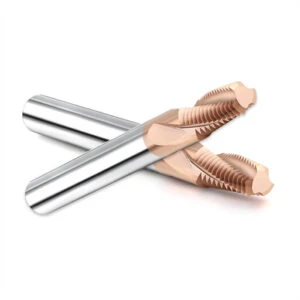
Thread Milling vs Tapping: Differences in Tool Breakage Risk
Machining deep internal threads into mold plates above HRC 60 frequently pushes rigid tooling to its breaking point. A specialized tap might run smoothly at first, but edge breakdown quickly sends cutting torque skyrocketing until the shank snaps flush inside the hole. The real disaster is rarely the broken tool itself; it is the nightmare of extracting the shattered fragment from an expensive, nearly finished workpiece.
Analyzing thread milling vs tapping requires treating tool failure as an operational financial risk rather than a simple wear metric. Pre-drill tolerances, pitch diameter, hole depth, spindle runout, and chip clearance dictate process stability. When threading hard steels—especially in deep blind holes—evaluating the scrap cost of catastrophic tool failure is far more important than shaving a few seconds off cycle times.
The Main Reasons for Thread Mill vs Tap Tool Breakage
Tool failures on the shop floor stem from system imbalances rather than basic cutter quality. Excessive toolholder overhang compromises rigidity, spindle runout overloads individual flutes, and undersized pilot holes spike radial engagement. For a thread mill, sudden breakage usually results from mismatched helical lead-in arcs, excessive radial step-overs, or aggressive feed rates that trigger severe tool deflection.
For a rigid tap, breakage stems from synchronization errors, chip packing, and uneven torsional resistance. In blind holes, unevacuated chips pack the flutes, driving torque beyond the carbide’s shear strength. When comparing failure mechanisms in thread mill vs tap tool breakage, operators must watch for early warning indicators like spindle load spikes, acoustic chatter, torn flank surfaces, or Go gauge binding.
Why Taps Are More Prone to Breakage in Hardened Steel
High-hardness tool steels in the HRC 60–62 range dramatically shrink the operational safety margin for continuous tapping. Full thread-profile engagement subjects the tool to intense friction and torsional stress across all cutting teeth simultaneously. In small-diameter blind holes with poor coolant access, cutting edge micro-chipping accelerates, causing rapid binding that snaps brittle solid carbide tooling.
When executing the tapping of hardened steel, successfully completing the first article provides zero guarantee of process stability. Shops working with HRC 62 steel must continually track spindle load monitors, edge wear progression, and thread pitch tolerances. When pre-drill hole conditions are marginal or depth-to-diameter ratios exceed 2.5xD, tapping creates unacceptably high risks of sudden tool seizure.
Minimizing Workpiece Loss After Thread Mill Breakage
Process salvagability makes helical interpolation the preferred choice for high-value components. A thread mill runs on a clearance-optimized cutter diameter that is significantly smaller than the hole itself. If a cutter chips or fractures, the loose fragments simply drop out or blow out with compressed air, leaving the workpiece threads completely unharmed and 100% salvageable.
Conversely, a shattered tap binds tightly across the entire circumference, requiring EDM burning, acid etching, or manual extraction that routinely ruins the part. Incorporating a thread mill allows machinists to catch acoustic deviations, stop the cycle, swap cutters, and safely recut the thread using tool offsets. Evaluating scrap risk alongside tooling costs proves that thread mills offer far superior asset protection on hard materials.
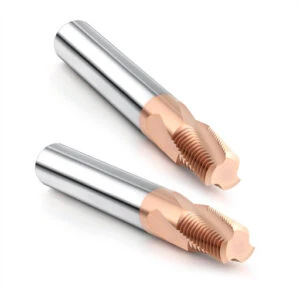
Thread Milling vs Tapping Cost: Which Method Is More Cost-Effective?
Machine shops often fall into the trap of comparing upfront tooling invoices, automatically assuming a conventional tap is the more economical choice. In reality, machining hard mold components reveals the opposite dynamic. Rapid cutting edge degradation, frequent changeovers, broken tools, and part rework quickly drive the true expense of conventional tools far past expectations.
When determining true ROI, shops must evaluate the complete balance sheet of thread milling vs tapping cost. Cycle times, spindle hourly rates, insert replacement downtime, scrap rates, and CMM inspection overhead dictate actual margins. In high-value alloys, a budget cutter that snaps and scraps a multi-thousand-dollar workpiece completely wipes out upfront savings, proving that cost per conforming hole is the only metric that matters.
Unit Tool Cost: Thread Mill vs Tap
Looking strictly at purchase orders, an indexable or solid carbide thread mill carries a noticeably higher initial price tag than a standard ground tap. Premium sub-micron substrates, multi-flute geometries, and specialized nanocomposite PVD coatings drive up the manufacturing cost of milling cutters. Relying exclusively on upfront sticker price, however, gives an inaccurate picture of total operational expenses.
On high-volume runs of mild steel or 6061 aluminum, a low-cost tool delivers undeniable cost efficiency. But on parts rated at HRC 60–62, rapid tooth wear and micro-chipping quickly eliminate that price gap. Investing in a premium carbide cutter that maintains pitch diameters across extended cycles ultimately yields a lower total expenditure than burning through cheap tooling.
Cost Per Hole: Thread Milling vs Tapping
On our shop floor, we determine machining economics by calculating the true cost per hole. This formula factors the tool purchase price divided by total qualified holes, combined with machine burden rates, cycle times, and inspection intervals. While an inexpensive tool might seem economical on paper, a short usable lifespan makes its per-hole cost dramatically higher than expected.
A solid carbide tool completely flips this balance sheet on difficult jobs. When cutting HRC 62 steel, a conventional tool wears rapidly, while a cutter running helical paths uses wear offsets to cut dozens of additional in-spec holes. Evaluating thread milling costs versus tapping costs reveals that dynamic toolpath compensation consistently produces the lowest net manufacturing cost.
Calculating Actual Costs Based on Tool Life, Tool Changes, and Scrap Rates
A practical tooling audit breaks total manufacturing costs into tool consumption, machine cycle time, setup downtime, quality control, and workpiece scrap. Rather than trusting optimistic catalog numbers, machinists must define true tool life as the number of conforming threads produced before pitch diameters drift past Go/No-Go limits.
Operator downtime and scrap risks carry the heaviest financial weight in tight-tolerance production. Swapping a worn tool in mild steel takes only a few minutes, but extracting a fractured tool from an expensive mold core causes catastrophic downtime and scrap. A rigorous cost comparison between thread mills and taps must factor in salvage risks to protect shop profitability.
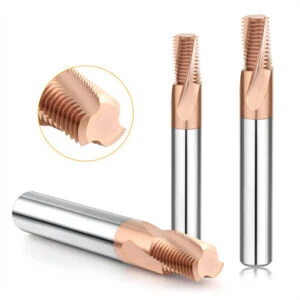
Thread Milling HRC62 Steel: How to Machine HRC62 Hardened Steel
Machining mold components at extreme hardness levels quickly proves that standard tooling parameters no longer deliver reliable stability. On a production batch around HRC 62, conventional taps initially cleared inspection before progressive flank wear spiked spindle torque and caused dimensional drift. Re-evaluating pre-drill concentricity, toolholder overhang, and chip evacuation was critical to finding a repeatable process window.
Successfully completing thread milling HRC62 steel requires mapping pitch diameter, thread depth, and hole geometry before selecting tooling. This severe hardness demands ultra-fine grain carbide substrates, negative rake reinforcements, and heat-resistant nanocomposite PVD coatings. For small-diameter holes, running single-hole trial cuts to inspect cutting loads prevents sudden edge fractures before launching unattended cycles.
Tool Selection for Thread Milling HRC62 Steel
Tool material and edge preparation must take priority over brand names when cutting hardened die steels. An optimized thread mill utilizes sub-micron carbide grades combined with high-aluminum TiAlN or AlCrN coatings to resist extreme abrasive wear and thermal shock. Overhang must be kept as short as possible, since excessive tool reach introduces chatter and dimensional taper under high radial cutting forces.
Tool architecture should directly reflect hole depth and annual production volumes. Multi-flute designs increase feed rates on shallow holes, while single-point cutters maximize chip clearance and reduce tool pressure in deeper pockets. When selecting a thread mill for HRC62 hardened steel, match the cutter’s neck diameter and helix angle to machine spindle rigidity and hydraulic chuck concentricity.
Cutting Stability Comparison: Thread Milling vs Tapping (HRC62)
Evaluating process stability on hard materials requires monitoring cutting harmonics, spindle load meters, and progressive tool wear. Helical interpolation cuts the thread incrementally, enabling machinists to divide the depth of cut across multiple radial passes. This controlled load distribution suppresses harmonic chatter and protects tool edges, making it easier to establish a dependable cutting window.
A specialized tap can still perform in shallow through-holes if pre-drill tolerances and thermal expansion are tightly controlled. However, in deep holes, full-profile engagement spikes friction rapidly. When comparing thread milling and tapping for HRC62 steel, real-world tool life is proven by continuous batch data—tracking Go/No-Go plug gauge resistance over time rather than relying on theoretical catalog claims.
Machining Parameters and Toolpath Control for Thread Milling HRC62 Steel
Never apply standard alloy speeds and feeds to extreme-hardness applications. Surface speeds typically drop to 20–40 m/min (65–130 SFM) with light chip loads per tooth to mitigate thermal fatigue on the cutting edge. Distributing cutting forces across two to three radial roughing passes followed by a zero-depth spring pass prevents tool deflection and holds tight pitch tolerances.
Toolpath entry and exit strategies are equally decisive. Programmers must utilize tangential arc-in and arc-out toolpaths with climb milling to avoid shock loading the carbide upon initial material engagement. When executing thread milling HRC62 steel, maintaining synchronized air blasts for chip clearance and ensuring stable radial toolpaths will protect cutting edges far better than chasing faster cycle times.
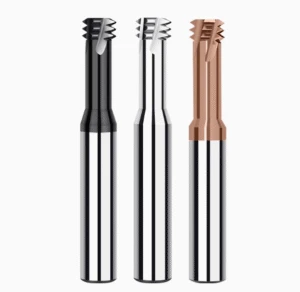
When Should You Use a Thread Mill Instead of a Tap?
Selecting the right tooling is never an arbitrary choice on the shop floor. When cutting deep blind holes in HRC 62 hardened steel, tool breakage risk and scrap costs quickly make helical interpolation the premier strategy. Conversely, running standard pitch threads through mild carbon steel with a stable tap eliminates the need for complex toolpath changes.
Before picking between a thread mill and a tapping tool, audit your job constraints rather than looking strictly at catalog tool prices. Clarify raw material hardness, hole depth, blind or through-hole design, gauge tolerances, and daily output targets. Answering these operational questions narrows your tooling strategy down to the most repeatable, cost-effective method.
When to Prioritize Thread Mills for Hardened Steel
For injection mold components rated at HRC 60–62 or higher, selecting a dedicated thread mill is the safest choice for tight tolerances. Where tapping previously caused sudden torque spikes, rapid tooth chipping, and tool seizure, helical toolpaths let operators divide cutting forces. Small-batch trial cuts verify tool wear progression and cutting harmonics before committing to continuous production runs.
Helical milling also excels across mixed-part runs requiring multiple thread diameters and dynamic wear compensation. While a milling cycle may not outpace rigid tapping in standard cycle times, its operational adjustability provides superior insurance. Choosing thread milling for hardened steel effectively eliminates scrapped parts on critical, late-stage workpieces.
When Tapping Remains Better for Batch Threading
When mass-producing standard components in ductile alloys or mild steels, high-speed tapping remains unbeatable. Rigid tapping cycles run exceptionally fast, requiring minimal programming and delivering high hourly output. If pilot hole roundness, spindle synchronization, and chip clearance are already locked in, switching to a milling process simply introduces unnecessary cycle time.
If your floor’s current tapping setup consistently passes Go/No-Go plug gauge inspections with zero flank tearing, stick with it. Key shop floor metrics—such as tool life per regrind, rapid cycle times, and minimal scrap rates—should drive your decision. In high-volume production with standard hole depths, conventional tools remain the most rational choice.
Choosing Between Thread Milling and Tapping Based on Material, Hole Depth, Precision, and Production Volume
Balance your final tooling decision across four core operational pillars: material hardness, hole depth, thread tolerance, and batch size. When cutting steels near HRC 62, evaluate torque loads, chip packing, and salvage costs. In deep blind holes, verify that flute clearance and tool overhang prevent chip recutting and harmonic vibration.
For mass production of standard threads, optimize for cycle times and cost per hole. For high-mix runs, complex hole locations, or high-value components, weigh tool versatility and workpiece salvage safety. In the end, choosing between thread milling and tapping must be guided by floor data rather than simplistic assumptions about tool cost.
FAQs: Thread Milling vs Tapping
Choosing between thread milling vs tapping requires evaluating operating constraints rather than theoretical tool specs. On materials ranging from mild steel to HRC 60–62 alloys, decisions depend on hole depth, pitch tolerances, cutting forces, and production batch sizes.
A rigid tap maximizes output in high-volume, standard steels, while a carbide thread mill prevents catastrophic tool breakage in hard metals. Balancing tool wear, setup rigidity, and part scrap risk determines the correct process.
Is Thread Milling Better Than Tapping?
A thread mill is not universally better than a tap. High-speed tapping remains unbeatable for mass-producing standard threads in soft alloys where cycle times dictate profit margins.
However, helical milling excels in high-mix production, blind holes. The ability to adjust pitch diameters via CNC wear offsets makes a thread mill far more versatile.
Is a Thread Mill Better for Hardened Steel?
A thread mill is vastly superior when machining die steels exceeding HRC 60. Dividing cut depths across multiple passes prevents the extreme torque spikes and chip packing that snap rigid taps.
Tapping hard tool steels requires flawless coolant delivery and tight pre-drill control. For critical, late-stage parts, choosing thread milling for hardened steel eliminates the financial threat of a broken tool scrapping the workpiece.
Can You Thread Mill HRC 62 Steel?
Yes, thread milling HRC62 steel is fully reliable with the correct tooling strategy. Success demands ultra-fine sub-micron carbide, heat-resistant AlCrN or TiAlN PVD coatings, and negative rake edge preparations.
Programmers must use tangential climb-milling entry arcs and low surface speeds (20–40 m/min). Validating spindle loads and gauge fit on test cuts prevents premature micro-chipping on HRC 62 parts.
Which Has Better Tool Life, Thread Mill or Tap?
True thread mill vs tap tool life is measured by conforming threads, not total holes before physical breakage. On hardened materials, cutting teeth wear down and pitch diameters shrink long before a tool snaps.
Solid carbide thread mills outlast taps in abrasive steels because cutting loads are distributed incrementally. Applying radial wear offsets extends usable cutter life without compromising Go/No-Go gauge tolerances.
Which Is More Accurate, Thread Milling or Tapping?
Both methods hit tight tolerances, but thread milling accuracy offers vastly superior dimensional control. Helical toolpaths allow operators to fine-tune pitch diameters via CNC offsets to compensate for deflection and tool wear.
Conversely, a tap relies entirely on grind precision, pilot hole concentricity, and rigid spindle synchronization. Any thermal expansion or machine tracking error directly alters pitch diameter and surface finish.
Is Thread Milling More Expensive Than Tapping?
A thread mill has a higher purchase price, but comparing upfront invoices ignores real operating costs. Evaluating thread milling vs tapping cost requires factoring cycle time, tool life, and scrap risk.
In hardened tool steels, extracting a shattered tap requires costly EDM burning that often ruins the component. Thread mills virtually eliminate scrap, delivering a significantly lower cost per qualified hole.