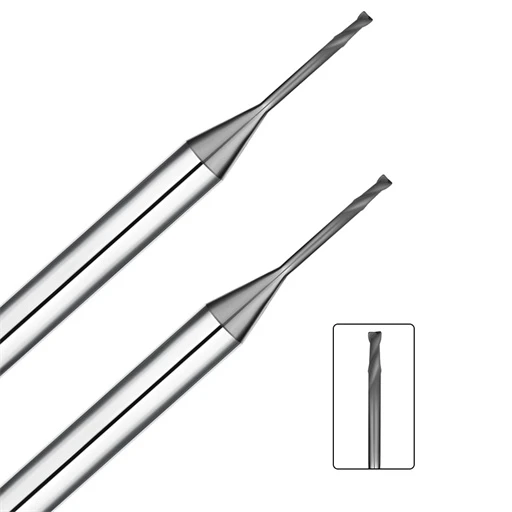
While machining a large EDM graphite electrode for a mold-making client, our shop hit a classic roadblock. As the cavity depth increased and the working area narrowed, standard graphite milling cutters suffered from tool chatter, visible machining marks, and dimensional inaccuracies. Although we initially tried lowering cutting parameters to improve stability, this only reduced machining efficiency without improving tool wear.
These issues are recurring challenges in graphite electrode manufacturing and precision graphite machining. In complex mold making, producing high-precision deep cavities places stringent demands on tool rigidity, machining paths, and the overall setup.
Our experience shows that the difficulty of deep-cavity graphite machining lies in maintaining stable cutting within confined spaces. As tool overhang increases, using long reach end mills often leads to tool deflection, vibration, and poor chip evacuation. Selecting the right long neck graphite end mills and high-rigidity solid carbide tools is crucial for enhancing stability.
Furthermore, the abrasive nature of high-density graphite accelerates edge wear on standard carbide tools. To combat this, more mold manufacturers are adopting diamond coated graphite end mills. The diamond coating enhances wear resistance and ensures consistent dimensional accuracy during prolonged runs.
Drawing on our real-world shop experience, this article shares proven methodologies for graphite electrode manufacturing. We will cover tool selection logic, deep-cavity milling strategies, and system-wide optimization. If you are struggling to balance stability and precision in deep-cavity setups, this guide is for you.
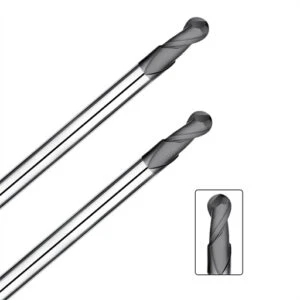
Applications and Challenges of Deep Cavity Graphite Machining in Graphite Electrode Manufacturing
In our years of servicing mold manufacturers, deep-cavity graphite machining has always been a major bottleneck. We once worked on automotive EDM electrodes with deep cavities and narrow slots where standard tools vibrated heavily. This chatter left subtle marks on the electrode surface, ruining the final EDM replication accuracy. Instead of just slowing down our feed rates, we knew we had to fundamentally optimize our machining approach.
Our shop floor experience shows that the real challenge lies in balancing tool rigidity, spindle speed, and toolpaths. Every millimeter of tool deflection during graphite electrode manufacturing drastically impacts the final surface finish. To succeed, machinist teams must focus on vibration control and dust evacuation rather than just dialing back cutting parameters.
Typical Application Scenarios for Deep Cavity Graphite Machining
We see deep-cavity graphite machining most often in high-precision injection molds, die-casting dies, and complex EDM electrodes. These parts require deep, narrow ribs and tight slots that demand flawless dimensional accuracy. Any surface defect on the graphite electrode will transfer directly to the steel mold during EDM, ruining the final tool.
Modern mold designs are far more complex today, featuring tighter corner radii and deep, multi-layered structures. Standard milling paths no longer cut it, requiring stable precision graphite machining setups and advanced tool strategies. Instead of chasing high cutting speeds, we prioritize analyzing the tool’s effective reach and toolpath engagement.
Tool Rigidity and Vibration Control in Deep-Cavity Graphite Machining
A common complaint we hear from clients is: “The tool fits the geometry, but the machined surface quality is inconsistent.” This inconsistency usually stems from cutting force fluctuations as the tool digs deeper into the cavity. As tool overhang increases, tiny vibrations amplify, causing severe chatter, edge chipping, and dimensional drift.
To solve this, we optimize tool overhang ratios by using specialized long-reach end mills and long-neck end mills. For deep cavities, choosing the right core thickness and carbide grade is far more effective than just adjusting spindle speeds. Deep-cavity success is about balancing reach, tool rigidity, and chip clearance—not just buying the longest tool available.
Requirements for Dimensional Accuracy and Surface Quality in Precision CNC Graphite Machining
In precision toolmaking, we measure success by dimensional consistency and surface finish, not just cycle times. During precision graphite machining, deep-cavity areas are highly prone to cumulative dimensional errors caused by uneven cutting forces. If your electrode dimensions drift, your EDM process will require complex compensation, or worse, scrap the workpiece.
We prevent this by adjusting toolpath step-downs and using specialized geometries designed specifically to handle abrasive graphite dust. When producing high-finish electrodes, these optimized strategies minimize tool wear and eliminate the need for manual benchwork. If your machined electrode looks perfect on the CMM but fails during EDM, your deep-cavity strategy needs a closer look.
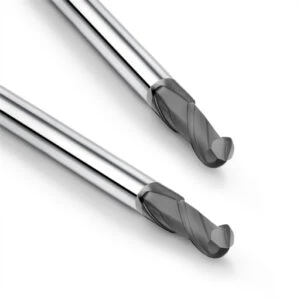
Optimizing Deep Cavity Graphite Milling Efficiency with Long Reach End Mills
In the shop, boosting efficiency in deep cavities is rarely about ramping up spindle speeds. It is about how well your cutting tool handles stability at extended lengths. We once tackled a set of mold electrodes with deep, narrow slots where standard tooling caused terrible chatter, ruining our finishing allowances. By shifting to a dedicated long-reach end milling strategy, we restored cutting stability and brought the dimensions back under control.
Our experience proves that deep-cavity success requires a balance of tool length, cutting loads, and programmed toolpaths. Selecting the wrong cutter for deep cavity graphite milling causes cutting forces to fluctuate, tanking your efficiency regardless of how rigid your CNC machine is. We always prioritize a tool’s engineered suitability for deep cavities over simply chasing maximum reach.
Advantages of Long Reach End Milling in Deep Cavity Graphite Machining
Standard tooling often fails to reach the bottom of complex mold cavities. The primary benefit of long-reach end milling is its ability to access these deep pockets for both roughing and semi-finishing. This extended reach minimizes the cumulative errors and surface mismatches that typically happen during frequent tool changes.
However, long-reach tools are not a one-size-fits-all solution for every deep cavity. If the cavity is shallow, using an excessively long tool needlessly sacrifices rigidity and invites chatter. We always match the tool proportions to the cavity depth and graphite density, ensuring we maintain optimal stability during deep cavity graphite machining.
The Impact of Long Reach End Mill Design on Machining Depth and Stability
At the machine, we know deep-pocket stability relies on the tool’s structural design, not just its length. To prevent elastic deformation under load, long-reach end mills must feature a thick core and a high-strength carbide substrate. When cutting highly abrasive graphite, any flex in the tool will instantly ruin your surface finish and accelerate edge wear.
When selecting tools for deep cavity graphite milling, we carefully evaluate the overhang ratio, flute geometry, and chip clearance. For high-precision EDM electrodes, we avoid using the longest tool in the carousel unless the depth absolutely demands it. A properly engineered tool shank allows long-neck cutters to maintain maximum rigidity in tight, deep cavities.
Minimizing Tool Runout and Vibration in Long-Reach End Mill Machining
Tool runout and vibration are the silent killers of deep-cavity electrode quality. During tight-tolerance jobs, even minor setup errors or aggressive feed rates will cause dimensional drift and surface gouges as the tool cuts deeper. What starts as a tiny vibration at the spindle nose becomes a massive deflection at the bottom of a deep cavity.
To eliminate vibration, we focus on high-precision tool holders, minimal tool overhang, and optimized toolpaths. Effective chip and dust evacuation is also critical in deep cavity graphite machining to prevent recutting highly abrasive dust. Balancing your tool length, holder runout, and cutting parameters is the only way to guarantee a flawless electrode finish.
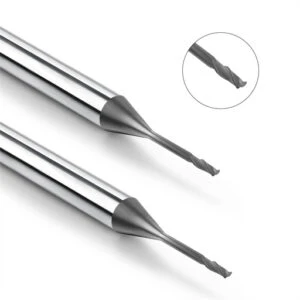
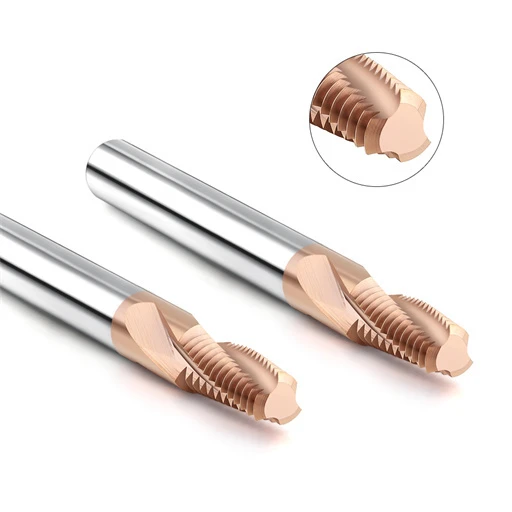
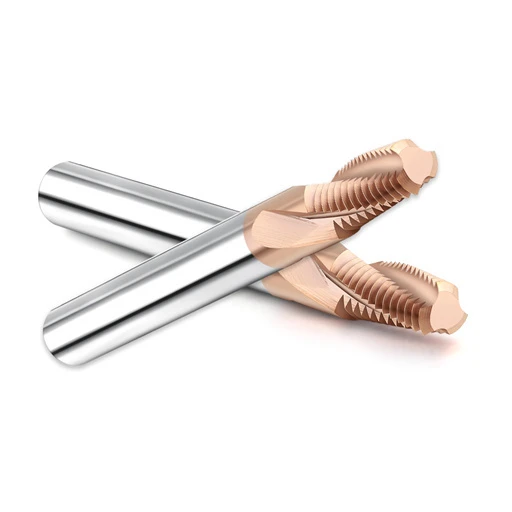
Long Neck End Mills for Graphite: A Key Tooling Choice for Deep Cavity Electrode Machining
When machining deep cavities, standard tooling often hits a hard limit on reach and stability. We recently tackled a precision mold EDM electrode project where the cavity depth exceeded standard tool ranges, leaving uneven stock allowances and requiring extra hand-finishing. Rather than just tweaking our speeds and feeds, we resolved this by evaluating the setup’s physical reach and shifting to a dedicated long-neck end mills for graphite strategy.
Our shop floor experience proves that specialized long-neck tools are essential for the demanding conditions of deep-cavity graphite electrode machining. These tools are engineered to maintain cutting stability at extended reaches while accessing confined pocket geometries. To keep improper tool lengths from ruining your parts, you must carefully match the tool’s neck design to your cavity depth, graphite grade, and finish requirements.
Long-Neck Graphite End Mills Solve Accessibility Issues in Deep Cavity Zones
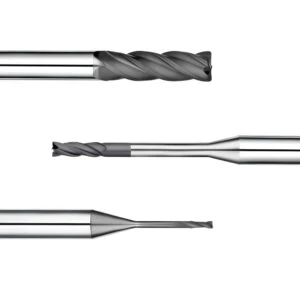
Standard short-flute tools offer great rigidity, but they cannot reach the bottom of deep, narrow slots. Specialized long-neck graphite end mills solve this by providing the clearance needed to clear high walls and deep pockets. This clearance allows for continuous, uninterrupted machining of complex electrode features without tool holder interference.
However, a longer neck means a higher risk of deflection if your cutting parameters are too aggressive. As the overhang ratio increases, you must balance your tool diameter with lighter cut depths and precise toolpaths. When machining miniature electrodes, we scale back the chip load and use high-speed trochoidal paths to keep cutting forces stable.
Long Length Graphite Milling Cutters Boost Deep Cavity Machining Efficiency
In high-volume electrode production, cycle times are heavily impacted by frequent tool changes and setup adjustments. Constantly swapping between different tool lengths to reach deeper zones adds cycle time and introduces accuracy errors. Using engineered long-length graphite milling cutters allows you to streamline your operations and complete deep cavities in fewer setups.
That said, we never use a long-length cutter for roughing when a shorter, stiffer tool can do the job. We divide our deep-cavity strategy into distinct stages: aggressive roughing with rigid tooling, followed by stable finishing with extended cutters. This staged approach maximizes material removal rates while preserving the tool life and surface finish of your finishing cutters.
Solid Carbide Graphite End Mills Enhance Tool Rigidity and Service Life
Abrasive materials like high-density graphite will quickly destroy weak tooling substrates during deep-cavity runs. Standard carbide often flexes under heavy loads, causing rapid edge wear, dimensional drift, and poor surface finishes. To counter this, we rely on high-grade solid carbide graphite end mills to provide the core stiffness required for deep-pocket stability.
A premium solid carbide substrate maintains its geometric accuracy over long runs, resisting the deflection that ruins tight-tolerance electrodes. Of course, maximizing tool life also requires proper dust extraction and optimized toolpath engagement to prevent recutting abrasive powder. If your tools reach the bottom of the cavity but lose tolerance halfway through the run, it is time to upgrade your carbide grade.
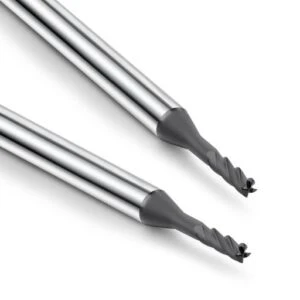
How to Select High Performance Graphite Milling Cutters for Deep Cavity Milling
On the shop floor, choosing the right tool is make-or-break for deep-cavity stability. We once machined an injection mold electrode with deep cavities and tight corner radii where standard graphite milling cutters suffered from minor deflection. This forced us to constantly baby the machine and adjust feeds during finishing. By re-evaluating our tool overhang and paths, we aligned our setup with the real-world demands of the job.
There is no “one-size-fits-all” tool for deep-cavity graphite milling. Factors like graphite density, pocket depth, and surface finish requirements all dictate your choice. For instance, roughing requires bulk material removal, whereas finishing demands absolute dimensional stability. We always evaluate the tool’s diameter, flute length, coating, and core rigidity as a complete package rather than looking at specs in isolation.
Selecting Diameter, Flute Length, and Overhang for Long-Neck Graphite End Mills
Deep-pocket machining always forces a trade-off between reach and tool rigidity. While long-neck graphite end mills clear deep pocket walls, their resistance to bending forces drops fast as diameters shrink and overhang lengths grow. Because of this physics bottleneck, we always calculate the minimum required neck length rather than grabbing the longest tool on the shelf.
For tight electrode features, we keep the flute length as short as possible to preserve core strength and prevent chatter. If the cavity is exceptionally deep, we use longer tools but scale back our step-downs and optimize the toolpath. For any machinist, balancing tool diameter, flute length, and overhang is far more critical than just pushing the feed rate.
Structural Design and Performance Advantages of Solid Carbide Graphite End Mills
We have learned that tool body geometry dictates long-term stability when cutting abrasive, high-density graphite. To keep a sharp edge and resist deflection under load, premium solid carbide graphite end mills are the industry benchmark. A rigid carbide substrate ensures your dimensions do not drift over hours of continuous, unattended machining.
We look for specific structural features: a thick core diameter, specialized draft angles, and adequate flute space for chip clearance. Because graphite milling produces fine, abrasive dust rather than traditional chips, poor flute design will pack the cavity and break the tool. Matching the carbide grade to your machine’s spindle capability is the secret to consistent deep-cavity work.
DiamondCoated Graphite End Mills Enhance Wear Resistance and Machining Stability
In long production runs, standard carbide tools wear out rapidly because of graphite’s highly abrasive nature. This abrasive wear quickly changes the tool’s cutting geometry, leading to dimensional drift and ruined electrodes. To maintain tight tolerances, we run diamond-coated graphite end mills to dramatically extend tool life.
A quality CVD diamond coating resists abrasive wear, keeping the cutting edge sharp and your electrode dimensions perfectly consistent. However, the coating is only as good as the cutting parameters and dust collection system supporting it. If you are struggling with deep-cavity stability, is your bottleneck rapid tool wear, or is it a mismatch between your tool geometry and the cavity depth?
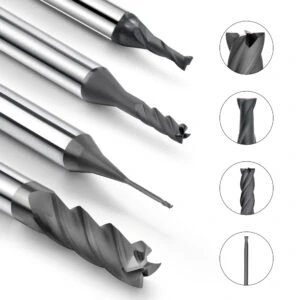
The Value of Diamond Coated Graphite End Mills in Deep-Cavity Graphite Machining
In deep-cavity work, tool wear is the ultimate enemy of machining stability. We once ran a high-precision batch of EDM electrodes where the first few parts were perfect, but later pieces showed rounded edges that required heavy discharge compensation during EDM. The root cause was not our CNC machine’s accuracy, but rather the cutting edge breaking down under constant abrasion from graphite dust.
To keep your batch runs consistent, you must evaluate wear resistance, tool life, and cutting stability as a single system. Running high-quality diamond coated graphite end mills is the most effective way to combat this relentless abrasive wear. By protecting the cutting edge, these specialized tools maintain consistent cutting forces and dimensions over long, unattended production cycles.
Diamond Coated Graphite End Mills Reduce Wear from Graphite Dust
A common floor mistake is ignoring how trapped graphite dust accelerates tool wear in deep, confined pockets. Because dust evacuation is highly restricted in deep cavities, the fine, abrasive powder is constantly recut, grinding down standard cutting edges. This rapid wear leads to tool deflection, dimensional drift, and poor surface finishes.
On our machine tools, we combat this by pairing diamond-coated graphite end mills with optimized toolpaths. The extreme hardness of the diamond film acts as a shield against the abrasive powder, extending the cutter’s life. However, even the best coating requires high-pressure dust extraction to keep the cutting zone clear and prevent heat buildup.
Diamond Coating Technology Enhances Tool Life and Machining Consistency
In mold-making shops, the real goal is batch-to-batch consistency, not just the lifespan of a single tool. If your cutter wears down mid-job, the dimensional mismatch between your electrodes will ruin your EDM spark gaps. This inconsistency creates a massive headache for quality control and slows down the entire mold assembly process.
Applying premium diamond coating technology ensures your cutting edge stays sharp and stable throughout the run. This level of stability is crucial for precision graphite machining, allowing you to hold tight tolerances across dozens of parts. We always pair these coated tools with dialed-in spindle speeds and feed rates to maximize both tool life and surface finish.
The Importance of Selecting a Specialized Supplier of Diamond Coated Graphite End Mills
Not all diamond coatings are created equal, and cheap tools often peel or flake under heavy cutting loads. A tool’s actual performance depends on the core carbide substrate, the edge prep, and how well the diamond film adheres to the carbide. That is why we choose specialized tooling partners who understand the physics of graphite electrode machining rather than just buying on price.
A reliable graphite end mill supplier provides more than just cutters; they offer proven cutting parameters and troubleshooting support for deep-cavity issues. When edge chipping or surface roughness occurs, we work with our supplier to analyze the actual machining data rather than blindly swapping parts. For long-term project success, their engineering expertise is just as valuable as the tool itself.
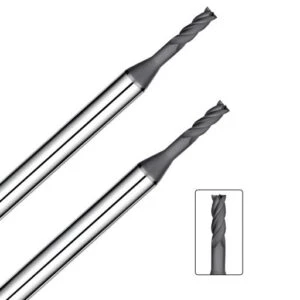
Establishing a Stable Graphite Machining System for High Precision Deep Cavity Machining
In our years of running a CNC shop, we have learned that deep-cavity issues rarely stem from just one bad tool or machine. We once worked with a client struggling with dimensional drift on large EDM electrodes despite using top-tier cutters. The real culprit was a lack of coordination between their tool overhang, cutting parameters, spindle harmonics, and dust management.
A truly stable setup requires seamless harmony between your CNC machine, cutting parameters, tooling, and dust extraction. This integration is absolutely vital for deep cavity graphite machining, where a single weak link will quickly ruin your workpiece. If you want to master graphite electrode manufacturing, you must optimize your entire machining ecosystem rather than looking for a magic-bullet tool.
Synergistic Optimization of Tools, Parameters, and Equipment in Graphite Machining Systems
On the shop floor, the exact same cutter can yield flawless finishes on one machine and terrible chatter on another. That is why our setup sheets simultaneously calculate tool geometry, spindle rigidity, chip loads, and programmed toolpaths. For instance, when running long-reach tools in deep pockets, we aggressively scale back step-downs to keep cutting forces uniform.
We always customize these parameters based on the specific material density and part geometry instead of using generic speed charts. When machining high-density graphite, we focus heavily on managing abrasive tool wear and spindle load. For intricate electrode geometries, our focus shifts to minimizing tool deflection to guarantee absolute dimensional accuracy in our precision graphite machining setups.
Controlling Cutting Parameters for Deep Cavity Graphite Machining
When tackling deep pockets, dialing in your speeds and feeds is the difference between a scrapped part and a perfect run. We once stepped in to help a client who kept pushing feed rates to save cycle time, resulting in heavy chatter and ruined surface finishes. By reducing the axial depth of cut and optimizing the step-over, we stabilized the cut and actually improved their overall output.
For successful deep-cavity graphite machining, your parameters must reflect the tool’s extended overhang and the grade of graphite. We balance spindle speed with feed per tooth and depth of cut to control cutting force spikes. Managing these mechanical forces with specialized graphite milling cutters is far more productive than chasing raw speed and breaking tools.
Boosting Graphite Electrode Manufacturing Efficiency through Systematic Machining Strategies
Real shop floor productivity does not come from cranking up machine rapids; it comes from eliminating scrap, air-cutting, and manual benchwork. If your roughing strategy leaves inconsistent stock allowances, your finishing cutters will deflect, causing costly dimensional errors. A systematic, multi-stage machining sequence ensures predictable stock removal and protects your delicate finishing tools.
Integrating tool selection, optimized paths, and proper dust collection creates a repeatable process for graphite electrode manufacturing. This systematic approach reduces setup times and guarantees consistent quality across large production batches. To scale your shop’s throughput, stop constantly tweaking overrides at the control panel and build a reliable, standardized machining system.
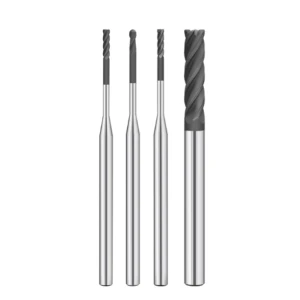
Achieving Efficient Deep-Cavity Graphite Machining with a Graphite Machining System
Over years of tackling tough electrode jobs, we have learned that deep-cavity success never hinges on a single variable. From overcoming severe tool chatter to dialing in our spindle harmonics, achieving consistent parts requires looking at the big picture. Resolving deep-cavity issues demands a holistic approach that connects your tooling, machine capabilities, and material behavior.
For complex EDM electrodes, deep-cavity graphite machining tests your entire system’s ability to maintain rigidity in confined spaces. If you are struggling with surface finish or tool deflection, we recommend auditing your entire setup rather than just swapping cutters. Evaluating how your machine rigidity, graphite grade, and tool overhang interact is the first step toward a stable process.
Summary of Core Technologies for Deep-Cavity Graphite Machining
As our real-world cases show, successful deep-cavity work is about balancing reach, tool rigidity, and cutting forces. Simply buying longer tools without adjusting your feed rates or toolpath engagement is a recipe for broken cutters. Before we ever cycle-start a job, we analyze the cavity geometry to plan the least aggressive path possible.
If you are currently focusing on graphite electrode manufacturing, prioritize keeping your tool overhang ratios as tight as possible. Program smooth toolpath entries to prevent sudden spikes in cutting force, and match your chip loads to your specific graphite density. Most shop floor issues are not machine limitations; they are simply mismatches in the cutting setup.
Summary of Selection Logic: Long Reach End Mills vs Long Neck Graphite End Mills
On the shop floor, we use different tools for different deep-pocket challenges. Standard long reach end mills are excellent for deep cavities with wide-open areas where raw material removal is the priority. However, tight slots and intricate electrode ribs require the targeted clearance and localized rigidity of specialized long neck graphite end mills.
Never select your cutter based on maximum length alone; always calculate the minimum clearance your part geometry actually requires. We advise defining your surface finish and tolerance goals first, then selecting the stubbiest tool that can safely clear the pocket walls. This simple logic dramatically reduces the risk of harmonic chatter and premature edge chipping.
Gaining Long Term Machining Advantages by Choosing a Specialized Diamond-Coated Graphite End Mill Supplier
In high-volume production, a tool’s performance relies on the synergy between its solid carbide substrate, edge preparation, and coating quality. This consistency is critical for precision graphite machining, where a microscopic change in tool geometry can scrap an entire batch of electrodes. A premium diamond coating must adhere perfectly to the carbide to survive the abrasive dust.
For long-term success, partner with tooling suppliers who understand the practical physics of cutting graphite, not just catalog sales. We collaborate closely with our suppliers to analyze tool wear patterns and optimize cutting parameters for specific machine spindles. If you are ready to stabilize your deep-cavity throughput, share your part prints with us, and let’s engineer the ideal solution together.
FAQs on Deep Cavity Machining in Graphite Materials
In our shop, we hear the same questions from clients once they hit the deep-cavity stage. They struggle with tool selection, deflection at depth, and why proven parameters suddenly fail on a new graphite grade. These issues are never random; they tie directly to the relationship between material density, tool geometry, and machine harmonics.
We compiled these frequent questions from real-world engineering discussions to help you audit your setup. Whether you are milling complex EDM electrodes or deep mold cavities, these answers will pinpoint your stability bottlenecks. Let’s look at how to keep your deep-cavity graphite machining stable and predictable.
What is the best end mill for deep cavity graphite machining?
There is no single “magic tool” that fits every deep-cavity setup. The right choice depends on your graphite grade, cavity depth, and required dimensional tolerances. For deep pockets, we always prioritize high core rigidity and specialized geometries that prevent dust packing in the flutes.
For high-precision jobs, your best options are long-neck graphite end mills and solid carbide graphite end mills. If you are running long unattended batches, upgrading to a diamond-coated tool is essential. We always prioritize a tool’s long-term dimensional stability over its initial material removal rate.
Why choose a long neck graphite end mill for graphite electrode machining?
Standard short-flute cutters offer great rigidity, but they cannot clear the high walls of narrow slots or deep pockets. Specialized long-neck graphite end mills solve this clearance issue by providing an undercut neck behind the cutting edge. This allows you to reach the bottom of deep cavities without the tool shank rubbing against the workpiece.
However, selecting a long-neck tool is a balancing act of physics. For successful graphite electrode machining, you must calculate the shortest possible neck length that clears your geometry to minimize tool deflection. Pair these tools with high-speed, light-radial-depth toolpaths to keep cutting forces low and stable.
How does a diamond coated graphite end mill improve tool life?
Highly abrasive graphite acts like sandpaper on a raw carbide cutting edge, rounding it over in minutes. This rapid wear changes your tool offset, causing dimensional drift on your electrodes and ruinous EDM spark gaps. A diamond-coated graphite end mill features an ultra-hard CVD barrier that resists this abrasive wear.
By keeping the cutting edge sharp, the diamond film maintains consistent cutting forces throughout the entire run. This consistency is crucial for shops running high-volume precision graphite machining where manual tool compensation is too slow. To get the most out of your coating, ensure your dust collector is pulling the abrasive powder out of the cavity immediately.
What factors affect graphite deep-cavity milling accuracy?
Deep-cavity accuracy is rarely just about your CNC machine’s linear precision. It is heavily dictated by tool deflection, thermal stability, and how effectively you evacuate abrasive dust from the cutting zone. If dust packs the bottom of a narrow slot, the tool will recut the powder, causing chatter and dimensional deviation.
To lock in your accuracy during deep cavity graphite milling, evaluate your tool overhang ratios and program smooth, continuous toolpaths. Avoid sudden direction changes that spike cutting forces, and match your feed per tooth to the specific density of your graphite. Taking a systematic approach to these variables is the only way to hold tight tolerances at depth.