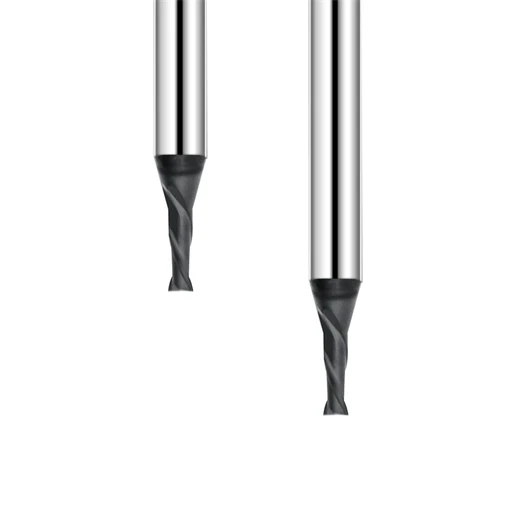
During a recent project machining high-density graphite electrodes, we ran into a familiar shop-floor challenge. Using identical tool specifications and cutting parameters, some graphite end mills cut dozens of parts effortlessly. Others suffered rapid edge dulling after just a few passes, compromising the entire run.
Our root-cause failure analysis showed that cutting parameters were not the culprit. The issue came down to the tool coating. The customer had mixed diamond-coated and DLC coated tools, leading to massive variations in tool life and part finish.
Graphite is notoriously abrasive. In high-speed dry milling environments, fine graphite dust acts like sandpaper on the cutting edge, causing severe abrasive wear. Selecting the right graphite machining coating directly determines tool life, dimensional stability, and final surface quality.
Chemical vapor deposition diamond coating delivers extreme hardness and abrasion resistance for demanding, high-volume milling jobs. DLC coating offers a lower friction coefficient and a sharper cutting edge, making it an excellent, cost-effective choice for lighter cuts or ultra-fine details.
Choosing the ideal coating requires balancing graphite density, machining strategy, feed rates, and production targets. Matching the right tool coating to your specific application prevents unexpected downtime and drastically lowers overall tooling costs.
Below, we break down real-world machining test data and practical shop-floor applications to compare diamond coating vs DLC for graphite. Understanding these core differences will help you optimize tool life, protect critical tolerances, and cut tooling expenses across every job.
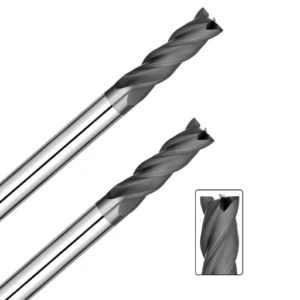
Diamond Coating vs DLC for Graphite Machining: A Core Comparison of Coating Systems
In graphite electrode machining, tool coating selection directly dictates machining stability. While machinists often focus on tool diameter, flute geometry, and feeds, coatings prove decisive during extended runs. High-speed dry milling generates abrasive graphite dust that rapidly erodes unprotected cutting edges.
Choosing between diamond coating and DLC for graphite machining comes down to matching the tool to the specific application. Diamond coatings deliver extreme hardness for long runs, while DLC coatings provide low friction for lighter duty cycles. The right choice balances graphite density, cutting strategy, and target production volume.
Fundamental Differences Between Diamond Coating and DLC Coating in Graphite Machining
Shop-floor testing under identical cutting conditions reveals clear performance differences between both coatings. Real diamond coating forms a crystalline structure that shrugs off abrasive graphite wear, maintaining razor-sharp edge retention during long cycles. DLC coatings lower cutting resistance through reduced friction, but wear faster in highly abrasive cuts.
There is no one-size-fits-all coating for graphite machining. Projects running fine-grain, high-density graphite require diamond-coated graphite end mills to prevent dimensional drift. Conversely, DLC coatings work well for short runs, prototype batches, or specialized cuts where low friction is the primary requirement.
Why Does Graphite Machining Require Specialized Tool Coatings?
Unlike metals that deform plastically during cutting, graphite fractures as a brittle solid. This fracture mechanism generates fine, highly abrasive dust that sandpapers the flank face and cutting zone. Without dedicated protection, this constant abrasion causes rapid graphite end mill wear and premature failure.
Specialized tool coatings act as an essential barrier against severe abrasion. A well-engineered coating preserves the cutting edge radius, preventing corner chipping, dimensional loss, and poor surface finish. For continuous, high-tolerance electrode milling, the right coating matters far more than simply boosting spindle speed.
How Do Coatings for Graphite Machining Affect Tool Performance?
Machining data shows that coatings influence three vital metrics: tool life, process stability, and workpiece quality. The right coating enables graphite end mills to cut consistently across hundreds of cavities. This consistency prevents unplanned tool offsets and eliminates costly machine downtime.
Selecting the best coating for graphite machining requires evaluating the entire setup rather than isolated hardness ratings. Finishing high-detail EDM electrodes demands pristine edge retention, while heavy roughing prioritizes maximum graphite end mill lifespan. Balancing material grade, cutting parameters, and cycle goals ensures peak machining efficiency.
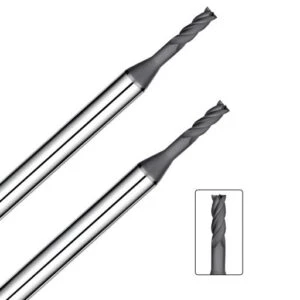
Diamond Coated Graphite End Mills: Why Is Diamond Coating Ideal for Graphite Machining?
In high-precision graphite mold and electrode shops, abrasive tool wear is the primary threat to process repeatability. Standard carbide tools might hold tolerance for the first few parts, but edge breakdown quickly leads to dimensional drift and frequent offset tweaks. Upgrading to diamond coated graphite end mills stabilizes cutting forces and eliminates erratic part-to-part variations.
While graphite is soft, its brittle grain structure creates continuous micro-abrasion during high-speed dry milling. Diamond coatings deliver the ultra-high hardness and abrasion resistance needed to withstand this punishing dust stream. For high-density graphite applications, real diamond coatings are essential to keep machines running unattended without unexpected downtime.
How Does Diamond Coating Reduce Graphite End Mill Wear?
Tool failure in graphite milling typically starts with microscopic flank wear rather than catastrophic breakage. As the cutting edge rounds over, cutting pressures spike, increasing the risk of corner chipping on fragile electrode ribs. Diamond coatings form an impenetrable barrier, drastically slowing down graphite end mill wear and preserving original geometry.
For multi-cavity electrode production, minimizing edge degradation translates directly into fewer tool changes and reduced touch-off cycles. When paired with proper flute geometries and chip evacuation, diamond coatings ensure predictable wear patterns. This allows machinists to push higher speeds while maintaining tight surface finish tolerances.
How Do Diamond Coated Graphite End Mills Extend Machining Lifespan?
Extending tool life in graphite milling requires more than just surface hardness; it demands perfect thermal and mechanical adhesion. Diamond coatings dissipate heat quickly and maintain a sharp, rigid cutting zone under high spindle speeds. This thermal stability prevents micro-chipping and dramatically extends overall graphite end mill lifespan during long cycles.
In fine-grain EDM graphite machining, diamond-coated end mills often outlast uncoated carbide by 10 to 30 times. However, tool longevity still depends on dialed-in machining parameters. Excessive chip loads or poor stepovers can fracture the coating, making balanced speeds and feeds vital to maximizing tool life.
What Performance Requirements Define the Best Diamond Coating for Graphite?
Not all diamond coatings perform equally in the spindle. The best diamond coating for graphite features high crystalline purity, uniform thickness, and exceptional substrate adhesion. Strong chemical bonding between the carbide substrate and the diamond layer prevents peeling under aggressive, high-feed roughing cuts.
Finding the optimal coating solution depends on your balance of roughing metal-removal rates and finishing detail. Micro-grain diamond coatings provide the smooth edge needed for intricate 3D contours, while thicker coatings excel in heavy stock removal. Matching coating grade to your graphite density ensures maximum cost efficiency and consistent electrode quality.

DLC-Coated End Mills for Graphite: Is DLC Coating Suitable for Graphite Machining?
Machinists often ask whether Diamond-Like Carbon provides a practical alternative to diamond tools. In precision electrode shops, DLC-coated end mills for graphite serve as a cost-effective solution for specific milling setups. While not a universal replacement for diamond, DLC delivers solid performance under the right machining conditions.
DLC films combine low friction coefficients with smooth surface topography, significantly reducing cutting resistance and dust adhesion along the flutes. However, graphite’s abrasive nature quickly tests any thin-film coating. Choosing DLC requires matching the tool against graphite density, cutting loads, and target tool life expectations.
Advantages of DLC Coating in Graphite Machining
DLC coatings excel where low cutting forces and vibration control matter most. The ultra-slick surface promotes smooth material evacuation during high-speed finishing passes, minimizing tool deflection. This makes DLC an effective choice for thin ribs and intricate 3D contours prone to chattering.
In short-run jobs or prototype graphite milling, DLC provides a reliable balance of surface finish and edge retention. It prevents localized heat buildup and reduces micro-chipping on fragile electrode corners. For shops looking to cut tooling expenses on low-volume runs, DLC offers a practical, budget-friendly alternative.
Analysis of Wear Resistance in DLC-Coated End Mills for Graphite
Evaluating the wear resistance of DLC coatings for graphite machining requires analyzing real shop-floor cycle times. Because graphite dust acts as a continuous abrasive stream, DLC’s thinner physical layer wears faster than crystalline diamond under heavy roughing loads. Once the thin coating breaches, carbide substrate wear accelerates rapidly.
For coarse-grain or high-density graphite grades, DLC tools show shorter production lifespans. They perform best in light-duty finishing passes or free-machining, standard-density graphite. Matching depth of cut and feed per tooth to the coating’s physical limits ensures you extract maximum life before edge dulling occurs.
Differences Between DLC and Diamond Coatings in Graphite Machining
Choosing between DLC and diamond comes down to production volume, material abrasiveness, and tolerance budgets. Real diamond coatings provide extreme hardness to handle hundreds of high-density electrodes without dimensional loss. DLC coatings focus on friction reduction, delivering sharp cutting edges for lighter-duty operations at a lower initial tool cost.
Selecting the optimal graphite machining coating requires evaluating total cycle time and machine setup costs. If maximum uninterrupted spindle time is the priority, diamond-coated tools deliver the lowest cost per part. For short production runs, rapid prototyping, or non-abrasive cuts, DLC remains a dependable, cost-efficient option.
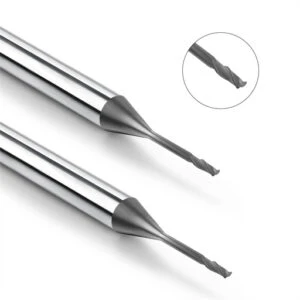
Diamond Coating vs DLC: Comparative Analysis of Graphite End Mill Wear and Tool Life
Tool life dictates overall profitability in graphite CNC machining. In one shop evaluation, an operator boosted spindle speeds to raise output, only to see rapid flank wear after three electrodes. This unexpected wear caused dimensional drift and forced constant manual tool offsets, proving that cutting data must match coating capabilities.
Accelerated graphite end mill wear stems directly from graphite’s abrasive micro-particulate dust stream. While both diamond and DLC coatings improve wear resistance, they utilize fundamentally different protective mechanisms. Maximizing tool life requires selecting the coating that matches your graphite grade and batch volume.
How Diamond Coatings Mitigate Graphite End Mill Wear
Milling dense, ultra-fine EDM graphite rapidly degrades uncoated tool geometry through aggressive mechanical abrasion. Once the cutting corner loses its original radius, cutting pressure spikes, causing part chipping and poor finishes. Real diamond coatings provide an ultra-hard physical shield that effectively neutralizes this abrasive wear mechanism.
Analyzing tool wear patterns under a toolmaker’s microscope confirms that diamond-coated edges retain their profile through long cycles. This edge stability eliminates tool deflection and maintains critical part tolerances across multi-cavity runs. For unattended, high-volume milling, superior diamond coating tool life remains the industry benchmark.
The Impact of DLC Coatings on Graphite End Mill Lifespan
DLC-coated tools offer tangible benefits in dedicated light-duty and finishing applications. Their ultra-low coefficient of friction reduces cutting resistance, dissipates localized heat, and prevents fine dust packing along the flutes. This low-friction barrier enhances cutting stability when machining thin, fragile graphite ribs.
However, production data indicates that DLC coated end mill lifespan drops when cutting high-density or coarse-grain grades. Because the amorphous carbon layer is significantly thinner than diamond, harsh abrasive dust eventually cuts through to the carbide core. DLC tools deliver maximum life when reserved for light finishing cuts and lower-density grades.
Which Coating Extends the Lifespan of Graphite End Mills?
When machinists ask which coating delivers maximum tool life, the answer depends entirely on production volume and graphite density. For high-volume production, high-density EDM electrodes, and unattended overnight runs, diamond tools last significantly longer. For short prototyping batches or ultra-fine finishing passes, DLC remains a cost-effective option.
Ultimately, extending overall graphite end mill lifespan requires tuning the entire machining process. Even the hardest diamond coating will fail prematurely if stepovers are too aggressive or dust extraction is inadequate. Balancing tool substrate, edge geometry, speeds, feeds, and coating selection ensures optimal tool life and minimal cost per part.
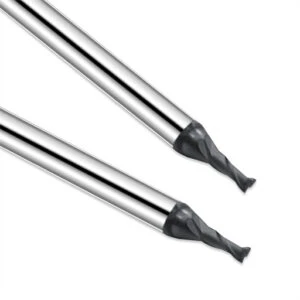
How Do Coatings Affect Graphite Machining Quality?
In precision graphite electrode and mold manufacturing, minor cutting defects cause significant downstream EDM issues. Surface striations, corner breakout, and micro-chipping often stem directly from cutting edge breakdown rather than machine axis errors. Maintaining an intact, wear-resistant tool coating is essential to holding tight geometric tolerances and fine finishes.
Graphite is a brittle material that fractures clean only when cut with a sharp, rigid cutting edge. As uncoated or under-coated edges dull, cutting pressure spikes, causing the tool to crush rather than shear the material. Protecting graphite machining quality requires managing tool wear, cutting forces, and chip evacuation as an integrated system.
How Do Diamond Coatings Improve Graphite Surface Finish?
During high-tolerance electrode milling, surface roughness often degrades gradually across a single batch. Even when spindle runout and feed rates remain unchanged, microscopic flank wear alters cutting dynamics and causes material tearing. Diamond coatings resist abrasive rounding, ensuring consistent cutting geometry throughout long cycle times.
By preserving edge sharpness, diamond coated graphite end mills produce clean shearing action and eliminate pitting on the electrode floor and walls. Maintaining a uniform graphite surface finish reduces secondary bench polishing and ensures predictable spark gaps during sinker EDM operations.
How Does Coating Selection Reduce Graphite Edge Chipping?
Corner chipping and rib blowouts are common failures when machining thin-walled electrodes and sharp 3D details. When a worn cutting edge enters or exits brittle graphite, elevated cutting forces snap the fragile structural corners. High-performance coatings provide the edge retention needed to minimize cutting impact and prevent catastrophic edge fractures.
In fine-grain, high-density materials, choosing the right coating layer protects the cutting corner radius from abrasive flattening. Preventing premature edge degradation eliminates common graphite machining defects and saves costly workpiece scrap. However, operators must still optimize climb milling toolpaths and radial depths of cut to protect vulnerable walls.
How Can Graphite Machining Coatings Improve Machining Stability?
Process repeatability across multi-cavity runs is far more profitable than short bursts of high feed rates. Frequent tool changes introduce manual offset errors, setup variations, and inconsistent surface textures between parts. Standardizing on the right tool coating stabilizes cutting resistance and enables dependable unattended overnight machining.
An engineered graphite machining coating controls flank wear, dampens cutting vibration, and holds dimensional accuracy over dozens of cycles. This stability gives CNC operators the confidence to run lights-out setups with predictable tool change intervals. Matching coating type to graphite density ensures consistent part quality at the lowest cost per feature.
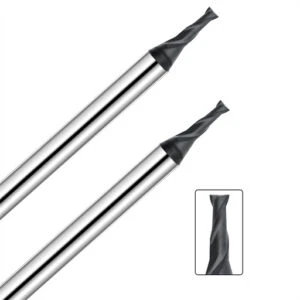
Optimizing Graphite Machining Parameters: How Do Different Coatings Affect Machining Parameters?
Upgrading tool coatings without updating cutting data often leads to disappointing tool life and missed production targets. A change in coating formulation alters cutting forces, chip evacuation dynamics, and thermal dissipation. If spindle speed, feed rate, and depth of cut remain unchanged, the distinct performance advantages of advanced tools cannot be fully realized.
Tool coatings and cutting data must function as a synchronized system. Diamond and DLC coatings have different friction coefficients, film thicknesses, and thermal thresholds. Establishing ideal graphite machining parameters requires fine-tuning cutting speeds, tooth loads, and stepovers to balance cycle time against overall tool wear.
Recommended Machining Parameters for Diamond Coated Graphite End Mills
Diamond coatings feature extreme crystalline hardness, allowing them to excel at higher surface speeds without suffering thermal softening. For high-density EDM electrodes, diamond-coated tools maintain tight dimensional tolerances across long, unattended runs. Adapting speeds and feeds to the coating’s wear characteristics ensures reliable cutting action from roughing to final finish.
Diamond tools support higher metal-removal rates, but exceeding maximum chip load limits can cause premature edge chipping. Dialing in optimal graphite milling speeds and feeds requires balancing tool diameter, graphite grain size, and depth of cut. In finishing passes, moderate feeds and high spindle speeds preserve fine ribs and produce smooth wall finishes.
Suitable Graphite Machining Parameters for DLC-Coated End Mills
DLC coatings perform best when cutting parameters match the physical limits of their thin, low-friction layer. The smooth, lubricious surface reduces cutting forces, making DLC ideal for light stepovers and delicate contours. However, aggressive heavy roughing or excessive axial depths can quickly breach the thin carbon film and expose the carbide substrate.
Running DLC tools successfully requires careful management of cutting loads and toolpath stepovers. Optimizing graphite cutting parameters by moderating chip load per tooth and controlling stepdowns prevents premature abrasive breakdown. This controlled approach protects the cutting edge, delivers consistent finishes, and maximizes tool longevity in light-duty jobs.
How Do You Select a Tool Coating Based on Spindle Speed, Feed Rate, and Depth of Cut?
Coating selection should directly reflect your planned machining strategy, cycle goals, and equipment capabilities. High-speed, high-feed production setups running deep cuts and long cycles demand the durability of diamond. Conversely, high-RPM light finishing passes on smaller machines can take full advantage of DLC’s slick surface and lower cost.
Matching coatings to depth of cut, stepover, and feed rate ensures predictable tool life and prevents erratic part scrap. If heavy dust erosion causes rapid flank wear during roughing, upgrading to a thicker diamond layer solves the problem. Aligning parameters with tool geometry and coating properties guarantees consistent quality across every batch.
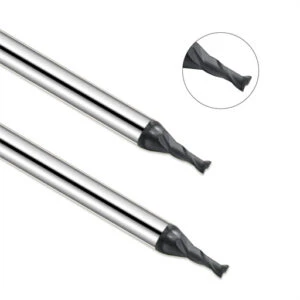
Best Coating for Graphite Machining: How to Choose the Right Coating?
Selecting the optimal tool coating requires balancing material properties, machine capabilities, and production goals. High-density graphite, intricate 3D contours, tight tolerances, and batch sizes all influence which tool performs best. Rather than looking for a universal solution, choose the coating that matches your primary machining challenges.
If rapid edge breakdown and unexpected tool changes are disrupting production, prioritize coatings with extreme hardness and wear resistance. When the focus is fine surface finishes, low cutting forces, and thin-rib stability, low-friction coatings and sharp edge preparation become more important. The best coating for graphite machining is always the one tailored to your specific process.
How to Choose a Coating for Graphite Roughing?
Graphite roughing requires high metal removal rates, structural tool strength, and long-term process stability. Pushing aggressive stepdowns and high feeds with standard tools causes rapid corner breakdown, leaving inconsistent stock allowances for semi-finishing passes. This uneven stock creates cutting force spikes that threaten delicate finishing tools.
For heavy stock removal, prioritize thick, highly adherent diamond coatings capable of withstanding severe continuous abrasion. The best diamond coating for graphite roughing features excellent substrate adhesion to prevent coating delamination under heavy chip loads. Pairing durable diamond coatings with rigid machine setups ensures predictable roughing cycles and consistent semi-finish stock.
How to Choose a Coating for Graphite Electrode Finishing?
Finishing passes on precision EDM electrodes demand tight dimensional accuracy, razor-sharp edge retention, and uniform surface finishes. Microscopic edge rounding alters spark-gap geometry and increases bench-polishing time. Finishing tools must maintain their exact programmed radius throughout long 3D profiling cycles.
High-precision graphite electrode machining benefits from smooth, fine-grained coatings that protect cutting edges without rounding sharp profiles. Diamond coatings maintain tight tolerances across complex multi-cavity runs, while DLC coatings provide low friction on delicate, thin-walled ribs. Base your selection on electrode tolerance requirements, surface finish targets, and total cut time.
Diamond or DLC Coating for EDM Graphite Machining?
Choosing between diamond and DLC for EDM electrode milling comes down to batch volume, graphite density, and required tool life. For high-volume runs, high-density iso-molded graphite, and lights-out unattended milling, diamond coatings deliver the lowest cost per part. For short prototyping runs, low-density materials, or light finishing passes, DLC remains a practical, cost-effective alternative.
If you are experiencing premature tool wear, erratic part dimensions, or rough surface finishes, audit your full machining setup. Review your graphite grade, tool geometry, spindle RPM, chip load per tooth, and dust collection efficiency. Analyzing this operational data makes it easy to select the right coating system, balance tool costs, and maximize spindle uptime.
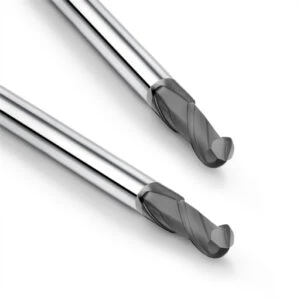
Diamond Coating vs DLC for Graphite – FAQs
Tool coating selection is one of the most critical decisions in graphite CNC milling. When choosing graphite end mills, engineers frequently compare Diamond Coating with DLC Coating but need clarity on which suits their spindle best. Because electrode shops balance different priorities—such as tool life, surface finish, and part tolerances—the ideal coating varies by setup.
Through extensive shop-floor testing, we have found that selecting between Diamond Coating and DLC for graphite requires evaluating graphite grade, batch volume, cutting parameters, and tool geometry. Below are concise answers to the most common questions machinists ask when selecting tool coatings for graphite machining.
Is Diamond Coating Better than DLC for Graphite Machining?
Neither coating is universally superior; each excels in specific milling applications. For high-density graphite, unattended multi-cavity runs, and aggressive roughing, diamond coating provides unmatched wear resistance and long-term dimensional stability.
DLC coating delivers lower friction, reduced cutting resistance, and sharp edge retention for light-duty finishing passes and prototype runs. Choosing the right coating requires balancing material abrasiveness, cut cycle duration, and cost per part.
What Is the Best Coating for Graphite End Mills?
The best coating for graphite end mills directly depends on your primary machining objective. If abrasive edge wear and frequent offset adjustments are your main bottleneck, high-purity diamond is the industry standard.
When machining ultra-fine ribs, delicate details, or short prototype batches, DLC coatings provide smooth chip flow and cost-effective surface protection. Evaluating coating adhesion, hardness, and tool substrate compatibility ensures the best balance of tool life and machining performance.
How Long Does a Diamond Coated Graphite End Mill Last?
Actual tool life varies based on graphite density, grain size, cutting parameters, spindle runout, and dust extraction efficiency. Under dialed-in conditions, diamond-coated tools typically last 10 to 30 times longer than uncoated solid carbide end mills.
However, improper speeds, excessive chip loads, or aggressive stepovers can cause mechanical chipping and shorten tool life prematurely. Pairing diamond-coated tools with optimized feeds and stable machine setups delivers predictable, long-lasting performance across multi-electrode runs.
Can DLC-Coated End Mills Machine Graphite?
Yes, DLC-coated end mills machine graphite effectively under the right operating conditions. They perform best in light-duty profiling, fine-pitch finishing, and low-density graphite where cutting forces and friction must remain minimal.
For high-density, ultra-fine-grain EDM graphite or high-volume continuous milling, DLC’s thinner film wears faster than crystalline diamond. Matching depth of cut and feed rates to the coating’s limits ensures reliable cutting without premature substrate exposure.
How Does Coating Affect Graphite Machining Quality?
Tool coatings protect cutting edge geometry from rapid abrasive breakdown during high-speed dry milling. As unprotected edges round over, cutting forces spike, leading to rough surface textures, corner breakout, and micro-chipping on delicate electrode ribs.
An intact, wear-resistant coating maintains consistent shearing action, preserves tight part tolerances, and improves final graphite machining quality. Treating coatings, toolpaths, and cutting data as an integrated system guarantees superior surface finishes and repeatable EDM spark performance.