
During a graphite electrode machining project, a client faced an unexpected tool life issue. Using the same batch of diamond-coated graphite end mills on identical graphite grades and CNC machines, tool wear varied wildly. Some cutters ran smoothly for hours, while others suffered rapid edge chipping, spiked cutting forces, and poor surface finishes.
Failure analysis revealed that the culprit was not the cutting feeds or speeds, but tool coating thickness. A common misconception in CNC graphite machining is that thicker diamond coatings always yield longer tool life. In practice, coating thickness must be matched to graphite grain size, machining stages, and cutting edge geometry.
Diamond coatings protect solid carbide tooling from abrasive graphite dust while stabilizing the cutting edge. However, excessive coating thickness increases the edge radius, turning a sharp cutting action into a plowing effect. This increased cutting resistance leads to premature edge chipping, higher vibration, and dimensional errors in fine electrode ribs.
Optimizing coating thickness requires balancing wear resistance, film adhesion, and tool sharpness. For roughing high-density graphite with heavy stock removal, a thicker coating delivers the required abrasion resistance. For micro-machining and finishing precision mold electrodes, a thinner coating preserves razor-sharp edges and high surface fidelity.
Determining the ideal diamond coating thickness is the key to predictable tool performance and lower cost per electrode. Matching tool geometry with the right coating film ensures maximum wear resistance without sacrificing edge sharpness or machining precision.
Custom-engineered tooling solutions bridge the gap between machine capabilities, graphite material grades, and cycle time targets. Selecting the right diamond-coated end mill for your specific operating conditions delivers reliable tool life and consistent part quality across every production run.
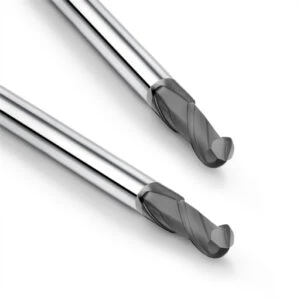
Graphite End Mill Coating Thickness Analysis: Why Does Coating Thickness Affect Tool Life?
Tool life issues in graphite electrode machining rarely stem from a single variable. A mold shop we supported used identical graphite blocks and CNC parameters, yet tool batches performed inconsistently. While some cutters held tolerances for hours, others rapidly developed edge wear, dimensional drift, and surface roughness due to variations in graphite end mill coating thickness.
Many machinists assume a thicker coating automatically provides superior wear resistance. In reality, diamond film thickness must match the tool diameter, edge prep, graphite grain structure, and cutting strategy. While proper thickness shields against severe abrasive wear, an overly thick diamond layer rounds the cutting edge and spikes cutting forces.
The Role of Diamond Coating Thickness in Graphite Machining
CVD diamond coatings serve two critical functions: maximizing surface hardness and insulating the carbide substrate from extreme abrasion. During continuous machining of high-density graphite, fine particles constantly scour the flute surfaces. Without a uniform diamond barrier, carbide substrates wash out quickly, triggering sudden tool failure.
Coating strategies must align with specific operational goals. High-stock roughing benefits from thicker coatings that withstand sustained abrasive friction and extend tool life. In contrast, fine finishing demands a controlled, thinner coating layer that preserves edge sharpness, tight tolerances, and pristine surface finishes.
How Graphite Machining Tool Coating Affects Wear Resistance and Machining Performance
A tailored graphite machining tool coating directly governs cutting dynamics and chip clearance. When diamond film adhesion and layer thickness are optimized, the cutting edge remains geometrically stable. This stability minimizes thermal buildup, prevents workpiece chipping, and keeps electrode dimensions consistent across long runs.
Prioritizing layer thickness over edge geometry often backfires in precision electrode production. An excessively thick coating increases edge radius and causes material plowing rather than shearing. A balanced tool setup must account for cutting forces, vibration, and chip flow rather than chasing raw coating thickness alone.
Wear Protection Mechanisms of Diamond Coatings for Graphite Machining
Graphite is relatively soft, but its abrasive dust acts like fine grinding media against the tool edge. Diamond coatings combat this through extreme surface hardness and a low coefficient of friction. This barrier prevents micro-grooving and keeps the cutting edge intact under continuous abrasive load.
Analyzing tool wear patterns reveals whether your coating thickness matches your cutting parameters. Even flank wear indicates an optimal balance of film thickness and tool geometry. Conversely, premature flaking or chipping signals excessive internal film stress, requiring adjusted coating specs to maintain consistent machining quality.
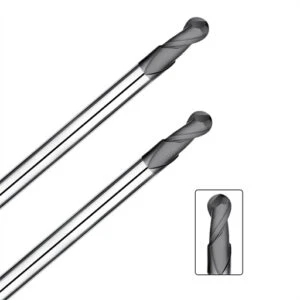
Diamond Coated Graphite End Mills: The Relationship Between Coating Thickness and Tool Life
During graphite electrode production, machinists frequently ask why identical diamond-coated cutters wear out at drastically different rates. Alongside machine tool rigidity, spindle runout, and graphite grade, coating architecture governs tool longevity. An effective diamond layer must work seamlessly with the solid carbide substrate and cutting edge profile.
For diamond coated graphite end mills, coating design directly dictates wear rates, cutting resistance, and process reliability. A properly engineered diamond film slows abrasive wear during continuous CNC runs. However, arbitrarily applying a heavy coating without evaluating operational parameters can compromise cutting performance in high-precision work.
How Diamond Coating Thickness Affects Graphite End Mill Tool Life
Coating thickness directly impacts wear progression during high-speed milling. As abrasive graphite dust continuously scours the cutting edge, an inadequate diamond barrier causes rapid flank wear, edge rounding, and loss of dimensional tolerance across the electrode.
In a recent graphite mold project, frequent tool changes were disrupting cycle times. Switching to an application-matched diamond film significantly extended graphite end mill tool life and cut tooling costs. Maximum tool longevity depends on balancing film wear resistance, adhesion strength, and edge sharpness rather than blindly increasing thickness.
How Thick Coatings Enhance the Wear Resistance of Graphite Machining Tools
Heavy material removal and long continuous roughing cycles demand thick, highly wear-resistant diamond layers. A thicker coating provides a durable barrier against hard graphite particles, shielding the underlying carbide substrate from premature washout and chipping.
However, coating growth must be carefully controlled during deposition. Excessive thickness increases internal film stress, which can cause micro-delamination and elevate cutting forces. Machining depth, feed per tooth, and tool core diameter must be balanced to ensure the heavy coating translates into reliable tool life.
How Thin Coatings Maintain Tool Sharpness and Machining Precision
Precision electrode detailing, micro-ribs, and deep slotting benefit significantly from thinner diamond coatings. These delicate features require minimal cutting resistance to prevent graphite chipping, corner breakdown, and part deflection during high-RPM operations.
While thinner coatings provide less sacrificial wear volume, they preserve the tool’s original edge radius and sharpness. For fine semi-finishing and finishing, optimizing coating thickness ensures tight tolerances, smooth surface finishes, and zero electrode edge blowouts.
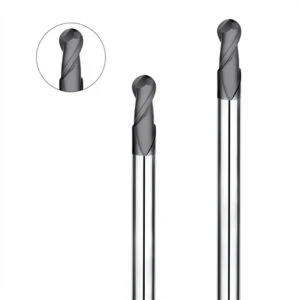
Thick Diamond Coating vs Thin Diamond Coating: Choosing the Right Coating Thickness for Graphite Milling Cutters
CNC mold shops frequently ask if choosing a thicker diamond coating automatically guarantees longer tool life. A mold manufacturer we advised adopted extra-thick coatings across all operations to cut tool changes. However, during fine electrode finishing, they experienced poor surface finishes and severe edge chatter.
Tool wear analysis confirmed that coating thickness must match the specific cutting stage. High-removal roughing benefits from a thicker coating layer for abrasion resistance, whereas finishing demands a sharper profile. Choosing between thick diamond coating and thin diamond coating is a matter of application balance, not raw thickness.
Advantages of Thick Diamond Coating: Extending Graphite Cutting Tool Life
Continuous graphite roughing demands heavy abrasion defense against abrasive carbon dust. Fine graphite particles act like continuous grinding media against the tool flutes. Without adequate protective film thickness, carbide flutes wash out quickly and cause premature cutting edge failure.
In high-volume electrode production runs, switching to an optimized thick diamond layer stabilized cutting performance and reduced tool changes. For deep-cavity roughing and high-removal milling, an engineered thick layer extends graphite cutting tool life while preventing costly mid-cycle interruptions.
Advantages of Thin Diamond Coating: Enhancing Cutting Sharpness
Thin-film diamond coatings are essential for precision finishing, 3D profiling, and micro-rib milling. In thin-rib EDM electrode machining, tool sharpness directly dictates cutting forces. Preserving the substrate’s original cutting edge geometry prevents corner blowout and part deflection.
Thinner diamond coatings reduce cutting resistance at high spindle speeds, keeping the tool free-cutting. This sharp edge retention prevents micro-chipping and maintains mirror-smooth surface finishes. Choosing a thin coating represents a deliberate optimization for dimensional precision over raw wear volume.
Selecting the Optimal Coating Thickness for Graphite Materials
Coating selection requires evaluating graphite grain size, bulk density, Shore hardness, and EDM surface finish targets. Ultra-fine grain, high-density graphite accelerates abrasive friction, demanding maximum wear resistance. Conversely, fine-detail electrodes require high edge fidelity and strict dimensional tolerance.
Optimizing diamond-coated graphite end mills requires segmenting your tool crib by roughing, semi-finishing, and finishing stages. Match heavy diamond films with roughing tools for cycle durability, and apply thin coatings to finishing cutters for edge sharpness. The ideal tool life solution balances film thickness with specific machining demands.

The Impact of Diamond Coating Thickness on Graphite Machining Performance
During graphite machining projects, clients often focus solely on tool longevity. However, actual CNC production reveals that tool performance dictates final part quality and process stability. A mold manufacturer we assisted met their initial tool life goals, but eventually faced surface patterning and edge degradation. Failure analysis proved these defects were directly tied to diamond coating thickness and wear behavior.
A tool coating never functions in isolation within a graphite machining system. It interacts constantly with cutter geometry, spindle speeds, and specific graphite material grades. We carefully track how diamond coating thickness influences edge retention, wear rates, and overall machining stability. An optimized coating thickness guarantees superior cutting performance, while mismatched layers destroy part consistency.
The Impact of Coating Thickness on Surface Quality in Graphite Machining
In precision graphite electrode machining, tool condition instantly dictates surface quality. When a diamond coating properly shields the cutting edge, the end mill holds a true cutting path during long cycles. This stability minimizes surface roughness fluctuations and prevents dimensional errors caused by micro-wear.
One client cutting complex electrodes saw pristine initial finishes, but localized chatter marks soon ruined the edges. Tool inspections confirmed that maintaining edge integrity heavily depends on the diamond film’s structural wear resistance. To truly enhance graphite machining quality, engineers must ensure the coating thickness matches the strict stability demands of continuous CNC milling.
The Impact of Coating Thickness on Graphite Dust and Tool Wear
Graphite machining generates massive volumes of fine, highly abrasive dust that constantly attacks the tool surface. Without adequate diamond surface protection, this dust rapidly accelerates cutting edge wear. As the carbide degrades, machinists face spiking cutting forces, poor chip evacuation, and plummeting production efficiency.
Effective coating strategies require analyzing the exact CNC machining environment. High-speed cutting of high-density graphite demands extreme abrasive wear resistance to survive continuous operations. Yet, adding diamond coating thickness at the expense of edge sharpness ruins cutting action. Balancing dust control, tool wear patterns, and cycle times ensures the coating provides effective protection.
The Impact of Coating Thickness on Machining Stability and Precision
In our CNC engineering experience, long-term process stability beats peak single-run performance. During the batch production of graphite components, erratic tool wear quickly causes scrapped parts and dimensional variations. An appropriately matched diamond coating thickness stabilizes cutting dynamics and drastically reduces unpredictable process fluctuations.
Evaluating graphite end mill performance requires tracking the tool across its entire lifecycle. We monitor cutting edge degradation, dimensional accuracy retention, and surface quality consistency from the first part to the last. For high-precision graphite machining, tailoring coating thickness to balance tool life and precision yields the highest overall production efficiency.
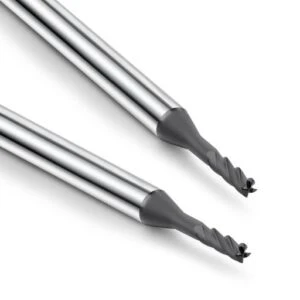
Diamond Coating Optimization Strategies for Graphite Machining Systems
Tool coating selection consistently dictates machining efficiency and part stability in graphite milling. A mold maker we supported struggled with dimensional drift across high-volume electrode runs. On-site cutting data revealed that while speeds and feeds were reasonable, the tooling failed because the diamond film properties were never tailored to the specific operation.
A robust graphite machining system requires aligning the diamond coating with workpiece material specs, cutting stages, and cycle time targets. Chasing raw thickness blindly often backfires. By analyzing real-world wear mechanics and chip loads, machinists can balance abrasive resistance, edge sharpness, and dimensional accuracy across entire production cycles.
Selecting Graphite End Mill Coating Thickness for Roughing vs. Finishing
High-volume roughing demands maximum tool stability under heavy, continuous cutting forces. Because roughing generates massive volumes of abrasive carbon chips, thin coatings wash out quickly. Applying a thicker diamond film protects the solid carbide substrate, prevents micro-chipping, and maintains reliable performance during heavy stock removal cycles.
Finishing operations demand the exact opposite tooling strategy. A precision electrode manufacturer we assisted had adequate tool life but suffered from rounded corner radii and poor surface finishes. Dialing back the graphite end mill coating thickness restored the razor-sharp edge required for clean shearing, chatter-free wall finishes, and tight EDM electrode geometries.
Optimizing Diamond Coating Thickness for Different Graphite Grades
Tool wear rates vary drastically depending on the specific graphite material grade. Dense, coarse-grained graphite accelerates mechanical abrasion against the tool flutes, requiring a robust wear layer. Conversely, ultra-fine grain grades for micro-detail electrodes demand a uniform, thin coating to maintain precise cutting stability and prevent localized edge blowouts.
Matching coating thickness to graphite hardness, particle size, and cavity depth prevents premature tool failure. Heavy-duty milling in high-density graphite requires prioritized wear volume. Meanwhile, 3D contouring of intricate electrode ribs requires sharp cutting geometries to minimize part deflection and maintain consistent tolerances.
Extending Graphite Tool Life through Coating Optimization
Extending tool life goes beyond increasing coating thickness; it requires harmonizing coating adhesion, film toughness, and cutting parameters. In several batch-production graphite electrode projects, optimizing film stress and flute geometry eliminated premature tool wear, slashing setup interruptions and reducing overall scrap rates.
Sustainable production depends on evaluating film adhesion strength, surface hardness, cutting edge integrity, and dust evacuation. A tailored coating design reduces tool consumption and stabilizes long unattended CNC runs. Balancing graphite end mill coating thickness with actual operating conditions ensures maximum tool life alongside flawless machining quality.
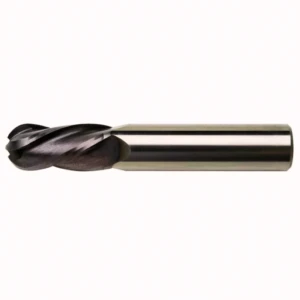
Custom Diamond Coated End Mills: Solutions for Tailored Coating Thickness
Machining data confirms that off-the-shelf tooling cannot address every graphite milling challenge. A standard diamond coated graphite end mill performs differently across diverse graphite grades, machine dynamics, and spindle limits. When standard catalog tools fail to meet cycle time, part precision, or tool life targets, custom-engineered coating thickness and geometry provide the solution.
If you struggle with high-density graphite wear, erratic surface finishes, or cycle bottlenecks, evaluating your current coating strategy is the first step. Matching coating film thickness with exact graphite grain sizes, cutting allowances, and part tolerances eliminates trial-and-error scrap while cutting tooling costs across high-volume production.
Customizing Diamond Coating Thickness Based on Machining Parameters
Engineering custom tooling requires evaluating diamond coating thickness alongside actual CNC cutting parameters. High-feed roughing at aggressive axial depths demands superior film adhesion and high wear resistance. Conversely, high-RPM 3D profiling demands razor-sharp edge retention to minimize cutting resistance and avoid tool deflection.
Variations in surface footage, chip loads, and step-over values dramatically alter thermal and abrasive wear rates on the tool flutes. When designing custom diamond coated end mills, we configure the diamond film growth to match cutting forces directly, delivering process stability without relying on arbitrary coating thickness increases.
Selecting the Right Coating Structure Based on Graphite Application
Different electrode manufacturing tasks demand distinct diamond coating architectures. Large-scale structural graphite roughing calls for a multi-layered diamond barrier built to endure heavy abrasive impact. In contrast, micro-milling EDM electrodes with thin ribs requires a dense, ultra-smooth diamond layer that protects the tool without rounding the cutting edge.
Workpiece variables like graphite density, Shore hardness, and grain size dictate how the diamond layer should be configured. Selecting the right coating structure prevents edge blowouts during delicate finishing and avoids premature carbide washout during roughing, maximizing cutting reliability across every operational stage.
How Custom Diamond Coated End Mills Enhance Machining Efficiency
The true value of custom tooling lies in seamless shop-floor integration. When diamond coating thickness, carbide substrate grain size, flute relief, and cutting parameters are properly matched, wear patterns become completely predictable. This consistency slashes unplanned CNC downtime and ensures tight part-to-part repeatability in batch runs.
To upgrade your graphite milling performance, evaluate your real-world tool wear patterns, cycle times, and electrode surface finishes. Using these production metrics, we tailor the diamond-coated graphite end mill coating profile to your specific CNC environment, maximizing tool life and overall machining efficiency.

FAQ – Diamond Coating Thickness and Graphite End Mill Tool Life
Machinists and tooling engineers frequently ask whether a thicker diamond coating guarantees a longer tool life. In high-speed CNC graphite machining, the answer is rarely a simple yes or no. True tool optimization requires evaluating graphite grain structures, milling stages, cutter geometry, and cutting speeds.
This FAQ addresses common production challenges, from premature edge chipping to severe flank wear and poor electrode surface finishes. Use these practical engineering insights to evaluate whether your current diamond coating thickness matches your specific production requirements.
Does a Thicker Diamond Coating Improve Graphite End Mill Life?
In abrasive, high-removal roughing operations, a thicker diamond coating significantly extends tool life by shielding the carbide flutes from continuous particle erosion. Heavy-duty graphite milling projects benefit from thick diamond films that prevent early substrate washout.
However, thicker coatings increase cutting edge radius, which compromises performance in fine electrode finishing and micro-rib milling. Maximizing graphite end mill tool life requires balancing abrasive wear volume with cutting edge sharpness, rather than simply maximizing film thickness.
What Is the Best Diamond Coating Thickness for Graphite Machining?
There is no universal coating thickness for every graphite application. Roughing dense, abrasive graphite blocks demands a thick diamond layer for wear resistance, while micro-milling EDM electrodes requires a thin, razor-sharp coating to prevent corner blowouts.
The ideal diamond coating for graphite machining balances film adhesion, cutting stability, and tool life. Choosing the right thickness requires analyzing your graphite particle size, axial depth of cut, spindle RPM, and part tolerance goals.
Thick vs Thin Diamond Coatings: Which Is Better?
Thick and thin diamond films fulfill distinct functions in CNC graphite machining. Heavy-layer coatings are ideal for high-removal roughing and uninterrupted pocketing, providing the sacrificial wear resistance needed to sustain tool longevity during long, lights-out milling cycles.
Conversely, thin diamond coatings are superior for high-speed finishing and intricate 3D profiling. They preserve the cutter’s original micro-geometry, minimize cutting forces, and eliminate chatter to deliver pristine electrode surface finishes.
How Can Diamond Coatings Extend Graphite Cutting Tool Life?
Diamond coatings combat abrasive wear by providing extreme surface hardness and a low friction coefficient against carbon dust. This barrier stabilizes cutting forces and keeps the underlying carbide substrate protected throughout high-speed milling cycles.
To maximize graphite cutting tool life, inspect your wear patterns under magnification. Rapid flank wear indicates that a thicker coating is needed, while micro-chipping suggests excessive coating stress or edge rounding that requires a thinner, more compliant film.
How Long Does a Diamond-Coated Graphite End Mill Last?
The service life of a diamond-coated graphite end mill varies based on graphite grain density, spindle runout, air-blast efficiency, and programmed feeds and speeds. Under light finishing conditions, a single cutter can run continuously for dozens of hours without losing tolerance.
In heavy roughing, tool life is governed by abrasive wear rates and chip evacuation. Evaluating real-world performance requires tracking cutting hours, dimensional stability, and edge wear patterns under your specific shop floor conditions.