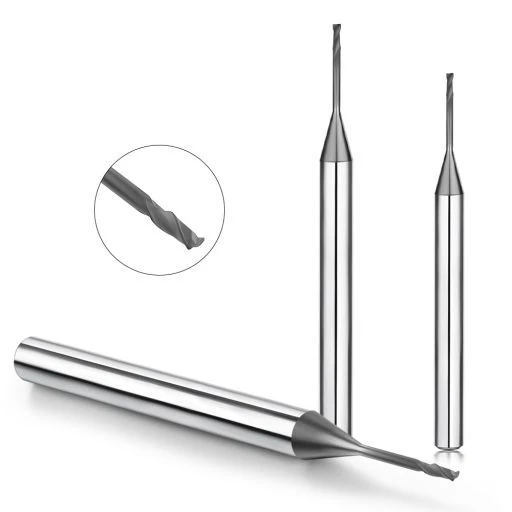
While engineering a tooling setup for a European mold and electrode manufacturer, we encountered a classic issue: the shop ran uncoated carbide end mills on graphite electrodes. Initial test cuts looked clean, but edge wear accelerated rapidly after just a few parts. The graphite showed severe corner chipping, dimensional drift, and loss of surface consistency.
In our CNC tooling experience, machinists often prioritize tool diameter, flute count, and feeds and speeds, while overlooking the single biggest driver of tool life—an engineered graphite end mill coating. Proper coating selection prevents premature failure and stabilizes long-run batch machining.
Although graphite is softer than steel, its abrasive particulate structure causes aggressive micro-wear. High-speed milling subjects the cutting edge to continuous abrasive bombardment from fine graphite dust. Uncoated carbide tools rapidly develop flank wear and edge rounding, leading to increased cutting pressure and micro-fractures.
Standard carbide substrates lack the surface hardness needed to withstand continuous abrasive friction in dry machining setups. Extending tool life requires more than just premium carbide substrates or optimized geometry; it demands an ultra-hard barrier that insulates the cutting edge.
Diamond coated graphite end mills solve this problem by leveraging real crystalline diamond to resist abrasive wear. The diamond layer maintains sharp cutting edges, drops friction, and prevents the graphite dust from eroding the carbide substrate. This allows machine shops to maintain tight tolerances and pristine surface finishes across long production cycles.
For EDM electrodes, semiconductor components, and complex mold details, diamond coatings transform graphite machining from an erratic process into a predictable, high-yield operation. Upgrading from uncoated to diamond-coated tools eliminates unexpected downtime, lowers total tooling costs per part, and delivers consistent part quality.
Have you noticed your cutting tools performing well on the first few graphite blocks, only to lose tolerances and stability as production ramps up?
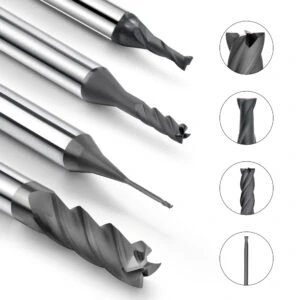
Why Do Uncoated End Mills for Graphite Machining Fail Prematurely?
In our tooling support for EDM mold and electrode shops, premature failure of uncoated end mills for graphite machining remains a persistent problem. While initial cuts appear clean and accurate, surface finishes degrade and dimensional tolerances drift rapidly during continuous production, forcing machinists into frequent, costly tool changes.
Successful graphite milling demands far more than basic substrate hardness. High-speed spindle rotation exposes cutting edges to a continuous stream of abrasive carbon particulate. Without protective surface engineering, edge degradation accelerates, which is why our engineering team evaluates long-term wear kinetics rather than short-run initial cutting performance.
Graphite End Mill Wear: Mechanisms of Tool Wear in Graphite Machining
During batch electrode milling, standard carbide tools often meet blueprint specifications for the first few cycles before edge integrity collapses. As the micro-geometry dulls, localized cutting forces spike, causing corner chipping on the electrode and unacceptable surface roughness. This progression is a textbook example of abrasive graphite end mill wear.
Unlike metal cutting, which generates continuous chips and high heat, graphite machining produces fine, highly abrasive dust particles that act like grinding compound against the cutting edge. This mechanism drives rapid edge rounding and flank wear. Once sharpness is lost, cutting resistance fluctuates, destroying critical tolerances on delicate ribs and precision EDM details.
Graphite Cutting Tool Failure: Common Causes of Failure for Uncoated Tools
Machinists often ask why identical toolpaths produce accurate parts initially, followed by a sudden collapse in performance. This pattern signals that the cutter has crossed its stable wear threshold into progressive degradation. In high-precision operations, graphite cutting tool failure typically presents as edge rounding, dimensional drift, surface tearing, and erratic tool life.
Diagnosing these failures requires looking past machine feeds and speeds to evaluate abrasive wear rates and edge-retention limits. While dropping cutting parameters may temporarily slow tool degradation, it compromises cycle times and shop-floor throughput. Resolving premature tool failure requires upgrading surface protection rather than throttling spindle productivity.
Why Uncoated Carbide End Mills Struggle in Production Graphite Machining
Standard carbide tools are not incapable of cutting graphite, but they lack the surface endurance required for sustained production runs. When batch-machining complex EDM electrodes where uniform spark gaps and tight tolerances are critical, uncoated tools introduce unacceptable process variability due to rapid flank wear.
When optimizing graphite milling workflows, tooling engineers balance batch size, feature complexity, and part tolerances. While uncoated carbide may suffice for one-off prototyping, scalable manufacturing demands predictable tool life and maximum edge protection. This makes engineered, wear-resistant tooling far more cost-effective over full production cycles than low-cost uncoated cutters.
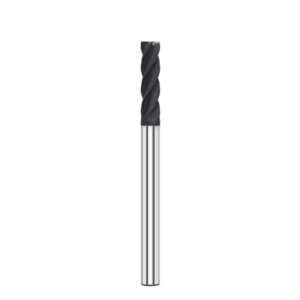
The Importance of Graphite End Mill Coatings: How Do Coatings Affect Tool Life?
Throughout years of troubleshooting graphite electrode setups and precision component manufacturing, tool coatings have consistently stood out as the defining factor in process stability. While CNC programmers naturally concentrate on end mill geometry, flute counts, and spindle feeds, shop-floor reality proves that surface protection dictates long-term consistency.
We frequently see carbide tools with identical geometries and chip loads deliver vastly different tool life curves based entirely on their surface treatment. A specialized graphite end mill coating serves as a thermal and physical shield, preventing rapid micro-chipping and stabilizing cutting forces. In production milling, advanced coatings are not optional accessories—they are critical process drivers.
How Do Graphite End Mill Coatings Reduce Abrasive Wear?
Graphite does not fail cutting tools through high tensile cutting forces or extreme thermal loads; instead, continuous mechanical abrasion gradually rounds the cutting edge. Fine, microscopic carbon particulate acts as an abrasive slurry that erodes the binder in raw carbide, causing severe flank wear and surface tearing on finished parts.
An engineered coating forms an ultra-hard physical barrier between the raw tungsten carbide substrate and the abrasive dust stream. By preventing direct carbon-to-carbide contact, the coating preserves critical edge sharpness during high-speed trochoidal milling and delicate finishing passes, significantly reducing cycle-to-cycle dimensional drift.
How Do Diamond Coatings Extend Graphite Machining Tool Life?
During tight-tolerance electrode production, standard tooling causes frequent spindle downtime and unpredictable tool-offset adjustments. In contrast, true diamond films deliver superior hardness and extreme wear resistance. This robust barrier prevents edge rounding, allowing shops to dramatically extend graphite machining tool life across continuous batch runs.
For mold-making facilities, the true value lies in predictable dimensional stability across dozens of electrodes rather than just raw spindle hours. Deploying diamond-coated cutters minimizes spark-gap variations in subsequent EDM operations, eliminates mid-program tool changes, and sharply reduces overall scrap rates.
The Relationship Between Coating Thickness and Graphite Machining Performance
In precision milling, thicker diamond layers are not automatically better for every application. Coating thickness directly alters cutting-edge radius and cutting edge sharpness; an overly thick film rounds delicate micro-tool edges, increasing cutting resistance, while an under-specified layer wears through prematurely under aggressive chip loads.
Tooling engineers balance coating thickness against tool diameter, graphite grain size, and machining method. Small-diameter micro-mills and rib-cutters require thinner diamond layers to maintain razor-sharp geometry, whereas roughing tools benefit from heavier diamond films for maximum longevity. Balancing edge sharpness with layer thickness is essential for consistent production.
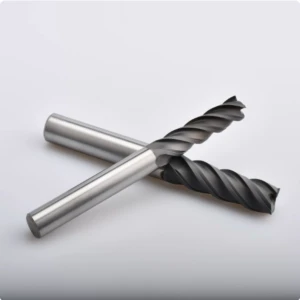
Diamond-Coated vs Uncoated End Mills for Graphite: A Comprehensive Performance Comparison
In EDM electrode machining, shops often wonder why two identical carbide cutters running identical speeds and feeds yield drastically different tool life. Evaluating diamond-coated vs uncoated end mills for graphite comes down to surface metallurgy. Standard carbide substrates alone cannot withstand the continuous micro-abrasion generated during dry graphite cutting.
Choosing between diamond-coated and uncoated end mills involves far more than initial purchase price. Experienced tooling engineers evaluate tool wear kinetics, surface finish consistency, and automated production capability. An engineered diamond coating acts as a thermal and physical barrier, transforming an erratic milling operation into a stable, predictable process.
Tool Wear Resistance: How Diamond Coatings Reduce Graphite End Mill Wear
During high-volume electrode runs, uncoated carbide tools show rapid flank wear after only a few cycles. As cutting edges dull, cutting pressure spikes, causing edge chipping on delicate electrode ribs and out-of-spec part profiles. This rapid deterioration is the most common cause of premature graphite end mill wear in high-speed CNC milling.
Diamond coatings provide an ultra-hard protective layer with hardness ratings exceeding 8,000 HV. This crystalline shield prevents abrasive carbon particulate from contacting the raw tungsten carbide substrate. By preserving sharp cutting edges through thousands of passes, diamond coatings drastically reduce micro-chipping and extend tool integrity across long production runs.
Surface Finish: How Coatings Improve Graphite Machining Quality
In precision finishing passes, tool condition directly dictates surface integrity. Flank wear on dull tools tears graphite grains rather than shearing them cleanly, causing micro-voids, pitting, and dimensional inaccuracies. These defects translate directly into erratic spark gaps, costly manual polishing, and surface flaws during the EDM burn process.
Diamond-coated cutters maintain uniform cutting forces throughout the toolpath, preventing deflection and chatter on thin-walled electrode ribs. By eliminating edge breakdown, diamond tooling delivers mirror-smooth Ra values and crisp edge definition. This surface stability reduces electrode rework and ensures predictable, repeatable burning performance on mold cavities.
Tool Life: How Diamond Coated End Mills Extend Service Life
Real-world tool life depends on abrasive wear rates and edge retention rather than raw substrate hardness alone. Uncoated cutters require frequent operator offsets and constant tool changes that disrupt cycle times. For high-volume production, maximizing tool life for graphite machining is essential to controlling overhead and maintaining spindle uptime.
True diamond end mills consistently outlast uncoated carbide by 10 to 30 times, depending on graphite grade and particle size. This extended lifespan slashes machine downtime, reduces scrap rates on expensive electrode blanks, and unlocks dependable lights-out machining. Investing in diamond-coated tooling delivers significantly lower cost per part over sustained production.
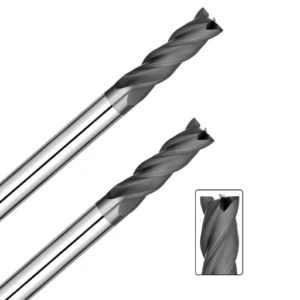
Why Are Diamond Coated Graphite End Mills Better Suited for CNC Graphite Machining?
When milling graphite electrodes, machine shops frequently upgrade from standard carbide to diamond-coated tooling. While uncoated cutters may complete initial prototype passes, rapid edge rounding causes dimensional drift during extended production runs. For delicate ribs and tight-tolerance EDM details, minor tool wear directly compromises downstream molding quality.
In high-speed CNC applications, diamond coated graphite end mills provide the thermal and physical protection required for process stability. The crystalline diamond film shields cutting edges from continuous abrasive wear, keeping cutting forces low and predictable. Maximizing these benefits requires pairing diamond tooling with rigid setups, optimized toolpaths, and balanced chip loads.
Diamond Coating Enhances Tool Life Through Superior Wear Resistance
During continuous electrode production, standard carbide cutters dull rapidly under aggressive micro-abrasion. Dulling edges force machinists to constantly adjust tool offsets, inflating cycle times and introducing part-to-part variability. Tool-wear analysis confirms that abrasive carbon particles, rather than mechanical impact, cause this rapid edge breakdown.
Graphite’s granular structure acts like an abrasive slurry against raw tungsten carbide. True diamond coatings deliver extreme surface hardness up to 10,000 HV, insulating the underlying carbide substrate. This wear-resistant barrier preserves razor-sharp cutting geometry and dramatically extends tool life in CNC graphite machining.
Diamond Coated Graphite End Mills Mitigate the Impact of Machining Dust
Dry graphite milling generates massive volumes of fine, abrasive dust that continuously scours tool flutes and relief angles. Without hard-surface protection, this abrasive cloud quickly erodes tool geometry and dulls the cutting edge. Specialized diamond coated graphite end mills withstand this abrasive friction, preventing edge breakdown and extending cycle times.
However, coating performance depends heavily on the overall machining environment. High-flow vacuum extraction, low-runout toolholders, and rigid high-speed spindles are vital to clear dust and avoid recutting particles. Combining proper dust evacuation with diamond tooling maintains sharp shearing action and pristine surface finishes.
How Diamond Coatings Extend the Service Life of Graphite End Mills
Evaluating tooling investments requires looking beyond initial purchase price to total production cost per part. Unscheduled tool changes, machine downtime, and scrapped electrode blanks quickly erode shop margins. A successful graphite tooling strategy focuses on predictable edge life and consistent part accuracy.
Pairing diamond-coated cutters with optimized speeds, feeds, and stepovers reliably extends tool life by 10 to 30 times over uncoated carbide. This durability enables dependable, lights-out machining for high-volume electrode manufacturing. Upgrading to diamond tooling lowers net production costs while maximizing spindle uptime.
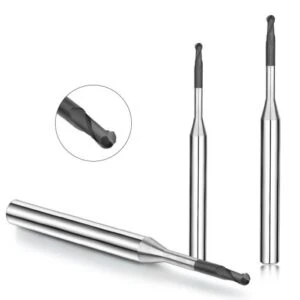
How to Choose the Right Graphite End Mill Coating?
In graphite milling, many machine shops assume that higher nominal hardness automatically delivers longer tool life. In production CNC operations, cutting performance depends on continuous abrasive wear resistance, cutting-edge micro-geometry, and specific graphite particulate behavior rather than a single hardness number.
Choosing the right graphite end mill coating requires aligning surface metallurgy with your shop’s machining volume and tolerance targets. For thin-rib EDM electrodes and high-volume semiconductor parts, selecting the correct coating system stabilizes cutting forces, prevents unexpected chipping, and significantly lowers net manufacturing costs.
Diamond Coating vs DLC: Which Is Better for Graphite Machining?
Machinists frequently ask whether DLC can replace genuine diamond to reduce initial tooling costs. DLC coatings offer low friction and perform well in non-ferrous metals, but their thin amorphous structure wears quickly when exposed to abrasive carbon particulate.
For sustained production runs and tight-tolerance electrode manufacturing, genuine crystalline diamond coatings provide far superior wear resistance. While DLC may suffice for short prototype runs or soft, coarse graphite, diamond coated graphite end mills remain the industry standard for maintaining dimensional accuracy and edge sharpness over long cycles.
Why Are Traditional Coatings Like TiAlN Unsuitable for Graphite Machining?
Shops often attempt to mill graphite using general-purpose metalworking coatings like TiAlN or AlTiN. While these coatings excel at high-temperature oxidation resistance in steel cutting, graphite machining does not generate the continuous thermal loads required to activate their protective mechanisms.
Instead of thermal wear, graphite milling creates continuous micro-abrasion from fine carbon dust that strips conventional PVD coatings quickly. Once the thin PVD layer wears through, the raw carbide substrate erodes rapidly. Dedicated graphite end mill coating formulations are essential to survive continuous dry abrasive contact.
Coating Selection Strategies Based on Graphite Material
Tool wear kinetics vary significantly across different graphite grades, grain sizes, and densities. Ultrafine and isotropic graphite grades demand razor-sharp cutting edges to prevent surface breakout, whereas coarse-grain graphite accelerates flank wear and requires heavier abrasive protection.
Tooling engineers tailor coating specifications to grain structure, feature size, and batch volume. Delicate micro-rib electrodes require thin, sharp diamond coatings to eliminate part deflection, while high-volume roughing operations benefit from thicker Cdiamond films to maximize edge longevity and spindle uptime.
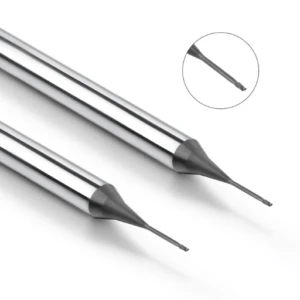
How to Optimize Tool Life for Diamond-Coated Graphite End Mills?
Through extensive experience machining EDM electrodes and precision graphite structures, we know tool life does not rely solely on surface coatings. While shops prioritize diamond coatings, overall performance depends on carbide substrate quality, cutting-edge micro-geometry, programming parameters, and machine rigidity.
Optimizing tool life requires balancing the entire machining ecosystem. A diamond-coated cutter will still chip or delaminate prematurely if the substrate lacks toughness, edge preparation is flawed, or speeds and feeds cause excessive tool deflection. Real process reliability comes from integrating tooling design with calibrated cutting conditions.
Integrating Substrate and Edge Design with Diamond Coating
During high-volume graphite electrode runs, we often see diamond-coated tools fail from premature micro-chipping. Root-cause analysis usually points away from the coating film and toward mismatched substrate grain size, improper cobalt binder levels, or incorrect cutting-edge honing prior to deposition.
Maximizing performance requires engineered carbide grades with ultra-fine grain structures, reinforced core diameters, and controlled edge preps for superior coating adhesion. Working closely with specialized diamond coated graphite end mill manufacturers ensures the substrate, micro-geometry, and diamond layer work in unison to eliminate flaking and edge fracture.
Optimizing Graphite Machining Tool Life Based on Parameters
When shops upgrade to diamond tooling without adjusting machining parameters, results often fall short of expectations. Machining graphite requires balancing high spindle speeds with proper chip loads to avoid rubbing, recutting abrasive dust, or causing excessive cutting-edge shock.
To maximize graphite machining tool life, programmers must optimize feed per tooth, radial/axial depth of cut, and high-speed trochoidal strategies. Stable cutting parameters reduce mechanical impact and abrasive wear on delicate ribs, ensuring predictable tool life and maximum throughput in automated production runs.
Insights on Improving Tool Wear from Customer Cases
In past electrode production audits, shops faced frequent spindle stops and erratic tool wear, driving up manufacturing overhead. By evaluating used cutters under optical magnification, our engineering team adjusted tool geometries, upgraded coating specs, and refined toolpaths to stabilize the entire cutting process.
This data-driven troubleshooting proves that reducing graphite end mill wear requires evaluating the full machining system: tool wear mechanics, part surface finish, dynamic tool runout, and dust extraction efficiency. Addressing systemic variables delivers consistent part accuracy, longer tool life, and lower cost per part.
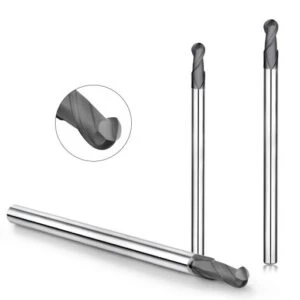
How Diamond-Coated End Mills Extend Graphite End Mill Life
Extending tool life in production graphite machining requires balancing multiple cutting variables rather than relying on a single quick fix. While uncoated carbide fails quickly against abrasive particulate, upgrading to a diamond tool requires matching tool geometry and cutting parameters to realize its full wear-resistance potential.
If your shop faces erratic tool wear, micro-chipping on thin electrode ribs, or excessive spindle downtime, start by auditing your overall setup. Ensuring the carbide substrate, edge preparation, and diamond film match your graphite grade establishes the foundation needed to reliably extend graphite end mill life in continuous production.
Optimizing Spindle Speed and Feed Rate to Reduce Tool Wear
Premature edge breakdown on diamond-coated tools often stems from improper chip load calculations rather than defective tooling. In graphite milling, running too slow causes abrasive rubbing that erodes coatings, while excessive chip loads generate mechanical shock that risks chipping the cutting edge.
To prevent premature graphite cutting tool failure, calibrate spindle speed, feed rate, and feed per tooth to the cutter diameter and graphite grain size. Maintaining clean shearing action and proper chip thickness prevents heat buildup, stabilizes cutting forces, and protects the diamond layer across long production cycles.
Selecting the Right Flute Count to Enhance Graphite Machining Stability
Flute geometry directly influences dust evacuation, cutter rigidity, and dynamic cutting stability during high-speed milling. Machinists should select flute counts based on the machining stage: high-clearance 2-flute designs excel at bulk roughing and deep-pocket dust evacuation, while 3- or 4-flute tools provide the rigidity needed for finishing passes.
Pairing optimized flute geometry with high-grade diamond coatings minimizes deflection and chatter on delicate features. Selecting the correct flute profile alongside proper chip evacuation ensures consistent surface finishes, protects critical tolerances, and helps extend graphite end mill life across high-volume electrode runs.
Mitigating Graphite Cutting Tool Failure Risks Through Coating Systems
Tool failure in graphite milling is rarely caused by a single isolated variable. Material density, fine particulate dust, spindle runout, and CAM strategies all dictate tool wear rates. Resolving erratic tool life requires a holistic engineering review of the entire setup rather than simply swapping cutters.
While engineered diamond films provide exceptional abrasive resistance, maximum reliability demands pairing the coating with an ultra-fine grain substrate and calibrated feeds and speeds. Auditing your graphite grade, part geometry, and vacuum extraction parameters ensures you eliminate premature graphite cutting tool failure and maximize machine uptime.
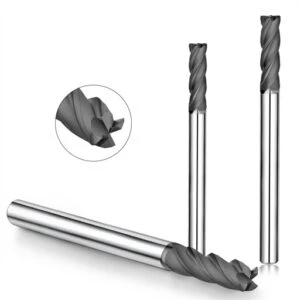
FAQ: Diamond-Coated vs Uncoated Graphite End Mills
In our tooling consulting for EDM shops, questions regarding coating performance and cost efficiency arise constantly. While machinists naturally focus on initial cutter pricing and immediate cycle times, long-term operational stability depends on aligning the substrate, surface coating, and machining environment.
The following practical answers address the most common technical questions encountered during on-site shop audits. These guidelines will help you evaluate the performance gap between uncoated and diamond-coated graphite end mills to select the right tooling for your production runs.
Are uncoated end mills suitable for graphite machining?
Uncoated carbide end mills are acceptable for short-run prototyping, non-critical geometries, or low-volume electrode preparation. If tool life is not a primary bottleneck and tolerances are generous, standard micro-grain carbide can complete basic passes without issues.
However, uncoated tools fail quickly in production runs. Abrasive carbon dust rapidly erodes unprotected cutting edges, leading to severe flank wear, dimensional drift, and edge chipping. For continuous manufacturing, uncoated cutters quickly create process instability and inflated labor costs.
Why do graphite end mills wear quickly?
Premature tool degradation in graphite CNC milling stems from micro-mechanical abrasion rather than thermal breakdown. During dry cutting, hard carbon particulates act like an abrasive slurry, continuously scouring the relief angles and rounding the cutting edge.
Accelerated graphite end mill wear indicates a breakdown in cutting dynamics, improper chip loading, or poor dust evacuation. When abrasive particulate is recut within deep pockets, edge rounding accelerates exponentially, driving up cutting forces and causing tool deflection.
Is a diamond-coated graphite end mill worth the cost?
Evaluating diamond tooling requires looking past the single-cutter purchase price to calculate the total cost per finished part. For prototype jobs, low-cost carbide may suffice; however, continuous production environments heavily favor diamond tooling.
High-purity diamond films extend tool life by 10 to 30 times, virtually eliminating mid-program offsets and spindle downtime. For thin-rib EDM electrodes, using diamond coated graphite end mills prevents scrap and guarantees dimensional consistency across high-volume batches.
How does graphite end mill coating improve tool life?
An engineered coating forms an ultra-hard physical barrier between the abrasive graphite stream and the tungsten carbide substrate. This prevents abrasive dust from eroding the cobalt binder, preserving sharp micro-geometries through extended cycle times.
Applying a specialized graphite end mill coating stabilizes cutting forces, prevents corner breakdown, and ensures uniform surface finishes. Retaining edge sharpness over long cycles prevents erratic tool deflection and protects tight EDM spark-gap tolerances.
What is the best coating for graphite machining?
Diamond is the gold standard for production graphite milling due to its extreme hardness rating exceeding 8,000 HV. Unlike standard PVD coatings, crystalline diamond easily withstands severe abrasive friction.
While DLC coatings offer an economical alternative for light-duty cutting, diamond delivers unmatched performance in high-density, fine-grain graphite. Selecting the right graphite end mill coating ensures maximum tool life and consistent machining accuracy across demanding production runs.