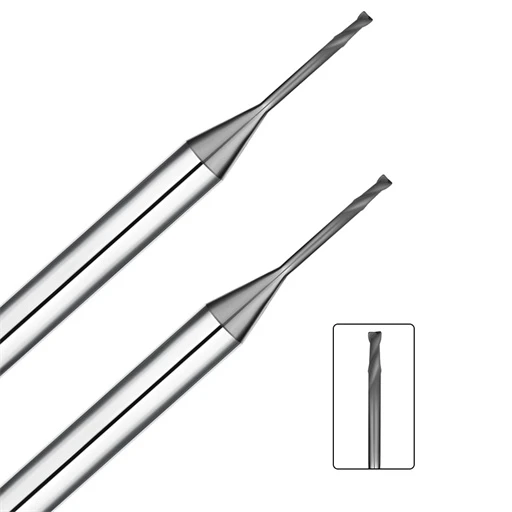
During a high-volume run of EDM graphite electrodes, a shop started seeing dimensional drift and rough edge finishes halfway through the batch. The operators initially suspected thermal expansion in the CNC spindle or drifting axis calibration. A quick microscopic inspection confirmed the real culprit: severe, progressive flank wear and localized micro-chipping on the carbide cutting edges.
Even though synthetic graphite feels soft and machines without high cutting forces, it remains notoriously aggressive toward standard tooling. Many machinists are caught off guard by the rapid rate of graphite cutting tool wear when running uncoated or general-purpose carbide. Left unchecked, this premature degradation leads to scrapped electrodes, poor surface consistency, and a sharp drop in overall graphite cutting tool life.
The issue comes down to graphite’s unique microstructure rather than its bulk hardness. As the end mill shears through the porous grain matrix, it creates an ongoing stream of highly abrasive, brittle micro-particles. Instead of forming continuous chips that carry heat away, these particles act like an ultra-fine grinding compound. This rubbing action causes continuous abrasive erosion right at the cutting interface.
Inadequate chip evacuation makes this problem significantly worse. When fine dust accumulates in the cut zone, recurrent graphite dust tool wear scours the cutting edge and strips away the cobalt binder matrix in cemented carbide. Without addressing the underlying mechanics of carbide end mill wear, adjusting feeds and speeds only yields temporary, minimal gains.
True process control requires matching the material’s grain size and hardness to the correct tool geometry and substrate. In high-precision electrode manufacturing, upgrading from bare tungsten carbide to diamond coated carbide end mills is the most effective way to resist particle scouring. This transition restores tight tolerances, keeps edge geometries intact, and ensures consistent surface finishes throughout long machining cycles.
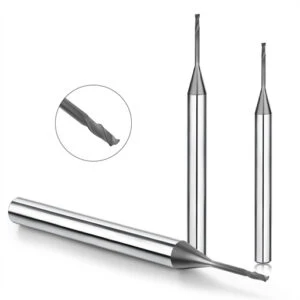
Why Is Graphite Abrasive? The Mechanism of Graphite Abrasive Wear
When machining graphite electrodes and molds, assuming graphite’s Shore hardness predicts tool life is a common mistake. In the field, using identical carbide end mills across two different graphite grades often produces drastically different outcomes. One tool maintains edge integrity, while the other quickly suffers from severe flank wear caused by grain irregularities and microscopic particle scouring rather than bulk hardness.
Assessing a grade’s abrasiveness requires looking past basic specification sheets. During cutting, graphite fractures at the microscopic level, continuously releasing hard micro-particles across the tool’s relief faces. This persistent friction creates classic graphite abrasive wear, leading to dimensional drift and poor surface finishes. When edge life drops, the material’s microstructural integrity is usually the true culprit.
Graphite Material Hardness and Microstructure
In practical CNC operations, bulk graphite material hardness provides little insight into actual cutter degradation. Experienced machinists prioritize microstructural attributes: average grain size, density, binder phase distribution, and open porosity. These microscopic traits determine whether the material yields cleanly under the shear plane or fractures unpredictably against the cutting edge.
Fine-grain graphite produces predictable, uniform chip dust that minimizes localized cutting edge shock. Conversely, non-uniform grades with coarse pores expose the cutter to constant microscopic impacts. Relying purely on bulk hardness ratings severely underestimates the wear rate of graphite machining carbide tools. Matching tool grades to microstructural density delivers far more reliable production runs.
The Impact of Graphite Grains, Porosity, and Particles on Abrasive Wear
Flank face inspections on worn graphite end mills typically reveal smooth, abrasive washouts rather than thermal damage or built-up edge. As individual graphite grains dislodge during milling, loose particles enter the contact zone between the tool flank and the workpiece. This constant grit creates a severe three-body abrasive cycle that erodes bare tungsten carbide rapidly during long cycle times.
Material porosity directly accelerates this abrasive erosion. Highly porous graphite grades fracture erratically along internal voids, generating irregular particulate sizes and heavy airborne dust. This erratic debris flow accelerates flank wear and strips the cobalt binder from the carbide matrix. Evaluating pore structure alongside dust volume provides clear answers when tool life deviates between graphite batches.
Brittle Fracture of Graphite and Cutting Tool Wear Formation
Unlike metals, which deform plastically into continuous curling chips, graphite undergoes brittle micro-fracturing along its grain boundaries. This process constantly generates fine, highly abrasive debris directly at the cutting zone. These pulverized particles flow over the rake and flank faces, driving cumulative graphite cutting tool wear with every pass.
Analyzing wear morphology under a toolmaker’s microscope reveals the true cutting mechanism. Steady abrasive rubbing produces uniform flank wear bands, while micro-chipping points to aggressive fracture impacts or incorrect feed per tooth. While brittle fracture is the nature of graphite cutting, managing its debris stream is essential to understanding the graphite cutting tool wear mechanism and protecting tool geometry.

How Does Graphite Cutting Tool Wear Occur?
In graphite electrode machining, tool degradation occurs progressively rather than suddenly. Initial parts typically pass inspection with tight tolerances and crisp edge definition. Over extended cut lengths, microscopic edge dulling builds up, introducing dimensional drift and fuzzy finishes. This gradual degradation represents classic graphite cutting tool wear under continuous production cycles.
Pinpointing root causes requires looking beyond spindle run-time alone. As graphite fractures into fine, abrasive debris, particles continuously recirculate through the cut zone. This creates a relentless combination of mechanical abrasion, flank friction, and microscopic impact. Rather than simply swapping worn cutters, analyzing the wear pattern reveals whether evacuation, grade, or parameters need adjustment.
Graphite Particles and Abrasive Wear on Carbide Cutting Tools
Inspecting worn cutters under magnification usually reveals uniform abrasive scouring along the relief faces rather than thermal cracking. Because graphite fractures into billions of brittle micro-particles, these hard fines repeatedly scrub the tool’s relief surfaces. This severe friction steadily erodes the cobalt binder from bare carbide cutting tools, accelerating premature failure.
In our shop trials, graphite grades with loose grain structures caused significantly faster flank degradation than dense, ultra-fine grades under identical CNC parameters. Fast tool degradation is rarely caused by the cutter substrate alone; efficient vacuum extraction and material density play equal roles in mitigating particle-driven abrasion.
How Graphite Abrasive Wear Affects the Cutting Edge
The cutting edge profile serves as the primary gauge for tool condition. Fresh end mills start with a razor-sharp, defined cutting radius. Over time, continuous particle scouring creates edge rounding, shifting the effective cutting zone and increasing radial tool deflection. This progression illustrates exactly how graphite abrasive wear undermines part precision.
Cutting performance often degrades long before catastrophic edge breakdown occurs. Subtle warning signs include bottom-edge burrs on thin electrode ribs, minor dimensional repeatability loss, or a distinct change in cutting acoustics. Catching the graphite end mill wear mechanism in its early rounding phase prevents scrapped parts and saves valuable EDM setup time.
Flank Wear and Micro-Chipping in Graphite Machining
Distinguishing between uniform flank wear and localized micro-chipping is critical for effective troubleshooting. Uniform flank wear indicates standard abrasive friction along the relief wall. In contrast, notched or jagged cutting edges point to intermittent impact shocks, excessive chip load, or structural voids within the graphite block.
When corner chipping appears during high-speed finishing passes, increasing tool hardness is rarely the right solution. Instead, machinists must re-evaluate edge prep, tool rigidity, radial step-over, and feed per tooth. Practical tool life depends on balancing abrasive wear resistance with enough toughness to absorb micro-mechanical impacts during continuous machining.
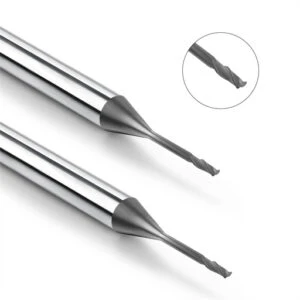
Graphite Dust and Tool Wear: Why Does Dust Accelerate Failure?
During graphite electrode milling, operators frequently treat airborne particulate as a housekeeping issue rather than an active cutting factor. In one customer trial, electrode tolerances drifted significantly once fine carbon dust packed the enclosed workspace. Microscope inspection revealed that poor evacuation fundamentally altered contact zone tribology, turning suspended debris into an abrasive grinding medium against the carbide flank.
Graphite dust acts as a destructive physical agent rather than harmless scrap. High-speed milling generates millions of micro-particles per second that recirculate across the cutting edge if vacuum velocity drops. This continuous scrubbing drives severe graphite dust tool wear, especially during deep-pocket cavity milling and dry machining passes. Managing vacuum airflow is just as critical as selecting the correct substrate.
Frictional Interaction Between Graphite Dust and Carbide Tools
Analyzing premature edge degradation requires evaluating the dynamic boundary layer between the relief face and the workpiece. When microscopic particles linger inside the cut channel, high-speed spindle rotation forces these hard fines directly into the tool-part interface. This continuous three-body rubbing scrubs the flank face of the carbide cutting tool, causing rapid cobalt binder leaching.
Diagnosing this failure mode requires assessing extraction velocity, particle mesh size, and localized tool clearance. Severe flank scouring paired with visible dust packing inside cutter flutes indicates that evacuation failure—not incorrect feeds—is accelerating edge decay. Optimizing localized vacuum nozzle positioning directly halts this aggressive abrasion before changing cutter grades.
How Graphite Dust Accelerates Tool Wear
Dust-induced degradation develops non-linearly across a production shift. During initial passes, sharp edge prep slices through the matrix with minimal rubbing. Over extended run times, recirculating fines round the primary relief angle, drastically spiking cutting friction and thermal build-up. This shift explains why graphite cutting tool wear appears negligible early on but accelerates sharply mid-batch.
When dimensional repeatability decays halfway through a run, inspecting localized dust evacuation provides immediate answers. Directing high-pressure air blasts alongside dedicated high-CFM extraction prevents micro-particles from being re-cut. Combining high-efficiency evacuation with proper tool geometry stabilizes cutting forces and prevents premature edge degradation.
The Impact of Dust-Induced Wear on Machining Stability and Tool Life
In high-precision EDM electrode fabrication, dust-driven degradation directly causes out-of-spec parts long before structural tool failure occurs. As abrasive scouring erodes cutting edges, machining forces increase, causing thin-rib deflection, bottom-corner chipping, and rough surface finishes. Inadequate particle removal remains a primary driver of unpredictable part rejection.
True cutter longevity is determined by dimensional repeatability rather than catastrophic fracture. Once edge rounding induces dimensional drift or excessive burring, the cutter’s productive cycle has ended. Implementing optimized vacuum extraction alongside scheduled tool offsets stabilizes graphite machining tool life across lights-out production schedules.
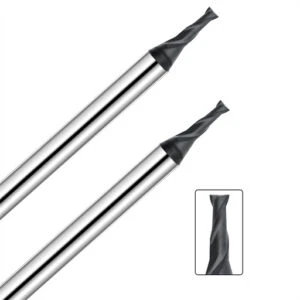
Carbide Tools for Graphite Machining: Why Does Graphite Cause Rapid Wear?
Standard carbide end mills handle initial passes well when milling graphite electrodes and molds. However, long-run edge retention remains a persistent challenge on the shop floor. In one customer run, parts held tight tolerances initially, but dimensions soon drifted across detailed finishing zones. Tool inspection revealed severe flank wear caused by continuous micro-abrasion rather than programming errors.
Analyzing the degradation of graphite machining carbide tools requires looking beyond bulk hardness ratings. Material density, grain structure, and porosity dictate how brittle particles detach and rub against the tool interface. When identical cutters deliver inconsistent tool life across different graphite batches, the microscopic contact zone—not an inherently defective cutter—holds the actual cause.
The Wear Relationship Between Tungsten Carbide and Graphite
Tungsten carbide tooling provides the high compressive strength and hardness required for graphite milling. Even so, it cannot completely resist the scouring effect of continuous carbon fines. During prolonged, high-removal cycles, billions of dislodged micro-particles pass across the relief surfaces. This sustained mechanical rubbing steadily abrades the cutting edge.
Tools with identical overall dimensions often show drastically different wear curves under identical feed rates. Evaluating tungsten carbide wear in graphite machining requires analyzing the substrate’s grain size, binder ratio, and edge hone. Comparing nominal hardness charts is insufficient; true cutter durability must be verified by examining actual flank wear bands after production milling.
Wear of WC Grains and Binder Phase in Carbide Cutting Tools
Under high magnification, cemented carbide reveals a composite structure of hard tungsten carbide (WC) grains embedded within a cobalt binder. During cutting, abrasive graphite debris erodes the softer cobalt binder first, loosening the exposed hard grains. This selective binder depletion accelerates edge rounding, flank washout, and localized micro-chipping along the primary relief.
Balancing hard-phase grain size against cobalt content is critical when selecting tooling substrates. Sub-micron WC grains with low binder percentages improve abrasion resistance during fine-finishing passes. Conversely, higher binder grades provide impact toughness for heavy roughing cuts. Selecting the right substrate minimizes WC grain and binder phase wear under variable shop conditions.
Cutting Edge Wear Mechanisms in Carbide Tools for Graphite Machining
Evaluating tool condition requires assessing cutting edge geometry rather than spindle run time alone. A fresh, sharp tool shears cleanly, but continuous particle contact causes progressive edge rounding and flank abrasion. In high-speed graphite milling, this wear cycle increases radial cutting forces and accelerates edge degradation.
Dimensional drift, corner burring on thin electrode ribs, and rough surface finishes indicate that edge wear has occurred. Operators should never run cutters until catastrophic edge failure or breakage occurs. Tracking carbide cutting edge wear in graphite machining allows shops to replace tools proactively, preserving electrode accuracy and reducing scrap.
How Does Carbide End Mill Wear Affect Graphite Cutting Tool Life?
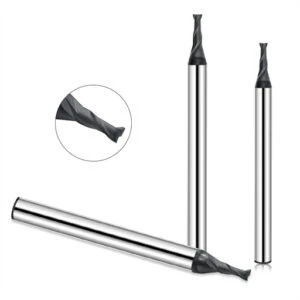
In precision graphite electrode milling, tool longevity should never be tracked by run-time hours alone. During a long production run, an operator noticed dimensional drift across fine details, even though no catastrophic breakage occurred. Microscopic inspection revealed that continuous flank scouring and subtle cutting edge rounding had developed over time. This insidious carbide end mill wear alters cutting mechanics long before complete tool failure occurs.
Determining true tool life requires evaluating part consistency rather than simply asking if the cutter can still remove material. As edge rounding advances, cutting forces spike, introducing tool deflection, rib chipping, and erratic surface finishes. When dimensional repeatability degrades across a shift, analyzing progressive wear patterns alongside material density provides clear answers for stabilizing the milling process.
Key Signs of Carbide End Mill Wear
Common indicators of cutter degradation in graphite machining include edge dulling, micro-radius rounding, flank abrasion, and localized corner chipping. In high-speed finishing operations, even minimal edge loss increases cutting resistance and alters nominal tool geometry. Detecting these subtle shifts early prevents scrapped electrodes and costly EDM rework.
Identifying carbide end mill wear signs in graphite machining requires inspecting both the cutting edge and the finished workpiece. A cutter may appear usable to the naked eye while already producing micro-burrs and edge blowout on delicate rib features. Combining optical magnification with surface roughness checks ensures early detection before severe geometry loss occurs.
How Tool Wear Affects Graphite Cutting Tool Life
Tool degradation follows an accelerated wear curve once initial edge rounding begins. Continuous micro-particle scouring wears down the sharp cutting radius, increasing tool-workpiece friction and localized cutting pressure. If feed rates remain unchanged, this increased friction accelerates flank erosion and leads directly to premature corner failure.
In production environments, effective lifespan is defined by the ability to hold tight tolerances and crisp corner radii. Once an end mill can no longer guarantee critical electrode dimensions, its practical graphite cutting tool life has ended. Controlling early abrasive wear through proper coatings and vacuum extraction extends predictable service life across lights-out machining cycles.
The Relationship Between Graphite Cutting Tool Wear and Surface Quality
Surface finish degradation almost always appears before visible tool failure occurs. A fresh cutter shears graphite cleanly, but an abraded cutting edge plows through the matrix, pulling out loose grains rather than cutting them cleanly. This dynamic produces rough surface textures, fuzzy detail lines, and chipped electrode ribs.
When surface finishes deteriorate under constant cutting parameters, inspecting graphite cutting tool wear is the first step. Progressive edge dulling directly impacts Ra values and creates inconsistent graphite surface finish quality across identical batches. Maintaining rigid quality standards means retiring cutters based on surface integrity rather than running them until total failure.
How Can the Impact of Abrasive Wear from Graphite on Carbide Cutting Tools Be Minimized?
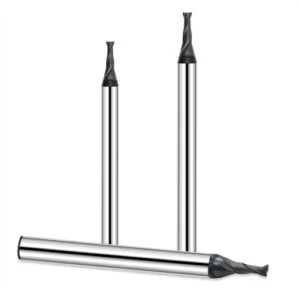
Solving rapid tool degradation in graphite machining is rarely as simple as buying premium cutters. In one electrode project, identical carbide tools showed severe wear acceleration despite stable initial cuts. A systematic review revealed that cutting loads, edge hone, and dust evacuation were working against the tool simultaneously. Adjusting these variables sequentially stabilized wear and restored reliable production.
Mitigating severe graphite abrasive wear requires treating the CNC setup as an integrated system. Spindle speed, chip load, tool geometry, machine rigidity, and vacuum velocity all directly dictate the wear rate. When troubleshooting erratic tool life, isolating the primary wear mechanism before changing parameters ensures you know exactly which adjustment solved the problem.
Optimizing Graphite Machining Parameters to Reduce Tool Wear
Adjusting cutting data should always begin by analyzing the specific wear pattern on the tool. Heavy flank scouring suggests excessive surface speed, while micro-chipping points to aggressive chip loads, deep radial cuts, or spindle vibration. Pushing parameters to maximize material removal often triggers severe tool breakdown, ultimately hurting net cycle productivity.
Finding the optimal operating window balances cycle time against predictable tool life. Adjusting graphite machining parameters requires tailoring feed per tooth and depth of cut to the specific graphite grain size and operation type. Separating roughing and finishing parameters—while documenting edge wear after each change—is the most reliable way to reduce graphite tool wear across production batches.
Optimizing Carbide End Mill Geometry to Extend Tool Life
Cutter geometry influences tool life just as significantly as the carbide substrate itself. In side-by-side shop testing, tools with identical diameters exhibited completely different wear rates due to subtle variations in flute core thickness, helix angle, and edge prep. Proper geometry balances cutting force distribution with efficient debris evacuation.
For electrode finishing, selecting the right carbide end mill geometry requires balancing edge sharpness with structural strength. An overly sharp edge chips quickly under abrasive impact, while excessive edge hone increases cutting pressure and part deflection. Choosing optimized graphite end mill geometry for longer tool life ensures the cutter structure matches your specific roughing or finishing demands.
Controlling Graphite Dust-Related Wear to Improve Machining Stability
Dust management is frequently overlooked as an active wear factor on the shop floor. In one customer facility, severe flank wear accelerated despite optimal feeds and speeds because dense carbon fines accumulated inside deep cavities. Re-aligning high-pressure air nozzles and boosting localized vacuum capture immediately halted the abrasive scrubbing cycle.
Preventing severe graphite dust tool wear requires ensuring that airborne fines exit the cutting zone instantly rather than recirculating. Directing high-velocity air blasts alongside high-CFM extraction clears abrasive particles before the flutes can re-cut them. Implementing effective graphite dust control for tool life creates a stable, repeatable environment for lights-out electrode machining.
Can Diamond Coated Carbide End Mills Mitigate Graphite Tool Wear?
Graphite tool degradation stems from combined friction mechanisms rather than a single source. Brittle grain fracture releases abrasive dust that accelerates flank wear, while high spindle loads and aggressive step-overs trigger localized chipping. When uncoated cutters wear out prematurely, jumping straight to coated tools without analyzing the failure mode rarely fixes underlying setup issues.
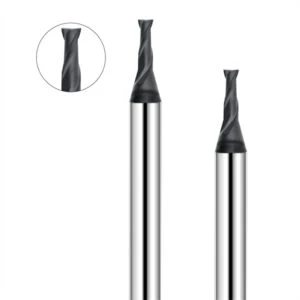
If abrasive flank scouring and dimensional drift dominate your finishing passes, diamond coated carbide end mills offer a proven solution. However, maximizing their performance requires matching the substrate grain structure, diamond thickness, and vacuum airflow to your specific graphite grade. Coatings protect against abrasive particle scouring, but they cannot compensate for unoptimized feeds, speeds, or inadequate dust extraction.
How Diamond Coatings Reduce Graphite Abrasive Wear
Chemical vapor deposition diamond layers provide exceptional surface hardness (up to 10,000 HV), creating an ultra-tough barrier against abrasive carbon dust. As pulverized micro-particles flow past the cutter, the diamond matrix prevents cobalt binder erosion. This robust layer minimizes graphite abrasive wear, allowing the tool to hold tight corner radii across long production cycles.
When milling ultra-fine, high-density graphite grades, standard cutters dull quickly under constant particle friction. In our shop evaluations, testing diamond tools against bare carbide under identical parameters reveals dramatic gains in edge retention. Verifying coating adhesion and uniform edge prep ensures the protective layer resists flaking under continuous high-speed finishing cuts.
Wear Differences: Diamond Coated vs Standard Carbide Cutting Tools
Evaluating diamond coatings against bare substrates centers on wear progression rates rather than initial cutting feel. Uncoated tungsten carbide rapidly develops flank washout and cutting edge rounding when exposed to abrasive dust. In contrast, diamond-armored surfaces maintain their original cutting profile, preventing erratic tool deflection and part dimensional drift.
Comparing diamond coated carbide end mills vs uncoated carbide tools for graphite requires measuring total linear cutting distance rather than simple run time. Tracking dimensional drift, edge integrity, and workpiece surface roughness under identical feed rates confirms real-world cost efficiency. This side-by-side data reveals exactly when the extended life of diamond tooling justifies its initial investment.
How Diamond Coated Carbide End Mills Extend Tool Life
Practical tool life is defined by how long an end mill holds critical tolerances and crisp surface finishes. By preventing premature cutting edge rounding, diamond layers stabilize radial cutting forces and eliminate erratic rib chipping. This consistent performance directly extends graphite cutting tool life across demanding, lights-out EDM electrode manufacturing.
If your machining cycle suffers from rapid edge dulling, switching to a diamond tool offers immediate gains in tool life. However, if premature tool failure is driven by edge chipping or tool deflection, optimizing tool rigidity, chip load, and step-over must come first. Balancing coating selection with proper cutting parameters ensures reliable, repeatable precision in high-volume graphite milling.
FAQ: Graphite Cutting Tool Wear and Carbide End Mill Wear
On the shop floor, troubleshooting graphite electrode milling usually centers on recurring questions about abrasive degradation, batch-to-batch tool life variance, and coating selection. While these issues appear distinct, they all link back to material grain structure, cutting zone friction, and chip evacuation dynamics.
Diagnosing premature failure requires evaluating the entire machining ecosystem rather than blaming a single parameter. Comparing graphite grain size, dust extraction efficiency, and tool wear morphology provides a clear roadmap to solving carbide end mill wear and stabilizing part accuracy.
Why Is Graphite Abrasive to Carbide Tools?
Graphite’s abrasiveness stems from micro-particle scouring rather than bulk hardness. During cutting, the material undergoes brittle fracture, releasing billions of hard, dislodged carbon fines. These particles continuously rub against the tool’s relief faces, accelerating cobalt binder depletion and edge rounding.
Understanding why graphite is abrasive to carbide tools requires analyzing the material’s microstructural density and wear patterns. When flank scouring dominates the cutting edge, managing micro-particle friction through proper tool geometry and coatings is the key to preventing premature failure.
Why Does Graphite Wear Carbide End Mills?
Graphite wears carbide cutters because loose carbon grains create a persistent three-body abrasive contact zone. Differences in graphite porosity, bulk density, and grain size drastically alter the volume and sharpness of dislodged particles, causing significant tool life variations across different graphite grades.
If initial electrodes meet tight tolerances but subsequent parts develop burrs and dimensional drift, progressive edge rounding is occurring. Addressing graphite wear on carbide end mills starts with checking cutting edge integrity before fine-tuning spindle speeds, feed rates, and radial step-overs.
Does Graphite Dust Accelerate Carbide Tool Wear?
Unmanaged graphite dust significantly accelerates tool breakdown. When fine carbon particles linger in the cutting zone, high-speed spindle rotation continuously re-cuts and scrubs these abrasive fines against the tool flank, compounding normal mechanical wear during extended dry machining passes.
Optimizing localized vacuum velocity and directing air blasts directly into deep pockets prevents this abrasive recirculation. Implementing effective dust extraction protects the cutting edge, ensuring that graphite dust tool wear does not compromise machining consistency or surface finishes.
How Can I Extend Graphite Cutting Tool Life?
Extending cutter longevity requires balancing chip load, cutter geometry, and debris evacuation simultaneously. In high-precision electrode manufacturing, machinists must first inspect worn tools under magnification to confirm whether flank wear or micro-chipping is the primary failure mode.
Stabilizing feeds and speeds, utilizing sub-micron carbide grades, and ensuring adequate vacuum airflow are essential steps to extend graphite cutting tool life. Once cutting parameters are optimized, upgrading to specialized wear-resistant coatings delivers maximum tool longevity across long production runs.
Are Diamond Coated Carbide End Mills Better for Graphite Machining?
Diamond-coated tools significantly outperform uncoated carbide in high-abrasion, long-reach finishing applications. The ultra-hard diamond layer resists abrasive grain scouring and preserves original edge geometry, making diamond coated carbide end mills for graphite the industrial benchmark for tight-tolerance electrode manufacturing.
However, diamond coatings cannot solve mechanical vibration, poor toolholder runout, or excessive chip load impacts. Verifying machine rigidity and optimizing feeds and speeds first ensures you get the full tool-life and cost-efficiency benefits from diamond-armored tooling.