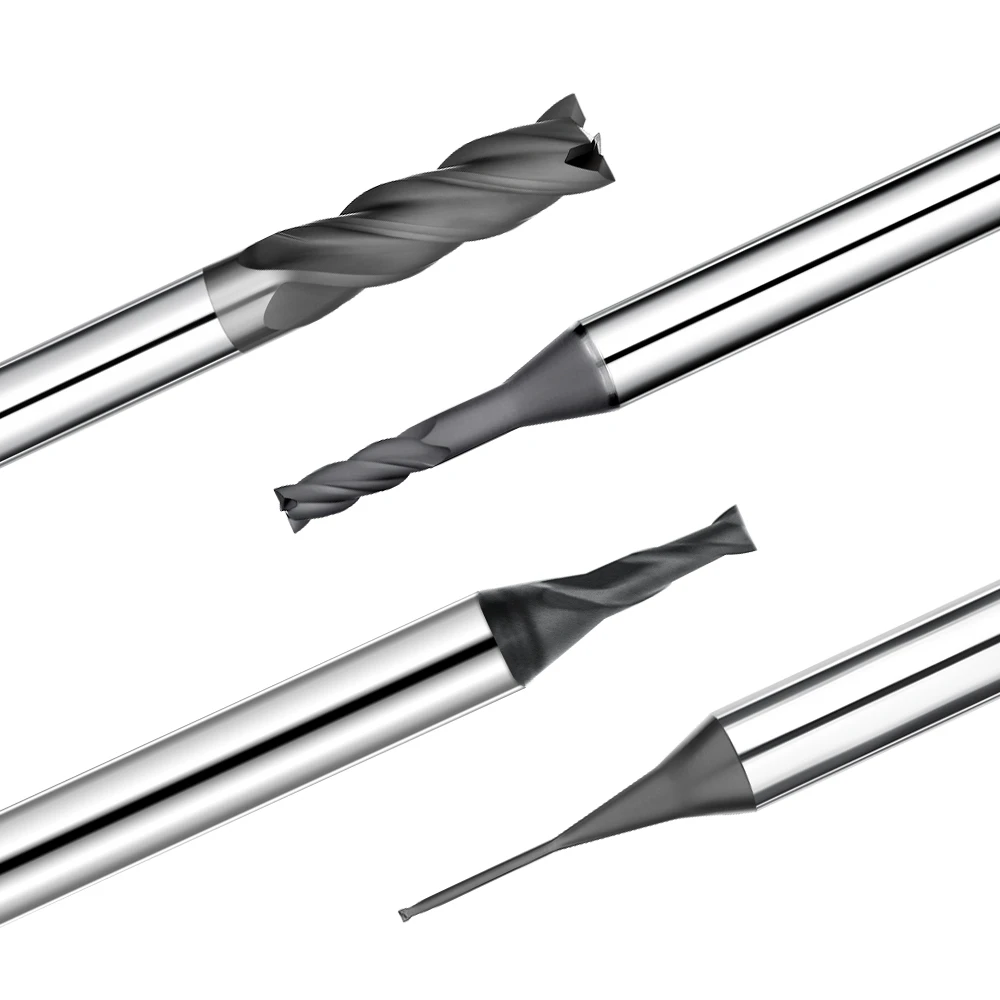
During a pilot production run of graphite EDM electrodes for a European client, we hit an unexpected bottleneck. The issue wasn’t our five-axis machine precision or our programmed toolpaths. Instead, we faced a hidden failure point: a drastic, non-linear drop in tool life characterized by sudden edge chipping and catastrophic failure.
Performance varied wildly across different batches, even when using identical process parameters and toolpath strategies. Some tools suffered micro-chipping during roughing, while others experienced total coating failure during finishing. This rapid tool wear was driven by a destructive combination of graphite dust abrasion, cutting heat accumulation, and dry machining conditions.
We repeatedly encountered these issues when processing high-density isotropic graphite. Traditional carbide end mills simply cannot maintain consistent tool life in these environments. Even after optimizing our spindle speed, feed rate, and depth of cut (DoC), we only delayed tool failure rather than solving it.
The breakthrough came when we systematically compared diamond coated end mills against conventional carbide tools. By redefining the application parameters for diamond coated tooling, we established a stable, repeatable CNC machining process. This system approach drastically reduces tool wear rates and improves surface finish consistency in mold-making and EDM electrode production.
Ultimately, successful graphite machining isn’t just about choosing the best end mill. It requires a cohesive, integrated system that synchronizes tool geometry, diamond coating wear resistance, and your overall machining strategy.
If you are struggling with inconsistent tool life or premature diamond coating failure, optimizing a single parameter won’t fix it. You need to re-examine your entire machining system. Is the cutting tool really the only problem?
Analysis of Core Mechanisms Behind Tool Wear in Graphite Machining
Across our extensive history with graphite electrode machining projects, data shows that cutting tools rarely fail abruptly. Instead, they undergo continuous, microscopic degradation that progressively compromises dimensional stability. This subtle erosion is especially aggressive when processing high-density isostatic graphite materials, where even slight geometry changes ruin workpiece tolerances.
We define this phenomenon as a process of cumulative instability rather than a single parameter failure. It represents a destructive synergy between raw material properties, airborne particulates, and dry cutting conditions. This explains why the exact same tool can exhibit wildly inconsistent tool life across different customer machine shops.
Why Graphite Machining Causes Rapid Tool Wear
During our early high-volume runs of EDM electrodes, our primary bottleneck was severe abrasive wear on the tool’s cutting edge. Although bulk graphite has low hardness, its micro-granular structure acts as a continuous abrasive matrix during chip formation. At high spindle speeds, these detached particles inflict millions of micro-cutting actions on the tool edge, making this the primary obstacle to tool wear reduction in graphite machining.
We quickly learned not to blame tool quality issues or individual tooling brands for this rapid degradation. Swapping suppliers while maintaining the same legacy cutting strategy yielded identical, predictable failure patterns. Our field data proves that wear is fundamentally dictated by the interaction between material physics and tool engagement, not a single variable.
The Impact of Graphite Dust on Cutting Tool Wear
On the production floor, machinists frequently underestimate the destructive nature of airborne graphite dust. We routinely observe that even high-velocity dust extraction systems leave millions of micro-particles suspended directly in the cutting zone. Pushed by high-speed vortexes around the spindle, these particles wedge themselves directly into the contact interface between the tool and the workpiece.
This harsh environment triggers a distinct graphite dust abrasion pattern: a highly uniform wear land across the tool’s flank face rather than localized chipping. When we spot this uniform wear band, it tells us that environmental dust accumulation—rather than your programmed cutting parameters—has become the primary limiting factor for tool life.
The Relationship Between Dry Graphite Machining and Tool Life
For the vast majority of our projects, dry graphite machining is the mandatory process standard. Eliminating liquid coolants is necessary to prevent sludge formation, protect the porous graphite structure, and maintain effective vacuum extraction. However, from a tool life perspective, removing fluids introduces a punishing compromise to the cutting ecosystem.
Without a liquid medium, the core issue isn’t thermal shock, but the total inability to flush microscopic debris from the cutting zone. Consequently, the tool continuously re-cuts and re-grinds the abrasive particles trapped in the slot, accelerating micro-abrasion on the tool surface. This damaging recycling effect multiplies exponentially when machining deep-cavity structures or narrow ribs.
Common Tool Failure Modes in CNC Graphite Machining
Through thousands of hours auditing CNC graphite machining lines, we classify tool failure into two primary modes: gradual edge wear (dulling) and catastrophic chipping. Gradual flank wear develops predictably during long, stable runs, manifesting as a slow, manageable drift in your part dimensions over time.
Conversely, micro-chipping triggers instantly due to localized stress concentrations during sudden feed rate spikes or abrupt toolpath changes. This is common when entering complex cavities or sharp 90-degree corners. Our experience shows these failures do not happen in a vacuum; they result from the combined dynamics of tool geometry, chip evacuation, and process stability.
Tool Selection Logic for Graphite Machining Systems
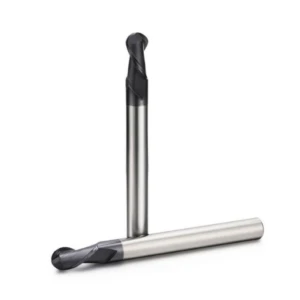
In our extensive field experience with graphite electrode machining projects, we have learned that the optimal tooling configuration is rarely determined on paper. Instead, it must be refined through iterative test cuts and rigorous failure analysis. For high-precision EDM electrode projects, we routinely test multiple tooling strategies against identical blueprint specifications to lock in long-term process stability.
Practical application proves that tool selection goes far beyond simple wear resistance. It is a comprehensive decision engineering process that must balance material microstructure, advanced coating systems, cutting edge geometry, and machining cadence. During prolonged, lights-out machining cycles, a slight deviation in any of these variables will escalate into severe dimensional drift and rejected surface finishes.
Selection Criteria for the Best End Mills for Graphite
When sourcing the best end mills for graphite, many programmers make the mistake of focusing strictly on initial sharpness. In a highly abrasive graphite machining environment, true tool longevity depends entirely on the substrate’s wear-resistance mechanism. Under high-speed, dry-cutting conditions, the cutting edge’s ability to resist continuous micro-abrasion is vastly more critical than a razor-sharp edge.
After benchmarking diverse structural designs across dozens of client turnkeys, we found that subtle factors dictate tool life stability in graphite machining. Specifically, micro-engineered edge honing, specialized flute angles, and proprietary coating adhesion methods determine success. Because of this, we never rely on a single catalog specification; we validate every tool choice through live machining cycles.
Comparative Analysis: Carbide End Mills vs Diamond Coated Tools for Graphite
In our early production runs, we frequently deployed standard carbide end mills to save on initial tooling costs. However, during continuous graphite machining, we observed massive inconsistencies in tool life, with wear rates accelerating exponentially when cutting high-density graphite or deep cavities. These erratic wear cycles become a major liability during high-volume batch production.
In contrast, diamond-coated tools for graphite deliver unmatched stability against abrasive wear mechanisms. They significantly retard edge dulling and maintain geometric integrity during grueling dry machining operations. However, we always remind clients that these premium tools are highly sensitive to process dynamics; poor feed rates or erratic toolpaths will cause premature coating delamination.
Why Diamond-Coated End Mills Are Essential for Graphite Machining
Through years of executing complex EDM electrode machining projects, we have established a clear baseline: diamond-coated end mills are essential for stable graphite machining. They are non-negotiable when processing medium-to-high-density materials and complex, 3D curved surfaces that require mirror-like finishes.
Yet, we never treat diamond coatings as a standalone silver bullet. In real-world shops, the performance of these tools depends heavily on the rigidity of your machining system—including machine tool spindle harmonics, dust extraction velocity, and feed control. If your setup lacks rigidity or permits dust packing, even the most expensive high-performance tool will fail prematurely.
PCD vs Diamond Coated End Mills for Graphite Machining
For specialized aerospace and automotive client projects with extreme tolerance demands, we have benchmarked PCD tooling solutions against chemical vapor deposition (CVD) diamond-coated end mills. The data reveals that while PCD tools offer unparalleled tool life under perfectly rigid conditions, they demand incredibly strict, narrow machining parameters.
Our engineering data indicates that PCD tooling is best reserved for highly standardized, high-volume production lines with dedicated setups, whereas diamond-coated end mills offer superior versatility for high-mix shops. We generally favor diamond-coated options as our primary recommendation because they tolerate real-world variations in operating conditions far better.
The Impact of Graphite Density (Isotropic Graphite) on Tool Selection
When machining isotropic graphite and various isostatic graphite materials supplied by global clients, we observe that material density dictates tool behavior. Under identical machining parameters, high-density graphite grades accelerate flank wear via intense friction, while low-density, porous grades trigger severe edge chipping and surface tearing.
Consequently, our application engineering strategy rejects a one-size-fits-all approach; we meticulously match tool geometries and coating specifications to the specific graphite density. For high-precision electrode projects, simply switching to a different material batch or supplier can completely alter your tool wear profile, requiring an immediate re-evaluation of your end mill choice.
Technical Advantages of Diamond-Coated End Mills for Graphite Machining
In our practical experience handling high-volume graphite electrode machining orders, the technical advantages of diamond coatings are far from theoretical. We have validated these performance benchmarks across multiple rounds of rigorous, head-to-head cutting tests. The true value of these tools becomes undeniably clear when machining high-density isostatic graphite under tight production deadlines.
Our engineering team prioritizes process consistency during continuous machining over sporadic, peak tool-life metrics. In long-cycle EDM electrode machining projects, the diamond coating’s resilience against the highly abrasive nature of graphite provides predictable wear cycles. This predictability allows shops to schedule tool changes accurately, provided your process parameters remain within structured limits.
Wear Resistance Mechanism of Diamond-Coated End Mills for Graphite
When we first benchmarked various advanced coatings, the most striking differences appeared right at the cutting edge. While standard or uncoated tools suffer from rapid, progressive dulling during graphite machining, diamond coated end mills exhibit a significantly slower, more uniform rate of abrasive wear. This distinct wear profile becomes highly apparent during extended, uninterrupted production runs.
Mechanistically, this specialized anti-abrasion coating does not completely stop material wear; rather, it shields the carbide substrate from immediate impact. Even in heavy dust environments, the erosion of the cutting edge happens at a very gradual, linear pace. This controlled degradation is a cornerstone of our engineered strategies for controlling tool wear in graphite machining.
Stability of Diamond-Coated End Mills in High-Speed Machining
Most modern graphite machining projects require elevated spindle speeds to achieve pristine surface finishes and competitive cycle times. Under these demanding high-speed conditions, standard carbide tools frequently suffer from harmonic vibration and micro-chipping, whereas diamond-coated end mills deliver highly predictable and controllable performance.
However, we must address a common floor reality: high spindle speeds do not automatically guarantee extended tool life. If your feed rate and toolpath strategy are mismatched, localized heat buildup or micro-chipping will still occur, even with a premium tool. That is why we always evaluate these tools as one component of a holistic CNC graphite machining strategy.
The Impact of Coating Thickness on Graphite Machining Tool Life
When conducting comparative tool life tests, coating thickness is a subtle variable that programmers easily overlook, yet it dictates real-world success. In several turnkey projects, we discovered that ultra-thick diamond coatings performed beautifully initially, but their adhesion stability during prolonged continuous machining was inferior to medium-thickness options.
From our data on optimizing tool life for graphite machining, a thicker coating is not always better. Instead, the diamond layer thickness must be precisely balanced against substrate toughness and cutting forces. In high-feed machining scenarios, we often modify the tool’s macro-geometry to support coating adhesion stability, a critical adjustment in high-volume EDM electrode production.
Why Diamond Coated Tools for Graphite Can Significantly Extend Tool Life
Across hundreds of customer mass-production applications, we have documented a clear, repeatable data pattern. Under highly stable machining conditions, diamond-coated tools for graphite can easily extend tool service life by several hundred percent compared to uncoated carbide. This lifespan extension is especially pronounced when machining high-density graphite or intricate cavities.
We always emphasize to our clients that this tool life extension is non-linear. It acts as a massive performance multiplier, but only within a stable operating range. Once your process experiences poor dust evacuation or excessive shock loads from a bad toolpath, that longevity advantage vanishes. True optimization requires treating tool life as a product of overall graphite machining process control.
Risk Control Regarding Coating Delamination in Graphite Machining
In the machining anomalies we analyze for clients, coating delamination is a rare but highly destructive failure mode. It typically triggers under extreme, localized impact loads or sudden spikes in the feed rate, manifesting as localized peeling of the diamond layer. Once the coating sheds, the exposed carbide substrate suffers rapid tool failure within seconds.
Based on our forensic tool failure analysis in graphite machining, delamination usually stems from severe process shocks rather than poor coating quality. Consequently, when troubleshooting, we audit toolpath smoothness, cutting load fluctuations, and machine tool dynamic response. Simply swapping the tool brand without fixing the underlying mechanical stress will not resolve the root issue.

Optimizing CNC Machining Parameters for Graphite
Through our long-term execution of diverse graphite electrode machining projects, we know that optimizing CNC machining parameters dictates your final tool life stability. Frequently, premature failure isn’t caused by a defective cutting tool. Instead, it stems from an improper balance between spindle speed, feed rate, and depth of cut, which causes rapid, premature tool wear.
Based on shop floor reality, parameter optimization is a process of dynamic balancing rather than applying rigid catalog values. Distinct geometries—such as deep-cavity electrodes, micro-thin walls, or high-speed contouring—demand custom parameter combinations. Without this tailored approach, maintaining consistent performance is nearly impossible, even when using premium diamond-coated end mills.
Strategies for Optimizing Spindle Speed
In our turnkeys, identifying the optimal spindle speed requires balancing your exact graphite density with the tool’s cutting diameter. During complex EDM electrode machining runs, we routinely observe that excessively low speeds induce unstable cutting and chipping. Conversely, excessively high speeds accelerate cutting edge wear, a destructive phenomenon that intensifies if your dust evacuation lacks proper velocity.
Consequently, when managing tool life in graphite machining, our engineering team never relies on a single rule-of-thumb RPM. Instead, we run brief test cuts to zero in on the sweet spot where harmonics stabilize. Maintaining a stable, vibration-free rotational speed is far more critical than chasing maximum RPM, especially when safeguarding expensive diamond-coated tools.
Determining the Appropriate Feed Rate
When programming high-volume batch orders for graphite machining, the feed rate is a highly impactful parameter that engineers frequently miscalculate. In a misguided effort to slash cycle times, many programmers initially crank up the feed rate. This aggressive approach inevitably triggers a drastic acceleration in tool wear and destroys edge profiles.
Our application data proves that your feed rate must be dictated by tool rigidity and toolpath stability, not raw speed. For high-precision electrode machining, we frequently lower the feed rate intentionally during critical transitions. This strategic reduction protects fine details, ensures superior edge quality, and delivers a much more predictable tool life.
Impact of Depth of Cut on Diamond-Coated End Mill Life
Our internal benchmarking tests consistently prove that your depth of cut (DoC) directly impacts the total service life of diamond-coated end mills. Especially during deep-cavity machining or pocketing, excessive axial or radial depths of cut spike lateral tool deflection. This mechanical stress breaks down cutting edge stability and accelerates micro-chipping.
In production, we systematically deploy a layered cutting approach to distribute mechanical loads evenly across the flutes rather than executing full-depth slotting. While multi-pass layered cutting slightly increases raw machining time, the massive payback in process stability and tool life more than offsets the extra cycles.
Decision Logic: Dry Machining Graphite vs. Air Blast Cooling
In our production facilities, dry machining serves as the default baseline process for handling graphite blocks. However, for specific deep-pocket applications, we integrate high-pressure air blast cooling to assist with chip and dust evacuation. The critical distinction here lies not in thermal reduction, but in your setup’s active dust control capabilities.
From the perspective of optimizing tool life, strategically applied air-assisted dust removal clears abrasive particulates out of the cutting zone, slowing flank wear. However, uncontrolled or poorly directed airflow will excite tool harmonics and increase tool vibration. Your decision must be based on a comprehensive assessment of your machine enclosure and vacuum setup.
Preventing Tool Damage Caused by Vibration in CNC Graphite Machining
Across the hundreds of troubleshooting cases we audit, structural vibration stands out as a hidden catalyst for catastrophic tool failure. When running setups with long tool overhangs or complex 3D paths, tiny harmonic vibrations amplify rapidly. This instability inevitably manifests as premature edge chipping and a severely degraded surface finish.
To master graphite machining process control, our vibration mitigation strategy targets three distinct areas: minimizing tool overhang length, optimizing toolpath smoothness, and balancing cutting loads. Only when you stabilize these mechanical variables can premium diamond-coated tools deliver their full service life, rather than succumbing to premature wear due to vibration.
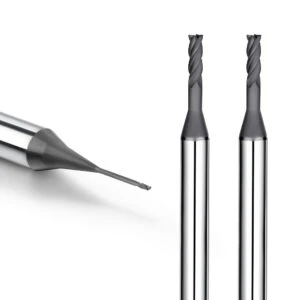
Tool Path and Process Control for Diamond-Coated Tools in Graphite Machining
Throughout our extensive history managing graphite electrode and precision mold machining projects, tool path programming and process control dictate your final machining stability. Even when deploying ultra-premium, high-performance cutters, a poorly designed tool path will cause localized abnormal wear. It also creates unpredictable variations in edge quality that can ruin tight-tolerance components.
In production environments, we treat CAM path control as the hidden core of the entire graphite machining system. It directly governs the distribution of cutting forces and dictates the mechanical shock loads generated when the cutting edge engages raw material. For complex EDM electrode cavity machining, your toolpath strategy is often more critical than the physical tool selection itself.
The Importance of Tool Path Optimization in Graphite Machining Systems
During live production runs, advanced tool path optimization serves as the primary software variable for securing long-term machining stability. When processing highly abrasive, high-density graphite materials, discontinuous movements or abrupt vector changes trigger severe load concentrations. These localized force spikes break down edge geometry and accelerate tool wear.
Comparative analysis across multiple client turnkeys shows that running the identical diamond-coated end mill under different path strategies yields massive variations in tool life. Consequently, our application engineers prioritize optimizing path smoothness, programming tangential entry and exit loops, and balancing localized material removal rates across the machining zone instead of just tweaking raw feeds and speeds.
Machining Strategies to Minimize Impact
When developing a comprehensive roadmap for tool wear reduction in graphite machining, climb milling serves as our mandatory default strategy. Compared to conventional up-milling, optimized climb cutting generates significantly less mechanical impact upon material entry. This reduction in initial shock forces helps mitigate the risk of cutting edge micro-chipping.
However, we always adapt our milling kinematics to the specific structural rigidity of the workpiece. For instance, when machining thin-walled sections or deep cavities, a lack of structural support can trigger localized vibration, even during climb milling. Therefore, true CNC graphite machining optimization rejects a one-size-fits-all strategy, favoring zone-specific control by segmenting the CAM tool path.
Application of Multi-Layer Cutting Strategies in Deep Cavity Graphite Machining
For complex, deep cavity graphite machining projects, deploying a multi-layer cutting strategy is an absolute necessity for process security. Forcing a cutter to machine to the full axial depth in a single pass spikes lateral deflection forces. This excessive bending moment rapidly compromises the structural stability of premium diamond-coated tools used for graphite machining.
Practical shop floor experience proves that layered cutting decreases the mechanical load per pass while significantly improving airborne dust evacuation. Clearing these pockets prevents high-density particle accumulation within the active cutting zone. In high-precision EDM electrode production, we frequently program a step-down strategy that progressively reduces the depth of cut per layer to maximize tool life extension.
Preventing Edge Chipping on Diamond-Coated Graphite Machining Tools
Based on hundreds of forensic tool failure inspections, edge chipping remains a highly disruptive yet completely preventable failure mode. It occurs most frequently at sharp 90-degree corners where tool paths are discontinuous or where feed rates change abruptly. Our analysis of graphite machining tool failures links this chipping directly to sudden, localized impact loads.
To eliminate this chipping risk, we optimize entry and exit toolpaths using spiral or trochoidal motions, eliminate sharp directional changes, and smooth out feed rate variations. Furthermore, when running diamond-coated tools for graphite machining, we audit the machine tool’s dynamic acceleration capabilities. Without high-end machine responsiveness, the benefits of advanced path optimization are completely lost.
Best Practices and Industrial Applications in Graphite Machining Systems
Through our extensive partnership on global graphite electrode and mold projects, we know that reliable best practices are never discovered in a vacuum. Instead, they emerge from the cumulative field insights gained across thousands of hours of on-site production. This holds especially true in EDM electrode manufacturing and high-precision mold machining, where your machine tool condition, dust extraction velocity, and tool management directly dictate process stability.
Our data proves that a truly stable graphite machining process never relies on a single optimal parameter, but rather on a repeatable system logic. This requires an engineered, closed-loop loop balancing tool selection, toolpath strategy, machining cadence, and automated quality inspection. Across our long-term client base, implementing this structured system has drastically stabilized tool life consistency.
Standard Workflow for Graphite Machining in EDM Electrode Production
In the EDM electrode machining projects we engineer, the standard graphite machining workflow must remain highly adaptable. As a block progresses through roughing, semi-finishing, and final finishing stages, programmers must scale cutting parameters dynamically based on structural complexity. This careful scaling prevents localized stress concentrations that lead to catastrophic workpiece fracturing.
On the shop floor, we prioritize the stability of transitions between these roughing and finishing stages over the peak efficiency of any single step. For instance, when machining deep-cavity electrodes, poor dust extraction during roughing will ruin your surface consistency during finishing, even when using premium diamond-coated tools designed for graphite. We evaluate process control and toolpath optimization holistically.
Practical Application Cases: Selecting the Best End Mills for Graphite in the Mold Industry
In high-end mold industry projects, clients frequently ask our team how to select the best end mills for graphite. Our application data shows that tooling requirements shift drastically based on the specific mold structure. These performance gaps become incredibly obvious when your spindle begins interpolating complex cavities and intricate, micro-thin ribs.
Head-to-head benchmarking tests comparing budget carbide end mills against premium diamond-coated tools for graphite revealed a clear divide. While diamond-coated options deliver unmatched dimensional stability during long continuous machining, carbide end mills are occasionally acceptable for short-cycle prototyping on open geometries. We always implement a tiered tooling strategy rather than a one-size-fits-all suggestion.
Stability Control Methods for High-Precision Graphite Machining (±0.01mm)
When executing high-precision EDM electrode machining contracts, holding a strict ±0.01 mm tolerance profile places extreme demands on your entire machining system. At this micron level, any minor spindle vibration, gradual tool wear, or slight toolpath deviation will instantly scrap the electrode. There is zero margin for mechanical error.
Practical experience proves that holding consistent precision relies on total system control rather than adjusting a single feed rate. You must actively synchronize machine tool rigidity, thermal spindle growth, real-time tool wear monitoring, and machining pacing. Without this holistic approach, even the highest-grade diamond-coated end mills cannot maintain dimensional consistency over long lights-out runs.
Tooling Requirements for Aerospace Graphite Component Machining
Aerospace-related graphite machining projects typically focus on functional, flight-ready graphite components featuring highly complex geometries rather than sacrificial EDM tooling. These mission-critical components demand absolute process security and allow zero tolerance for surface defects, micro-cracks, or structural delamination.
In our aerospace turnkeys, we find that the best end mills for graphite prioritize predictable wear over raw material removal rates. Flank wear linearity is far more critical than initial edge sharpness during prolonged, multi-hour continuous machining cycles. To maximize reliability, we pair diamond-coated tools with highly segmented, conservative toolpaths to mitigate mechanical risk.
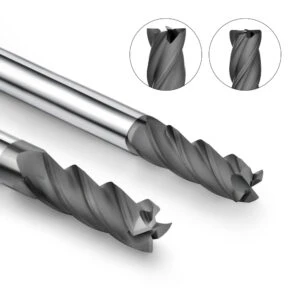
How to Extend the Service Life of Diamond-Coated End Mills in Graphite Machining
Through our long-term involvement in graphite electrode and precision mold machining projects, we know that extending the service life of diamond-coated end mills in graphite machining requires a holistic ecosystem. It is a systemic engineering challenge that spans your entire manufacturing process. In continuous batch production, erratic fluctuations in tool life often demand far more troubleshooting attention than your average lifespan baseline.
Based on practical shop floor experience, tool life management is a direct outcome of process control rather than just an inherent quality of the tool substrate. Across diverse graphite machining projects using identical diamond-coated end mills, massive gaps in final tool life emerge. These discrepancies are driven entirely by variations in cooling methods, CAM toolpath strategies, and programmed feed rates.
Proper Cooling and Cleaning Strategies for Diamond-Coated End Mills
On the shop floor, the field performance of diamond-coated end mills depends heavily on maintaining a clean cutting zone. In dry graphite machining environments, highly abrasive graphite dust accumulates continuously around the cutter. If you fail to evacuate these particulates promptly, they accelerate flank wear and ruin the stability of the cutting edge.
Consequently, during complex EDM electrode machining projects, we deploy high-velocity air blasts and localized vacuum extraction systems to clear the active cutting zone. However, we meticulously audit the airflow direction. Improperly targeted air streams can excite tool harmonics, induce vibration, or blast abrasive particles back into the cut, negatively impacting tool life.
Feed and Toolpath Optimization to Prevent Tool Wear
When developing a roadmap for tool wear reduction in graphite machining, coordinating your feed rate with your toolpath vectors is more critical than tweaking any single parameter. Excessive feed rates spike localized cutting forces instantly. If your toolpath has sharp, un-smoothed directional changes, it multiplies these damaging mechanical shock loads exponentially.
In practice, we mitigate the risk of edge micro-chipping by eliminating sudden feed rate fluctuations and programming tangential arc entries and exits. When machining a complex cavity, even the highest-grade diamond-coated tools will fail prematurely if the toolpath is poorly designed. Bad code creates highly concentrated, abnormal wear patterns that scrap tools within minutes.
The Feasibility of Regrinding Diamond-Coated End Mills for Graphite Machining
Throughout our extensive deployment of diamond-coated end mills, the economic feasibility of tool regrinding has depended on your specific coating type and the severity of the wear land. For cutting tools that have only sustained minor, uniform wear, resharpening can occasionally extend total service life. However, in abrasive graphite machining environments, the delicate diamond coating structure remains the ultimate limiting factor.
In production, we only consider tool recycling when the wear pattern is perfectly uniform and the underlying carbide substrate remains undamaged. If the substrate is compromised, the stability of the tool life after resharpening rarely meets production expectations. Consequently, within our tool life management strategy, we treat regrinding as a supplementary cost-saving experiment rather than a primary engineering solution.
Application of Tool Life Monitoring and Predictive Maintenance in CNC Graphite Machining
In high-volume mass-production projects for EDM electrodes, we have transitioned tool life monitoring from subjective, operator-dependent guesswork to data-driven management. By actively logging spindle load metrics, tracking exact machining time, and capturing vibration fluctuations, we map out the tool wear progression curve at a very early stage.
When optimizing CNC graphite machining lines, the true value of predictive maintenance lies in eliminating catastrophic, unscheduled tool breakages. Especially in automated lights-out environments, monitoring the real-time condition of diamond-coated tools allows for timely parameter overrides or scheduled tool changes. This proactive approach prevents costly machining interruptions and eliminates batch dimensional errors.
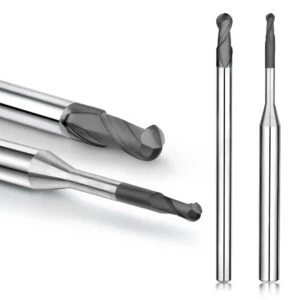
Graphite Machining System Summary: Achieving Machining with Zero Abnormal Tool Wear
Reflecting on our extensive history managing graphite electrode and precision mold machining projects, we have concluded that “zero abnormal tool wear” is a benchmark of engineered stability rather than an absolute elimination of material wear. In a real-world CNC shop, tool friction is mathematically inevitable. The true engineering goal is ensuring that wear remains 100% predictable, uniform, and controllable over long cycles.
Our field experience across global customer facilities proves that a stable graphite machining system never relies on a single isolated optimization variable. Instead, success requires a tight convergence of specialized tooling substrates, calibrated parameters, smooth toolpaths, and your active shop-floor environment. In the mass production of EDM electrodes, a failure in any single link will cascade into total system instability.
Summary of Systematic Selection for the Best End Mills for Graphite
In our consulting projects, selecting the best end mills for graphite is never a one-dimensional purchasing decision. It must be dictated by an integrated matrix balancing your exact material density, workpiece geometric complexity, and structural machine tool stability. When interpolating complex cavities or ultra-thin electrodes, variations in tool geometry dictate your yield rates far more than minor speed overrides.
Based on application data, we systematically deploy a tiered tooling strategy utilizing a calculated mix of budget carbide end mills and premium diamond-coated tools. For long-duration, high-precision finishing runs, we strictly prioritize diamond layer structural stability. Conversely, for short-cycle roughing or open, simple geometries, we program a calculated balance between raw machining efficiency and overall tool life.
Reviewing the Core Value of Diamond Coated Tools for Graphite
Through tracking hundreds of high-volume graphite machining projects, our engineering conclusion is definitive: the core value of diamond-coated tools for graphite goes far beyond superior wear resistance. Their true value lies in providing absolute performance consistency and dimensional stability during lights-out, multi-hour machining windows where manual compensation is impossible.
Comparative benchmarking proofs confirm these premium tools excel at controlling abrasive wear, but only when the parent machining system maintains high rigidity. If your machine introduces erratic feed rate fluctuations or sudden, un-blended shocks along the toolpath, this diamond coating advantage vanishes. We never evaluate tool performance in a vacuum; we audit it as part of your overall machining process stability.
Three Core Control Points for Stability in CNC Graphite Machining
When auditing problematic CNC graphite machining setups, process security always hinges on three core operational pillars: tool selection, machining parameters, and advanced toolpath control. These three pillars are not isolated variables. They form an interdependent, closed-loop mechanical system where a minor modification in one directly reacts against the other two.
Practical shop floor data reveals that even when utilizing the highest-grade diamond-coated end mill, localized abnormal wear still triggers if your CAM toolpath optimization contains erratic vector changes. An improper balance between spindle harmonics and feed per tooth will destroy the cutting edge. Therefore, our system control protocol prioritizes smoothing out toolpath load curves before fine-tuning speeds or tool change cycles.
Future Trends in Graphite Machining Systems
Looking at the manufacturing landscape over the past few years, a definitive industry shift has emerged: the demand for high-density graphite materials and micro-scale machining is accelerating simultaneously. This evolution places brutal tolerance demands on your graphite machining system, particularly when cutting fragile rib structures and complex micro-contours.
We predict that future profitability will rely heavily on integrated, smart system control capabilities. This includes deploying real-time acoustic tool wear monitoring, implementing algorithmic toolpath generation, and sourcing specialized diamond-coated tools optimized for specific graphite grades. In micro-machining environments, the slightest mechanical fluctuation is amplified instantly, a trend we consistently document in our active turnkeys.