
Achieving consistent surface finishes on graphite electrodes remains a major hurdle for many CNC shops. Even with identical blueprints, machines, and feeds, tool life and part quality can fluctuate wildly. While diamond-coated end mills deliver stable finishing results across standard batches, switching to PCD tools often introduces uncontrollable micro-chipping on complex curved surfaces.
This issue frequently disrupts high-precision graphite machining systems during critical mold electrode projects. While PCD significantly extends overall tool life, its extreme hardness behaves unpredictably along intricate geometries. Understanding why these two tool types perform so differently on identical toolpaths is the first step toward stabilizing your production.
In a recent EDM electrode project using high-density graphite, the client required a strict surface finish of Ra 0.8 or better. We initially deployed PCD end mills for the entire process to maximize tool life and minimize tool changes. However, trial cuts revealed that PCD tools struggled in tight 3D corners and complex pocket transitions.
During finishing stages with frequent toolpath changes, the rigid PCD edges amplified minute machine trajectory errors. We quickly pivoted to high-performance solid carbide diamond-coated end mills for the final passes. This adjustment yielded a highly uniform surface texture and predictable tool mark distribution across all batches.
Our field experience proves that choosing between PCD and diamond-coated tools involves more than comparing wear resistance. The decision hinges on your specific machining stage, tool rigidity, and how the cutting edge interacts with graphite at the micron level.
For high-volume graphite machining systems, roughing operations benefit most from the brute material removal capabilities of PCD. Conversely, final finishing relies on the delicate balance of cutting-edge sharpness and resilient coating tech found in diamond-coated end mills.
Modern machine shops are moving away from single-tool solutions for electrode manufacturing. Relying on one tool type for both roughing and finishing invariably forces a compromise between precision and cost-per-part. Refining your tooling strategy requires a multi-stage approach tailored to the unique behavior of graphite.
If you struggle to balance tool life and surface quality, you are not alone in this dilemma. Many shops face the same choice: utilizing ultra-durable PCD tools that lack complex contour precision, or relying on coated tools that offer superior stability but a shorter lifespan.
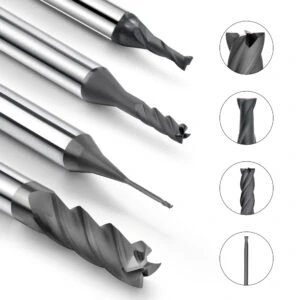
Graphite Machining Characteristics and Fundamentals of Selecting Precision Graphite Milling Tools
The most critical factor in graphite electrode machining is not the cutting tool itself, but the material’s volatile behavior. Graphite varies drastically across density grades, ranging from porous structural blocks to ultra-dense EDM graphite. These variations directly dictate cutting stability, accelerate tool wear, and cause unpredictable variations in surface consistency across identical batches.
To achieve reliable results, machine shops must move away from a trial-and-error approach and adopt systematic tool selection. Successful high-speed milling requires mitigating severe carbon dust abrasion and controlling micro-chipping at the cutting zone. Integrating precision graphite milling tools into a multi-stage strategy ensures predictable performance from roughing through final finishing.
Material Characteristics in Graphite Machining Systems
Graphite’s extreme brittleness heavily dominates its cutting mechanics, making chip formation vastly different from metal cutting. Instead of continuous shearing, the material undergoes continuous micro-fracturing as the tool edge engages the workpiece. This fracturing creates severe cutting force fluctuations, which frequently trigger localized corner breakage and edge chipping on high-precision electrodes.
Additionally, the high electrical conductivity and intense abrasiveness of carbon dust create a hostile machining environment. Driven by high-speed airflow, microscopic graphite particles continuously erode the cutting edge in a process akin to dry grinding. This abrasive environment attacks both PCD tools and diamond coatings through distinct wear mechanisms, requiring highly targeted tool selection.
Why Graphite Machining Requires Precision Graphite Milling Tools
Using general-purpose carbide tools for graphite electrode manufacturing invariably leads to poor surface consistency and unstable batch quality. Minor material variations across batches quickly manifest as visible surface flaws, especially on complex 3D curved geometries. While these defects might pass inspection on a single prototype, they ruin consistency during automated, high-volume EDM operations.
Implementing dedicated precision graphite milling tools shifts the focus from pushing speed limits to securing absolute process stability. These specialized tools offer superior control over tool runout, cutting edge consistency, and specialized diamond coating adhesion. This precision is indispensable during finishing stages, where microscopic tool variations are immediately reflected in the electrode’s final quality.
The Impact of Graphite Dust Wear Mechanisms on PCD Tools for Graphite Machining
When deploying PCD tools for graphite machining, the cutting edge experiences a unique wear phenomenon rather than traditional micro-chipping. While the structural integrity of the PCD blank remains intact, the cutting edge undergoes localized micro-erosion over long production cycles. This degradation is caused by the continuous bombardment of abrasive carbon dust hitting the binder material.
Field comparisons show that while PCD tools excel at high-efficiency bulk material removal, they are not always ideal for fine detailing. In high-concentration dust environments, maintaining a razor-sharp edge profile on complex 3D contours becomes difficult for PCD. Consequently, advanced graphite machining systems rarely rely on PCD tools alone to complete the entire finishing phase.
Three Major Modes of Tool Failure in Graphite Machining
Our shop logs indicate that tool failure during graphite milling typically follows three distinct wear modes. The first is macro-chipping, which occurs at initial impact points or during sudden toolpath inflections in heavy roughing passes. This failure mode is usually caused by an incorrect balance between aggressive cutting parameters and core tool rigidity.
The second and third modes are coating wear and progressive edge dulling, which primarily plague diamond-coated solid carbide end mills during finishing. Coating wear presents as a gradual thinning of the diamond layer, while edge dulling slowly degrades dimensional accuracy and surface finish. To maintain tight tolerances, machinists must monitor a combination of all three failure modes rather than relying on a simple timer.

A Comprehensive Analysis of PCD Tools for Graphite Machining
In high-volume graphite electrode machining projects, experienced CNC shops rarely use PCD tools for initial prototyping. Instead, PCD tools become indispensable during the mass production phase when processing hundreds or thousands of identical electrodes. When the tool life of standard carbide becomes erratic, the extreme wear resistance of PCD tools for graphite machining stabilizes the entire line.
However, practical shop floor experience proves that PCD is not a universal cure-all for every milling challenge. While it excels during heavy stock removal and extended lights-out machining, it struggles with complex 3D curved surfaces and tight toolpath inflections. Consequently, an optimized graphite machining system utilizes PCD at strategic stages rather than throughout the entire cycle.
What Are PCD Tools for Graphite Machining?
Structurally, PCD tools derive their performance from an engineered diamond matrix rather than a traditional solid substrate. Polycrystalline diamond is formed by sintering micron-sized diamond particles under ultra-high pressure and temperature, creating an incredibly hard cutting edge. In production, this robust structure resists the intense abrasion of graphite dust far better than any standard carbide edge.
Yet, this extreme hardness introduces a distinct geometric limitation: PCD cutting edges lack the complex, free-form micro-geometries available in coated carbide tools. When machining intricate 3D geometries or micro-features, this rigid edge profile can restrict toolpath tracking agility. This limitation makes raw PCD less adaptive during the ultra-precise finishing stages of complex electrode manufacturing.
Typical Applications for PCD End Mills for Graphite
In modern mold and die shops, PCD end mills for graphite find their primary home in heavy EDM electrode roughing stages. They excel in high-efficiency pocketing and bulk material removal where cycle time reduction is prioritized over flawless surface finishes. In these aggressive roughing setups, PCD drastically reduces tool-change downtime and keeps the spindle spinning longer.
Another prime application is high-volume, standardized electrode manufacturing where batch-to-batch tool life consistency is critical. In these automated environments, predictability outweighs the need for extreme detail precision on a single part. Choosing PCD for the primary roughing passes protects the machine from sudden tool breakages during long, unattended production runs.
Advantages of PCD Tools in Graphite Machining Systems
The most compelling advantage of integrating PCD tools into your graphite machining systems is their highly predictable wear curve. Unlike carbide, which can suffer rapid, catastrophic edge failure without warning, PCD degrades at a slow, measurable rate. This linear wear behavior is crucial for shop managers running overnight, unattended electrode production cycles.
Furthermore, PCD maintains its dimensional geometry over vast cutting distances, effectively eliminating workpiece dimensional drift during long cycles. In high-precision graphite milling, this geometric stability is often more valuable than raw cutting speed. It guarantees that the first electrode machined in a shift matches the exact dimensions of the last one.
Limitations of PCD Tools for Graphite Machining
Deploying PCD tools for graphite machining requires evaluating several stark economic and mechanical limitations. First is the upfront tooling acquisition cost, which sits significantly higher than that of premium diamond-coated solid carbide end mills. This cost barrier makes PCD highly uneconomical for small-batch job shop runs or rapid prototyping phases.
Second, PCD lacks the impact resistance needed for rapid directional changes and complex toolpath inflections. When navigating tight 3D corners or interrupted cuts, the brittle nature of the diamond matrix can lead to micro-chipping. This lower shock absorption capability can amplify servo tracking errors, resulting in localized gouging or surface defects.
Machining Strategies Suitable for PCD Tools
To maximize ROI, a smart graphite machining strategy separates tool usage into a phased, multi-tool workflow. The most efficient approach utilizes rugged PCD tools during the initial roughing and semi-roughing stages to strip away bulk material reliably. This isolates the heavy abrasive shock, saving the fragile finishing tools from premature wear.
Our recommended setup pairs the bulk-removal stamina of PCD with the detail flexibility of diamond-coated end mills for graphite. PCD secures volumetric stability early in the cycle, while diamond-coated carbide handles the complex surface quality and fine details. This strategic division of labor delivers the best balance of tool life, surface finish, and cost-per-part.
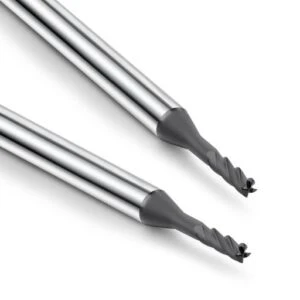
Technical Analysis of Diamond Coated End Mills for Graphite
In our long-term electrode manufacturing projects, diamond coated end mills for graphite serve as the industry standard for final finishing. When machining medium-to-high-density EDM graphite blocks, these tools deliver highly predictable performance and unmatched detail profiling compared to conventional coatings. However, maximizing their benefits requires precise toolpath control and highly optimized cutting parameters.
In practical shop workflows, we position these tools as precision instruments rather than bulk material removal tools. They are specifically deployed during finishing and semi-finishing stages where cutting forces are stable and uniform. While they have low tolerance for heavy mechanical shock, their ability to control micro-surface textures makes them indispensable for achieving tight tolerances.
What Are Diamond-Coated End Mills for Graphite?
The core performance of these specialized tools stems from their micro-crystalline diamond layer applied via CVD (Chemical Vapor Deposition) technology. This process deposits a pure diamond matrix directly onto a solid carbide substrate, creating an incredibly hard edge with a very low friction coefficient. This unique atomic structure significantly reduces abrasive edge wear during high-speed milling.
However, this thin crystal matrix introduces a distinct sensitivity to sudden mechanical impact loads. Localized micro-chipping can occur at the coating interface if the tool experiences erratic feed rates or sharp direction changes. Managing these micro-forces through smooth toolpath programming is essential when machining intricate high-precision graphite milling tools.
The Relationship Between Substrate Material and Performance in Solid Carbide Diamond Coated End Mills
The real-world success of solid carbide diamond-coated end mills depends heavily on the quality of their underlying tungsten carbide substrate. We prioritize ultra-fine micro-grain substrates with uniform cobalt distribution to maximize core rigidity and damp harmonic vibrations. If the substrate deforms under high-speed cutting loads, the premium diamond coating will crack and fail prematurely.
Field data confirms that pairing a premium substrate with advanced CVD coating tech drastically reduces micro-vibration amplification during finishing passes. This structural synergy is critical when milling complex EDM electrodes, as even minor spindle harmonics will manifest as visible chatter marks on the workpiece surface. Investing in premium substrate integrity directly stabilizes your entire graphite machining system.
Coating Advantages of Diamond-Coated End Mills for Graphite
The most immediate operational benefit of diamond-coated end mills for graphite is their exceptional wear stability during long production runs. Unlike standard carbide, which dulls rapidly under carbon abrasion, the CVD layer maintains sharp cutting edge geometry over extended periods. This linear wear rate minimizes the need for frequent operator offsets and CNC compensation adjustments.
Furthermore, these coatings excel at resisting the aggressive, dry grinding erosion caused by suspended carbon dust particles. Driven by high-velocity flushing or vacuum airflow, this abrasive dust constantly bombards the cutting zone, yet the diamond layer remains unyielding. This resilience makes them the top choice for automated, high-precision graphite milling tools.
Actual Performance in Precision Graphite Milling Tools
Across numerous mold and die projects, diamond-coated end mills for graphite have proven their ability to secure flawless surface quality. They consistently achieve a uniform Ra 0.8 surface finish or better during continuous, long-duration finishing passes. This predictable texture uniformity eliminates the localized batch-to-batch variations common with non-coated alternatives.
However, achieving maximum tool life remains highly dependent on maintaining stable, continuous cutting conditions. While tool longevity is outstanding during fluid, uninterrupted toolpaths, it drops sharply when encountering sudden step-overs or jerky motions. Consequently, we restrict these tools to dedicated finishing segments rather than forcing them to run the entire machining cycle.
Machining Limitations of Diamond-Coated End Mills for Graphite
A primary risk when utilizing diamond-coated end mills for graphite is sudden coating delamination. Under unstable feed rates or excessive localized chip loads, micro-cracks can propagate along the substrate-coating interface, leading to premature peeling. This failure mode typically occurs when navigating tight internal radii on complex 3D curved surfaces.
Additionally, their extreme hardness correlates with a heightened sensitivity to intermittent mechanical shock. If the toolpath lacks adequate smoothing transitions, sudden load spikes will chip the fragile cutting edge instantly. This structural limitation is why advanced shops isolate these tools from roughing cycles, reserving them strictly for controlled finishing.

Core Comparative Analysis: PCD vs DiamondCoated Tools for Graphite
When launching any high-volume graphite electrode line, shop owners always ask the same question: which tool is objectively better? However, actual production data reveals that this is not a binary choice, but a classic application-matching puzzle. Within a modern graphite machining system, PCD and diamond-coated tools routinely coexist, each dominating a distinct phase of the cutting cycle.
Our project reviews show that shops relying exclusively on PCD to maximize tool life eventually hit a wall during final inspection. They are forced to introduce diamond-coated end mills for the complex finishing passes to fix localized surface defects. Transitioning from a single-tool mentality to a staged, multi-tool configuration is the only way to achieve both cost efficiency and tight tolerances.
PCD vs Diamond Coated Tools for Graphite: Material Structure Differences
The fundamental divergence between PCD vs. diamond-coated tools for graphite lies in their micro-structural matrix. PCD tools for graphite machining feature a cutting edge formed by sintering micron-sized diamond particles into a solid, super-hard block brazed to a carbide body. Conversely, diamond-coated end mills utilize a solid carbide substrate with a thin diamond layer deposited via CVD technology.
This atomic difference directly impacts how each tool handles cutting forces. The solid diamond structure of PCD provides massive rigidity for bulk material removal, while the coated carbide system offers superior micro-cutting flexibility. Recognizing these material differences allows engineers to select precision graphite milling tools based on structural strengths rather than guesswork.
Tool Life Comparison: PCD vs Diamond Coated End Mills for Graphite
In terms of raw tool life, PCD end mills demonstrate unmatched volumetric endurance across heavy production runs. Their linear wear curve eliminates sudden catastrophic failure, providing excellent predictability during long, continuous roughing cycles. This longevity makes them the top financial choice for high-volume, standardized electrode manufacturing.
However, shop floors must look beyond raw operational hours when evaluating graphite machining systems. While diamond-coated end mills have a shorter overall lifespan, they excel at maintaining an unblemished surface finish during long profiling sequences. Judging a tool strictly by its hours in the spindle, while ignoring its specific machining stage, will lead to skewed production metrics.
Comparison of Machining Efficiency
When tuning CNC parameters, PCD tools for graphite machining prove they can withstand substantially higher material removal rates (MRR). They thrive under aggressive feed rates during roughing, provided the toolpath transitions remain fluid to prevent localized shock. This bulk efficiency is critical for clearing out deep pockets and heavy electrode channels quickly.
In contrast, solid carbide diamond coated end mills deliver superior cutting stability during high-RPM finishing passes. Their geometry is optimized for handling fast micro-load fluctuations without chipping, which is essential when executing complex 3D toolpaths. Balancing these two efficiency profiles allows shops to minimize cycle times while protecting fine workpiece details.
Tool Cost vs Tool Life Economics
From a tool life economics perspective, the upfront acquisition cost of PCD tools is significantly higher than that of coated carbide. This premium makes PCD highly impractical for short-run job shop work or rapid electrode prototyping. However, in long-term mass production, PCD’s massive part-per-tool yield lowers the final cost-per-part dramatically.
Conversely, diamond-coated end mills for graphite fit perfectly into agile, low-volume production environments. Their lower initial price tag reduces financial exposure when machining low-batch, highly customized electrodes. Tooling decisions should always be dictated by your overarching order structure rather than the single unit price of the tool.
Comparison of Precision and Surface Quality
When auditing final part metrics, PCD tools deliver exceptional macroscopic dimensional control over long distances, but they often struggle with micro-surface textures. Their rigid edge profiles can create subtle harmonic facets along intricate curved profiles. This is where diamond-coated end mills for graphite shine, providing flawless surface consistency across complex 3D features.
In high-precision graphite milling, securing repeatable precision across multiple batches outweighs achieving a perfect finish on just one prototype. Combining both tool types into a unified workflow creates an ideal synergy. PCD locks in the bulk dimensions early, while diamond coatings refine the final surface texture to the required specification.
Comparison of Application Scenarios: Roughing / Semi-finishing / Finishing
In operational workflows, PCD end mills for graphite belong strictly in high-efficiency roughing and semi-roughing setups. They excel at hogging out bulk material on blocky geometries where tool longevity outweighs final aesthetics. Forcing a PCD tool to execute tight, complex curved surfaces invariably leads to micro-chipping and scrapped parts.
Alternatively, diamond-coated end mills for graphite represent the definitive choice for critical finishing operations. Their micro-edge sharpness stabilizes cutting forces during light-depth-of-cut profiling, ensuring uniform Ra values. Implementing this multi-stage strategy across your graphite machining systems ensures predictable quality from the first chip to the final spark.
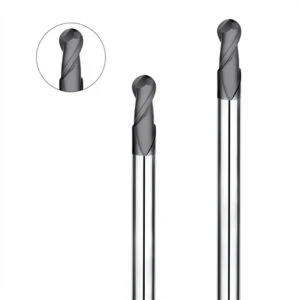
Positioning of Solid Carbide Diamond Coated End Mills Within Graphite Machining Systems
In our extensive EDM electrode and mold manufacturing projects, solid carbide diamond coated end mills have transitioned from optional specialized gear into a critical production stabilizer. For mid-volume runs demanding both aggressive cycle times and immaculate surface consistency, these tools strike the ideal operational balance. Within a modern graphite machining system, they do not compete with PCD tools; instead, they bridge the capability gap in high-precision finishing.
Field data shows that relying exclusively on PCD forces a shop into a high-efficiency roughing bottleneck, leaving no flexibility for intricate detailing. Conversely, running non-coated carbide tools spikes your tool-change downtime, destroying workflow stability. Solid carbide diamond coated end mills act as the necessary process bridge, seamlessly linking heavy metal removal to microscopic surface finishing across the manufacturing chain.
Division of Labor Between Solid Carbide Diamond Coated End Mills and PCD Tools
On our shop floor, the division of labor between these two cutting systems is crystal clear and non-negotiable. PCD tools are reserved strictly for high-removal-rate roughing passes where maximizing volumetric tool life on blocky electrode blanks is the primary goal. In contrast, solid carbide diamond coated end mills step in during the intermediate and final detailing stages to secure contour accuracy.
Our graphite machining systems eliminate production risks by assigning specialized tasks rather than hunting for a magical single-tool solution. In short, PCD handles the volume through heavy bulk removal, while the diamond-coated carbide handles the form via precision shaping. This split-workflow strategy reliably achieves tight quality metrics across large client orders where individual tool setups fail.
Tooling Stratification Strategy (Roughing → Finishing)
Implementing a strict tooling stratification strategy is standard operating procedure for safeguarding high-precision graphite milling tools. The initial roughing cycle utilizes aggressive PCD end mills to hog out mass while eliminating frequent tool-change interruptions. As the CNC program transitions to semi-finishing, diamond-coated end mills take over to stabilize the remaining stock and uniform the part geometry.
During the final finishing passes, the priority shifts entirely away from material removal rates toward surface uniformity and fine-detail retention. At this critical stage, the specialized micro-geometry of coated carbide tools prevents edge deflection on thin-rib electrode profiles. This tiered approach systematically filters out process vibrations, preventing dimensional errors from compounding near the end of the cycle.
Advantages of Solid Carbide Diamond-Coated End Mills in Small-to-Medium Electrode Machining
The operational benefits of solid carbide diamond-coated end mills intensify when processing small-to-medium electrode configurations. These intricate workpieces feature tight geometric details and narrow channels that require exceptional tracking agility from the machine spindle. Rigid, bulk-brazed PCD tools often struggle to navigate these highly localized, delicate internal contours without gouging.
Conversely, diamond-coated carbide tools exhibit superior flexible stability when executing tight multi-axis toolpaths. They maintain sharp edge profiles through small-radius corner transitions and complex, shallow cavity details where cutting forces fluctuate rapidly. This makes them the definitive choice for high-mix, low-volume shops where part complexity outweighs bulk tool life.
Application Logic for High-Precision Graphite Milling Tools
A review of our past high-precision electrode projects highlights a common shop dilemma: a client attempting to run an automated batch of multi-cavity electrodes using PCD tools exclusively. Microscopic surface variations quickly emerged in the 3D curved zones, leading to erratic spark erosion and geometric drift during the subsequent EDM phase.
We corrected the workflow by anchoring solid carbide diamond coated end mills into the finishing cycle while keeping the rugged PCD tools for roughing. This structured hierarchy within the graphite machining system ensured that micro-cutting forces remained uniform through the final pass. The adjustment eliminated subsequent EDM defects and proved the value of a balanced, multi-stage tooling ecosystem.
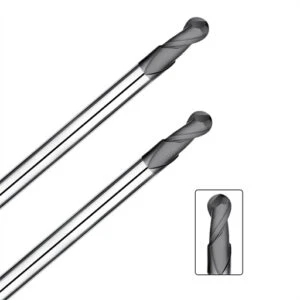
Selecting the Optimal Tool Combination for Graphite Machining Systems
In high-volume EDM mold shops, clients rarely ask which individual cutter is the absolute best. Instead, smart production managers ask how to orchestrate different tools to ensure stable, lights-out mass production. Running a single tool type across a complex workpiece with both bulk cavities and intricate micro-ribs always triggers a bottleneck. Maximizing efficiency within a graphite machining system relies entirely on the logic behind your combined tooling assembly.
Our extensive project audits confirm a clear operational boundary: PCD excels at volumetric endurance, while diamond coatings dominate fine surface control. However, final part yield depends less on the individual tools and more on the strategic tool handoffs between machining stages. Overlooking this transition balance is the primary reason shops experience erratic scrap rates across identical production batches.
When to Prioritize PCD Tools for Graphite Machining
PCD tools for graphite machining should be your primary choice under two specific production conditions. First, prioritize them during high-volume material removal passes, such as squaring raw electrode blanks, where volumetric material removal rate (MRR) dictates profitability. Second, deploy them in standardized mass production runs where a single electrode geometry is repeated over hundreds of uninterrupted cycles.
However, we routinely advise clients to isolate these ultra-hard tools from complex 3D surface detailing. Because brazed PCD cutting edges lack micro-geometric flexibility, they cannot adapt to sudden, multi-axis toolpath directional shifts without inducing surface gouging. Within a lean graphite machining system, keep PCD confined to the high-load roughing phase to maximize its structural advantages.
When to Prioritize Diamond Coated End Mills for Graphite
In our automated setups, diamond-coated end mills for graphite deliver the most consistent return on investment in two distinct scenarios. The first is semi-finishing passes with light-to-moderate stock removal, where refining the remaining material to a uniform envelope is critical. The second is high-precision finishing on complex curved surfaces that require complex, multi-directional 3D cutting vectors.
Field data proves that these CVD-coated carbide tools maintain highly uniform surface textures under consistent cutting loads. Their fine micro-grain core provides the required elastic deflection needed to track erratic toolpath inflections without fracturing. Consequently, within high-end precision graphite milling tools ecosystems, they function as your primary quality-control instruments rather than bulk stock lifters.
Hybrid Strategy Using PCD End Mills and Diamond Coated End Mills for Graphite
Relying on a single tool geometry across a diverse toolpath architecture invariably forces an expensive operational compromise. To bypass this limitation, implementing a hybrid approach pairing PCD end mills and diamond-coated end mills for graphite has become standard engineering practice. We divide the cutting labor by mechanical capability rather than forcing one tool type to run the entire program.
Specifically, the graphite machining system is programmed so that PCD locks in volumetric stability during the high-load cycles. The diamond-coated tools then step in to execute the low-load precision refinement and thin-wall geometry profiling. This hybrid layout eliminates the chipping risks of PCD on complex contours while protecting the coated carbide from premature abrasive failure.
Systematic Selection Formula for Precision Graphite Milling Tools
Selecting precision graphite milling tools requires a systematic, three-variable optimization framework balancing tooling cost, part precision, and predictable tool life. Many shops evaluate tools strictly on raw longevity, only to realize during mass production that surface consistency and cycle times dictate actual profitability. Balancing these three variables simultaneously is far more valuable than maxing out any single metric.
In actual shop floors, we run a clear economic formula: if upfront cost control is your immediate barrier, lean toward diamond-coated end mills. If maximizing unattended spindle hours is your primary driver, increase your allocation of heavy PCD tools. For high-precision contract delivery, a hybrid strategy combining both systems is the only way to safeguard your per-part manufacturing economics.
A Systematic Summary of Graphite Machining: Reviewing Tool Selection Logic
In high-precision electrode manufacturing, consistent results depend on the structural clarity of your overarching graphite machining system rather than any single cutter. Revisiting the comparison between PCD and diamond-coated end mills for graphite highlights a fundamental question: is your shop operating with a tool-centric mindset or a process-system framework?
Experienced engineers view PCD tools, solid carbide diamond-coated end mills, and standard carbide tools as parts of a tiered ecosystem rather than isolated fixes. If you are battling erratic electrode tolerances, unpredictable tool life, or poor surface uniformity, avoid the temptation to swap tools immediately. First, audit your toolpath stratification and process segmentation, as structural flaws cannot be solved by simply upgrading a cutter.
Summary of Core Decision Logic: PCD vs Diamond Coated Tools for Graphite
Reviewing hundreds of successful client projects reveals that selecting PCD vs. diamond-coated tools is never a simple binary choice. If your production line focuses on high-volume electrode roughing and you need to aggressively slash per-part costs, PCD tools represent the optimal choice for initial operations. They secure massive volumetric material removal rates while eliminating frequent tool-change downtime.
Conversely, if you are navigating complex 3D curved surfaces, thin-rib features, or strict surface uniformity requirements, diamond-coated end mills deliver superior edge control. Achieving long-term production stability depends on deploying the right tool geometry at the exact mechanical stage where it thrives. If your surface finish numbers are fluctuating, verify that your roughing and finishing toolpath boundaries are completely isolated.
Future Trends in Precision Graphite Milling Tools
The development trajectory for premium precision graphite milling tools is moving toward extreme material specialization. On one hand, CVD diamond coating adhesion continues to advance, drastically reducing the risk of coating delamination caused by abrasive carbon dust. On the other hand, micro-machining capabilities are evolving rapidly to meet the demand for increasingly intricate EDM electrode features and tighter tolerances.
For shops specializing in micro-structures or high-density graphite components, two technological advancements warrant immediate engineering attention. Look for next-generation nano-crystalline CVD coating matrices and ultra-high-rigidity micro-grain tungsten carbide tool substrates. These engineering developments will ultimately shift advanced graphite machining systems from experience-driven setups to highly predictable, empirical-parameter-driven workflows.
Summary of a Comprehensive Graphite Machining Tool Ecosystem
A highly resilient graphite machining system relies on an interconnected ecosystem containing three distinct tool tiers. This assembly combines rugged PCD tools for high-efficiency bulk roughing, solid carbide diamond-coated end mills for contour refinement, and economical conventional carbide tools for auxiliary structural features.
If you are currently experiencing erratic tool life, inconsistent cycle times, or variable electrode uniformity, re-evaluate your total tooling configuration in isolation. Often, the bottleneck is not a flawed individual cutter, but an incorrect allocation of mechanical roles within your CNC program. By breaking down your workflow relative to material density and geometry complexity, you can systematically pinpoint and eliminate your line’s production bottlenecks.
FAQ: PCD vs Diamond-Coated Tools for Graphite
In our day-to-day graphite electrode and mold manufacturing projects, tool selection FAQs arise constantly during the programming phase. When evaluating PCD tools versus diamond-coated end mills for graphite machining, many clients instinctively assume one is universally superior to the other. However, in a high-efficiency production environment, this black-and-white assumption quickly falls apart under actual spindle loads.
From a practical CNC engineering perspective, the real question centers on matching tool geometry to your specific material density, machining stage, and toolpath complexity. If you are setting up automated EDM graphite machining lines or producing high-precision electrodes, the following technical breakdowns will clarify your selection logic.
Q1: Are PCD tools for graphite machining necessarily superior to diamond-coated end mills?
There is no one-size-fits-all answer when comparing these two premium cutting systems on the shop floor. PCD tools for graphite machining demonstrate unmatched structural longevity during heavy-duty bulk material removal and extended, continuous roughing cycles. Their massive wear resistance maximizes material removal rates (MRR) and minimizes tool-change downtime when hogging out large electrode blanks.
However, when machining complex 3D curved surfaces, thin-rib features, or tight internal profiles, diamond-coated end mills provide far better surface quality. Their micro-edge geometry adapts fluidly to intricate toolpath vectors where brittle PCD edges might micro-chip. Within an optimized graphite machining system, we view these tools as complementary partners rather than direct replacements for one another.
Q2: What is the typical service life of solid carbide diamond-coated end mills?
Across our manufacturing logs, the operational lifespan of solid carbide diamond-coated end mills fluctuates heavily based on application variables. Under optimized EDM graphite machining conditions—using steady feeds, smooth step-overs, and aggressive dust extraction—these tools reliably handle anything from mid-batch runs to extended finishing cycles.
However, if your electrode design forces the spindle into frequent interrupted cuts or violent direction changes, the coating layer faces severe mechanical shock. When auditing precision graphite milling tools, our shop never relies on a generic “hours-in-spindle” metric. Instead, we measure real tool life by how long the edge maintains the client’s required surface finish tolerance.
Q3: Which tool is better suited for a high-precision graphite machining system?
If your primary manufacturing milestone is securing flawless surface quality control within a high-precision graphite machining system, diamond-coated end mills hold the technical advantage. This is especially true during the critical finishing stage, where their fine substrate grain allows the tool to track microscopic toolpath deviations without creating surface chatter.
Conversely, if you are running massive batches of standardized electrodes with basic, boxy geometries, PCD tools remain the more profitable choice. Because no single cutter wins every scenario, we evaluate combinations based on part precision, geometric complexity, and production volume. Designing a tiered, multi-tool process is always more reliable than forcing a single tool to run the entire job.
Q4: How can rapid wear of precision graphite milling tools be prevented?
Premature wear on premium precision graphite milling tools rarely points to a single flawed tool; it is usually a combination of parameters, toolpaths, and dust extraction. Under high-spindle-speed conditions, the continuous bombardment of abrasive carbon dust acts like dry grinding wheel friction against the cutting edge.
If your shop is burning through tooling abnormally fast, we recommend immediately auditing three distinct system areas: toolpath smoothing, feed rate stability, and your rough-to-finish stratification strategy. Within automated graphite machining systems, rapid edge degradation is almost always a systemic programming issue rather than a defect in the cutter itself.