Over years of serving the aerospace sector, we frequently encounter a common challenge: clients struggle to achieve consistent results when machining complex graphite parts. While these components are critical for high-temperature tooling and specialized aerospace aids, securing tight dimensional tolerances remains a persistent bottleneck.
Many projects start as seemingly simple milling tasks. However, as geometries grow complex, manufacturers face severe edge chipping, rapid tool wear, and inconsistent surface finishes. These issues stem from a mismatch between material characteristics, toolpath design, and tool selection.
Graphite is highly valued in aerospace for its thermal stability and low coefficient of thermal expansion. However, its high brittleness makes it prone to micro-cracking and edge chipping under cutting forces. Managing these material properties requires a deep understanding of CNC dynamics.
In addition, the abrasive nature of graphite dust accelerates tool wear and threatens machine longevity. Achieving stable aerospace graphite component machining requires a systematic approach that balances precise dust extraction with optimized cutting parameters.
Using general-purpose carbide cutters for abrasive carbon materials is a recipe for rapid tool failure. The wrong graphite end mill leads to severe tool deflection, dimensional deviations, and ruined workpieces during continuous production runs.
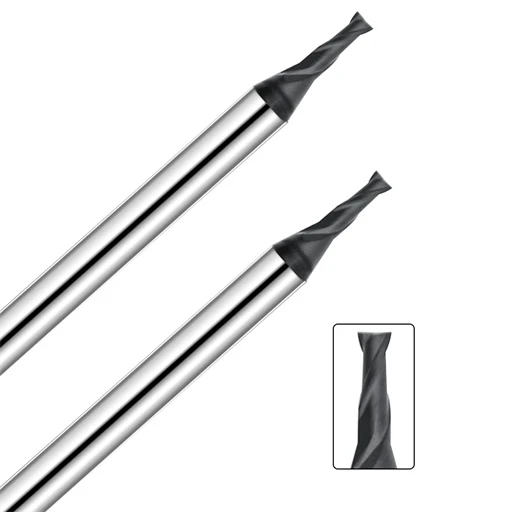
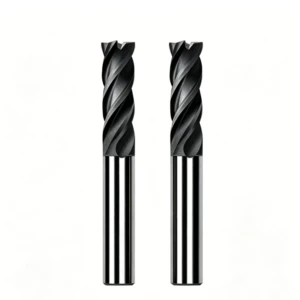
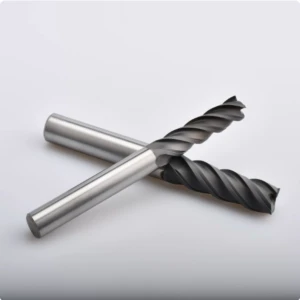
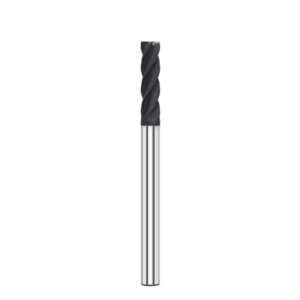
To prevent this, we equip our clients with specialized, high-performance diamond-coated graphite milling cutters. These tools are engineered to withstand extreme abrasion, ensuring long-lasting sharpness and consistent part geometry.
Selecting premium graphite machining tools is only one part of the equation. True production stability relies on a holistic integration of CNC equipment capabilities, smart toolpath strategies, and robust engineering expertise.
Our comprehensive machining systems are designed to help aerospace manufacturers eliminate process variability. We deliver tailored workflows that ensure repeatable precision, maximum efficiency, and lower cost-per-part on every run.
The Value of Graphite Aerospace Machining
Graphite is a cornerstone material for specialized aerospace components requiring extreme heat resistance and dimensional stability. In our machining facility, we often handle intricate tooling featuring deep cavities and thin walls. For these complex parts, prioritizing process stability over raw cutting speed is the secret to meeting tight aerospace tolerances.
True value in this sector comes from mastering aerospace graphite component machining through controlled, repeatable workflows. By integrating material analysis with precise CNC setups, we help aerospace engineers avoid common pitfalls like thermal distortion. This holistic strategy guarantees long-term consistency across demanding production cycles.
Typical Applications for Aerospace Graphite Components
In aerospace manufacturing, graphite parts serve critical roles in high-temperature tooling, heat-treatment fixtures, and precision positioning structures. While these components rarely bear direct structural loads, they must maintain absolute structural integrity under thermal stress. Achieving this requires specialized graphite machining tools designed for delicate materials.
When milling complex contours and micro-features, managing cutting vibration is critical to prevent edge chipping. Our team customizes the machining parameters based on the part’s exact dimensions and operating environment. This tailored approach protects fragile edges and ensures every specialized component meets rigid aerospace standards.
Advantages of Graphite Material Machining for High-Precision Parts
The primary engineering advantage of graphite is its outstanding thermal stability and resistance to deformation under frequent thermal cycling. Unlike metals, it retains its precise shape when exposed to extreme temperatures. However, unlocking these benefits requires managing challenges like dust generation and material hardness variations.
To counter these issues, we optimize cutting geometry and avoid aggressive feeds that cause micro-fracturing. Choosing a high-performance graphite end mill is vital to maintaining tool sharpness during continuous runs. By pairing the right tool with robust dust extraction, we ensure consistent part quality from the first run to the last.
The Importance of Precision Graphite Machining for Aerospace Quality
Precision machining determines not just whether a part passes inspection, but how reliably the entire assembly performs. In multi-component aerospace systems, even minor dimensional drift can halt downstream assembly. Our experience shows that maintaining quality during large-scale production requires a highly stable process window.
Many shops experience precision loss during batch production due to rapid abrasive wear on standard tooling. We resolve this by implementing specialized diamond coated graphite milling cutters that maintain sharp cutting edges. This targeted tooling upgrade, combined with optimized toolpaths, eliminates dimensional drift and guarantees repeatable aerospace quality.
Core Machining Challenges in Aerospace Graphite Component Production
Achieving a perfect first-off part in a prototype run is relatively straightforward. However, maintaining tight tolerances across hundreds of parts in a production run is where most machine shops fail. In aerospace graphite component machining, the transition from prototyping to mass production often triggers issues like edge degradation and dimensional drift.
These setbacks occur because graphite lacks the ductility of metals, making the machining process unforgiving to minor setup variations. To secure consistent quality in high-temperature aerospace tooling, engineers must holistically optimize cutting forces, chip evacuation, and toolpath strategies. Relying on a single optimized parameter is never enough to guarantee long-term stability.
Material Brittleness and Edge Chipping in Graphite Machining
Graphite’s high brittleness makes it highly susceptible to micro-chipping, especially when milling thin-walled features, sharp corners, or deep slots. As the cutting tool exits the material, high localized tensile stresses can easily shear the fragile edges. Therefore, controlling cutting force dynamics is far more critical than simply pushing for high material removal rates.
To prevent edge damage on delicate aerospace fixtures, we utilize specific climb milling paths and customized tool geometries. Upgrading to a premium, wear-resistant graphite end mill also helps stabilize cutting forces by maintaining a sharp edge profile. Adjusting these entry and exit strategies is the most effective way to eliminate costly scrap caused by chipping.
Dimensional Precision and Surface Quality Control in Graphite Machining
In aerospace production, microscopic surface defects and minor dimensional deviations can lead to catastrophic assembly failures. Most of these errors do not originate from CNC machine inaccuracies, but rather from cumulative tool wear and high-frequency harmonics. When machining deep cavities, excessive tool overhang and poor dust extraction will quickly degrade the surface finish.
To combat this, our engineering team integrates real-time tool wear monitoring with optimized dust evacuation systems. We match the specific graphite grade with high-performance diamond-coated graphite milling cutters to withstand the material’s intense abrasiveness. This targeted approach prevents thermal buildup and ensures the structural integrity of every completed aerospace component.
Requirements for Micro-Graphite Machining of Fine Structures
As aerospace designs shrink, the demand for micro-machining complex graphite geometries like miniature slots and micro-holes has surged. At this scale, even minor machining vibrations are amplified, leading to immediate tool breakage or part fracture. Consequently, micro-machining requires exceptional tool rigidity and highly specialized toolpath programming.
To achieve reliable micro-features, we bypass standard setups in favor of ultra-precise, small-diameter graphite machining tools. We run these tools at optimized feed-per-tooth rates rather than just maximizing spindle speeds, ensuring stable chip load. For high-precision aerospace parts, maintaining a stable machining environment and precise tool-runout control are the ultimate keys to success.
How a Graphite Machining System Enhances Production Efficiency
Many machine shops fail in aerospace graphite component machining not because of inadequate equipment, but due to a lack of systematic workflow planning. Relying on isolated machining methods might work for quick prototyping. However, continuous production runs often suffer from unpredictable cycle times, accelerated tool wear, and poor dimensional drift.
To overcome these bottlenecks, we implement an integrated graphite machining system that harmonizes material analysis, toolpath programming, and rigorous quality control. A truly optimized system makes the highly abrasive cutting environment predictable and manageable. For engineering teams, establishing a stable process system is far more valuable than simply pushing for faster cutting speeds.
How Graphite Machining Engineers Optimize CNC Workflows
Experienced CNC engineers never rush into tweaking machine parameters without analyzing the graphite grade and part geometry first. When dealing with complex aerospace components featuring deep cavities or thin walls, we map out potential deflection risks beforehand. This proactive approach ensures the CNC setup can handle the material’s unique structural demands.
The role of expert engineers is to mitigate manufacturing risks before the tool ever touches the workpiece. By structuring dedicated roughing and finishing sequences, optimizing chip clearance, and managing cutting allowances, we eliminate process uncertainties. This disciplined workflow optimization guarantees long-term stability and high yields during mass production runs.
A Comprehensive System Workflow: From Roughing to Finishing
When machining high-precision aerospace parts, a single-pass milling strategy is a recipe for failure. We divide our workflow into distinct stages tailored to the component’s geometric complexity. The roughing stage focuses on efficient material removal and minimizing bulk stress, while the finishing stage shifts entirely to dimensional accuracy.
Maintaining this strict separation is vital for achieving the tight tolerances required by the aerospace industry. Standard components may allow for simpler sequences, but high-precision assemblies demand continuous adjustments based on tool wear feedback. This structured progression allows manufacturers to achieve excellent surface finishes without sacrificing overall throughput.
Process Control and Parameters for Stable CNC Graphite Machining
In real-world production, cutting parameters cannot remain static because material hardness and tool conditions fluctuate constantly. When processing graphite components, engineers must dynamically adjust spindle speeds, feed rates, and axial depths of cut. This continuous monitoring ensures the tooling operates within its optimal performance window.
Aggressive parameters will trigger micro-chipping, while overly conservative feeds ruin cycle times and accelerate rubbing wear. We utilize robust graphite machining tools, such as specialized graphite end mill varieties, to maintain edge sharpness. For clients requiring scalable production, selecting high-performance diamond-coated graphite milling cutters is the ultimate key to parameter stability.
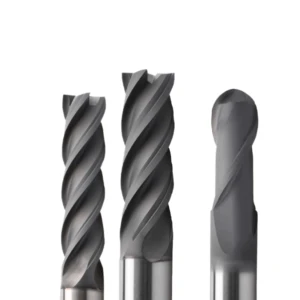
Selection Strategies for Graphite End Mills in Precision Machining
In aerospace graphite component machining, your choice of tooling dictates your success. Many machine shops invest heavily in high-end CNC centers but cut corners on tooling, leading to severe tool deflection and ruined tolerances. Our experience proves that even the most rigid spindle cannot compensate for a tool that matches poorly with graphite’s abrasive nature.
To secure tight aerospace tolerances, we select cutting tools based on a holistic assessment of cavity depth, surface finish specs, and production volumes. Roughing passes require high material removal rates and strong cores to withstand impact. Conversely, finishing operations demand pristine edge stability to prevent dimensional drift and secure flawless surfaces.
Key Performance Characteristics of the Best End Mills for Graphite Machining
The best end mills for graphite machining must combine extreme abrasion resistance, micro-edge sharpness, and optimized flute geometry. Because graphite milling generates dense, highly abrasive powder rather than ductile chips, standard tool geometries fail instantly. Without wide, polished flutes, packed dust causes thermal buildup, catastrophic tool breakage, and localized edge chipping.
In our production runs, standard uncoated carbide cutters suffer from rapid abrasive rubbing, degrading part quality within minutes. To solve this, we implement specialized graphite machining tools with engineered clearance angles that reduce friction and stabilize cutting forces. Finding the right tool means matching the specific graphite grain size with a cutter designed to handle severe abrasive wear.
Application of Solid Carbide Graphite End Mills in Aerospace Machining
We rely heavily on premium solid carbide substrates when machining complex aerospace components that demand high structural rigidity. A dedicated solid carbide graphite end mill provides the torsional stiffness needed to eliminate chatter during high-speed contouring. This rigidity is essential for maintaining flat floors and straight vertical walls in deep cavities.
During a recent aerospace tooling project, high-frequency harmonics caused severe surface wrinkling and corner radiusing issues. We resolved this by optimizing the tool’s helix angle and upgrading to specialized diamond-coated graphite milling cutters. This combination minimized cutting resistance, controlled vibration, and delivered the repeatable accuracy our client required.
Requirements for Micro-Diameter Graphite End Mills in Micro-Machining
As aerospace designs become more complex, machining micro-slots, miniature cross-holes, and delicate fins has become standard practice. These micro-features require ultra-small diameter cutters where tool deflection and runout control are constant challenges. At this micro-scale, even a few microns of spindle runout will instantly snap a fragile cutting edge.
When selecting a micro-diameter graphite end mill, we evaluate the precise aspect ratio and depth of the cut. We prioritize short flute lengths and rigid stubs to maximize core strength and prevent the tool from walking under load. Maintaining low, consistent chip loads and strict runout control is far more vital than simply pushing the spindle to its maximum RPM.
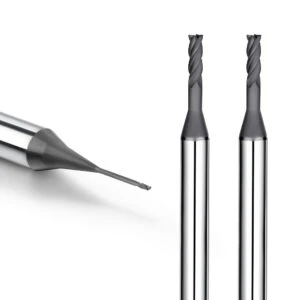
Advantages of Diamond Coated Graphite End Mills in Aerospace Machining
In aerospace graphite component machining, severe abrasive wear is the primary enemy of dimensional consistency. Standard carbide cutters dull rapidly when milling high-purity, fine-grained graphite, leading to fluctuating cutting forces and poor edge quality. For aerospace applications, maintaining absolute part repeatability requires a tooling substrate that can withstand this intense, continuous abrasion.
Integrating high-performance diamond coated graphite milling cutters solves this bottleneck by providing an ultra-hard thermal barrier. This specialized CVD diamond layer maintains cutting edge integrity far longer than traditional coatings. By preventing premature dulling, these tools eliminate frequent offsets and mid-program tool changes, ensuring stable, predictable production runs.
How Diamond Coated Graphite End Mills Extend Tool Life
Tool failure in abrasive carbon milling is driven by continuous micro-chipping and gradual flank wear. As a standard edge dulls, cutting resistance spikes, increasing spindle load and causing fragile graphite walls to fracture. Upgrading to a diamond-coated graphite end mill mitigates this by drastically lowering the coefficient of friction during chip evacuation.
In our production facility, switching to diamond-coated tooling for large-batch aerospace components increased tool longevity exponentially. The key to maximizing this lifespan lies in matching the coating thickness with optimized feed-per-tooth rates to prevent coating delamination. This strategic balance keeps cutting forces low and ensures the process remains stable from the first part to the last.
Selection Criteria for the Best Graphite End Mill for Aerospace Applications
There is no one-size-fits-all cutter; the best end mills for graphite machining are selected based on the specific grade of the material. Fine-grain graphite requires sharp, positive rake angles, while coarser, highly abrasive grades demand maximum coating thickness. Engineers must evaluate total cavity depth, machine dynamics, and dust collection efficiency before finalizing their tooling choices.
For basic roughing fixtures, high material removal rates and open flute designs take priority to evacuate fine powder quickly. However, complex aerospace components with intricate tolerances require tight runout control and maximum core stiffness. We customize the tooling geometry to match the specific structural features of the part, ensuring consistent quality over extended operational cycles.
How a Graphite Machining Tool Manufacturer Delivers Professional Solutions
As an experienced graphite machining tools manufacturer, we know that troubleshooting a failed process requires looking beyond the tool catalog. Rapid tool wear or poor surface finishes are often symptoms of improper toolpath indexing or inadequate dust extraction velocity. We analyze the entire CNC ecosystem to identify the root cause of machining instability.
Our engineering approach starts by auditing your specific graphite grade, spindle capabilities, and programmed feed strategies. For deep-cavity applications, we engineer specific neck reliefs to prevent rubbing, while for micro-features, we prioritize core rigidity. By aligning tailored tooling solutions with real-world shop floor conditions, we help aerospace manufacturers establish highly efficient, bulletproof production workflows.
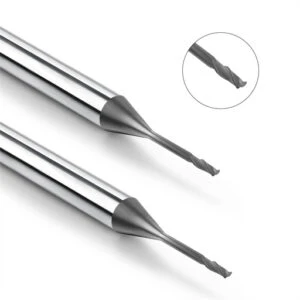
High Precision Machining Solutions for Aerospace Graphite Components
In aerospace graphite component machining, batch-to-batch repeatability is the ultimate test of a shop’s capability. Many manufacturers can dial in a single prototype, but struggle with dimensional drift during continuous production runs. This variability can disrupt downstream assembly and ruin production schedules, making long-term stability your top priority.
Achieving consistent results requires a deep integration of material characteristics, custom tooling, and rigorous inspection protocols. Meticulous process planning is the only way to shield your production line from uncontrollable cutting variables. For aerospace engineering teams, establishing a highly predictable process window is far more valuable than a lucky first-off part.
High Precision Graphite Milling Enhances Consistency in Aerospace Parts
Process drift during continuous graphite milling usually stems from uneven machining allowances and fluctuating cutting forces. As the tool moves across complex geometries, variable material resistance triggers subtle vibrational spikes that compromise tolerances. To combat this, we optimize toolpaths to maintain a constant chip load across all cutting zones.
Securing tight aerospace tolerances requires focusing on edge integrity and surface quality during the final finishing pass. By adjusting the machining sequence and using dedicated finishing tools, we successfully eliminate dimensional variance in delicate positioning components. If your batch runs lack consistency, it is time to audit your toolpath strategies rather than blaming your CNC hardware.
CNC Graphite Machining Reduces Machining Errors and Tool Wear
Abrasive tool wear is the root cause of dimensional errors in high-volume CNC graphite machining. As the cutting edge dulls, cutting forces increase exponentially, causing micro-fractures in the workpiece and shifting critical tolerances. We counter this by optimizing cutting parameters and running real-time tool wear inspections to prevent out-of-tolerance parts.
A stable CNC process relies on the perfect alignment of spindle speeds, feed rates, and high-velocity dust extraction. We often see shops prematurely swapping expensive tools when the real issue is an incorrect feed-per-tooth calculation. By matching your cutting parameters with specialized graphite machining tools, you can dramatically extend tool life and stabilize part quality.
Achieving Stable Batch Production through a Graphite Machining System
Successful batch production of complex aerospace parts requires a closed-loop machining system rather than isolated process adjustments. This system must integrate material analysis, rigid workholding, optimized graphite end mill selections, and post-machining dimensional feedback. This structured approach ensures identical part quality across separate production cycles.
We customize our machining systems to match your specific production volumes and geometric challenges. For high-volume contracts, we implement robust diamond coated graphite milling cutters to maintain a stable cutting edge over thousands of cycles. For aerospace manufacturers, investing in a complete, tailored machining system is the single best way to guarantee long-term profitability and zero-defect delivery.
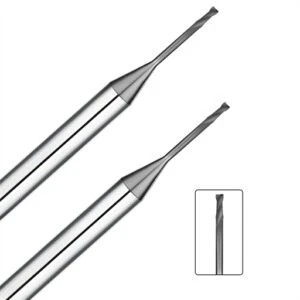
How to Choose a Reliable Graphite Machining Tool Manufacturer
In aerospace graphite component machining, choosing a supplier based solely on tool pricing or catalog specs is a common mistake. The true determinant of production stability is your manufacturer’s grasp of real-world machining challenges. For complex aerospace components, simply buying a tool off the shelf cannot resolve process-level errors.
An elite tooling partner must evaluate your specific graphite grade, spindle dynamics, and target tolerances. When milling deep cavities or intricate features, a manufacturer’s engineering expertise is far more critical than raw product parameters. Look for a supplier that acts as a technical consultant rather than just a product vendor.
Technical Support from Expert Graphite Machining Engineers
In high-precision machining, troubleshooting a failed run is rarely as simple as swapping out a dull cutter. Many shops blame the carbide grade for poor surface finishes when the root cause is actually an improper toolpath or bad dust extraction. True optimization requires engineers who can diagnose the entire CNC machining setup on the shop floor.
Our engineering team analyzes your specific material hardness, part geometries, and cutting loads to pinpoint process bottlenecks. This technical partnership eliminates expensive trial-and-error testing and stabilizes your scrap rates. For aerospace manufacturers, working with expert engineers is the fastest way to resolve persistent quality and tool-life variance.
The Impact of Graphite End Mill Design on Machining Performance
A tool’s geometric design directly dictates its cutting stability and resistance to abrasive wear. Core diameter, flute count, helix angles, and cutting edge treatments must be engineered specifically for carbon dust evacuation. When milling brittle graphite, the tool must cut cleanly with minimal impact force to prevent micro-chipping.
For high-tolerance aerospace parts, we customize the geometry of our graphite end mill options to match the specific machining stage. Roughing passes require rugged cores to handle heavy impacts, while finishing demands pristine edge sharpness to eliminate chatter. A tool’s true value is only realized when its geometry aligns with your specific CNC strategy.
An Integrated Solution: From Tool Selection to Process Optimization
Modern aerospace manufacturing requires moving away from basic tool sourcing toward integrated, closed-loop machining solutions. Because machining issues span from tool deflection to bad parameter synchronization, solving them requires a holistic approach. Optimizing a single variable while ignoring the broader process window always leaves your production vulnerable.
We deliver comprehensive solutions that pair high-performance graphite machining tools with optimized toolpaths and customized parameter setups. For complex aerospace applications, we recommend utilizing premium diamond coated graphite milling cutters to lock in your tolerances. This integrated approach ensures your shop achieves consistent, repeatable success across every single production run.
Achieving Highly Reliable Machining with a Graphite Machining System
Years of hands-on experience prove that successful graphite milling is never about a single process variable. It relies on a delicate balance between material physics, toolpath logic, and cutting tool selection. From initial analysis to final parameter optimization, every tiny detail directly dictates the dimensional stability of your finished aerospace component.
A truly reliable machining system is an integrated philosophy built around your actual shop-floor needs. For high-precision parts, our goal is to balance material removal rates with pristine surface finishes and long-term repeatability. If you are struggling with batch inconsistencies, look beyond your CNC hardware and audit your entire process workflow.
Enhancing Aerospace Quality through Precision Graphite Machining
In the aerospace sector, high-quality manufacturing depends entirely on maintaining stable precision control. Whether you are milling thin-walled high-temperature fixtures or complex positioning components, achieving batch-to-batch repeatability is non-negotiable. To secure this, we focus on minimizing process vibration rather than just hoping for a lucky inspection run.
The core value of precision aerospace graphite component machining lies in eliminating variables through a structured workflow. Optimizing tool entry angles, running tool-wear sensors, and controlling dust evacuation are critical to keeping the process stable. If your reject rates are climbing, re-evaluate how your tooling setup aligns with your specific graphite grade.
Summary: Strategic Logic for Selecting Graphite End Mills
Tool selection is the single most critical factor in determining your final surface finish and dimensional accuracy. Different machining phases and part geometries require highly specific tool geometries to prevent deflection and edge chipping. While roughing passes demand rugged core diameters to withstand impact, finishing requires razor-sharp, stable cutting edges.
Therefore, when choosing a graphite end mill, you must look beyond catalog specifications to evaluate your exact cutting conditions. Factors like cavity depth, dust collection velocity, and material density must dictate your final tooling choice. For high-volume contracts, matching your setup with high-performance diamond coated graphite milling cutters is essential to lock in tolerances.
Partnering with a Specialized Graphite Machining Tool Manufacturer for Long-Term Advantages
A reliable tooling supplier must do more than ship boxes; they must understand the harsh realities of machining abrasive materials. Resolving chronic manufacturing issues on the shop floor requires deep process knowledge, not just a standard product catalog. Simply swapping out a dull cutter will never cure a fundamental process instability.
When selecting a supplier of graphite machining tools, prioritize partners who offer hands-on engineering support and custom geometry options. Collaborating with engineers who can analyze your specific part prints and cycle-time goals will yield far better long-term results. For demanding aerospace projects, establishing a continuous technical partnership is the ultimate key to predictable profitability.