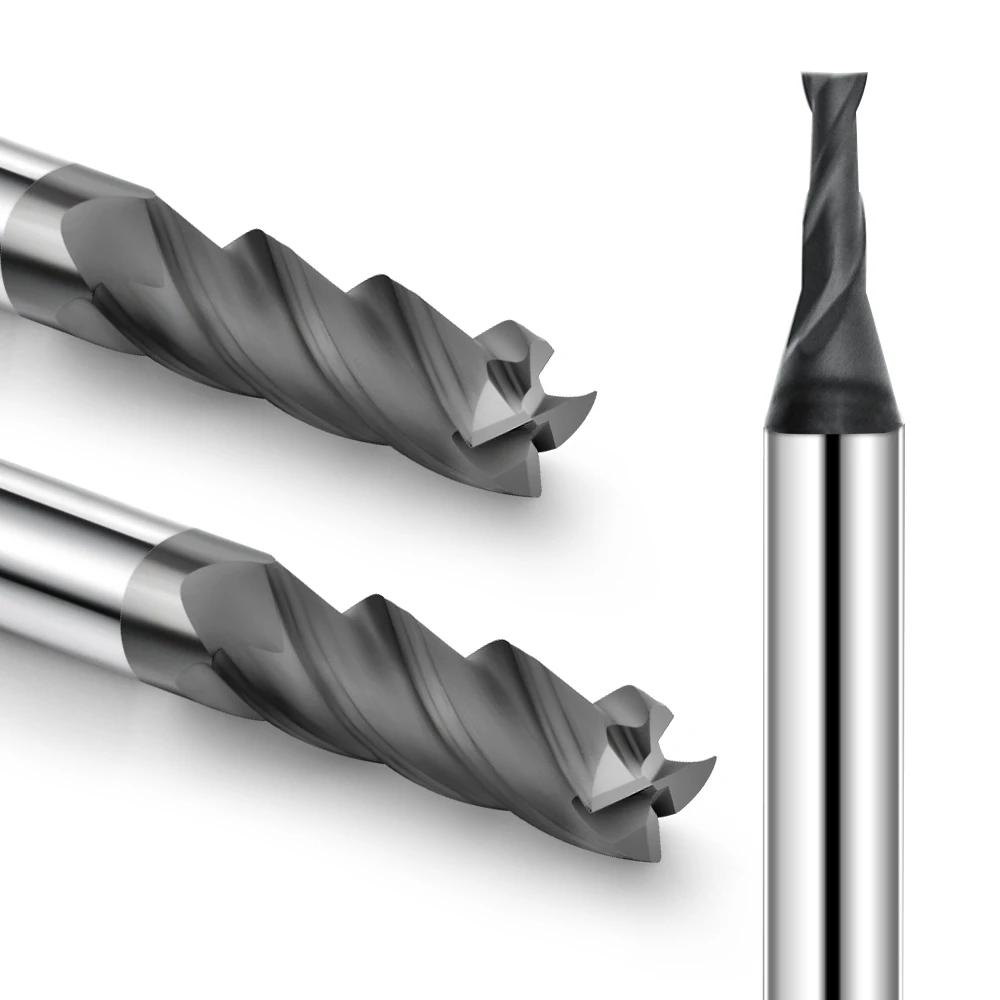
In precision mold manufacturing and EDM electrode production, achieving tight tolerances on brittle materials requires optimized tooling. Standard 2-flute cutters often cause problems during graphite finishing operations. As cutting depths increase, machinists frequently observe poor surface finishes, rapid tool wear, and severe graphite edge chipping.
A high-density graphite electrode project recently highlighted this challenge during micro-feature milling. Because graphite fractures rather than shears, 2-flute geometries concentrate excessive cutting pressure on each flute at high spindle speeds. This concentrated edge load triggers micro-chipping along delicate contours and accelerates abrasive tool wear.
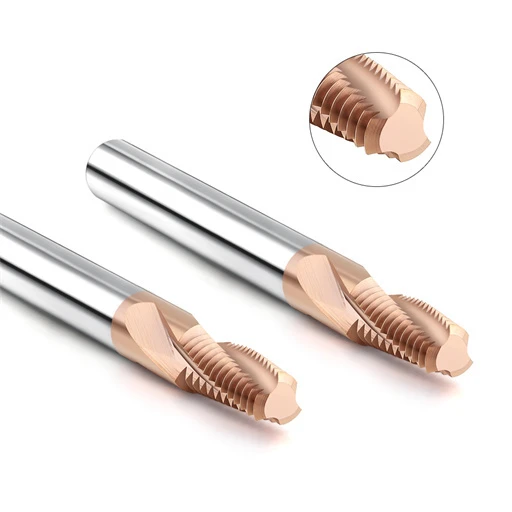
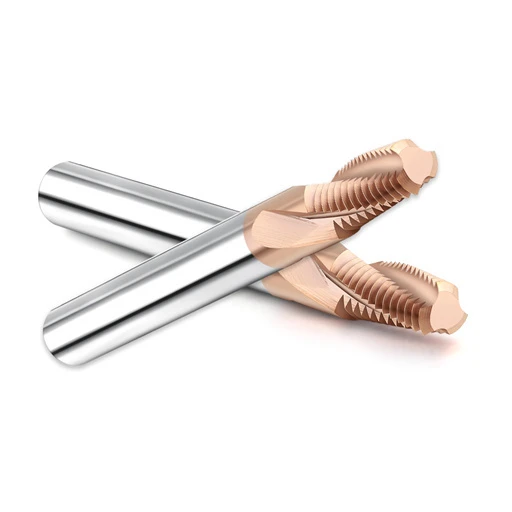
To resolve this bottleneck, we transitioned the operation to a specialized 4-flute graphite end mill. Increasing the flute count while optimizing the core diameter and helix angle distributed cutting forces evenly across all four cutting edges. This balanced load reduced tool deflection, minimized chatter, and eliminated graphite edge chipping on fine electrode ribs.
Field trials confirm that 4 flutes graphite end mills deliver distinct mechanical advantages beyond simply adding cutting edges. The stiffer core structure enhances dimensional accuracy across deep cuts, while the optimized flute spacing directs abrasive graphite dust away from the cut zone. This prevents re-cutting wear and protects the diamond coating.
However, selecting the right cutting tool depends heavily on your specific milling stage and setup rigidity. While 4-flute end mills excel in finishing and high-feed contouring, 2-flute designs remain effective for aggressive roughing and deep-pocket chip clearance. Tool selection must always balance flute count, corner geometry, and spindle capabilities.
Shifting from rapid material removal to high-precision electrode finishing requires dedicated tooling strategies. For tight-tolerance EDM electrodes and brittle graphite components, 4-flute graphite end mills provide the stability, edge integrity, and extended tool life needed for repeatable results. Upgrading your flute geometry is often the most cost-effective way to improve graphite machining efficiency.
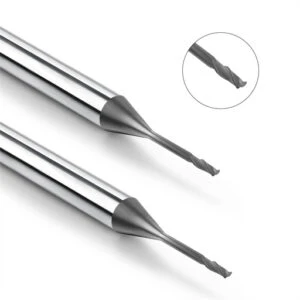
Graphite Machining System Analysis: Why Does Graphite Machining Demand More from End Mill Design?
Machining issues in graphite electrode production rarely stem solely from machine tool precision or feed settings. In one recent mold project, a client used standard carbide end mills for high-speed milling, which caused inconsistent surface quality, heavy dust buildup, and rapid tool wear. We resolved the bottleneck by upgrading the graphite machining system with specialized tool geometries, balanced flute counts, and dedicated evacuation channels.
Unlike metals that form continuous chips, brittle graphite fractures into abrasive micro-particles during cutting. This unique material removal mechanism demands cutting tools engineered specifically for particle evacuation, edge stability, and abrasive wear resistance. Focusing strictly on tool diameter or spindle speed while ignoring specialized graphite tool geometry frequently leads to premature tool failure and dimensional errors.
Graphite Machining Dust: The Impact of Dust on Tool Structure
Precision electrode shops frequently report that cutting tools perform well initially but lose finish quality after just a few hours. Toolpath analysis reveals that the primary culprit is secondary cutting caused by accumulated graphite machining dust. When fine particles linger in the cut zone rather than evacuating instantly, they create severe abrasive friction that damages cutting edges and degrades surface integrity.
Engineers must prioritize flute core thickness, flute spacing, and helical evacuation paths when designing graphite-specific cutters. An open, polished flute profile expels particulate matter rapidly during high-speed rotation, preventing re-cutting wear. For tight-tolerance graphite finishing operations, selecting an end mill with optimized dust-clearing geometry is essential for maintaining process stability.
Graphite Edge Chipping: Issues Caused by Graphite Brittleness
Edge breakout remains one of the costliest scrap factors in precision EDM electrode fabrication. We recently helped a mold manufacturer struggling with corner breakout on thin-walled graphite ribs. While their linear axes held tolerance, excessive cutting pressure fractured delicate features because the tool’s cutting edge profile did not match the mechanical properties of brittle graphite.
Because graphite lacks ductile yield strength, concentrated cutting forces along a single flute trigger micro-fractures instead of clean shearing. Transitioning to higher flute counts distributes cutting loads evenly across multiple edges, effectively eliminating graphite edge chipping. For delicate electrode ribs, balancing the chip load per tooth delivers far better yields than simply dialing back feed rates.
Graphite Tool Wear: Impact on Machining Precision and Tool Life
Abrasive graphite tool wear develops progressively rather than failing catastrophically. A fresh end mill easily holds sub-micron tolerances on the first few electrodes, but gradual flank rounding quickly introduces dimensional drift, burrs, and rough surface textures. Without proper wear monitoring, continuous production runs quickly slip out of tolerance.
Controlling graphite tool wear requires matching diamond coatings and cutting edge preparations to specific graphite grain sizes. Implementing wear-resistant tool designs stabilizes production runs by preventing frequent tool offsets and unexpected spindle downtime. For high-volume electrode manufacturing, long-term wear predictability is far more valuable than aggressive initial material removal rates.
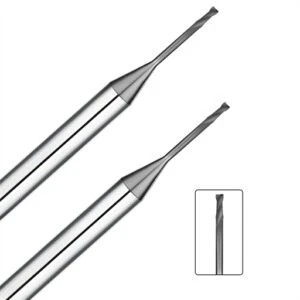
Structural Advantages of 4 Flutes End Mills for Graphite: Why the 4-Flute Design Excels in Graphite Machining
Flute count selection directly dictates machining stability in graphite electrode manufacturing. We recently helped a mold shop that attempted to shorten cycle times by boosting table feeds with 2-flute cutters. This approach triggered excessive tool deflection, chatter marks, and critical out-of-tolerance errors. An on-site engineering audit revealed that the cutter geometry failed to match the brittle fracture dynamics of high-density graphite.
Extensive machining trials confirm that 4 flutes end mills for graphite provide superior dynamic balance for tight-tolerance operations. Rather than relying on oversized flute valleys, the four-flute geometry maintains continuous cutting engagement with the workpiece. This constant contact stabilizes cutting forces, minimizes cyclical shock loads, and prevents fracture damage on fragile electrode contours.
How the Multi-Flute Structure of 4 Flutes Graphite End Mills Reduces Cutting Load per Edge
Tool failure investigations show that flute count significantly influences chip load distribution at identical feed rates. When machining with 2-flute cutters, each cutting edge absorbs high instantaneous impact forces as it engages brittle graphite. This concentrated mechanical load causes rapid edge dulling, micro-chipping, and premature tool failure.
In contrast, 4-flute graphite end mills divide the total chip load across four contact points, cutting single-edge pressure in half. This balanced load distribution enables machinists to maintain high table feeds without overstressing delicate cutting edges. For intricate electrode ribs and deep-cavity finishing, balancing edge pressure is the most reliable way to extend tool life.
How the 4-Flute Design Enhances Graphite Machining Stability
During a high-volume EDM electrode run, a client reported severe dimensional drift after just three hours of continuous milling. Our inspection showed that harmonic tool deflection and unstable cutting pressure were degrading part repeatability. Switching the toolpath to an optimized 4-flute end mill eliminated vibration and restored consistent part tolerances across multi-hour runs.
Process stability relies on maintaining steady cutting resistance during high-RPM spindle operations. A 4-flute profile features a thicker web core, which dramatically increases radial tool stiffness and dampens cutting harmonics. Combined with an optimized helix angle, this rigid tool architecture ensures reliable, unattended machining on high-precision graphite components.
How 4-Flute End Mills Improve Graphite Surface Finish Quality
Surface integrity on EDM electrodes directly determines subsequent spark-erosion efficiency and final mold finish. Machinists often struggle with micro-pitting and visible step-over ridges that force tedious manual polishing. These surface flaws usually stem from intermittent tool engagement and harmonic vibrations during finishing passes.
Transitioning to 4-flute end mills provides higher cut overlap per revolution, creating an exceptionally smooth, uniform graphite surface finish. Stable cutting action eliminates the micro-fractures that leave porous pits on electrode surfaces. Delivering a pristine surface straight off the CNC mill eliminates benchwork and speeds up production throughput.
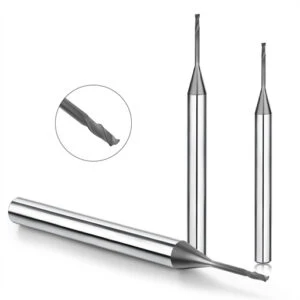
Analysis of Graphite End Mill Geometry: Key Structural Design Features of 4-Flute End Mills
Flute count alone does not guarantee superior machining performance. A mold manufacturing client recently experienced poor surface finishes, contour drift, and short tool life when high-speed milling complex graphite electrodes. A technical review showed that while the flute count was suitable, the overall cutter profile conflicted with the abrasive, brittle behavior of high-density graphite.
High-precision electrode milling demands a balanced tool architecture that manages cutting forces, particle evacuation, and edge strength. When choosing high-performance cutting tools, engineers must analyze the complete graphite end mill geometry. This includes core diameter, helix angles, flute cross-sections, and cutting edge preparations, all of which directly govern tool deflection and part quality.
Graphite End Mill Helix Angle: How the Helix Angle Affects Cutting Stability
Machinists often focus exclusively on tool coatings while overlooking how the helix angle directs cutting forces. Using an incorrect helix on thin-walled electrodes or deep cavities increases cutting impact and causes severe edge breakdown. A mismatched angle also introduces axial vibrations that leave visible chatter marks on fine electrode ribs.
An optimized graphite end mill helix angle ensures smooth tooth entry and reduces instantaneous shock loads. Selecting the proper helix angle—tailored to graphite grain size, tool reach, and machine rigidity—smooths out cutting forces across all four flutes. This controlled cutting action stabilizes the toolpath and prevents micro-fractures on fragile workpiece features.
Flute Geometry: How Flute Design Reduces Graphite Machining Dust
Rapid abrasive wear is often caused by poor particle evacuation rather than substandard carbide substrates. When high-speed milling brittle graphite, micron-sized dust particles quickly pack into tight flute pockets. This creates severe friction against the cutting zone, re-cutting trapped particles and accelerating diamond coating loss.
To resolve this issue, engineers optimize the flute valleys to provide wide, polished evacuation channels. A well-proportioned flute cross-section rapidly expels abrasive graphite machining dust away from the active cutting zone. Keeping flutes clear minimizes friction, prevents heat concentration, and maintains consistent tool sharpness during high-speed finishing passes.
Cutting Edge Design: Mitigating Graphite Edge Chipping
We recently resolved an edge breakout issue on precision EDM electrodes with sub-millimeter rib profiles. While the CNC held tight positioning tolerances, the brittle graphite material chipped along sharp outside corners. Microscopic inspection revealed that an excessively razor-sharp edge profile was concentrating excessive mechanical stress onto brittle graphite grains.
Applying a micro-honed edge preparation and a reinforced corner radius dampens impact forces and prevents localized workpiece fracture. This balanced cutting edge geometry eliminates graphite edge chipping on intricate 3D contours without increasing tool deflection. Dialing in the correct balance between edge sharpness and structural strength is essential for defect-free electrode production.

4-Flute vs 2-Flute Graphite End Mills: Which Configuration is Better for Graphite Machining?
Machinists often assume that 2-flute cutters are universally superior for graphite because of their larger flute pockets. However, practical CNC operations show that flute selection depends on the machining stage, graphite grade, and tolerance requirements. A single tool configuration cannot efficiently cover every stage from bulk stock removal to micro-finishing.
A recent mold electrode trial demonstrated this contrast clearly. Standard 2-flute end mills delivered aggressive material removal during roughing passes but failed during final finishing, causing edge breakout and dimensional drift. Switching to a 4-flute configuration for the finishing passes restored tight tolerances, surface consistency, and edge integrity across the entire electrode.
Advantages and Limitations of 2-Flute Graphite End Mills
A 2-flute graphite end mill remains the standard choice for high-feed roughing and deep pocketing. The deep flute valleys provide ample room to evacuate high volumes of abrasive graphite dust rapidly. This open geometry prevents dust packing during aggressive plunging, heavy ramping, and high-depth-of-cut hogging passes.
However, 2-flute tools show clear structural limitations during tight-tolerance finishing operations. With only two cutting edges absorbing cutting forces, each edge experiences severe shock loads that induce harmonic chatter. On thin-walled electrodes and sharp outside corners, this cyclical vibration frequently triggers edge chipping and uneven surface textures.
Performance Advantages of 4-Flute Graphite End Mills in Finishing
High-precision electrode milling relies heavily on 4-flute graphite end mills to achieve mirror-like finishes and sub-micron repeatability. The 4-flute layout divides cutting resistance across four contact zones, drastically lowering the chip load per tooth. This balanced cutting action suppresses tool deflection and maintains consistent engagement along delicate 3D contours.
Furthermore, the four-edge architecture features a significantly thicker web core, which boosts radial tool stiffness during high-RPM passes. This added rigidity dampens spindle harmonics and prevents micro-fracturing on brittle graphite features. For semi-finishing and final contouring passes, 4-flute cutters deliver superior surface integrity and longer diamond coating life.
Selecting Graphite Machining End Mills: Roughing vs. Finishing
Optimizing shop-floor productivity requires matching tool architecture to specific machining phases. Electrode roughing demands large flute pockets to clear bulk material quickly, making 2-flute cutters the most productive choice. Conversely, finishing passes demand maximum tool rigidity and low chip loads to protect delicate workpiece details.
Selecting the best graphite machining end mill involves balancing flute count, substrate stiffness, and dust extraction methods. Using 2-flute tools for bulk evacuation and transitioning to 4-flute end mills for fine detailing maximizes tool life and part accuracy. This dual-tooling strategy eliminates costly scrap while optimizing overall cycle times in graphite manufacturing.
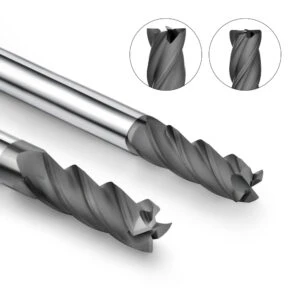
How Do 4-Flute Graphite End Mills Improve Graphite Surface Finish and Machining Precision?
Consistency across multi-electrode runs is the ultimate benchmark in precision mold shops. We recently audited an EDM electrode facility where parts met basic dimensional tolerances but exhibited micro-step marks on complex 3D profiles. Under optical magnification, fine cutting edges also showed micro-fractures, which led to erratic electrical arcing during the subsequent EDM process.
A technical analysis showed that high cutting loads on standard 2-flute cutters were causing localized tool vibration. Switching the finishing passes to a 4-flute graphite end mill stabilized cutting pressures by distributing engagement across four cutting edges. This balanced load profile eliminated harmonic flutter, delivering pristine surface integrity and predictable dimensional accuracy across batch production runs.
Reducing Chatter and Surface Marks in Graphite Machining
Machinists often notice finish quality fluctuating across identical parts even when spindle speeds and table feeds remain unchanged. High-speed microscopic analysis shows that micro-chatter during high-RPM passes causes the cutting path to oscillate. In brittle graphite, these dynamic vibrations leave visible feed ripples and uneven, cloudy surface textures.
A 4-flute cutter provides continuous workpiece contact, smoothing out cutting force transitions as each tooth enters and exits the cut. Combined with a thicker web core, this configuration dampens harmonic vibration and significantly enhances the graphite surface finish. For mirror-like electrode cavities, upgrading cutter geometry yields far better finishes than simply tweaking feed overrides.
Enhancing Dimensional Stability in EDM Electrode Machining
EDM electrode machining demands strict sub-micron repeatability across multi-cavity runs to avoid spark gap variations. In one customer project, identical CNC programs produced dimensional drift on matching rib electrodes after just two hours of milling. An inspection showed that cutting instability and uneven tool deflection were causing the toolpath to wander under load.
A rigid 4-flute tool architecture resists radial deflection, maintaining a consistent cutting stance during long machining cycles. Distributing the cut across four edges also promotes uniform diamond coating wear, preventing sudden dimensional drift. This mechanical stability ensures repeatable part tolerances and uniform spark gaps in high-precision EDM electrode production.
Optimizing Tool Structure to Reduce the Risk of Graphite Edge Chipping
Brittle graphite fractures easily along thin ribs, steep corners, and delicate freeform contours. We frequently see electrode jobs scrapped because sharp corners break out during the final contouring pass. While machine axes may hold exact coordinates, concentrated cutting shock fractures the brittle carbon grain matrix.
Optimizing flute counts and cutting edge micro-geometry reduces instantaneous impact forces per tooth. This gentle, continuous cutting action protects fragile features and practically eliminates graphite edge chipping. For intricate, high-precision graphite machining, preserving fragile corner geometry is far more profitable than chasing aggressive cycle times.
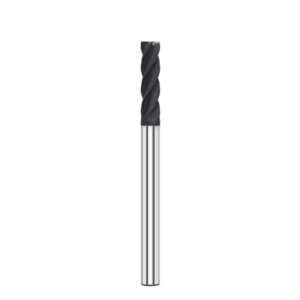
Graphite Tool Wear Analysis: How Does a 4-Flute Design Extend Graphite End Mill Life?
Machinists often assume tool wear is minimal in graphite because the material cuts easily without high cutting forces. However, in precision electrode production, abrasive micro-particles quickly cause severe dimensional drift and surface degradation over long cycles. Uncoated or poorly matched tools lose their sharp edges within hours, disrupting lights-out manufacturing and driving up consumable tooling costs.
Abrasive erosion, rather than thermal breakdown, is the primary mechanism behind accelerated graphite tool wear. As cutting edges sweep through brittle carbon grains, continuous mechanical friction rounds the cutting edge and wears away protective coatings. Maintaining tight tolerances across multi-cavity runs requires pairing wear-resistant geometries with balanced load distribution.
Graphite Dust: A Primary Cause of Tool Wear
Poor dust extraction frequently causes erratic tool life across identical CNC machining centers. In a recent shop audit, a mill with inadequate vacuum velocity suffered twice the flank wear of neighboring machines. Inspecting the cutting zone revealed that trapped particulate was forcing the cutter to continuously re-machine abrasive debris.
When fine graphite machining dust is not evacuated instantly, it creates a grinding paste effect between the tool flutes and the workpiece. This secondary cutting friction strips tool coatings and accelerates abrasive flank wear. Designing open flute channels alongside high-velocity vacuum extraction prevents particle buildup and protects cutting edges.
How a 4-Flute Design Reduces the Rate of Tool Wear
Tool wear rates depend heavily on whether cutting loads are balanced across the entire cutter profile. With 2-flute designs, each cutting edge absorbs high cyclical impact forces, concentrating abrasive friction onto fewer contact zones. This concentrated stress quickly dulls the cutting edges, leading to premature tool failure and uneven part dimensions.
A 4-flute configuration cuts the individual tooth load in half by distributing cutting resistance across four contact edges. This balanced engagement promotes even, predictable flank wear and maintains edge sharpness through extended finishing cycles. Distributing the abrasive workload prevents sudden edge chipping, minimizes mid-run tool offsets, and significantly extends usable tool life.
Further Extending the Service Life of Diamond Coated Graphite End Mills
Machining abrasive, high-density graphite grades requires combining rigid tool geometry with ultra-hard surface treatments. Diamond coatings provide a critical micro-barrier with exceptional hardness, shielding the carbide substrate from the sandblasting effect of abrasive dust. Field tests show that coating adhesion improves substantially when applied to stable, multi-flute cutter geometries.
Using diamond coated graphite end mills with a rigid 4-flute layout delivers the ultimate wear resistance for high-precision mold applications. The rigid core prevents coating micro-fractures, while the diamond layer prevents abrasive edge erosion during long, unattended cycles. This balanced combination maximizes spindle uptime, ensures sub-micron accuracy, and lowers overall cost per electrode.
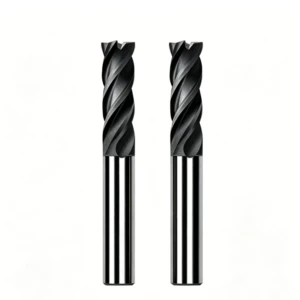
How to Choose the Right 4-Flute Graphite End Mill for CNC Graphite Machining?
Tool selection in high-precision CNC graphite machining begins with a thorough audit of your specific cutting environment. Factors like abrasive dust generation, edge chipping, rapid tool wear, and surface roughness dictate the ideal cutter architecture. Whether milling EDM electrodes, semiconductor components, or complex mold cavities, selecting the right cutter requires balancing material grade, machine rigidity, and part tolerances.
Field results show that 4-flute graphite end mills deliver outstanding cutting stability and dimensional consistency when properly matched to the workpiece. Ultra-fine grain graphite behaves quite differently from coarse, extruded grades during chip formation. Machinists must clarify their primary objective—maximizing bulk material removal rate or achieving mirror-like surface integrity—before locking in tool specifications.
Selecting a Graphite Machining End Mill Based on Graphite Material Type
Graphite properties vary widely across different grades in particle grain size, bulk density, shore hardness, and flexural strength. Milling dense, ultrafine-grain graphite requires high-rigidity cutters with reinforced edge profiles to prevent micro-fracturing along delicate ribs. Conversely, coarser graphite grades generate larger volumes of abrasive particulate that demand generous flute clearance.
Choosing the ideal graphite machining end mill requires matching cutter geometry to the abrasive characteristics of the specific carbon substrate. For high-density EDM electrodes with tight corner requirements, an optimized helix angle and micro-honed edge preparation ensure crisp contour definition. Reviewing material test data alongside target feed rates ensures maximum spindle uptime and tool life.
Selecting 4-Flute Roughing and Finishing Tools Based on the Machining Stage
Many shop-floor tool failures occur when machinists use finishing end mills for heavy material removal passes. Forcing high-density 4-flute finishing tools into heavy plunging cuts packs the flute valleys with dust, causing rapid abrasive wear. Conversely, running roughing geometries during final wall passes leaves visible chatter marks and poor dimensional accuracy.
Effective machining strategies divide the CNC toolpath into dedicated roughing, semi-finishing, and final contouring stages. Roughing stages require open flute pockets to evacuate bulk dust quickly without packing the tool flutes. Final passes benefit from rigid, 4-flute geometries that minimize deflection, eliminate harmonic vibration, and deliver superior surface finishes on critical electrode features.
Optimizing Tool Performance by Partnering with a Custom Graphite End Mill Manufacturer
Off-the-shelf standard tooling often fails to meet the strict demands of deep-rib geometries and micro-scale graphite components. Standard reach lengths can introduce excessive tool deflection, resulting in tapered side walls and chatter marks on deep EDM electrodes. In these demanding setups, custom cutter profiles, specialized reach ratios, and targeted diamond coatings are required.
Partnering with a custom graphite end mill manufacturer allows engineering teams to tailor core thickness, helix profiles, and diamond layers directly to complex part drawings. Providing your machine tool spindle specs, graphite grade data, and vacuum extraction parameters ensures a tailored cutting solution. Optimized custom tooling shortens cycle times, stabilizes unattended runs, and lowers total manufacturing costs.
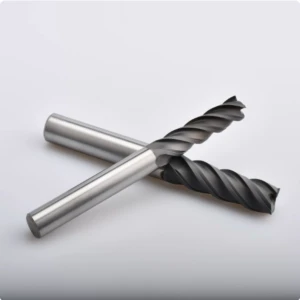
FAQ: Common Questions About 4-Flute Graphite End Mills
In precision graphite electrode manufacturing, CNC programmers and machinists frequently raise questions about flute counts, cutter geometries, and process stability. While increasing material removal rates is important, long-term profitability depends on dimensional accuracy, surface finish, and predictable tool life across abrasive cuts.
We have compiled these technical answers based on shop-floor data to help guide your tool selection. Whether optimizing existing high-speed toolpaths or outfitting a new machining center, use these insights to match cutter specifications with your specific graphite grade, machining stage, and spindle capabilities.
Why are 4-flute end mills preferred for graphite machining?
Brittle graphite fractures easily under cyclical cutting shock, making balanced load distribution essential. Standard cutters with fewer flutes concentrate cutting forces onto individual teeth, triggering rapid abrasive wear, harmonic chatter, and micro-fractures along thin electrode ribs.
A 4-flute design divides cutting resistance across four contact edges, ensuring smooth and continuous engagement. This rigid configuration suppresses vibration and maintains dimensional repeatability during high-RPM passes. For complex 3D contours and tight-tolerance EDM electrodes, 4-flute graphite end mills deliver superior process reliability.
Is a 4-flute graphite end mill better than a 2-flute one?
Neither configuration is universally superior; each serves a dedicated role in high-precision graphite manufacturing. Selecting the right tool depends entirely on your machining depth, feed strategy, and whether your primary goal is rapid bulk stock removal or final surface finishing.
A 2-flute tool features open flute valleys that prevent dust packing during high-feed roughing and deep pocketing. Conversely, 4-flute graphite end mills offer the structural stiffness and low tooth load required for thin-wall finishing and sharp corner definition without edge breakout.
What is the best flute count for graphite machining?
Determining the ideal flute count requires evaluating your current machining stage and setup rigidity. For aggressive roughing passes where material removal rates dominate, 2-flute geometries excel by evacuating large volumes of abrasive particulate quickly without clogging.
For semi-finishing and final detailing passes, 4-flute cutters are the industry standard. The multi-flute architecture minimizes tool deflection, maintains a consistent cutting stance, and creates exceptionally smooth surface finishes on delicate EDM electrodes and semiconductor components.
How does the helix angle of a graphite end mill affect machining?
The helix angle governs the direction of cutting forces, chip evacuation efficiency, and axial tool vibration. A mismatched helix can generate excessive lifting forces on brittle graphite parts, increasing harmonic chatter and causing sudden breakout on thin outside corners.
An optimized graphite end mill helix angle ensures smooth tooth entry and dampens instantaneous impact shock. Tailoring the helix angle to your specific graphite density, tool reach, and spindle RPM stabilizes the cut, extends diamond coating life, and delivers pristine surface finishes.
How can I reduce graphite machining dust and edge chipping?
Excessive dust re-cutting and edge breakout usually stem from poor particle evacuation and concentrated edge loads. Trapped graphite machining dust accelerates flank wear through secondary cutting friction, while unoptimized edge profiles concentrate mechanical stresses directly onto brittle carbon grains.
To minimize dust buildup, pair polished flute valleys with high-velocity vacuum extraction systems. To eliminate graphite edge chipping, transition to rigid 4-flute tools featuring micro-honed edge preparations and reinforced corner radii to ensure smooth, fracture-free machining.